
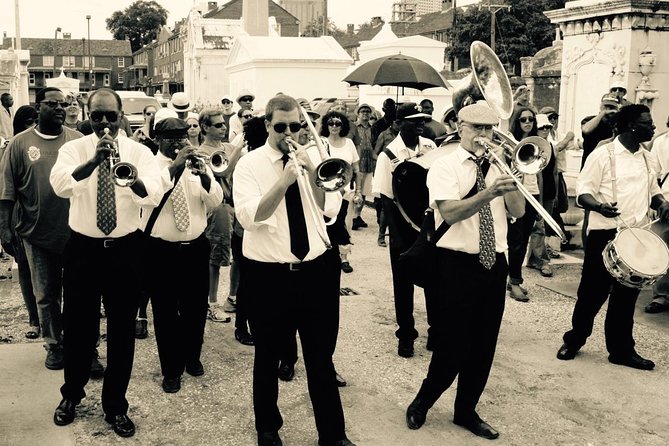
Reviewed · NEW ORLEANS JAZZ AND LIVE MUSIC TOURS
New Orleans Music Tour
New Orleans music did not appear from nowhere. It grew from African traditions, forced labor, street gatherings, dance halls, bars, recording studios, and the stubborn creativity of local musicians. This two-hour walk puts that story under your feet, beginning at Congo Square and ending near Preservation Hall.
I like the direct connection between places and performers. You follow the paths linked to Louis Armstrong, Fats Domino, Jelly Roll Morton, Little Richard, Allen Toussaint, and others. I also like the small-group limit of 20 people and the chance to hear present-day street musicians, not just old stories. The main concern is consistency: several visitors had a superb, personal tour with David Higgins, while others felt the guide stayed too long in Armstrong Park and missed listed stops.
Key points to know before you book
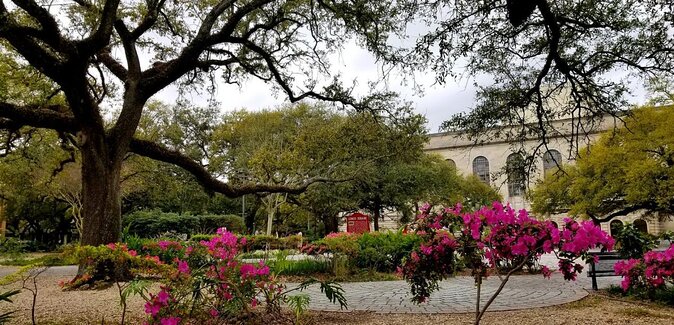
- Congo Square gives the tour its strongest foundation: You learn how African musical and religious traditions survived under slavery and helped shape New Orleans music.
- The route links jazz to rock ’n’ roll: J&M Studios, Basin Street, Storyville, and Preservation Hall connect several generations of music.
- Guide quality matters: David Higgins receives especially strong praise for his energy, musicianship, and broad musical knowledge, but the guide may be David, Eva, Margie, Rob, Anna, or another team member.
- The walk ends at Preservation Hall: The tour does not include a concert ticket, but it finishes where people may be lining up for the 5 PM show.
- Expect a story-heavy outing: Guides may use a phone or tablet for recordings and images, which some people enjoy and others find distracting.
- The $25 price is fair for the setting: You pay for interpretation and access to a carefully chosen route, not for transportation, food, or a performance.
Starting at Louis Armstrong Park and Congo Square
Meet at the Rampart Treehouse, 740 North Rampart Street, at 2 PM. The walk begins inside Louis Armstrong Park, where statues, paths, and open spaces introduce you to one of the city’s central musical stories.
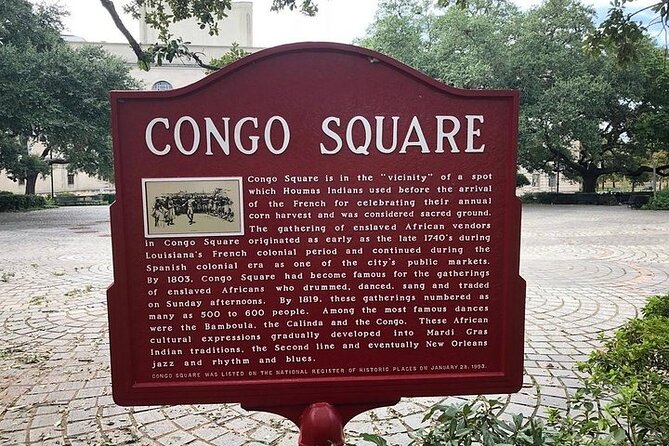
Congo Square is the key. Under slavery, enslaved Africans were allowed to gather there on Sundays. The site became a place where African rhythms, dance, singing, and religious customs continued in North America. Calling it the source of all New Orleans music is a grand claim, but the place clearly matters. It helps you understand that jazz was not simply invented by a few famous men in the early 20th century. Its foundations reach back to African traditions carried into an oppressive system and kept alive through community.
The guide may spend a good part of the first section here. That can be useful if you want context before meeting the famous names. Guides have also pointed out sculptures of musicians and discussed figures such as Mahalia Jackson and Marie Laveau. One especially memorable possibility is an unexpected second-line moment in the park, though you should not treat that as a guaranteed feature.
This is also the part of the walk most affected by guiding style. A strong guide, such as David Higgins, can connect the park to politics, religion, race, and musical form. A weaker presentation may feel like a long talk in one location. Bring patience, listen closely, and ask questions if the discussion gets too broad.
The itinerary returns to Congo Square later, so the exact order may shift. That repetition makes sense if the guide uses the square as both a starting point and a final reminder of where the story begins. It also means the tour can feel less like a fast march through landmarks and more like a lesson built around one important place.
More jazz and live music tours in New Orleans:
- New Orleans Steamboat Natchez Jazz Cruise with Dinner Option
★ 4.0 · 7,533 reviews - New Orleans Steamboat Natchez Jazz Cruise
★ 4.5 · 5,334 reviews - New Orleans: Evening Steamboat Jazz Cruise + Optional Dinner
★ 4.3 · 4,548 reviews
The former J&M Studios and the sound of early rock
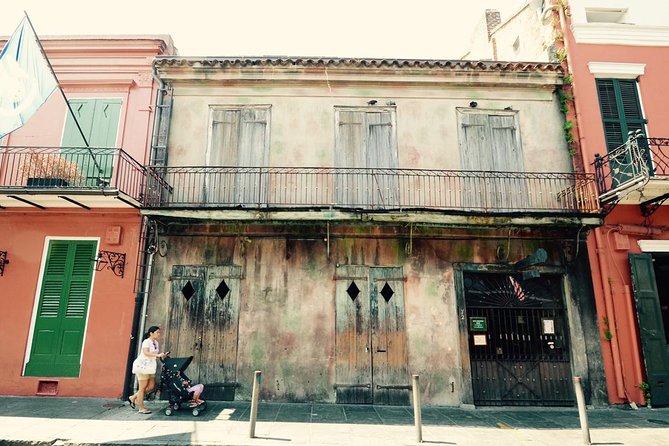
From Armstrong Park, you view the building that once housed J&M Studios. The studio itself no longer functions as a visitor attraction, and the stop may be viewed from outside or discussed as part of the walk. Still, the address carries serious musical weight.
Cosimo Matassa’s studio helped create what became known as the New Orleans Sound. Professor Longhair, Dave Bartholomew, Fats Domino, Guitar Slim, Shirley and Lee, Lloyd Price, Ernie K-Doe, Allen Toussaint, and Clarence Frogman Henry recorded there. Visitors from outside New Orleans included Little Richard, Ray Charles, and Jerry Lee Lewis.
This is where the tour broadens beyond jazz. The rhythmic piano, guitar, horns, and vocal styles associated with New Orleans helped shape rhythm and blues, rock ’n’ roll, and later popular music. If you arrive expecting only a jazz walk, this part adds welcome range.
A guide may use a tablet or phone to play short music samples or show old images. That approach can make an ordinary-looking building come alive. It can also be hard to hear on a noisy street, and one person specifically wished for fewer tablet videos. I would treat the recordings as helpful illustrations, not a replacement for seeing a functioning museum or studio.
Basin Street and the vanished world of Storyville
The next section moves toward Basin Street Station and the remains of Storyville. Basin Street once bordered New Orleans’ famous legal red-light district, which operated from 1897 to 1917. The district’s buildings and clubs created work for many musicians and gave early jazz room to develop in public.
The physical remains are limited, so this is a stop where imagination does some of the work. You see the area and hear about the people who played there, including King Oliver, Buddy Bolden, Jelly Roll Morton, and Sidney Bechet. Their music grew within a complicated setting of vice, segregation, tourism, poverty, and opportunity.
One specific landmark is Frank Early’s My Place Saloon, associated with the song Pretty Baby. Do not expect a preserved entertainment district with intact interiors. The value comes from placing names and music within the streets where that culture once operated.
Basin Street Station itself is a short stop, listed at about 20 minutes. The compact schedule keeps the walk moving, but it also limits how much detail the guide can give. If you want a full social history of Storyville, this tour offers an introduction rather than a complete account.
May Bailey’s Place and the Tango Belt
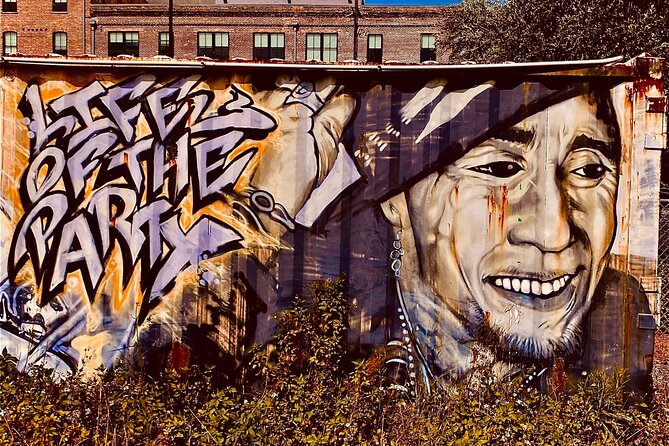
The route continues through the Tango Belt to May Bailey’s Place and the former site of the Old French Opera House. This section adds another layer to the city’s entertainment past.
May Bailey’s Place was linked to the world of Storyville and its performers. The old opera house site points to a time when New Orleans drew audiences for opera, theater, dance, and popular music in the same broad downtown area. The tour’s strength here is connection. You begin to see that jazz did not develop in isolation from formal music, nightlife, or the city’s theater culture.
Like the Storyville stop, May Bailey’s is mainly an outdoor history lesson. There is no promise of a preserved interior or a live show at this point. If you prefer tours with dramatic buildings you can enter, this section may feel modest. If you enjoy standing on a street corner and learning what used to happen there, it adds useful texture.
A different side of New Orleans for another evening:
- New Orleans Premier Ghost, Voodoo and Vampire Walking Tour
★ 4.5 · 12,856 reviews - Adults-Only New Orleans Ghost, Crime, Voodoo, and Vampire Tour
★ 5.0 · 6,545 reviews - New Orleans Food Walking Tour of the French Quarter with Small-Group Option
★ 5.0 · 6,118 reviews - New Orleans Swamp and Bayou Boat Tour with Transportation
★ 5.0 · 5,399 reviews
Preservation Hall and music that remains alive
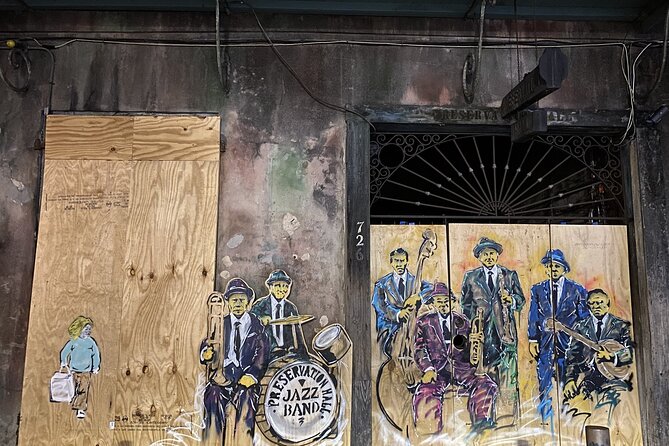
The walk finishes at Preservation Hall, 726 St. Peter Street, in the French Quarter. The hall represents the old, current, and continuing traditions of New Orleans music. The tour does not include admission to a performance, but the timing is useful: people may already be lining up for the 5 PM show when you arrive.
That gives you a practical option after the walk. You can ask the guide about the performance, decide if you want to wait, or continue into the French Quarter. Just keep your expectations clear. Seeing Preservation Hall from the route is not the same as attending a concert, and at least one person felt disappointed when the hall was not entered.
This final stop also introduces New Orleans Bounce, a local form of hip-hop known for its strong rhythmic drive and call-and-response energy. The inclusion matters because the city’s music is not frozen in the jazz age. A good guide connects early African rhythms and brass-band traditions with the music being made and performed now.
You may also see street musicians during the latter part of the walk. That is one of the tour’s best ideas. The city’s musical past is easier to understand when you hear performers working in the present, even if the sound quality and exact artists vary from day to day.
What the guides add to the walk
The guide can make or break this experience. David Higgins receives the strongest and most repeated praise. His approach combines music history with the political and cultural forces that shaped New Orleans, and his own background as a musician adds authority to the explanations. He has also been praised for playing a little jazz during the walk, answering questions, and using recordings and photographs to support the stories.
Other guides have their own strengths. Eva has been described as warm and enthusiastic about both city history and music. Margie is noted for teaching in an engaging way, while Rob brings musical and historical detail to the route. Anna received mixed feedback, with one person finding her personable but the tour itself poorly paced.
That range tells you something important. This is not a fixed audio guide with identical content every day. It is a personality-led walking tour. You might get a focused lesson from a musician who adjusts the material to your questions, or you might get a looser talk that spends too long in one spot.
The best way to improve your experience is to ask direct questions. Ask how slavery shaped the music, why Storyville mattered, how J&M Studios influenced rock, or how Bounce relates to older New Orleans forms. The guides who enjoy discussion appear to respond well to curiosity.
Is two hours enough for this route?
The advertised duration is about two hours. That is a comfortable length for a downtown walk, but the route covers a lot of ground in musical terms. You move from African traditions to jazz, early recording studios, rock ’n’ roll, opera, Storyville, Preservation Hall, street music, and Bounce.
One person thought the tour needed an extra hour because it was hard to cover everything in two hours. I agree with the concern. The schedule gives roughly 30 minutes to Louis Armstrong Park, 20 minutes to Basin Street, 20 minutes to May Bailey’s Place, 20 minutes to Preservation Hall, and another 30 minutes connected with Congo Square. Those timings leave little room for long stops, unexpected music, or slow walking.
Think of this as a concentrated overview. It works best early in your New Orleans stay, when you want a framework for later visits to clubs, halls, and music museums. It is less suitable if you want a leisurely photographic walk or a full performance-based afternoon.
Wear comfortable shoes and bring water, sunscreen, a hat, and protection from rain or strong sun. The tour runs outdoors and requires good weather. Most people can take part, service animals are allowed, and the meeting point is near public transportation.
What the $25 price really buys you
At $25 per person, this is an inexpensive way to explore New Orleans music with a guide. The price includes the tour leader and visits to music-related landmarks, but not food, drinks, transportation, or a concert. The stops are free public locations, so you are paying mainly for the route, explanation, historical links, and access to a guide’s musical perspective.
That is good value if you enjoy walking tours and want context. It is especially useful if you would otherwise pass the former studio site, Basin Street, or Congo Square without knowing why they matter.
The price is less compelling if you expect entry into Preservation Hall, a private studio visit, a cemetery tour, or a live concert. Some people expected stops that were not fully delivered, and one account described seeing Preservation Hall only from across the street. Confirm the day’s exact route with your guide at the start, particularly if a specific location matters to you.
The group can include up to 20 people. That is still manageable, but it is not the same as a private tour. Small groups have sometimes allowed David to give more personal attention, especially when only a few people booked. You cannot count on that level of customization, but the possibility adds value.
Free cancellation is available until 24 hours before the start time. Within 24 hours, the payment is not refunded, and poor weather may lead to a different date or a full refund.
Who should book this New Orleans music walk?
I would choose this tour if you want a clear introduction to the city’s music and are willing to learn mainly through stories, street views, and short musical examples. It suits adults, families, and music fans who want to connect jazz with slavery, African traditions, early recording, rock, and current street performance.
It is also a smart choice for anyone interested in musicians beyond Louis Armstrong. Fats Domino, Allen Toussaint, Professor Longhair, Little Richard, Jelly Roll Morton, and others receive attention, giving you a wider view than a standard jazz-only outing.
I would hesitate if you need a guaranteed concert, indoor attractions, or a precisely controlled itinerary. The walk depends heavily on the guide, and the supplied schedule may not always match the route delivered. If you book, arrive ready to ask questions and accept that some stops are viewed from the street.
Should you book it?
Book it for the story of how New Orleans music developed, especially if David Higgins is leading. Congo Square, the J&M Studios connection, Storyville, and Preservation Hall create a strong outline, and the $25 cost is reasonable for a two-hour introduction.
Skip it if your main goal is live music or a formal museum visit. In that case, put the money toward a concert and explore the historic streets on your own. For a music fan who values context and an enthusiastic guide, this walk can give the rest of your New Orleans visit a better soundtrack.
FAQ
How much does the New Orleans Music Tour cost?
The tour costs $25 per person.
How long does the tour last?
The tour lasts approximately two hours.
Where does the tour begin?
It begins at the Rampart Treehouse, 740 North Rampart Street, New Orleans, Louisiana 70116.
What time does the tour start?
The start time is 2 PM.
Where does the tour end?
The tour ends at Preservation Hall, 726 St. Peter Street, New Orleans, Louisiana 70116.
Is admission to a Preservation Hall concert included?
No. The tour ends at Preservation Hall, but a concert ticket is not included.
Is the tour offered in English?
Yes. The tour is offered in English.
How many people can join the tour?
The maximum group size is 20 people.
What should I bring?
Bring comfortable shoes, water, sunscreen, a hat, and protection from rain or sun.
Can I cancel for a full refund?
Yes, if you cancel at least 24 hours before the start time. Cancellations within 24 hours are not refunded. If poor weather cancels the tour, you will be offered another date or a full refund.
Newest New Orleans tours we have written up
- New Orleans : Garden District Architecture Walking tour★ 4.8 · 5 reviews
- Ultimate Denver Day Out: Red Rocks, City Views & Ice Cream★ 5.0 · 7 reviews
- From New Orleans: Whitney and Laura Guided Plantation Tour★ 4.9 · 20 reviews
- Whitney Plantation and Soul of New Orleans City Tour Combo★ 5.0 · 13 reviews
- Treme Bar Crawl & Seafood Experience★ 4.2 · 7 reviews
- True Voodoo History of NOLA’s Congo Square with Local Guide★ 4.9 · 16 reviews
- Whitney Plantation Tour with Transportation★ 4.0 · 29 reviews
- Witches Coven Walking Tour in New Orleans★ 5.0 · 49 reviews
New Orleans Jazz and Live Music Tours, compared.
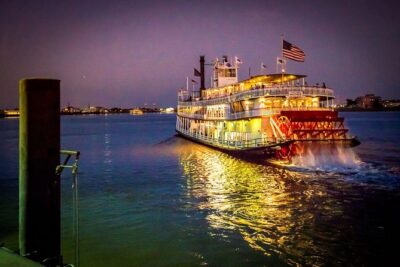
New Orleans Steamboat Natchez Jazz Cruise with Dinner Option
Read our review →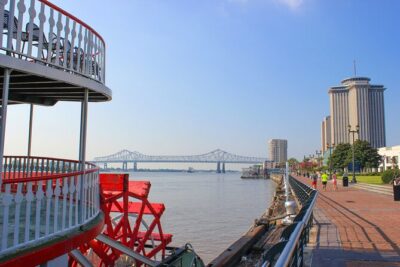
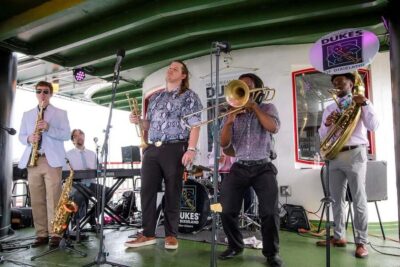
Evening Steamboat Jazz Cruise + Optional Dinner
Read our review →
Daytime Steamboat Jazz Cruise + Optional Lunch
Read our review →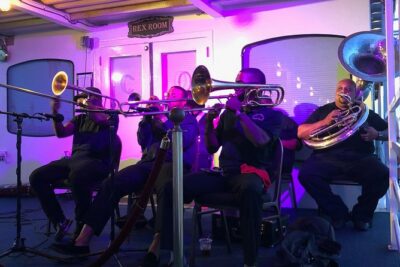
Paddlewheeler Creole Queen Jazz Dinner Cruise in New Orleans
Read our review →
Evening Jazz Boat Cruise with Optional Dinner
Read our review →
VIP Jazz Dinner Cruise with Private Tour and Open Bar Option
Read our review →Browse the lists this tour appears in