
Reviewed · HISTORICAL TOURS
Eras of New Orleans: A History Lover’s Walking Tour
The most interesting part of this walk is its broad view of New Orleans. You move from early French and Spanish rule to slavery, voodoo, yellow fever, fires, piracy, and changing ideas about the city itself. The stories reach beyond the usual parade of pretty balconies and haunted buildings.
I like the focus on lesser-told voices, including Michaela Almonester and Marie Laveau. I also like the sensible $27.99 group price and the finish at Lafitte’s Blacksmith Shop Bar, one of the city’s oldest operating bars. The catch is that this is a serious history lesson, not a light stroll, and a small booking may be canceled if the minimum group size is not met.
Key points to know before you book
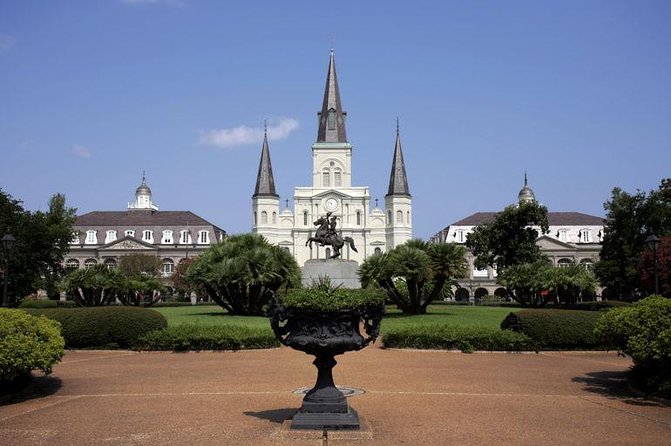
- Jackson Square sets the historical frame: Expect about 30 minutes on the city’s early settlers, slave rebellions, and Michaela Almonester.
- The tour looks beyond the standard French Quarter story: Smuggling, piracy, yellow fever, fires, nuns, architecture, and New Orleans Voodoo all get time.
- Graham has led especially information-heavy walks: Be ready for names, dates, and political details rather than quick anecdotes.
- You finish at Lafitte’s Blacksmith Shop Bar: The tour ends on Bourbon Street, not back at the starting point.
- The pace is manageable but the ground is not always easy: Historic French Quarter streets can challenge anyone with mobility limits.
- Bring patience as well as walking shoes: Some stops last 20 to 30 minutes, with relatively few stops overall.
A history lesson that starts at Jackson Square
This two-hour walk begins at Witches Brew Gallery & Haunted Sanctuary on Exchange Place at 1:30 pm. That starting point is near the French Quarter and public transportation, but it is important to know that the gallery is a retail location. If a cancellation affects your booking, staff there may not have the tour details, so keep your booking contact information handy.
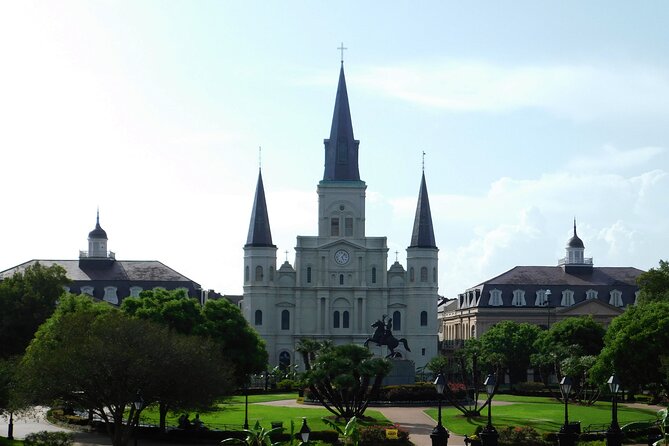
The first stop, Jackson Square, gets the largest block of time. You spend roughly 30 minutes here, learning how the city began, how early settlers shaped it, and how enslaved people resisted through rebellions. The focus on Michaela Almonester adds a useful twist. Her life connects wealth, gender, power, and the physical growth of New Orleans in a way that a basic sightseeing walk might skip.
This is a good place to begin because the square is not just a postcard setting. It gives you a physical reference for the city’s early religious, social, and political life. Look around as you listen. The buildings, the open space, and the cathedral help turn names and events into something you can place on a map.
The guide may pack a lot into this opening section. Graham, one guide associated with the tour, has a reputation for presenting a large amount of material with clear enthusiasm. That is good news if you want substance. It also means you may need to listen closely and accept that you will not remember every name.
A few more New Orleans tours worth comparing
- New Orleans Garden District History Walking Tour
★ 5.0 · 2,879 reviews - French Quarter Historical Sights and Stories Walking Tour
★ 5.0 · 2,724 reviews - New Orleans Small-Group Haunted History Carriage Tour
★ 4.5 · 2,289 reviews
St. Louis Cathedral and the business of survival
The walk then moves to the exterior of St. Louis Cathedral for about 10 minutes. You do not receive an admission ticket, so this is an outside visit rather than a museum or interior church tour.
The subject here is less about decoration and more about early economics. You hear how smuggling and piracy fit into New Orleans life. That matters because the city’s growth was not powered only by official trade and orderly government. Informal commerce, contested authority, and the port’s strategic position all helped shape the place.
This short stop should appeal to anyone who likes the practical side of history. Instead of treating the French Quarter as an old backdrop, the guide connects its development to money, law, and people who operated outside the rules. Ten minutes is enough for a focused explanation, though it will not satisfy anyone hoping for a full cathedral visit.
Voodoo Authentica and the real story of Marie Laveau
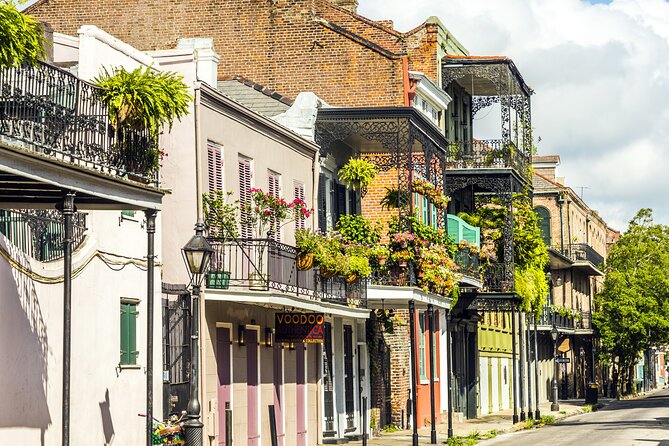
At Voodoo Authentica, the tour spends about 10 minutes discussing New Orleans Voodoo. The guide explains what Voodoo is, what it is not, and how Marie Laveau became one of the city’s most famous figures.
This part can help correct the cartoon version of New Orleans Voodoo often sold in tourist settings. You get a historical and cultural explanation rather than only spooky tales. Marie Laveau is treated as a major figure in the city’s past, with attention to why her reputation lasted and how popular ideas about her developed.
The stop is brief, so think of it as an introduction rather than a full study of religion and ritual. Still, it gives the rest of your French Quarter walk more context. New Orleans culture cannot be understood through architecture and food alone, and this section makes that clear.
The Ursuline nuns and the city’s early institutions
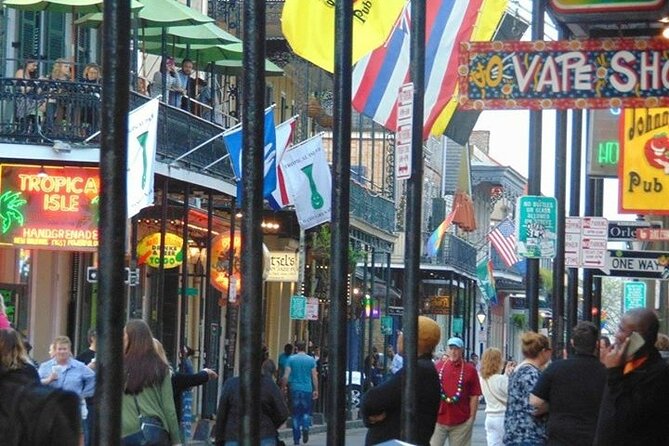
The Old Ursuline Convent Museum receives about 20 minutes. The guide explains how the Ursuline nuns came to New Orleans and how they influenced early life in the city.
This is one of the more useful stops for understanding how a young settlement organized itself. Religious orders were involved in education, care, and community life, and the convent represents more than an attractive old building. It points to the institutions that helped the city function before modern public services existed.
Admission is not included, and the tour does not promise an interior visit. You should treat the stop as an exterior history lesson unless the guide tells you otherwise. That distinction matters if you are hoping to tour the museum itself.
The pace here may feel slow if you prefer constant movement. I think the 20-minute pause works well for people who want social history, but families with young children may find the long explanations hard to follow.
A different side of New Orleans for another evening:
- New Orleans Premier Ghost, Voodoo and Vampire Walking Tour
★ 4.5 · 12,856 reviews - New Orleans Steamboat Natchez Jazz Cruise with Dinner Option
★ 4.0 · 7,533 reviews - Adults-Only New Orleans Ghost, Crime, Voodoo, and Vampire Tour
★ 5.0 · 6,545 reviews - New Orleans Food Walking Tour of the French Quarter with Small-Group Option
★ 5.0 · 6,118 reviews
Fire, yellow fever, and 919 Royal Street
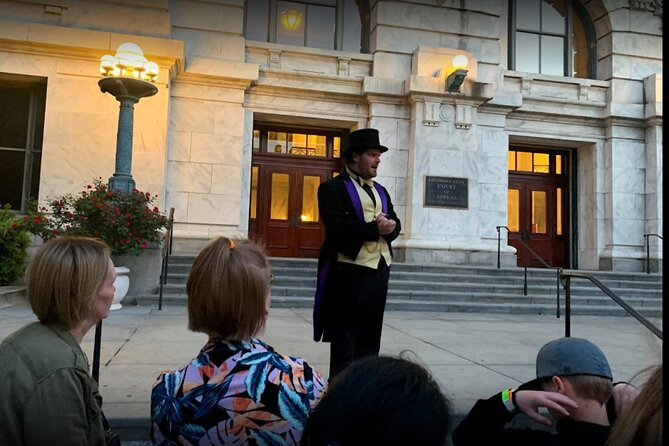
At 919 Royal Street, you spend roughly 15 minutes hearing how New Orleans looked in the 18th and 19th centuries. Fires and yellow fever repeatedly damaged the city, changed its buildings, and affected its population.
This section gives useful context to the French Quarter’s appearance. The old streets are not simply a preserved picture of the past. They reflect rebuilding, disease, changing materials, and the need to adapt to repeated disasters.
A stop like this can also sharpen your eye for the rest of the walk. Instead of seeing every weathered wall as untouched history, you begin to ask what survived, what was rebuilt, and why certain architectural forms became common.
There is no admission charge listed for this stop. It is mainly about looking carefully and listening to the guide connect one address to the wider development of the neighborhood.
Madame John’s Legacy and New Orleans architecture
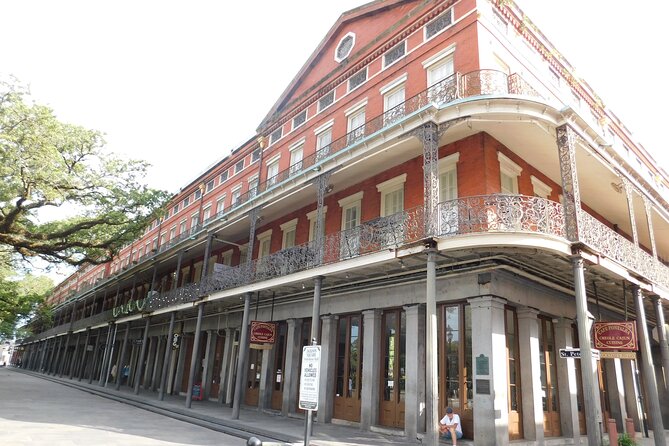
The architecture stop at Madame John’s Legacy lasts about 10 minutes. Here you learn about several New Orleans building styles and the features that make the city’s architecture distinctive.
This is a valuable counterweight to the political and social material earlier in the walk. You get a chance to connect history to shutters, balconies, galleries, rooflines, and the way buildings meet the street. The guide explains not only what you are looking at but why the city developed such a recognizable visual character.
The stop is short, so do not expect a full architectural survey. It works best as a reading lesson for the French Quarter. Once you know what to watch for, the neighborhood becomes easier to understand on your own.
Architecture also gives you a break from the dense stream of names and events. If the guide has been moving quickly through early governments, slavery, disease, and religious life, this section lets you look up and take in the actual buildings around you.
Ending at Lafitte’s Blacksmith Shop Bar
The final stop is Lafitte’s Blacksmith Shop Bar on Bourbon Street. The tour ends here after about five minutes, and the bar is described as one of New Orleans’ oldest operating bars.
Alcohol is not included, and the walk is BYOB. That means you pay for any drink yourself. The ending feels fitting because the tour moves from the formal history of squares, churches, convents, and homes to a place tied to the city’s long drinking culture.
You should plan your afternoon around the end point. Since the walk finishes at 941 Bourbon Street rather than returning to Exchange Place, you will need to make your own way back to your hotel or next activity. The location is useful, though, since you are already in the heart of the French Quarter.
Do not assume the bar stop becomes a long social visit. The stated time is only about five minutes. It is a finish and orientation point, not a full pub tour.
What you get for $27.99
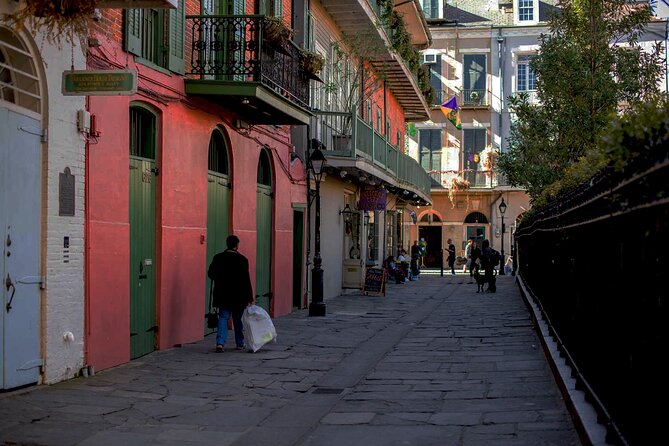
At $27.99 per person, this is a fair price for a two-hour guided walk if you care about history. You are paying for a live English-speaking guide and a structured route through several important French Quarter subjects. You are not paying for museum admissions, drinks, or private attention.
The group format keeps the cost down. The maximum group size is listed as 22 people, so the experience may feel more like a small public class than a private walk. That suits the price, but it also means you may need to stay near the guide and speak up if you have a question.
The value is strongest if you would otherwise wander the French Quarter without understanding what you are seeing. The guide ties locations together and includes subjects often left out of a quick architecture or ghost walk. If you want a relaxed photo walk with only a few fun facts, this may feel too academic.
The average booking point is about 28 days ahead. That does not mean you must book a month early, but it suggests that putting the walk on your schedule before arriving is sensible, especially if your New Orleans dates are fixed.
Who will enjoy this walk most
I would choose this tour if you enjoy social history, city development, politics, religion, and architecture. It is especially useful early in a New Orleans visit because the stories give you a stronger sense of place for the rest of your stay.
The tour also suits people who want more than the standard French and Spanish colonial story. The material includes slavery, rebellions, Voodoo, disease, smuggling, piracy, and the role of women in the city’s development. That wider view is one of the best reasons to book.
You should think twice if you are traveling with young children or teenagers who dislike long explanations. One account describes the guide as sounding like a textbook at times, which is a fair warning. The tour can be engaging, but it asks you to concentrate.
Wear comfortable walking shoes. The French Quarter has historic streets and uneven terrain, and the operator advises a moderate level of fitness. The tour tries to accommodate mobility needs, but the setting itself creates limits. Service animals are allowed.
Weather, cancellations, and one practical warning
Free cancellation is available if you cancel at least 24 hours before the 1:30 pm start. Changes or cancellations made inside that window are not accepted for a refund.
The tour requires good weather. If poor weather causes a cancellation, you are offered another date or a full refund. The booking also requires a minimum number of people, so a very small group may face cancellation.
This is not just a theoretical concern. At least one booking was canceled because only two people had signed up, and another cancellation followed a staff emergency. In those cases, alternative tours or refunds were offered, but the disruption still caused trouble for people who had already arranged their day.
I recommend checking your messages on the day before and the morning of the tour. If you are booking this as the central activity in a short visit, keep a backup plan. Do not rely on the retail staff at Witches Brew Gallery to manage tour questions, since the gallery and tour operations are separate.
Is Eras of New Orleans worth booking?
Book it if you want a serious, information-heavy look at New Orleans and you enjoy learning how social forces shape a city. The guide’s strongest qualities are enthusiasm, preparation, and the ability to connect many eras and subjects in a short walk. Graham, in particular, has been praised for remembering and explaining a large amount of material.
The $27.99 price is sensible for a two-hour group tour, and the route includes more than the usual French Quarter highlights. Jackson Square, Marie Laveau, the Ursuline nuns, yellow fever, fires, architecture, and Lafitte’s Blacksmith Shop Bar give the walk a useful range.
Skip it if you want a short, casual outing, an interior cathedral visit, or a tour built mainly around entertainment. Also be cautious if your schedule cannot absorb a last-minute cancellation or if walking on historic streets is difficult.
For the right audience, this is a solid choice: bring water, wear good shoes, listen closely, and leave room in your afternoon after the walk ends on Bourbon Street.
FAQ
How long does the tour last?
The tour lasts approximately two hours.
What time does the tour begin?
The tour starts at 1:30 pm.
Where does the tour begin?
It begins at Witches Brew Gallery & Haunted Sanctuary, 311 Exchange Place, New Orleans, Louisiana 70130.
Where does the tour end?
It ends at Lafitte’s Blacksmith Shop Bar, 941 Bourbon Street, New Orleans, Louisiana 70116.
Is the tour offered in English?
Yes. The tour is offered in English and includes a live guide.
Are drinks included?
No. Alcoholic beverages are not included. The tour is BYOB.
How many people can join the tour?
The maximum group size is 22 people.
Can I cancel for a full refund?
Yes, if you cancel at least 24 hours before the experience start time. Poor weather or an unmet minimum group size may also lead to a different date, another experience, or a full refund.
Newest New Orleans tours we have written up
- 45-Minute Garden District Highlights Tour in New Orleans★ 5.0 · 33 reviews
- New Orleans City and Swamp Helicopter Tour★ 5.0 · 9 reviews
- 45-Minute Marigny Triangle Highlights Tour in New Orleans★ 5.0 · 12 reviews
- 20 Passenger New Orleans Airport or Hotel Transfer★ 5.0 · 6 reviews
- Private New Orleans 2-Hour Sail Aboard a Luxury Yacht★ 5.0 · 44 reviews
- The New Orleans Darkness Tour★ 4.4 · 9 reviews
- 11 Passenger Executive Van: New Orleans Airport or Hotel Transfer★ 4.0 · 8 reviews
- Spooky Family Ghost Tour★ 3.4 · 9 reviews
Historical Tours, compared.
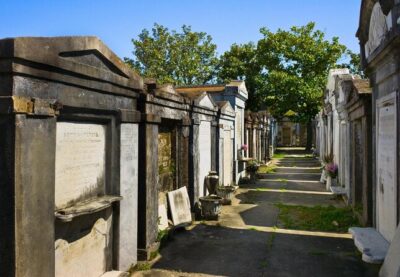
New Orleans Garden District History Walking Tour
Read our review →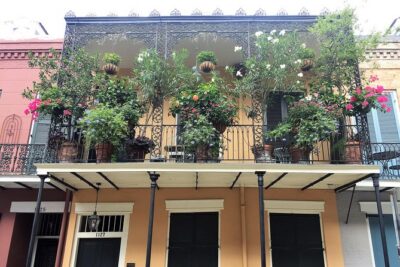
French Quarter Historical Sights and Stories Walking Tour
Read our review →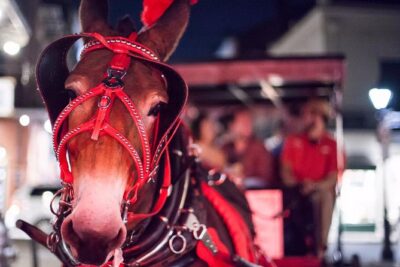
New Orleans Small-Group Haunted History Carriage Tour
Read our review →
Paddlewheeler Creole Queen Historic Mississippi River Cruise
Read our review →
Creole Queen History Cruise with Optional Lunch
Read our review →
Browse the lists this tour appears in