Reviewed · TOURS
New Orleans Pestilence, Pandemic and Plague Tour
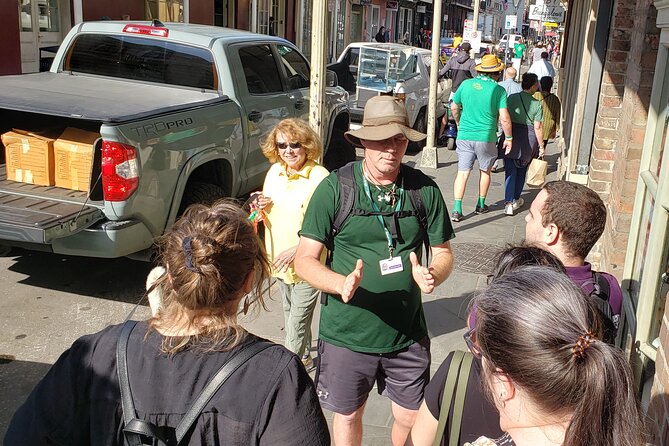
New Orleans has always had a complicated relationship with disease. On this two-hour walk, you’ll hear how epidemics shaped the city, then spot physical clues in the French Quarter that most visitors pass without a thought. I like the tour’s unusual subject and its mix of medical history with everyday New Orleans details. I also like that a guide handles the route, so you can focus on the stories instead of the map.
The main drawback is that the tour covers a lot in two hours. One person found the speaker hard to hear, and a group of up to 56 could make that issue worse. Bring water, wear good shoes, and stay near the guide, especially in the noisy French Quarter.
Key things to know before you book
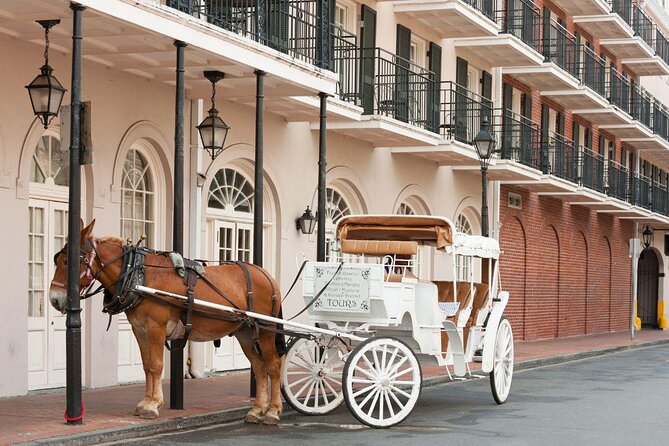
- Look closely at the city’s old infrastructure: The tour includes an explanation of in-ground garbage and other small details that change how you see the French Quarter.
- Expect more than grim stories: The subject includes disease, but the tone is educational, witty, and often surprisingly light.
- Start at 1:00 pm on Toulouse Street: The walk begins at 815 Toulouse Street and finishes at Bourbon Street and Dumaine Street.
- The Pharmacy Museum is part of the plan: Its history of strange medical practices gets about 20 minutes, but admission is not included.
- Guides shape the experience: Mikko, Dalvin, Dane, and Anderson are named in the tour feedback, with particular praise for humor, local detail, and adapting the walk to the group.
- Plan for a proper city walk: The tour lasts about two hours and requires a moderate level of fitness.
Why New Orleans disease history makes a good walking tour
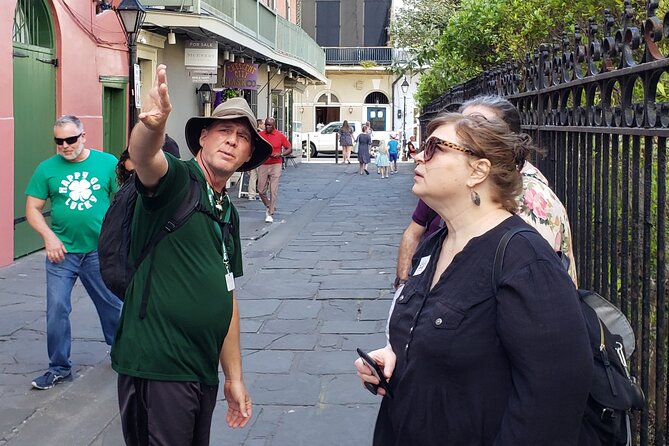
This is not a standard cemetery walk or a general French Quarter introduction. Its subject is the way pestilence, pandemics, and plague affected New Orleans, the United States, and the people who lived through them.
That gives you a different way to read the city. Disease is tied to housing, sanitation, medicine, public behavior, commerce, and government decisions. As you move through the French Quarter, the guide connects those broad subjects to streets and buildings around you.
I like that approach because it keeps the past from feeling sealed away in a museum. The stories are about old medical beliefs, but they also point to mistakes and habits that still matter today. One person with professional experience in outbreak response found plenty to learn, which suggests the tour can work for serious medical-history fans as well as curious first-time visitors.
The tone is not meant to be gruesome for its own sake. Dane was praised for making the subject fascinating without turning it into a parade of shock stories. Mikko brings sharp humor, including an unusual stop involving a garbage can, while still keeping the historical thread clear.
That balance matters in New Orleans. The city’s history includes suffering, but it also includes improvisation, humor, and a strong sense of place. This walk appears to use all three.
Other New Orleans outings people pair with this one:
- New Orleans Premier Ghost, Voodoo and Vampire Walking Tour
★ 4.5 · 12,856 reviews - New Orleans Steamboat Natchez Jazz Cruise with Dinner Option
★ 4.0 · 7,533 reviews - Adults-Only New Orleans Ghost, Crime, Voodoo, and Vampire Tour
★ 5.0 · 6,545 reviews
Beginning at the New Orleans Pharmacy Museum
The first stop is the New Orleans Pharmacy Museum, where you spend about 20 minutes learning how people approached illness before modern medicine became reliable.
You can expect stories about strange remedies and unusual medical thinking during past outbreaks. The museum gives the tour a useful starting point because it puts medical practice before you move into the streets. You begin with the tools, beliefs, and treatments of the period, then see how disease affected the wider city.
Admission is not included in the $37 tour price, so check the cost before you arrive if entering the museum is important to you. The scheduled stop is about 20 minutes, which means this is not a long museum visit. The focus is the history of medicine as it connects to the walking route.
There is also a practical point to keep in mind: the museum was closed on one tour date, so you should be prepared for the possibility that this stop may not operate exactly as planned. The walking experience continued with other French Quarter material, but you should not pay for museum entry separately unless you have confirmed it is open.
Jackson Square and the center of the French Quarter
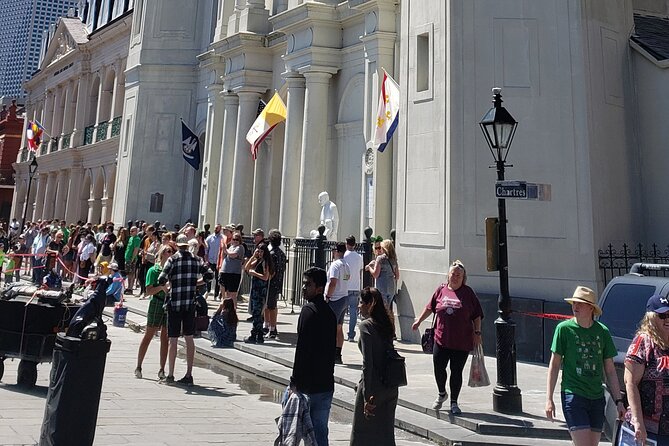
The walk then reaches Jackson Square, the central public space of the French Quarter. You spend about 20 minutes here, and there is no separate admission charge.
Jackson Square works well for this subject because it brings several parts of New Orleans together in one place. It is a major city landmark, but on this tour you are looking at it through the effects of disease and public health rather than simply taking photos of the buildings.
This is also a good point for the guide to connect city history with the wider national story. The tour covers outbreaks from earlier periods through the nineteenth and twentieth centuries and into the modern day. You will not get a full lecture on every epidemic, but you should expect a broad timeline with local examples.
The guide may also point out details you would miss on your own. Anderson, Dalvin, Dane, and Mikko have each been associated with the experience at different times. Their styles vary, but the strongest pattern is a mix of city knowledge, medical history, and quick humor.
Jackson Square is an open public space, so conditions can affect your comfort. New Orleans can be hot and humid. Dalvin made a point of allowing time to hydrate and rest, and water was provided at the beginning of one tour. Even so, I would carry your own water and use the shade when possible.
Eighty minutes of French Quarter details
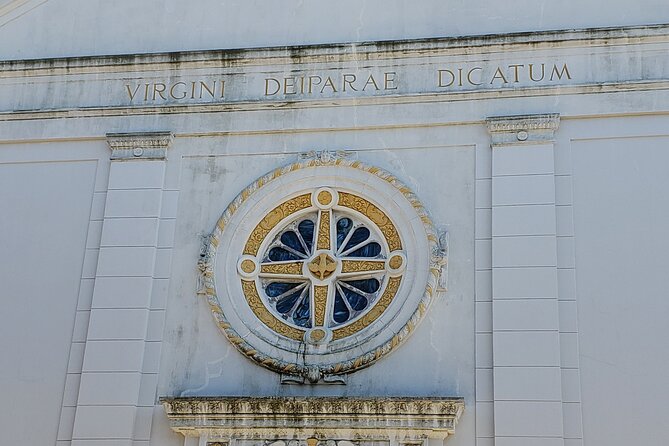
Most of the experience takes place across the French Quarter, with roughly 80 minutes devoted to stops connected to historic and recent pandemics and plague.
This is the part that gives the tour its value. You are not simply walking from one famous building to another. The guide uses the neighborhood as evidence, showing how disease affected daily life and how past choices left marks on the city.
The precise stops can vary, but the material includes obscure details about sanitation, street features, and the way people dealt with waste. The underground or in-ground garbage discussion is one example. It sounds like a small subject, but it gives you a fresh way to understand the neighborhood. After hearing it, you may look at railings, street surfaces, and other ordinary features with more suspicion.
That sort of detail is why this tour suits people who already know the French Quarter. You will still see familiar streets, but the guide gives them a new purpose. Instead of only asking where a building fits into local history, you start asking how people lived there, how illness spread, and what they believed would protect them.
The route ends at Bourbon Street and Dumaine Street. You are left in a central part of the French Quarter, close to the city’s best-known nightlife street. That makes the tour easy to pair with an afternoon meal, another walking route, or an evening plan.
A different side of New Orleans for another evening:
- New Orleans Food Walking Tour of the French Quarter with Small-Group Option
★ 5.0 · 6,118 reviews - New Orleans Swamp and Bayou Boat Tour with Transportation
★ 5.0 · 5,399 reviews - New Orleans Steamboat Natchez Jazz Cruise
★ 4.5 · 5,334 reviews - New Orleans City Sightseeing Hop-On Hop-Off Bus Tour
★ 4.5 · 4,943 reviews
The guides make or break the walk
A subject like this needs a strong guide. Medical history can become a list of dates and symptoms very quickly, especially when the group is standing outdoors in heat or street noise.
Mikko is repeatedly singled out for sharp humor, broad New Orleans knowledge, and the ability to make unusual subjects memorable. His style seems especially good for people who like odd details and quick exchanges. The garbage stop is a fine example of his approach: an ordinary object becomes part of the city’s public-health story.
Dalvin is praised for combining local knowledge with a clear grasp of the main topic. His approach includes obscure city details, opportunities to discuss ideas, and practical care in hot weather. If you prefer a guide who watches the group as well as the clock, that is useful.
Dane is associated with an entertaining, informative walk that treats the history of death and disease as serious without making the experience unpleasant. Anderson is praised for New Orleans history and for delivering good value during a tour that is not too long.
Because several guides lead the experience, your exact style may differ. That is not necessarily a problem. The shared strength is a clear interest in the subject and the city. The main thing you can do is stay close enough to hear.
One person had trouble hearing the speaker and found it easy to lose the thread. A group of up to 56 people is allowed, so the size of your departure may matter. If hearing every word is important to you, arrive early, stay near the guide, and speak up if street noise gets in the way.
What $37 buys you
At $37 per person, this is priced like a focused city walking tour rather than a full-day attraction package. You are paying for about two hours with a professional guide, not for museum admission, meals, or transportation.
I think the price works best for people who value interpretation. The French Quarter is free to walk, and you could pass Jackson Square without spending anything. The $37 pays for the connections: why a street detail matters, how medical beliefs changed, and how disease shaped the city.
The tour also has value if you have limited time. You cover a major neighborhood while following a clear theme. You do not have to plan a route between scattered sites or research each stop in advance.
The value is less certain if you want a conventional overview of New Orleans. This is a specialized subject, and a large portion of the walk is devoted to illness, sanitation, death, and medical mistakes. You should choose it because that subject interests you, not simply because it includes the French Quarter.
The experience is recommended by 96 percent of its audience and carries a 4.9 rating from 26 reviews. Those numbers point to a strong level of satisfaction, but they do not remove the practical concerns about weather, group size, and hearing the guide.
Who should book this experience
I would choose this tour if you like medical history, public health, social history, or the strange side of ordinary places. It is also a good fit if you have already seen the main French Quarter sights and want a subject that feels more specific.
Families can enjoy it, provided children are comfortable with discussions of disease and death. The tone is not described as grim or gross, but the material is still about suffering and mortality. A family that enjoys history and asks questions will get more from it than a group looking for light entertainment.
Solo visitors should find the format manageable. One solo booking became a one-to-one walk, allowing the guide to set the pace and tailor the material. You should not assume every departure will be private, but the guide may adjust the experience to the group.
It can also suit people who want a short walking activity before dinner. The two-hour length gives you a focused afternoon plan without taking over the day. The 1:00 pm start may be comfortable in cooler months, while summer heat makes water, light clothing, and sensible pacing more important.
You should be able to walk for two hours at a moderate level. Comfortable shoes are essential. Service animals are allowed, and the start is near public transportation.
Practical details that affect your day
The meeting point is 815 Toulouse Street, New Orleans, Louisiana 70112. The tour starts at 1:00 pm. The walk ends at Bourbon Street and Dumaine Street, New Orleans, Louisiana 70116.
The end point is useful because you can continue exploring on foot. It also means you should not expect to finish where you began, so plan your next stop from the Bourbon and Dumaine area.
The experience is offered in English and uses a mobile ticket. Confirmation arrives when you book. The maximum group size is 56 people, though actual departures may be smaller.
Wear comfortable shoes and bring water. The route includes outdoor standing and walking, and New Orleans weather can be demanding. If the day is hot, make use of shade and rest when offered.
The tour has free cancellation up to 24 hours before its start time for a full refund. Cancellation within 24 hours is not refundable, and changes inside that window are not accepted. The cut-off follows local New Orleans time.
Final call: book it for the subject, not just the route
You should book the Pestilence, Pandemic and Plague Tour if you want New Orleans history with an unusual angle. The best parts are the specific street details, the medical stories, and guides such as Mikko, Dalvin, Dane, and Anderson who add humor and local color.
I would be cautious if you dislike discussions of disease or need a quiet, small-group setting. The subject is specialized, the group can reach 56 people, and one person had trouble hearing. Still, at $37 for two hours of guided history in the French Quarter, it offers a fair deal for curious minds.
This is a good choice for the visitor who wants to stop seeing the French Quarter as scenery alone. Bring water, keep close to the guide, and be ready to look twice at the city’s garbage, railings, streets, and public spaces.
FAQ
How long is the Pestilence, Pandemic and Plague Tour?
The tour lasts approximately two hours.
What time does the tour start?
The tour starts at 1:00 pm.
Where does the tour begin?
The meeting point is 815 Toulouse Street, New Orleans, Louisiana 70112.
Where does the tour end?
The tour ends at Bourbon Street and Dumaine Street in the French Quarter.
Is admission to the New Orleans Pharmacy Museum included?
No. Admission to the Pharmacy Museum is not included in the tour price.
Is the tour offered in English?
Yes. The experience is offered in English.
How far in advance can I cancel for a full refund?
You can cancel at least 24 hours before the start time for a full refund. Cancellations within 24 hours are not refundable.
Newest New Orleans tours we have written up
- New Orleans : Garden District Architecture Walking tour★ 4.8 · 5 reviews
- Ultimate Denver Day Out: Red Rocks, City Views & Ice Cream★ 5.0 · 7 reviews
- From New Orleans: Whitney and Laura Guided Plantation Tour★ 4.9 · 20 reviews
- Whitney Plantation and Soul of New Orleans City Tour Combo★ 5.0 · 13 reviews
- Treme Bar Crawl & Seafood Experience★ 4.2 · 7 reviews
- True Voodoo History of NOLA’s Congo Square with Local Guide★ 4.9 · 16 reviews
- Witches Coven Walking Tour in New Orleans★ 5.0 · 49 reviews
- Whitney Plantation Tour with Transportation★ 4.0 · 29 reviews
Tours, compared.
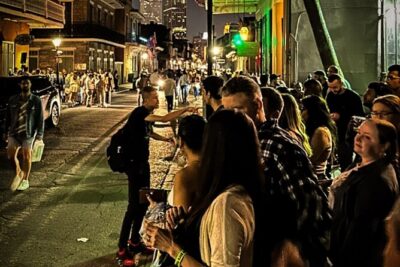
New Orleans Premier Ghost, Voodoo and Vampire Walking Tour
Read our review →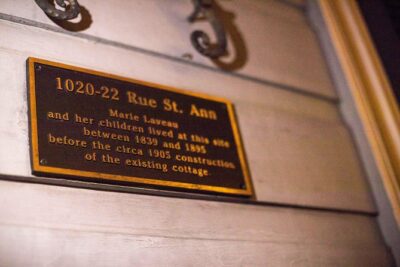
Adults-Only New Orleans Ghost, Crime, Voodoo, and Vampire Tour
Read our review →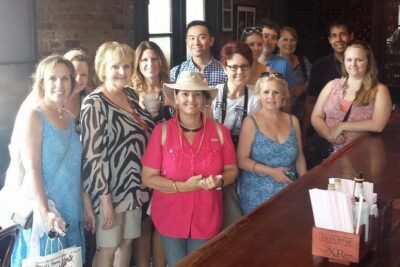
New Orleans Food Walking Tour of the French Quarter with Small-Group Option
Read our review →
New Orleans Swamp and Bayou Boat Tour with Transportation
Read our review →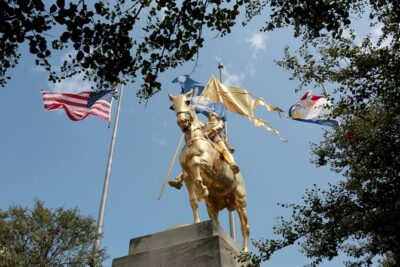
New Orleans City Sightseeing Hop-On Hop-Off Bus Tour
Read our review →
St. Louis Cemetery No. 1 Official Walking Tour
Read our review →
Swamp Boat Ride and Oak Alley Plantation Tour from New Orleans
Read our review →