
Reviewed · NEW ORLEANS FRENCH QUARTER TOURS
New Orleans: French Quarter Food History Walking Tour
The best part of this French Quarter tour is the way a plate of gumbo or red beans and rice becomes a lesson in New Orleans history. You walk from 316 Chartres Street to Toulouse Street, stopping at restaurants, candy shops, a hot sauce bar, and small local food spots along the way.
I like the broad food lineup, especially the chance to try both the muffuletta and the po-boy in one morning or afternoon. I also like the guides’ role: Beth, Gary, John, Meg, Cat, and others are praised for making the history lively without turning the walk into a lecture. The drawback is the fixed menu. If you avoid seafood, alligator, gluten, dairy, or meat, several tastings may not work for you.
Key points at a glance
- Up to eight or nine tastes: Gumbo, catfish po-boy, muffuletta, boudin balls, red beans and rice, praline, hot sauce, and banana Foster bread pudding form the core lineup.
- A food history lesson: Your guide connects Louisiana dishes with the people, cultures, and events that shaped New Orleans.
- A real French Quarter walk: The route covers several short blocks between Chartres Street and Toulouse Street, with about three hours on foot.
- Vegetarian choice available: Black-eyed pea soup, vegetable jambalaya, portobello po-boys, and other meat-free versions replace the standard menu.
- Guides make the difference: Beth, Gary, John, Meg, Cat, and the guide known as the Professor are repeatedly praised for humor, storytelling, and a good walking pace.
- Come hungry: The portions add up. Several people found the food sufficient for a full meal, not just a few token bites.
Why this tour works as a first taste of New Orleans
New Orleans food can feel like a puzzle at first. Gumbo, boudin, pralines, po-boys, muffuletta, and red beans and rice all have different roots, textures, and uses. This tour gives you a way into that menu without asking you to choose one restaurant and hope for the best.
The food comes in a sensible order. You begin with savory dishes, move through sandwiches and classic sides, then finish with dessert. Along the way, your guide explains how local cooking developed and ties each dish to the city’s cultural past.
That connection matters. You are not simply sampling a bowl of soup and moving on. You learn why gumbo belongs in Louisiana, how seafood became central to local cooking, and why the po-boy and muffuletta are such important New Orleans sandwiches. The best guides, including Beth, Gary, John, and Meg, use stories and personal knowledge of the French Quarter to make those links easy to remember.
I would book this early in your stay. You get a useful introduction to the city’s food vocabulary, plus ideas for where to eat later. You also avoid spending your first night guessing between a dozen menus filled with unfamiliar terms.
More French Quarter tours in New Orleans:
- New Orleans Food Walking Tour of the French Quarter with Small-Group Option
★ 5.0 · 6,118 reviews - New Orleans French Quarter, Voodoo and Culture Walking Tour
★ 4.5 · 2,961 reviews - French Quarter Historical Sights and Stories Walking Tour
★ 5.0 · 2,724 reviews
Starting at 3rd Block Depot with Cajun-style gumbo
Meet your guide inside 3rd Block Depot at 316 Chartres Street. This is the first food stop, not merely a place to gather outside, so arrive ready to begin with a substantial taste.
The opening dish is rustic, Cajun-style gumbo served with warm potato salad. Gumbo is a good first course because it shows how New Orleans cooking balances broth, seasoning, meat or seafood, and filling side dishes. The potato salad adds another local touch and gives you something cool and creamy alongside the stew.
The first stop also sets the tone for the tour. Your guide talks while you eat, and the focus is on how food connects to New Orleans culture. One practical note: the staff at this first location may be working while the group gathers, and one person found the restaurant noise distracting during the opening talk. If hearing every word matters to you, stand close to the guide.
Hot sauce, pralines, and the sweet side of Creole cooking
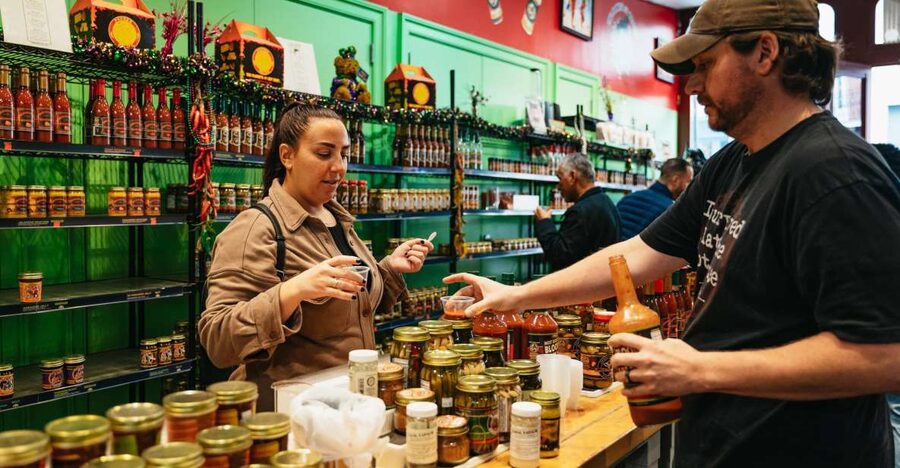
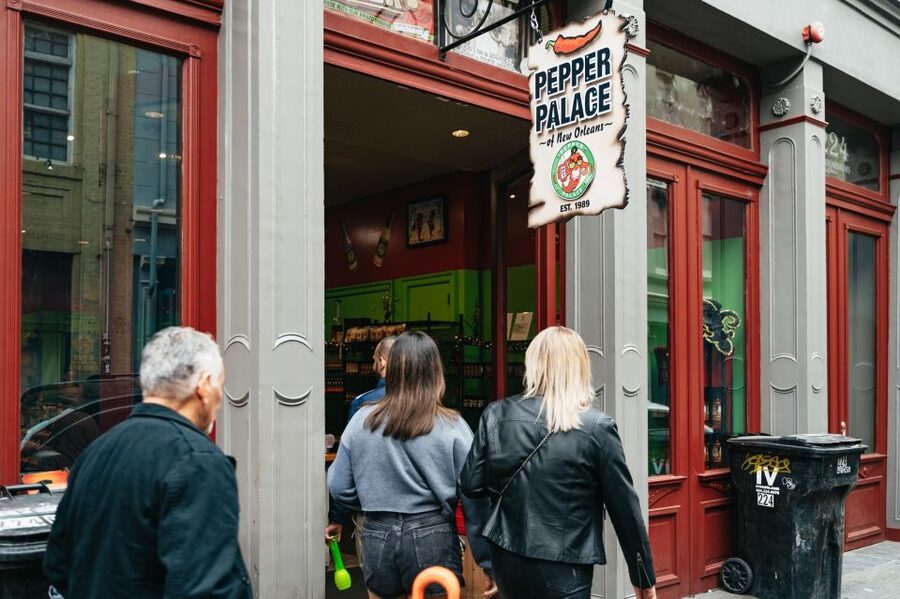
After a short walk of about five minutes, the group heads to a hot sauce bar. You can sample a large selection of fiery sauces, with dozens of varieties available to taste. This is a fun stop, but take the warning seriously: the sauces vary in heat, and one participant ended up needing milk after trying a particularly strong sample.
The hot sauce stop gives your guide room to discuss seasoning and the bold flavors associated with Louisiana food. It also breaks up the heavier dishes. You are not eating a full serving of every item, but the food comes often enough that you should avoid a large meal before the tour.
Next comes Leah’s Pralines. Here you try a classic Creole praline or the bacon pecan brittle option. Pralines show the sweeter side of the city’s food traditions, with nuts and sugar providing a sharp contrast to gumbo and hot sauce.
This is one of the better examples of the tour’s range. You move from a bowl of savory stew to intense chili heat, then to candy. It keeps the three-hour walk from feeling like a long restaurant crawl focused on the same kind of food.
Catfish po-boy and the seafood tradition
A walk of roughly five minutes brings you to NOLA Poboys. Here, the focus shifts to the po-boy and the importance of seafood in Louisiana cooking.
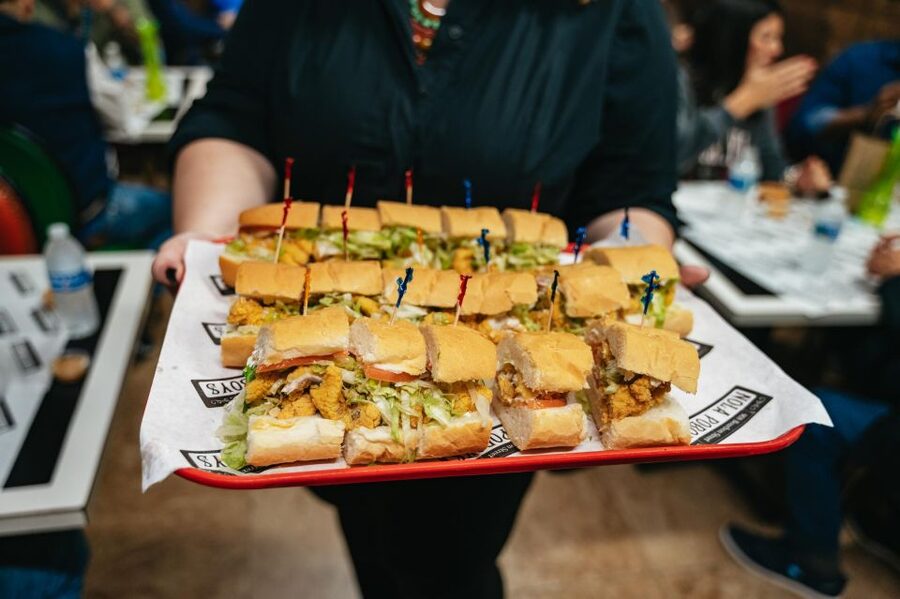
The tasting is a freshly fried catfish po-boy. This is not just a sandwich with a local name. It gives you a practical way to notice the contrast between crisp fried fish, bread, and the sandwich’s seasoning. Your guide also explains the broader po-boy tradition and how seafood fits into the food culture of the state.
This stop may be less comfortable for people who do not eat seafood. One person who avoided seafood and alligator could not eat some of the standard tastings. The vegetarian version includes a portobello po-boy, but you need to request the vegetarian option when booking.
The route then continues on foot for about ten minutes. The walks are short by city standards, but the weather can change the experience. The tour runs rain or shine, and New Orleans heat and humidity can make even an easy walk feel demanding. Wear light clothing, bring sun protection, and choose practical shoes.
A few more New Orleans tours worth comparing
- New Orleans Food and History Walking Tour
★ 5.0 · 1,544 reviews - New Orleans French Quarter Food Tour: Cajun, Creole and Culture
★ 5.0 · 1,246 reviews - French Quarter walking Food Tour Famous Flavors of New Orleans
★ 5.0 · 1,115 reviews - New Orleans Cocktail and Food History Tour
★ 5.0 · 819 reviews
Muffuletta and boudin balls in the French Quarter
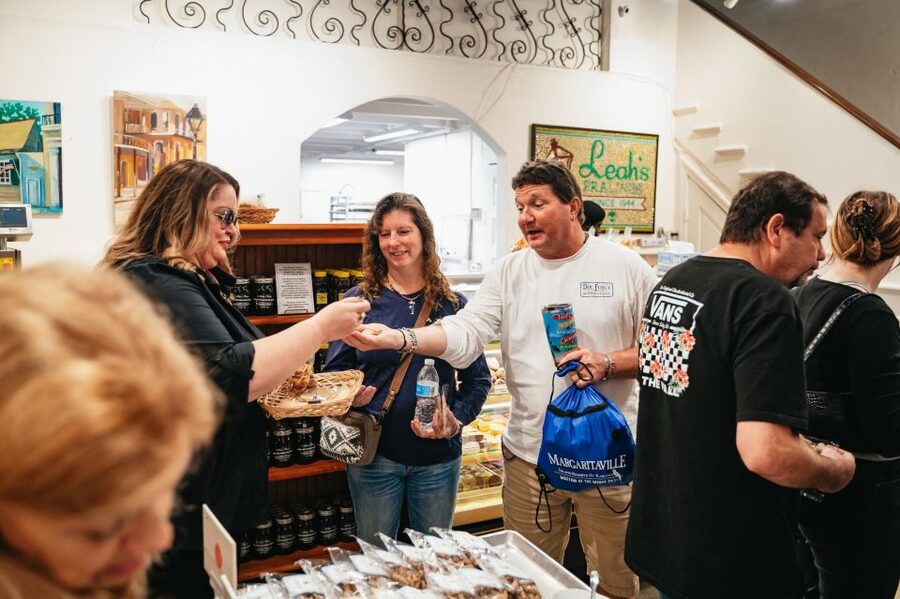
The next food stretch brings two distinctly New Orleans tastes: the muffuletta sandwich and boudin balls.
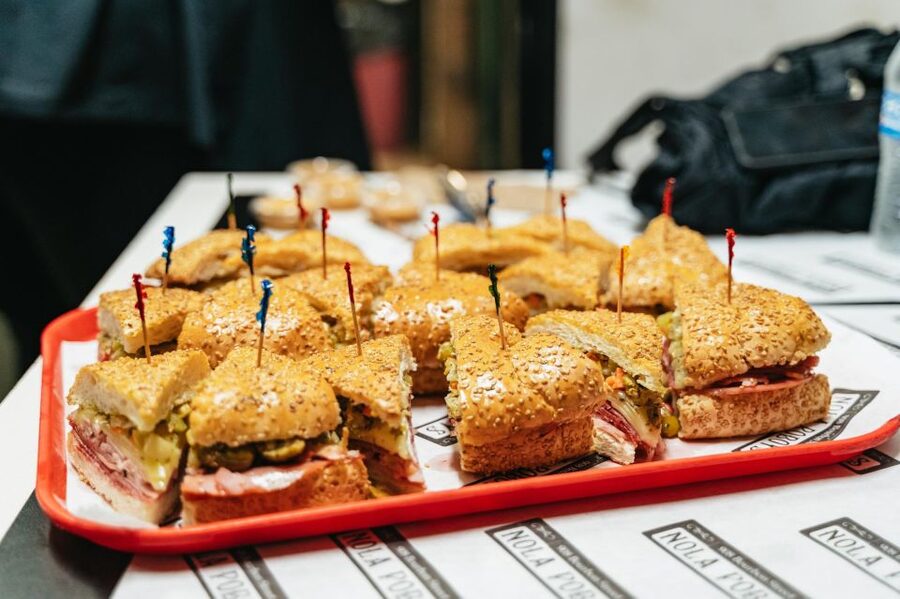
The muffuletta is a meaty sandwich, usually recognized for its round bread and savory filling. It is a useful contrast to the po-boy. Instead of comparing two versions of the same sandwich, you get a look at two different local formats, each with its own character.
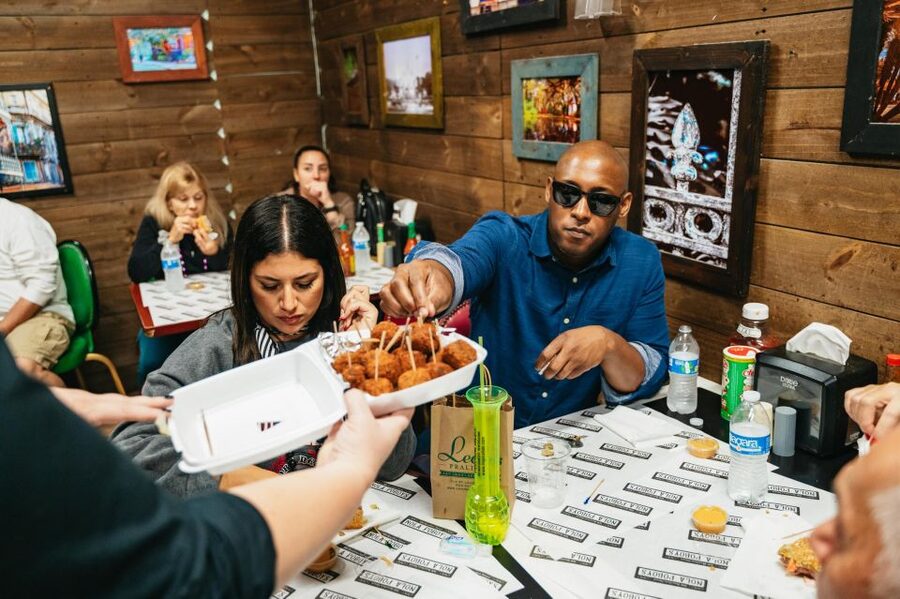
Boudin balls offer another change in texture. Boudin is a Louisiana sausage mixture, and the fried ball format turns it into an easy tasting portion. If you are new to Louisiana food, this is exactly the kind of dish that can be hard to identify from a menu alone. Trying it with a guide nearby makes the experience less uncertain.
The timing here matters. The food is served in several stages, and the portions are larger than tiny samples. People who arrived very hungry often left full. I would eat a light breakfast or lunch beforehand, not skip food all day, unless you are comfortable with a heavy three-hour tasting session.
Red beans and rice at Creole Cookery
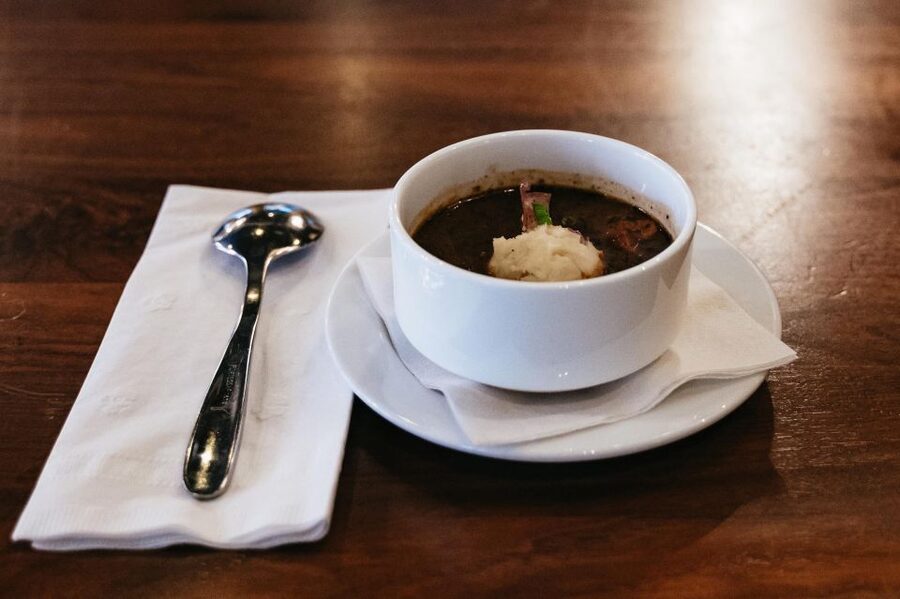
The route continues to Creole Cookery for red beans and rice. This dish is one of the most familiar New Orleans staples, and it earns its place because it shows how filling, affordable ingredients became part of local cooking.
Your guide can place the dish within the broader food culture of the city, rather than treating it as just another side. It is hearty, seasoned, and substantial after the sandwich tastings. One person singled it out as a favorite, and it is easy to see why: by this point, the warm bowl feels like comfort food.
The restaurant stops also give you a chance to sit down or pause between walking sections, though the experience still involves moving through several businesses. It is not a long meal in one restaurant. Think of it as a guided sequence of tastings with short walks and history talks between them.
Banana Foster bread pudding to finish
The final tasting is bananas Foster bread pudding. It ends the route on a warm, sweet note and gives the group a dessert after the savory food.
This is a particularly useful finish because dessert portions can make the difference between leaving satisfied and leaving stuffed. Several people found the overall amount of food generous, and the banana dessert was mentioned as a favorite alongside the gumbo.
The tour ends on Toulouse Street in the French Quarter, rather than returning to Chartres Street. That is convenient if you plan to continue exploring the area, but it means you should know where you are going next. Your guide may offer restaurant suggestions, and guides such as Mike were praised for sharing ideas about other places to visit.
What the guides add to the three-hour walk
The guide is the main variable in any history and food tour, and this experience appears to rely heavily on that person’s storytelling style.
Beth is repeatedly described as warm, funny, and deeply familiar with New Orleans culture. Gary is praised for tying food to the city’s history and explaining the region clearly. John, sometimes called the Professor, is known for a patient style and a large store of local stories.
Meg and Cat are also praised for keeping the group engaged, including in hot weather or with quieter groups. Mike is noted for answering questions, walking at a comfortable pace, and giving useful suggestions for the rest of a New Orleans visit.
You should not expect every guide to perform in exactly the same way. Some are more energetic, while others focus on clear explanations and conversation. The consistent strength is the connection between food and place. The guide is not simply naming dishes. The goal is to explain why they matter.
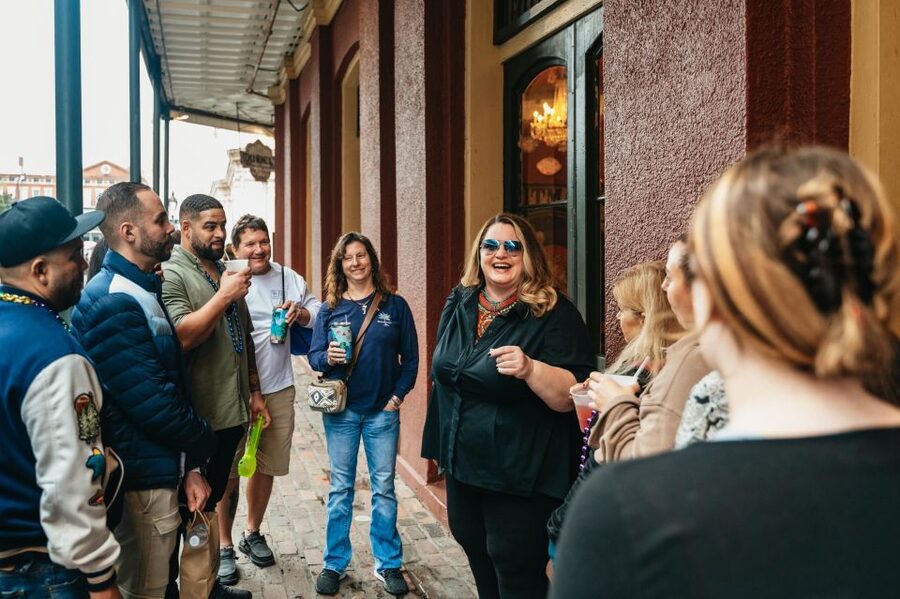
The tour is conducted in English. With a group size capped at nine, the format should allow questions and a more personal exchange than a large coach excursion.
Vegetarian choices and food restrictions
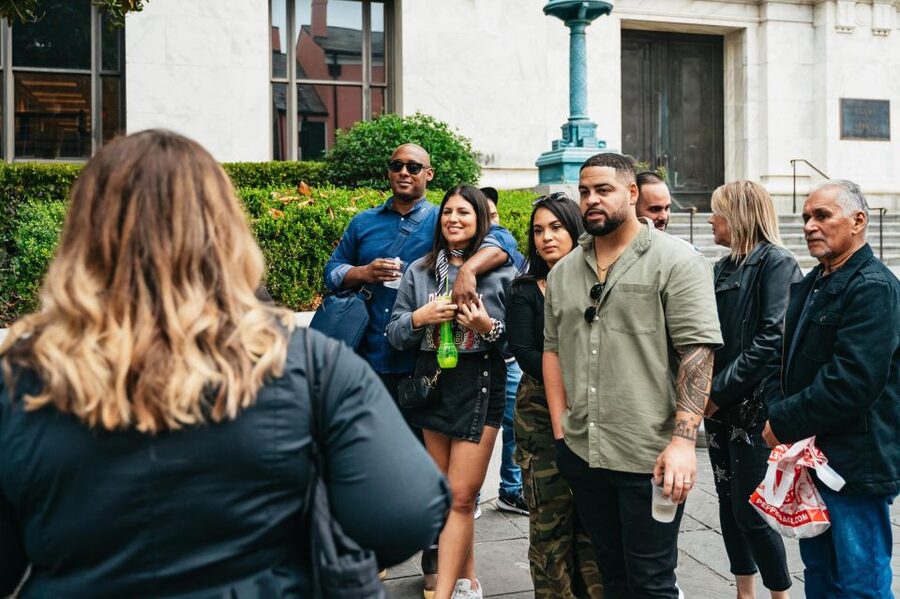
The vegetarian menu includes black-eyed pea soup, vegetable jambalaya, portobello po-boys, and other meat-free versions of Southern classics. This is a meaningful alternative, not just a plate of salad added at the last moment.
You must request the vegetarian option at checkout. Pescatarians have also found the food workable, but the standard menu includes seafood and meat, so state your needs clearly when booking.
The tour does not offer gluten-free, dairy-free, or vegan menus. People with food allergies should notify the provider when booking. The provider asks you to identify allergies, not general dislikes or preferences.
This distinction matters because the tasting sequence is planned in advance. If you simply dislike seafood, alligator, or another ingredient, you may not receive a replacement. The safest choice is to book only if the listed menu fits your diet, or contact the provider before paying.
Is $85 a fair price?
At $85 per person, this is not the cheapest way to eat in the French Quarter. You could buy individual snacks for less, especially if you are happy to choose restaurants on your own.
The price makes more sense when you count the complete package: three hours with a guide, up to eight food samples, stops at several restaurants and shops, water, and tips for servers and waitstaff. You are also paying for the explanation behind the food and for the convenience of moving between places without planning the route yourself.
The portions appear large enough to replace a meal for many people. That improves the value, especially if you use the tour to decide where to return for a full dinner. The value is weaker if you do not eat seafood or meat, cannot handle gluten or dairy, or mainly want a formal history walk with only one or two tastes.
Alcohol and soft drinks cost extra. Most stops have fully stocked bars, so you can buy a drink if you want one, but those purchases are not covered in the price.
Walking, weather, and practical comfort
The walk covers several French Quarter blocks and includes sections of five and ten minutes between stops. The route lasts three hours, with food, talks, and pauses built into the timing.
New Orleans weather is part of the decision. The tour runs in rain, and past groups have found the heat and humidity noticeable. Bring water, although water is included, and wear shoes that will stay comfortable on city streets.
The activity information describes the tour as wheelchair accessible, but it also lists it as not suitable for people with mobility impairments. That is a conflict worth clarifying directly with the provider before booking. The route includes several walks between restaurants, and the exact conditions at each stop may matter.
Free cancellation is available up to 24 hours before the start, and you can reserve now and pay later. Those terms are useful if your schedule is still shifting, but they do not solve menu restrictions or mobility concerns.
Who should book this French Quarter food tour?
I would recommend it to first-time visitors who want a quick, guided introduction to New Orleans food. It also suits couples, families with older children, and anyone who prefers a small group and a clear route rather than picking restaurants at random.
It is especially useful if you want both food and history. Guides regularly connect the dishes with local culture, and the mix of restaurants, candy shops, hot sauce, and street food keeps the experience varied.
I would skip it if you need a vegan, gluten-free, or dairy-free menu. I would also think twice if you dislike fixed tastings or want full portions at one sit-down restaurant. The experience is generous, but it is still a shared food walk with a set sequence.
Should you book it?
Book this tour if you want to eat your way through the French Quarter while learning why the dishes matter. The best reasons are the wide spread of food, the small group size, and guides such as Beth, Gary, John, Meg, and Cat, who bring humor and clear local stories to the route.
Come hungry, but not uncomfortably so. Request the vegetarian menu in advance, disclose allergies, prepare for heat or rain, and be realistic about the fixed food choices. For an $85 introduction to gumbo, po-boys, muffuletta, boudin, pralines, and red beans and rice, the value is good if you will eat most of the menu and use the tour as a starting point for the rest of your New Orleans visit.
FAQ
How long does the New Orleans food tour last?
The tour lasts three hours.
Where does the tour begin?
Meet your guide inside the 3rd Block Depot restaurant at 316 Chartres Street in the French Quarter.
Where does the tour end?
The tour finishes on Toulouse Street in New Orleans.
How many food tastings are included?
The tour includes up to eight food samples. The food lineup can include gumbo, hot sauce, pralines or bacon pecan brittle, catfish po-boy, muffuletta, boudin balls, red beans and rice, and banana Foster bread pudding.
Is a vegetarian menu available?
Yes. The vegetarian option includes black-eyed pea soup, vegetable jambalaya, portobello po-boys, and other meat-free versions of Southern classics. Request it at checkout.
Is there a vegan option?
No. The tour does not offer a vegan menu.
Can people with gluten or dairy intolerance join?
The tour does not offer gluten-free or dairy-free options. Contact the provider before booking if you have an allergy or serious dietary need.
Are drinks included?
Water is included. Alcoholic drinks and soft drinks are not included, though most restaurant stops have bars where you can buy beverages.
Is the tour conducted in English?
Yes. The tour has a live English-speaking guide.
What happens if it rains?
The tour runs rain or shine. Dress for the forecast and wear comfortable walking shoes.
Can I cancel the booking?
You can cancel up to 24 hours in advance for a full refund. You can also reserve now and pay later.
More Historical Tours in New Orleans
- New Orleans Garden District History Walking Tour
★ 5.0 · 2,879 reviews - New Orleans Small-Group Haunted History Carriage Tour
★ 4.5 · 2,289 reviews - New Orleans Haunted History Ghost Tour
★ 4.5 · 2,084 reviews - Paddlewheeler Creole Queen Historic Mississippi River Cruise
★ 4.5 · 1,948 reviews
More Food in New Orleans
- French Quarter walking Food Tour: Signature Tastes of New Orleans
★ 4.5 · 592 reviews - French Quarter Small-Group Cocktail and Foodie Crawl
★ 5.0 · 519 reviews - The Premier New Orleans Food Tour
★ 4.5 · 398 reviews - New Orleans: Beloved Bites & Famous Dishes Food Tour
★ 4.8 · 239 reviews
Newest New Orleans tours we have written up
- 45-Minute Garden District Highlights Tour in New Orleans★ 5.0 · 33 reviews
- New Orleans City and Swamp Helicopter Tour★ 5.0 · 9 reviews
- 45-Minute Marigny Triangle Highlights Tour in New Orleans★ 5.0 · 12 reviews
- 20 Passenger New Orleans Airport or Hotel Transfer★ 5.0 · 6 reviews
- Private New Orleans 2-Hour Sail Aboard a Luxury Yacht★ 5.0 · 44 reviews
- 11 Passenger Executive Van: New Orleans Airport or Hotel Transfer★ 4.0 · 8 reviews
- The New Orleans Darkness Tour★ 4.4 · 9 reviews
- Spooky Family Ghost Tour★ 3.4 · 9 reviews
New Orleans French Quarter Tours, compared.
New Orleans Food Walking Tour of the French Quarter with Small-Group Option
Read our review →
New Orleans French Quarter, Voodoo and Culture Walking Tour
Read our review →
French Quarter Historical Sights and Stories Walking Tour
Read our review →
Ghost and Vampire Walking Tour Of The French Quarter
Read our review →
New Orleans City Tour: French Quarter, Garden District & Cemetery
Read our review →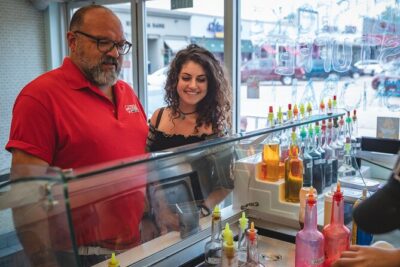
New Orleans French Quarter Food Tour: Cajun, Creole and Culture
Read our review →
New Orleans French Quarter and More Carriage Ride
Read our review →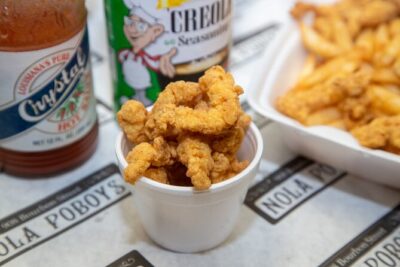
French Quarter walking Food Tour Famous Flavors of New Orleans
Read our review →Browse the lists this tour appears in