
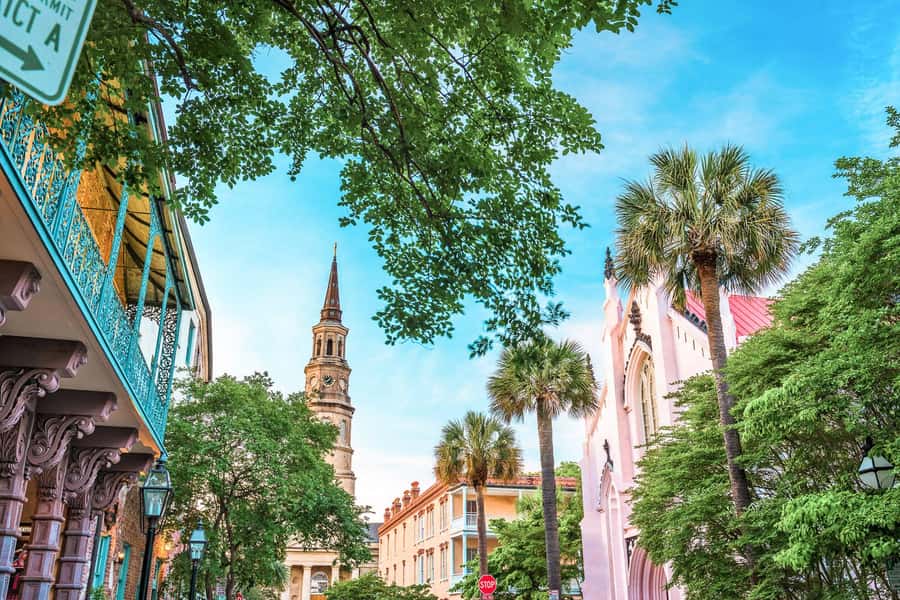
Reviewed · NEW ORLEANS FRENCH QUARTER TOURS
New Orleans: French Quarter Walking Tour
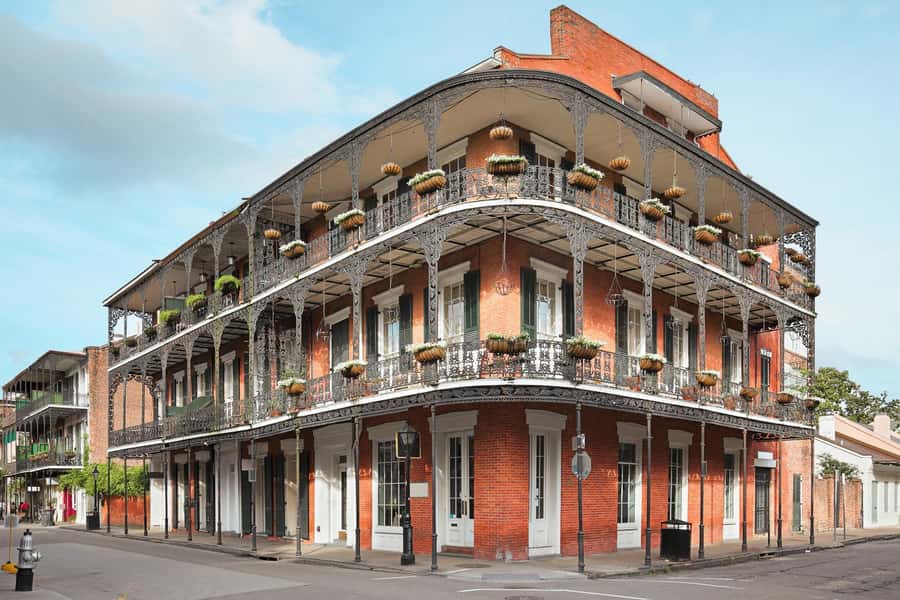
New Orleans reveals its character in layers: French and Spanish rule, Sicilian immigration, traditional jazz, devastating fires, slavery, and the constant threat of hurricanes. This two-hour French Quarter walk links those stories to real buildings, so you are not just staring at balconies and taking pictures.
I like the stop at the former St. Louis Hotel and Exchange, where thousands of Africans were sold into slavery. I also like the way the route connects Danny Barker’s work in preserving traditional jazz with Preservation Hall, giving you more than the usual party-town version of New Orleans.
The main drawback is the pace. Two hours is enough for a strong introduction, not a full study of the French Quarter, and the walk takes place rain or shine. Wear solid shoes, dress for the weather, and remember that food and drinks are not included.
Key points to know before you book
- Cafe du Monde gives the walk a tasty opening: You can watch the famous beignets being made, though your food and drink are not included.
- The route covers hard history: Former slave markets and the St. Louis Hotel and Exchange are treated as central parts of New Orleans, not side notes.
- Danny Barker links the streets to jazz: You pass his former home and finish near Preservation Hall, a major home of traditional jazz.
- One careless fire changed the city: The house connected with Vincente Nunez helps explain the Great Fire of 1788, which destroyed about 80 percent of New Orleans.
- Hurricanes are part of the story: You learn how the city has tried to protect itself, including the deadly impact of Katrina.
- Regine has earned strong praise: Her tours are described as personal, full of useful history, and generous with tips for the rest of your time in New Orleans.
Starting beside Jackson Square
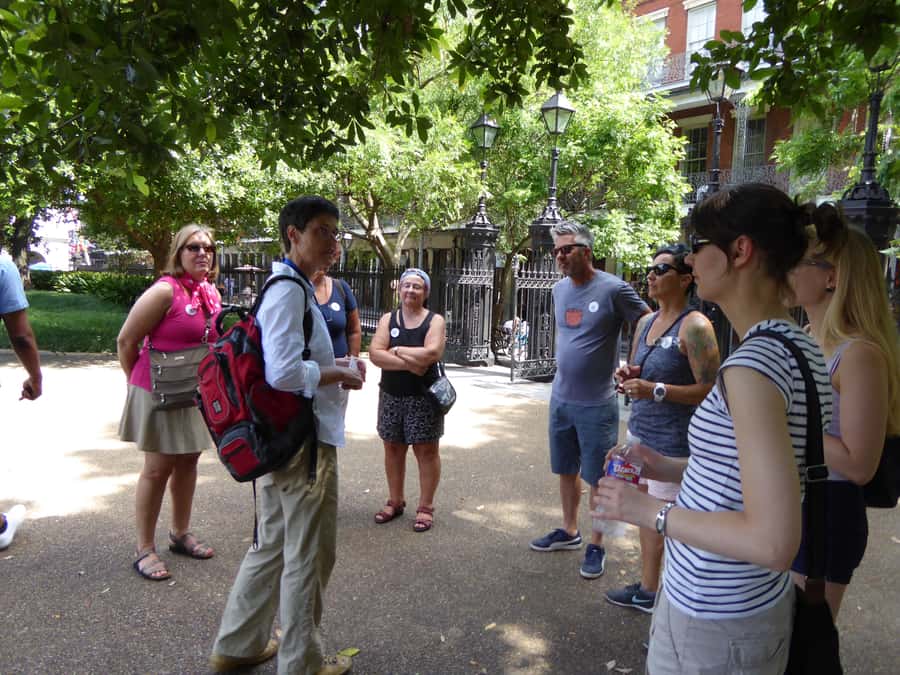
The walk begins at 529 St. Ann Street, beside Jackson Square and near the lower Pontalba Rowhouse. The old Louisiana Welcome Center once occupied the meeting point, but Fives Bar now operates in that storefront, so do not expect to see a current welcome-center sign.
Look for the licensed 504tours guide in front of the space. It is mid-block on St. Ann Street, about half a block from Chartres Street. This section of St. Ann is a pedestrian zone, and the location is to the left of Jackson Square when you face the Mississippi River.
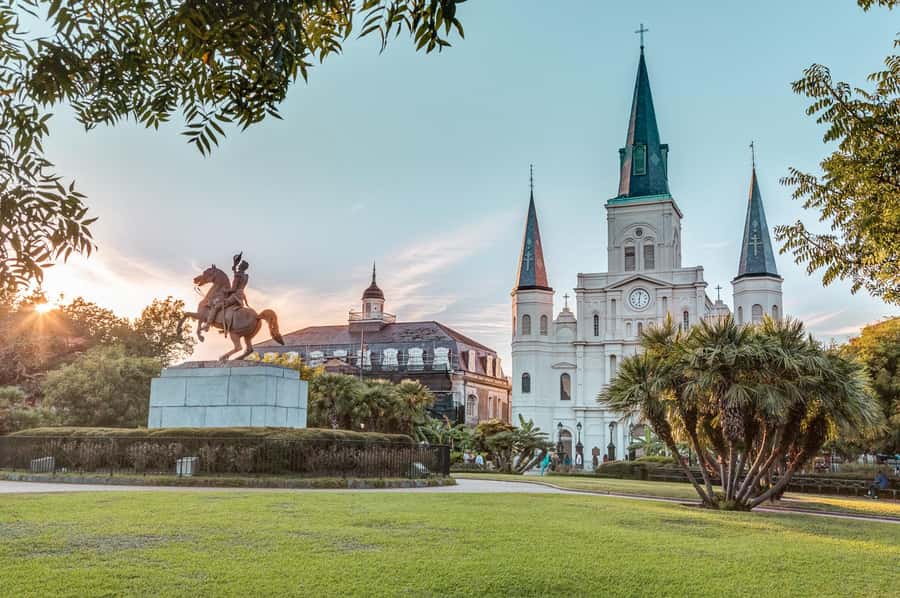
Jackson Square is a sensible place to begin. Once used as a parade ground, it now gathers musicians, tarot readers, and street performers. You get an immediate feel for the French Quarter’s mix of formal architecture and freewheeling street life before the guide starts filling in the background.
The setting also helps you get your bearings. The route moves downriver along the old French Market before circling through the lower French Quarter and returning to Jackson Square. Since the route ends where it begins, you can easily continue sightseeing, find lunch, or return to a nearby hotel afterward.
More French Quarter tours in New Orleans:
- New Orleans Food Walking Tour of the French Quarter with Small-Group Option
★ 5.0 · 6,118 reviews - New Orleans French Quarter, Voodoo and Culture Walking Tour
★ 4.5 · 2,961 reviews - French Quarter Historical Sights and Stories Walking Tour
★ 5.0 · 2,724 reviews
Cafe du Monde and the old French Market
One early highlight is the chance to watch how beignets are made at Cafe du Monde. These square pastries, covered with powdered sugar, are among New Orleans’ best-known foods. The point here is not just to eat something sweet. It is to see how food, commerce, and public life meet around the French Market.
Food is not included in the $50 price, so plan to buy your own beignet or coffee if you want one. That small extra cost is worth keeping in mind when you compare this walk with tours that include tastings.
The old French Market also helps explain why this part of town has always been more than a row of pretty buildings. It was a place for trade and public exchange, and the guide uses the area to connect the city’s architecture with the people who built its economy.
You should expect a walking tour rather than a stop-by-stop attraction visit. The route keeps moving, and some sites are viewed from outside. That is useful if you want a broad introduction, but less suitable if your main goal is long indoor visits.
Ursuline Convent and the city’s early years
The walk continues to the Ursuline Convent, described as the oldest building from the colonial period in the Mississippi Delta. Its story brings the city’s early years into focus through the women who came to New Orleans in the early 1700s.
These nuns were not simply sheltered figures behind convent walls. They faced a demanding frontier setting and took on a life far from Europe. Their presence adds an important piece to the usual French Quarter story, which often focuses too heavily on restaurants, nightlife, and decorative ironwork.
I like this part of the route because it shows how New Orleans developed through institutions as well as individual characters. The convent gives you a quieter pause after the activity around Jackson Square and the market.
The walk does not present the French Quarter as a museum frozen in time. It shows how buildings were reused, how different communities shaped the city, and how modern businesses now occupy spaces with difficult and complicated pasts.
Danny Barker, jazz, and Sicilian macaroni makers
Next, you pass the former home of Danny Barker, a banjo player who played a major role in preserving traditional jazz. Barker matters because New Orleans jazz is not only about famous trumpet players and historic clubs. It also depends on musicians who kept older styles alive and passed them to new generations.
The route later reaches Preservation Hall, widely regarded as the city’s holy grail for traditional jazz. Even if you are not planning to attend a performance, seeing the place gives the music a physical address. It also makes the earlier stop at Barker’s home feel connected to the city’s wider musical life.
Between those jazz landmarks, you come across one of the lower French Quarter’s former macaroni factories. This is a useful reminder of the large role Sicilian immigrants played in New Orleans. The French Quarter’s identity was shaped by more than its original French and Spanish connections.
I appreciate this sequence because it avoids treating culture as a list of isolated curiosities. A musician’s home, an old food factory, and a performance hall each show a different way people made a life here. You get food, work, and music in the same short stretch of city streets.
A few more New Orleans tours worth comparing
- New Orleans Premier Ghost, Voodoo and Vampire Walking Tour
★ 4.5 · 12,856 reviews - St. Louis Cemetery No. 1 Official Walking Tour
★ 4.5 · 3,941 reviews - New Orleans Garden District History Walking Tour
★ 5.0 · 2,879 reviews - Ghost and Vampire Walking Tour Of The French Quarter
★ 4.5 · 2,406 reviews
The Great Fire of 1788 at Vincente Nunez’s house
The story takes a darker turn at the house associated with Vincente Nunez, a Spaniard whose carelessness caused the Great Fire of 1788. The blaze destroyed about 80 percent of the city, making it one of the events that changed New Orleans’ physical form.
This is the kind of stop that makes a walking tour more useful than a quick architectural stroll. You begin to understand why the French Quarter has such a strong Spanish imprint, even though its name and early identity are tied to France.
The building itself may not look dramatic compared with the Quarter’s grander houses. That is part of the lesson. Major events often connect to ordinary rooms and streets, not only to monuments designed to announce their importance.
The fire also gives the guide a natural way to discuss rebuilding, survival, and the city’s repeated need to adapt. New Orleans has faced fire, flood, storms, and political change. The tour keeps those forces tied to the streets around you.
Former slave markets and the St. Louis Hotel
The most important part of the walk for many people will be the discussion of slavery. You pass several former slave markets and learn about Jean Francois Merieult, a powerful Creole businessman and slave trader.
You also visit the former St. Louis Hotel and Exchange, where thousands of Africans were sold into slavery. This site can be easy to miss if you explore the Quarter only through food, music, and architecture. Including it gives you a more honest understanding of how wealth was built in New Orleans.
The subject is painful, and it should be. A good city tour does not soften the past to keep the mood light. Here, the story of the French Quarter includes commerce, forced migration, and the people whose lives were treated as property.
This section may appeal most to readers who want historical context rather than a purely entertaining walk. Families should decide how much detail will suit their children, though one family with a nine-year-old found the broader tour a good fit. The exact presentation can depend on the guide and the questions you ask.
Hurricanes, Katrina, and the problem of staying above water
The tour also explains how New Orleans has protected itself from hurricanes and discusses the deadly storm Katrina. This adds a modern layer to the old streets. The French Quarter is not only a preserved historic district. It is part of a city that has had to defend itself against water and severe weather.
Katrina is often reduced to a single disaster story. A guided explanation can help you connect the storm to the city’s wider problem of living below or near water, though the tour’s main focus remains the French Quarter rather than a full engineering lesson.
This information matters when you plan your visit. The walk operates rain or shine, so weather can affect your comfort even if the tour goes ahead. Bring suitable clothing and solid shoes, and do not assume that a short route will feel easy in wet or hot conditions.
The hurricane discussion also balances the older stories of fire and slavery. New Orleans’ past is not finished. The city continues to manage serious risks while protecting the places that make it distinctive.
Madame de Pontalba and the return to Jackson Square
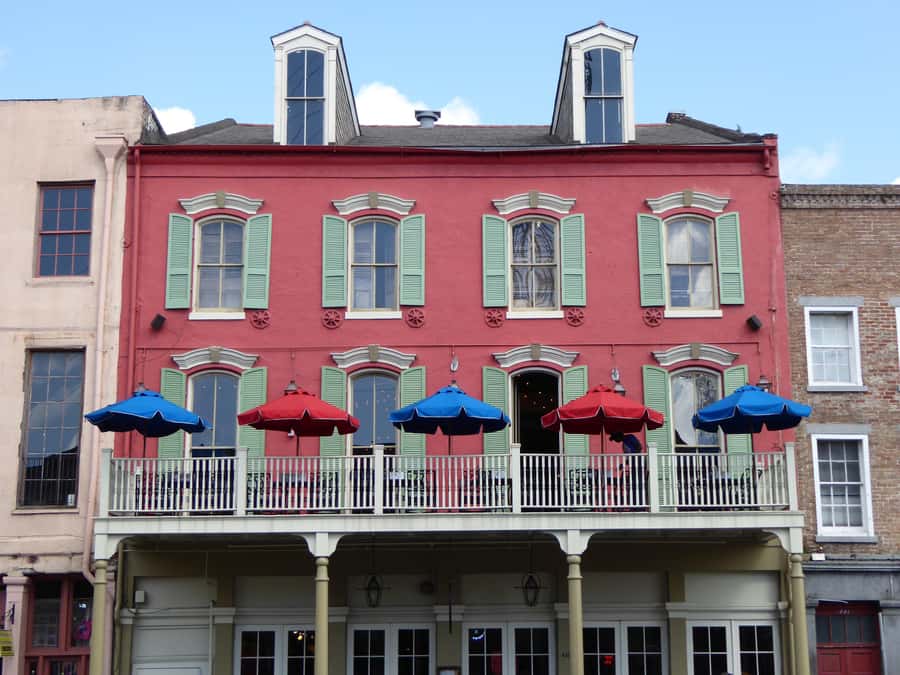
The final story concerns Madame de Pontalba, a French baroness and businesswoman connected with the beautiful Pontalba buildings around Jackson Square. Her story brings the walk back to the architecture surrounding the starting point.
That ending works well because the buildings are no longer just attractive backdrops. You have heard about the people, money, disasters, and social forces that shaped the Quarter. The Pontalba buildings become a final reminder that private ambition and public design have always been linked here.
Finishing in Jackson Square is practical, too. You can stay for the musicians and street performers, walk toward the river, return to the French Market, or make your own way to Preservation Hall later. The tour gives you a useful first map of the area without taking your entire day.
Is $50 a fair price?
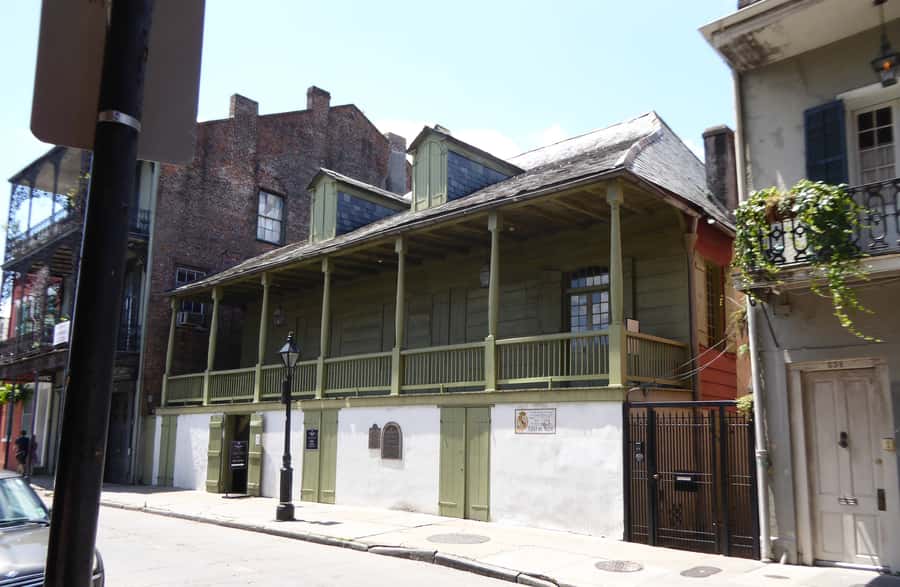
At $50 per person, this is not the cheapest way to walk around the French Quarter. You can wander the streets without paying anything, and you can read signs or use a guidebook at your own pace.
The fee makes more sense if you value the links between places. The guide turns a convent, a former factory, a burned-out city, a slave market, a jazz musician’s home, and a hurricane story into one connected account. That context is the main product.
The price also includes two hours with a live guide, in English or German. Recent praise for Regine focuses on her historical detail, friendly manner, willingness to answer questions, and practical suggestions for the rest of a New Orleans stay. If Regine is leading your departure, you can reasonably expect an interactive style, though guide assignments can vary.
Food and drinks are extra. The walk does not include a beignet tasting, a meal, or admission to a jazz performance. If you want those, budget separately. For someone seeking a history-focused orientation early in a visit, $50 can be good value. For someone who mainly wants snacks and photographs, it may feel expensive.
Who will get the most from this walk?
I would choose this tour if you want a clear introduction before exploring the French Quarter on your own. It suits adults interested in history, architecture, migration, music, and the difficult parts of New Orleans’ past.
It can also work well for families, especially if children can manage two hours of walking and are ready for serious subjects. The experience with a nine-year-old suggests the route can be family-friendly, but the sections on slavery and Katrina deserve a little preparation.
The tour is wheelchair accessible according to the activity details. You should still contact the provider if you need specific assistance, since the route takes place outdoors and includes a walking itinerary through historic streets.
Choose another option if you want a food tour, a dedicated ghost tour, a long jazz program, or extensive time inside buildings. This is a broad history walk, and its strength comes from the range of topics rather than from one major attraction.
Practical details for a smoother morning
Meet at the former Louisiana Welcome Center site at 529 St. Ann Street, in front of the Fives Bar storefront. The address is near Jackson Square, but allow a few minutes to identify the exact place since the old welcome-center sign is gone.
Look for a licensed 504tours guide. The guide may speak English or German. Regine has been especially praised for personal attention and tips for later in the trip, so ask about the guide when you book if that matters to you.
Wear solid shoes and suitable clothing. The walk runs in rain or shine, and New Orleans weather can change the comfort of an outdoor tour quickly. Food and drinks are not included, so plan your Cafe du Monde purchase separately.
You can cancel up to 24 hours before the activity for a full refund, and you can reserve now and pay later. Starting times vary, so check availability for your date.
Should you book the French Quarter walk?
Book it if you want the French Quarter explained rather than merely photographed. The route gives you jazz, immigration, slavery, fire, hurricanes, architecture, and food in a compact two-hour format, with the useful advantage of ending back at Jackson Square.
I would especially recommend it for a first visit, for anyone who wants historical depth, and for readers who appreciate a guide who answers questions and offers practical advice. I would skip it only if you prefer to explore alone, want a food-centered outing, or dislike walking outdoors in uncertain weather.
For $50, you are paying for the connections between the sites. That is a fair trade if you want New Orleans to make sense as a living city, not just a pretty collection of balconies and bars.
FAQ
Where does the French Quarter walking tour begin?
It begins at 529 St. Ann Street, in front of the former Louisiana Welcome Center site. Fives Bar now occupies the storefront. The meeting point is near Jackson Square, to the left of the square when you face the river.
How long does the tour last?
The guided walk lasts two hours.
What languages are available?
The tour is offered with a live guide in English or German.
Is food included?
No. Food and drinks are not included. You may choose to buy a beignet or coffee at Cafe du Monde during or around the tour.
Is the tour wheelchair accessible?
Yes, the activity is described as wheelchair accessible.
What should I wear?
Wear solid shoes and appropriate clothing. The tour operates rain or shine.
Can I cancel for a refund?
Yes. You can cancel up to 24 hours in advance for a full refund. You can also reserve now and pay later.
Newest New Orleans tours we have written up
- 45-Minute Garden District Highlights Tour in New Orleans★ 5.0 · 33 reviews
- New Orleans City and Swamp Helicopter Tour★ 5.0 · 9 reviews
- 45-Minute Marigny Triangle Highlights Tour in New Orleans★ 5.0 · 12 reviews
- 20 Passenger New Orleans Airport or Hotel Transfer★ 5.0 · 6 reviews
- Private New Orleans 2-Hour Sail Aboard a Luxury Yacht★ 5.0 · 44 reviews
- 11 Passenger Executive Van: New Orleans Airport or Hotel Transfer★ 4.0 · 8 reviews
- The New Orleans Darkness Tour★ 4.4 · 9 reviews
- Spooky Family Ghost Tour★ 3.4 · 9 reviews
New Orleans French Quarter Tours, compared.
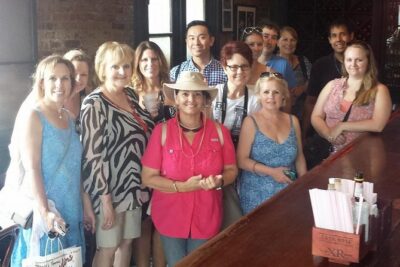
New Orleans Food Walking Tour of the French Quarter with Small-Group Option
Read our review →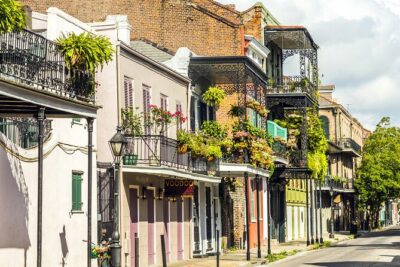
New Orleans French Quarter, Voodoo and Culture Walking Tour
Read our review →
French Quarter Historical Sights and Stories Walking Tour
Read our review →
Ghost and Vampire Walking Tour Of The French Quarter
Read our review →
New Orleans City Tour: French Quarter, Garden District & Cemetery
Read our review →
New Orleans French Quarter Food Tour: Cajun, Creole and Culture
Read our review →
New Orleans French Quarter and More Carriage Ride
Read our review →
French Quarter walking Food Tour Famous Flavors of New Orleans
Read our review →Browse the lists this tour appears in