
Reviewed · NEW ORLEANS FOOD TOURS
New Orleans: The Premier Food Tour — Your Must-Do Activity
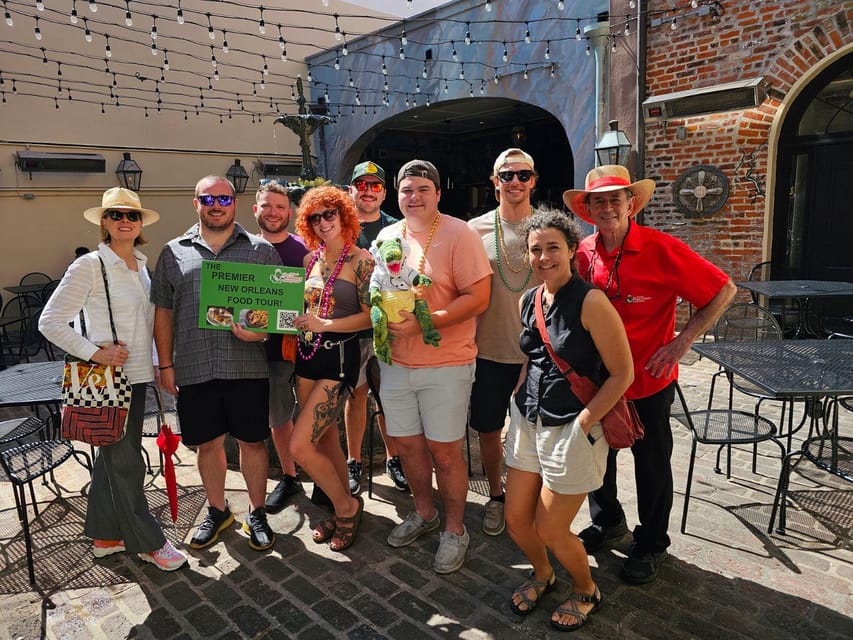
New Orleans cooking makes the most sense when you taste it one dish at a time. This three-hour French Quarter food tour links four restaurants with stories about the city’s Cajun, Creole, Sicilian, Black, and other cultural influences, beginning with New Orleans’ founding in 1718.
I like the generous portions and the easy pace. I also like the way guides such as Naif and Brian connect each plate to local history instead of treating lunch as a string of unrelated samples. The main consideration is the $81 price, which is fair if you want a full meal and a guided introduction, but less appealing if you prefer to choose your own restaurants or already know the French Quarter well.
Key points at a glance
- Four restaurant stops: Expect local dishes such as jambalaya, gumbo, crawfish étouffée, muffaletta, roast beef sliders, and a Creole pecan praline.
- More than lunch: Your English-speaking guide explains Cajun and Creole food, ethnic influences, historic buildings, and local culture.
- Large tastings: Many people finish the tour full, so eat lightly beforehand.
- Simple French Quarter route: The tour begins beside the golden Joan of Arc statue and ends at Tujague’s on Decatur Street.
- A relaxed walk: Several recent tours were described as easygoing, with time for questions, photos, and conversation.
- Useful for families: It suits all ages, is wheelchair accessible, and can accommodate dietary concerns when arranged in advance.
Why this food tour works as a first taste of New Orleans
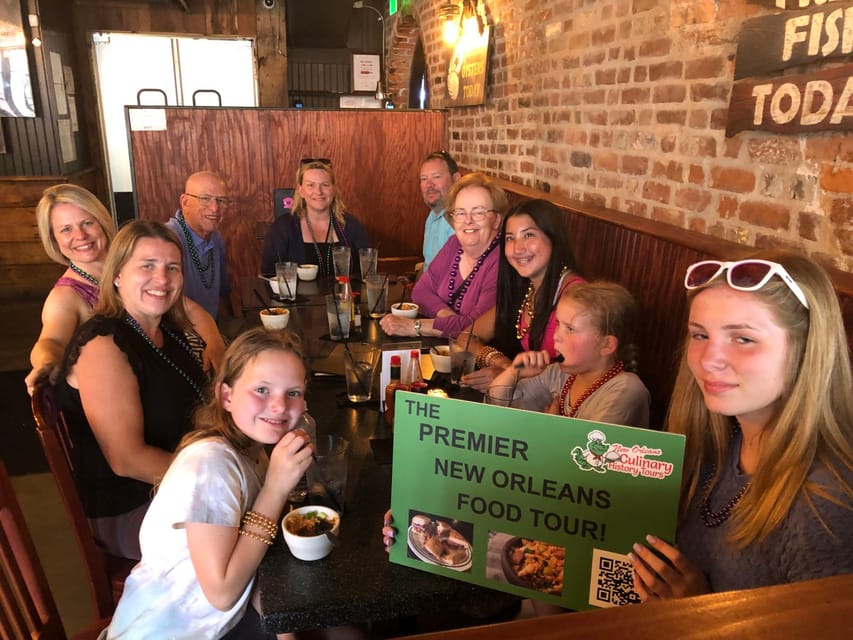
A good food tour should answer more than the question of where to eat. It should help you understand why a city cooks the way it does. This one uses jambalaya, gumbo, crawfish étouffée, muffaletta, and pralines as entry points into New Orleans history.
Your guide may explain the difference between Cajun and Creole cooking, a question that often confuses first-time visitors. The food is not presented as one single New Orleans style. Instead, you hear about the many people and traditions that shaped the city’s cooking from 1718 onward.
The guides also bring their own style. Naif is often praised for his stories, warmth, and ability to answer questions without turning the walk into a dry lecture. Brian is noted for making buildings and food come alive, while Brion has been singled out for tying dishes to the city’s wider culture and past. The exact guide depends on the day, but the pattern is clear: the personality of your guide matters a great deal here.
I particularly like that the tour leaves room for conversation. One guide has been described as adjusting the route for photos and questions, and another showed how certain foods were made behind the scenes. Those details make the experience feel more like an afternoon with a local than a restaurant checklist.
More food tours in New Orleans:
- New Orleans Food Walking Tour of the French Quarter with Small-Group Option
★ 5.0 · 6,118 reviews - New Orleans French Quarter Food Tour: Cajun, Creole and Culture
★ 5.0 · 1,246 reviews - French Quarter walking Food Tour Famous Flavors of New Orleans
★ 5.0 · 1,115 reviews
Meeting Joan of Arc at Market Cafe
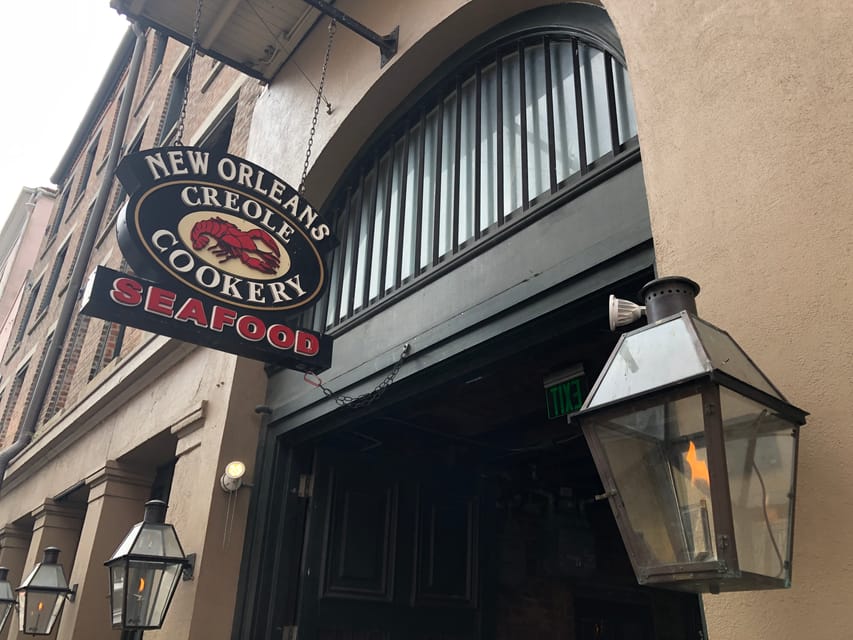
The tour starts at Market Cafe, 1001 Decatur Street, beside the golden statue of Joan of Arc. The meeting point is easy to identify, but arrive by 12:45 for the 1 p.m. start. The tour ends at Tujague’s Restaurant, 429 Decatur Street, so you remain in the French Quarter rather than being left far from the center.
The route is on foot, and comfortable shoes are important. You are not walking continuously for three hours. The restaurant stops break up the route, and several people have found the pace manageable. Still, New Orleans heat, humidity, rain, and uneven pavement can make a short walk feel longer, especially in summer.
The tour runs in rain, so bring weather protection rather than assuming a wet day means cancellation. Ice water is served at each stop. Adult drinks are available for purchase, but beverages are not included in the $81 price.
Stop one: a generous introduction to local cooking
The first restaurant stop lasts about 45 minutes and sets the tone for the meal. Expect a regional dish such as Creole jambalaya, served with enough food to make clear that this is not a token tasting.
Jambalaya is a useful opening dish because it shows how rice, meat, seasoning, and local cooking habits come together in one bowl. The exact preparation can vary, but you should expect bold seasoning rather than bland comfort food.
This is also where your guide can begin sorting out the differences between Cajun and Creole traditions. Pay attention to the explanation, not just the plate. The point is not to memorize strict rules, since New Orleans cooking has changed over time, but to understand how the city’s food reflects many influences.
The generous portions create one of the tour’s practical strengths and one of its small drawbacks. You get good value from the meal, but you need to pace yourself. If you eat a full lunch before arriving, you may struggle later.
Jackson Square and the St. Louis Cathedral
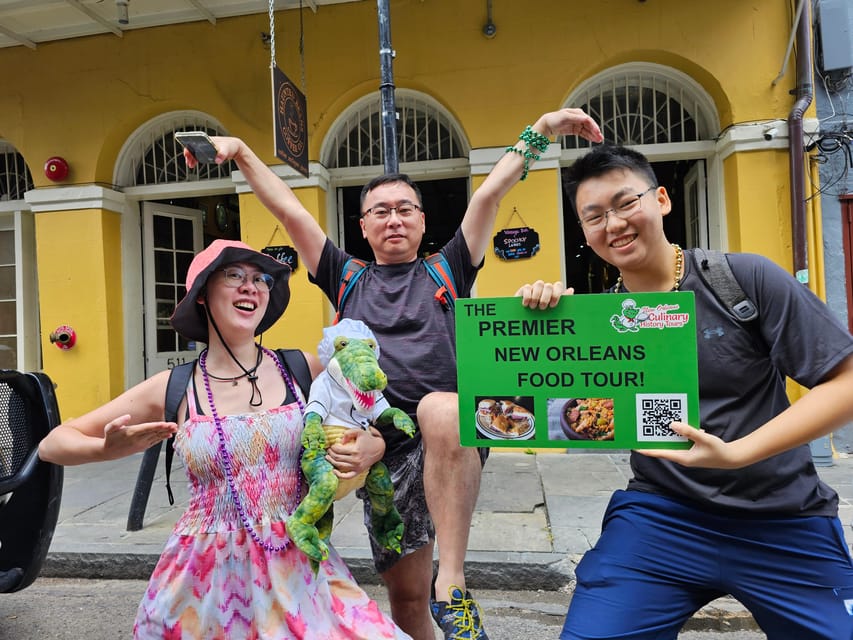
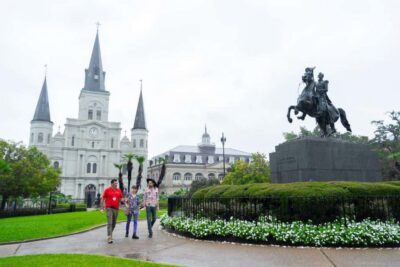
Between tastings, the walk brings you past some of the French Quarter’s most recognizable sights. Jackson Square and the St. Louis Cathedral are included, giving you time to take photos and place the food stories within the city’s older streets.
Your guide also points out buildings and sites connected with important local events. This helps the tour avoid the common problem of food walks that ignore their surroundings. You are not simply moving from one dining room to the next. You are learning how the neighborhood’s architecture, people, and food developed together.
The historic setting is especially useful if you are new to New Orleans. A first visit can leave you admiring balconies, courtyards, and old facades without knowing what you are seeing. A good guide gives those details a human context and makes the walk easier to remember.
A few more New Orleans tours worth comparing
- New Orleans Food and History Walking Tour
★ 5.0 · 1,544 reviews - New Orleans Cocktail and Food History Tour
★ 5.0 · 819 reviews - New Orleans: French Quarter Food History Walking Tour
★ 4.9 · 713 reviews - French Quarter walking Food Tour: Signature Tastes of New Orleans
★ 4.5 · 592 reviews
Stop two: dessert, pralines, and a short market visit
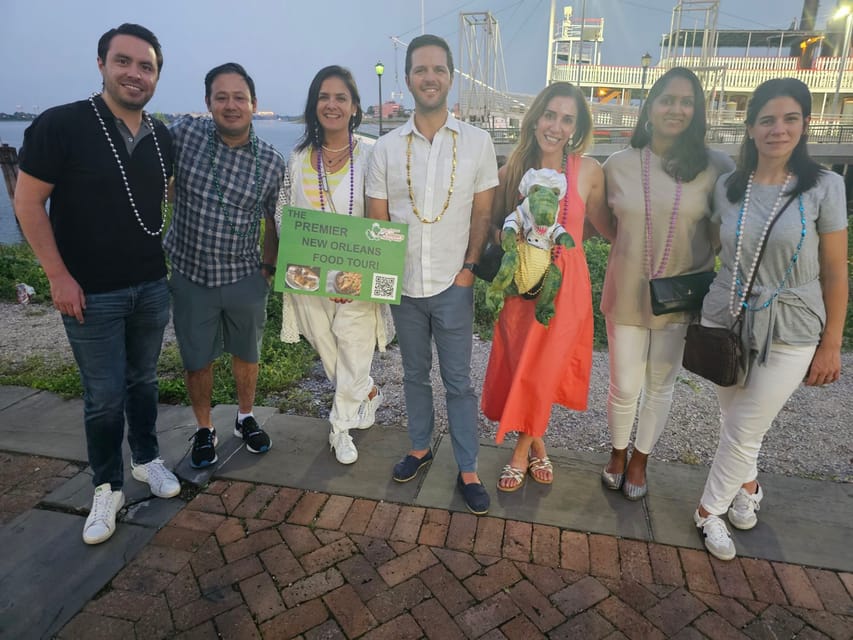
The second food stop lasts about 20 minutes and focuses on dessert. You can expect an authentic Creole pecan praline, a sweet, nutty confection closely associated with New Orleans.
The praline offers a change of pace after savory dishes. It is also a compact way to discuss local confectionery and the city’s broader food traditions. If you have never tried one, do not expect a light, delicate candy. It is sweet and filling, which makes the earlier advice about arriving hungry but not overfed even more important.
This part of the route may also include a food market visit. The shorter stop keeps the tour moving, but it gives you a chance to look at local ingredients and food culture beyond restaurant plates.
The praline may be served as the final dessert in the overall tour, depending on the day’s arrangement. The supplied schedule separates a short dessert stop from longer savory stops, while the advertised meal places the praline at the end. In practical terms, plan to taste it at some point during the route rather than counting on a specific restaurant order.
Stop three: Cajun duck and andouille gumbo
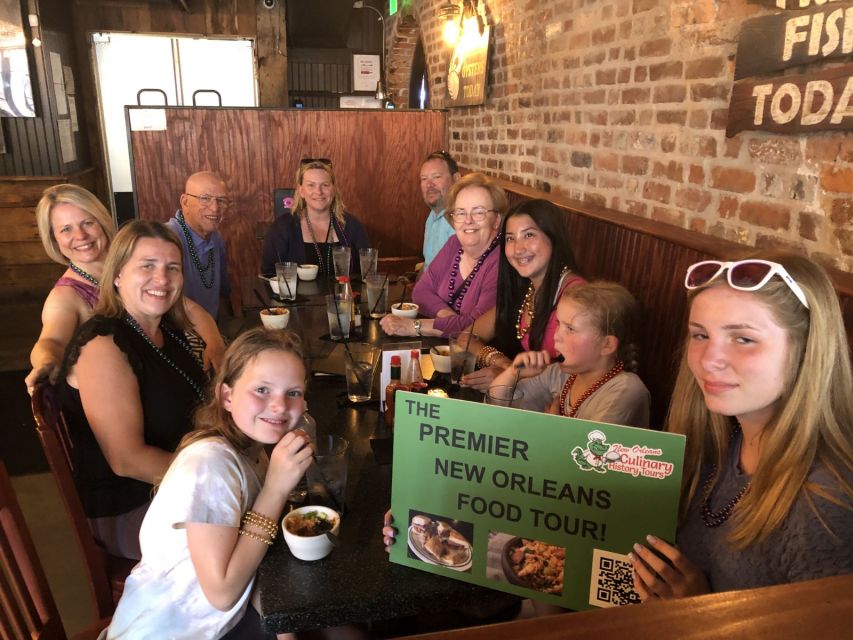
Another 45-minute restaurant visit brings out gumbo, described here as a version made with Cajun duck and andouille sausage. Gumbo is one of the best dishes for showing how New Orleans cooking layers flavor over time.
The bowl should have a strong savory base, smoky sausage, and the seasoning associated with Cajun cooking. Duck adds another element beyond the more familiar chicken or seafood versions. The exact ingredients can change, but the tour’s stated selections are built around classic regional dishes rather than generic American fare.
Gumbo was a favorite for at least one recent group, while others preferred the étouffée or jambalaya. That is useful to know because taste is personal. The dishes are flavorful and well-seasoned, but not every plate will suit every palate.
This stop also shows why the price can make sense. You are not paying only for a guide and a few bites. You are receiving multiple substantial tastings at several restaurants, with drinks available separately. By the middle of the route, you may already have eaten the equivalent of a hearty lunch.
Stop four: crawfish étouffée and the food of Louisiana
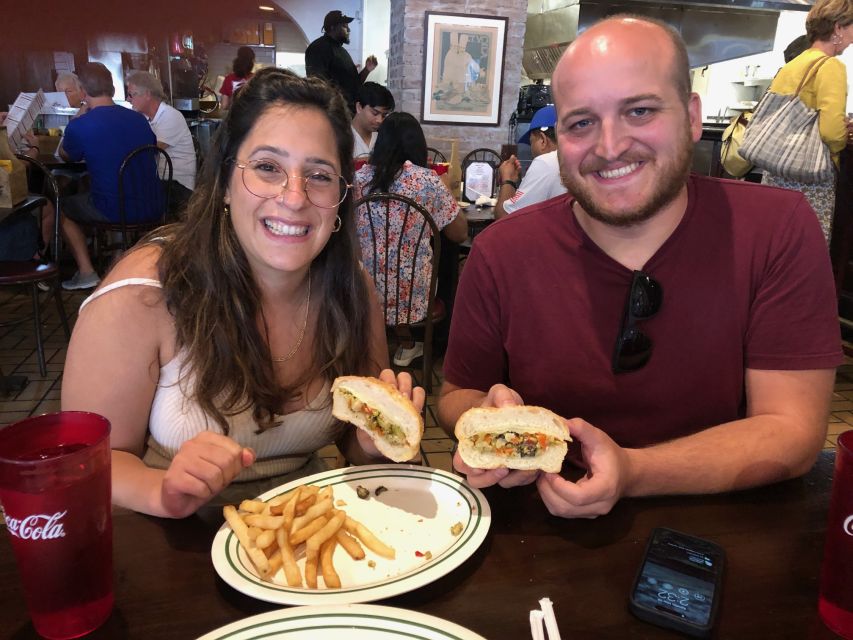
Crawfish étouffée is another expected highlight. The dish is typically served with a rich sauce over rice, and it gives you a different experience from the drier texture of jambalaya or the soup-like character of gumbo.
Your guide uses dishes like this to explain how local ingredients and cooking traditions developed. The crawfish connection is important because seafood plays a major role in Louisiana food culture, while the sauce and rice show the region’s preference for slow, layered flavor.
This is often the point where the tour feels most useful to people who have never studied the difference between Cajun and Creole cooking. You can taste the distinctions instead of hearing them as abstract definitions.
The stop is scheduled for roughly 45 minutes, which gives the group time to eat without rushing. If you are full by this stage, do not feel obliged to clear every plate. The portions are intended to feed you properly, and the guide can help explain what you are tasting even if you take only a smaller serving.
Stop five: muffaletta and roast beef sliders
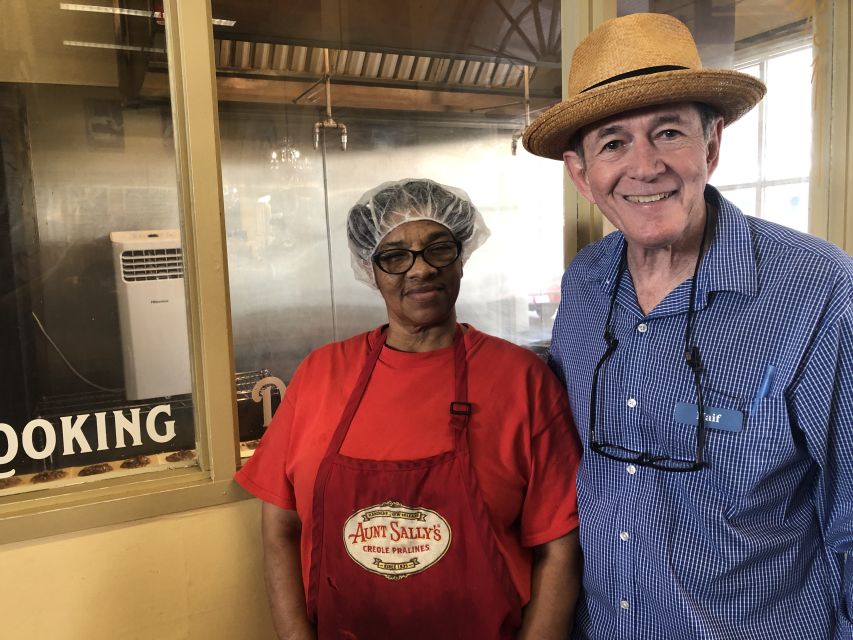
The final savory portion may include the Sicilian muffaletta sandwich and rich roast beef sliders. The muffaletta reflects the influence of Sicilian immigrants on New Orleans food. Its inclusion makes the tour broader than a Cajun and Creole sampler.
This is one of the most valuable choices on the route because it shows that New Orleans food cannot be reduced to gumbo and seafood. The city’s identity also appears in sandwiches, cured meats, bread, and the traditions of immigrant communities.
Roast beef sliders provide a different kind of local comfort food. They are smaller than a full sandwich, but by this stage the reduced size is welcome. You may be ready for the final bite rather than another full plate.
This stop is also a chance to ask your guide which restaurants and dishes deserve a return visit. Since the tour ends nearby, you can note the places that suit you best and come back later during your stay.
How much walking and food you should expect
The tour lasts three hours and includes several walking sections, photo stops, sightseeing, and restaurant visits. The route is not described as strenuous, and people of different ages and activity levels have found the walking manageable. Wheelchair access is available, though you may still want to confirm any personal mobility needs when booking.
The food is the bigger physical commitment. You will taste multiple savory dishes plus a praline, and the portions are described as generous. I would schedule this as your main meal rather than pairing it with another large lunch.
Eat a light breakfast or snack beforehand, especially if your tour begins at 1 p.m. Bring water for the walking sections, even though ice water is served at the restaurants. If you want beer, wine, or another adult drink, budget extra because beverages are not included.
Dietary concerns can be accommodated when you tell the provider in advance. Do not wait until you arrive if you have a serious allergy or a strict dietary need. A young child sharing food with an adult does not need a separate ticket, according to the tour information.
Is $81 a fair price?
At $81 per person, this is not the cheapest way to eat in the French Quarter. You could order one meal for much less, especially if you choose casual counter service. The comparison changes when you count four restaurant tastings, a full lunch’s worth of food, a praline, and three hours of local interpretation.
I see the price as reasonable for a first visit if you want structure. You get several dishes without guessing what to order, and you avoid spending your entire afternoon researching restaurants. The guide also gives you background that you would not receive from a menu.
The value is strongest for people who care about context and variety. It is weaker for a confident food planner who already has a list of New Orleans restaurants and wants full portions of only favorite dishes.
Free cancellation up to 24 hours before the tour and the option to reserve now and pay later make the booking less rigid. Tips for the guide are appreciated, so include that in your budget if the afternoon is useful to you.
Who should book this French Quarter food walk?
I would recommend it to first-time visitors, families, couples, and solo visitors who want an easy way to get oriented. The tour is also a good choice if you want to learn the difference between Cajun and Creole food through actual tasting.
It suits people who enjoy conversation. Guides such as Naif and Brian have been praised for warmth, humor, stories, and personal attention, and the smaller-group feel described on some dates allows more questions. If you prefer to move silently from restaurant to restaurant, you will miss much of what makes this worthwhile.
It is also useful for repeat visitors who want a stronger connection to the city’s Black history, immigrant traditions, and local culture. One guide has been specifically praised for placing New Orleans Black history at the center of the food discussion.
You may want a different plan if you have a very limited appetite, dislike heavily seasoned food, or want to spend three hours at only one or two restaurants. The food is the main event, and the amount can be substantial.
My final take: a strong first-day choice
Book this tour if you want a filling introduction to New Orleans that combines food, architecture, and local stories. The best parts are the variety of dishes, the relaxed walking pace, and the guides’ ability to connect meals with the city’s people and past.
Schedule it early in your stay if possible. You will leave with a better sense of what you like, which dishes deserve another try, and where to explore next. Arrive hungry, wear comfortable shoes, meet by the Joan of Arc statue at 12:45, and leave room in your budget for drinks and a tip.
Skip it only if you already have a carefully planned food itinerary or prefer independent dining. For most first-time visitors, $81 buys far more than a meal. It buys a practical introduction to the French Quarter through the dishes New Orleans is proud to call its own.
FAQ
Where does the New Orleans food tour begin?
It begins at Market Cafe, 1001 Decatur Street, next to the golden statue of Joan of Arc.
What time should I arrive?
The tour starts at 1 p.m. You should meet your guide by 12:45 p.m.
Where does the tour end?
The tour ends at Tujague’s Restaurant at 429 Decatur Street.
How long does the tour last?
The food tour lasts three hours.
What food is included?
Expected tastings include Creole jambalaya, crawfish étouffée, a Sicilian muffaletta sandwich, roast beef sliders, gumbo with duck and andouille sausage, and a Creole pecan praline. Items may vary.
Are drinks included?
No. Ice water is served at each stop, while adult beverages are available for purchase at the restaurants.
Is the tour suitable for children?
Yes. The tour is described as suitable for all ages. If a young child shares food with an adult, the child does not need a separate ticket.
Can dietary concerns be accommodated?
Yes. Dietary concerns can be accommodated when you inform the provider.
Is the tour wheelchair accessible?
Yes, the activity is listed as wheelchair accessible.
More Food in New Orleans
- French Quarter Small-Group Cocktail and Foodie Crawl
★ 5.0 · 519 reviews - The Premier New Orleans Food Tour
★ 4.5 · 398 reviews - New Orleans: Beloved Bites & Famous Dishes Food Tour
★ 4.8 · 239 reviews - French Quarter Food Walking Tour
★ 4.5 · 202 reviews
Newest New Orleans tours we have written up
- 45-Minute Garden District Highlights Tour in New Orleans★ 5.0 · 33 reviews
- New Orleans City and Swamp Helicopter Tour★ 5.0 · 9 reviews
- 45-Minute Marigny Triangle Highlights Tour in New Orleans★ 5.0 · 12 reviews
- Private New Orleans 2-Hour Sail Aboard a Luxury Yacht★ 5.0 · 44 reviews
- 20 Passenger New Orleans Airport or Hotel Transfer★ 5.0 · 6 reviews
- The New Orleans Darkness Tour★ 4.4 · 9 reviews
- 11 Passenger Executive Van: New Orleans Airport or Hotel Transfer★ 4.0 · 8 reviews
- Spooky Family Ghost Tour★ 3.4 · 9 reviews
New Orleans Food Tours, compared.
New Orleans Food Walking Tour of the French Quarter with Small-Group Option
Read our review →
New Orleans French Quarter Food Tour: Cajun, Creole and Culture
Read our review →
French Quarter walking Food Tour Famous Flavors of New Orleans
Read our review →
New Orleans Delicious Donuts & Beignets: A Sweet Walking Tour
Read our review →
French Quarter walking Food Tour: Signature Tastes of New Orleans
Read our review →
French Quarter Small-Group Cocktail and Foodie Crawl
Read our review →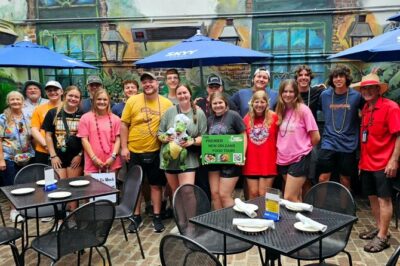
Browse the lists this tour appears in