
Reviewed · NEW ORLEANS FRENCH QUARTER TOURS
The French Quarter History Tour
New Orleans history gets much more interesting when it moves from dates and monuments to pirates, smugglers, duels, strange punishments, and a bar once tied to Tennessee Williams. This small-group walk connects the French Quarter with Louis Armstrong Park, giving you stories that a simple stroll through Jackson Square will miss.
I like the local point of view and the way the route mixes famous sights with lesser-known characters. I also like the modest $35 price for about two hours of guiding, especially since the group is capped at 16 people. The main drawback is that the tour content can shift with the guide and the group, so you may not hear every story described here.
Key details that shape the experience
- Pirates and smugglers: Hear about Lafitte’s Blacksmith Shop, a Bourbon Street bar linked to smugglers and pirates.
- A walking tour with real variety: The route includes the Mississippi River, Jackson Square, Cafe Du Monde, St. Louis Cathedral, and Louis Armstrong Park.
- A small group of up to 16: This is a more personal setup than a large coach or crowded street tour.
- A 10:30 a.m. start: The morning timing gives you a useful introduction before you spend more time exploring New Orleans on your own.
- Stories can change by guide: The tour leaves room for questions and group interests, so no two outings need to follow exactly the same script.
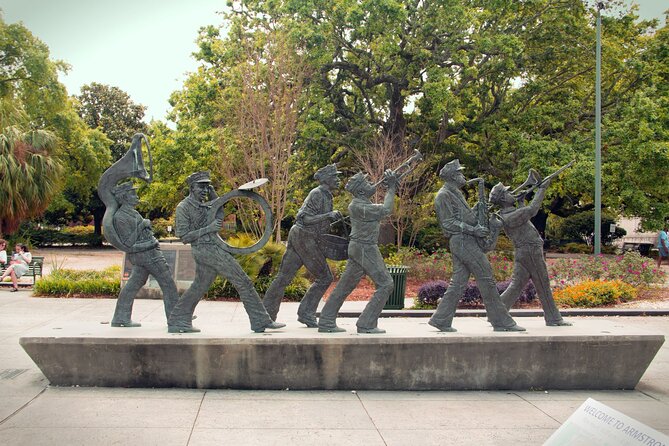
- A scenic finish outside the French Quarter: The walk ends near the Jazz Statue in Louis Armstrong Park, in the Tremé area.
Why this two-hour walk works as a first look at New Orleans
New Orleans can be hard to read at street level. Spanish, French, Caribbean, African American, and American influences overlap in a compact area, but the clues are not always obvious. A guide helps connect the buildings, streets, and public squares to the people who shaped them.
This tour is especially useful early in your stay. You begin near the river, pass some of the city’s best-known landmarks, and finish near Louis Armstrong Park. Along the way, you get enough context to make later visits to the French Quarter feel less random.
The group limit of 16 matters. You are still walking through busy streets, but a small party makes it easier to hear the guide and ask questions. The tour is offered in English, and most people can participate. Service animals are allowed, and the route is near public transportation.
The walk lasts about two hours, though the listed stops add up to a little more than that when combined. Treat the timing as an estimate rather than a rigid schedule. You will be on foot, and the route includes several brief stops rather than long indoor visits.
More French Quarter tours in New Orleans:
- New Orleans Food Walking Tour of the French Quarter with Small-Group Option
★ 5.0 · 6,118 reviews - New Orleans French Quarter, Voodoo and Culture Walking Tour
★ 4.5 · 2,961 reviews - French Quarter Historical Sights and Stories Walking Tour
★ 5.0 · 2,724 reviews
Starting at Cuban Creations on Toulouse Street
The meeting point is Cuban Creations Cigar Bar at 533 Toulouse Street. It is an unusual place to begin a city history tour. The bar is described as the only smoking bar in the French Quarter, with comfortable indoor and outdoor seating and cocktails.
You will spend about 20 minutes here, with no admission charge. The stop gives the group a chance to gather before the history begins, though the cigar-bar setting will not suit everyone. If you dislike smoke, ask where the group will wait and keep in mind that this is not a museum or formal visitor center.
The setting does, however, establish the tone. This is not a tour built only around polished landmarks. It uses places with their own character, including old bars and working corners of the Quarter.
Washington Artillery Park and the muddy ground beneath the city
The first major history stop is Washington Artillery Park, one of the most scenic points in the French Quarter. Here you hear about the river and the bed of mud on which New Orleans rests.
That opening gives you useful physical context. New Orleans is not simply a city placed beside water. Its relationship with the river, wet ground, and changing settlement patterns helps explain why the city developed as it did.
The guide also introduces the early Chitimacha tribe and the French colonists who founded New Orleans in 1718. The description of those colonists as rather odd hints at the tour’s style: expect character-driven stories, not a dry list of dates.
You spend about 15 minutes here. The view is one reason to have a camera ready, but do not expect a long pause for independent sightseeing. The guide needs to keep the route moving.
Cafe Du Monde and the story behind beignets
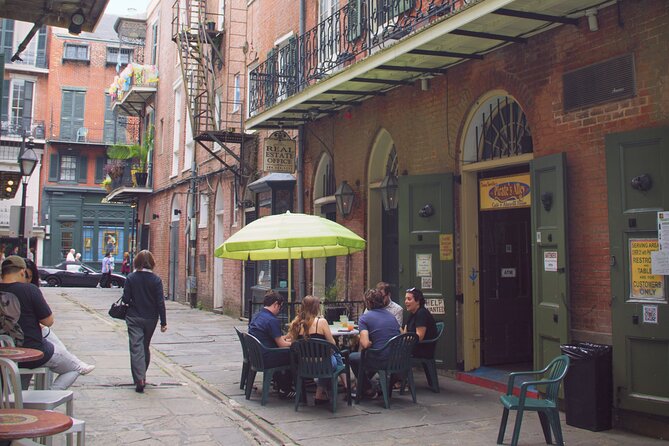
The route passes Cafe Du Monde, identified as the city’s oldest coffee house. You get about five minutes here, so this is not a planned breakfast stop or a guaranteed chance to sit down with coffee and beignets.
Instead, the guide talks about the sweet history of beignets. That small detail is useful because food in New Orleans is not separate from the city’s story. A beignet is simple, but the tradition carries traces of the city’s French connections and its habit of turning everyday food into a cultural marker.
The guide may adjust this part to suit the group. If you want to stop for your own beignets, plan to return later rather than assume you will have time during the tour.
A few more New Orleans tours worth comparing
- New Orleans Garden District History Walking Tour
★ 5.0 · 2,879 reviews - New Orleans Small-Group Haunted History Carriage Tour
★ 4.5 · 2,289 reviews - New Orleans Haunted History Ghost Tour
★ 4.5 · 2,084 reviews - Paddlewheeler Creole Queen Historic Mississippi River Cruise
★ 4.5 · 1,948 reviews
St. Louis Cathedral, Pirate’s Alley, and old conflicts
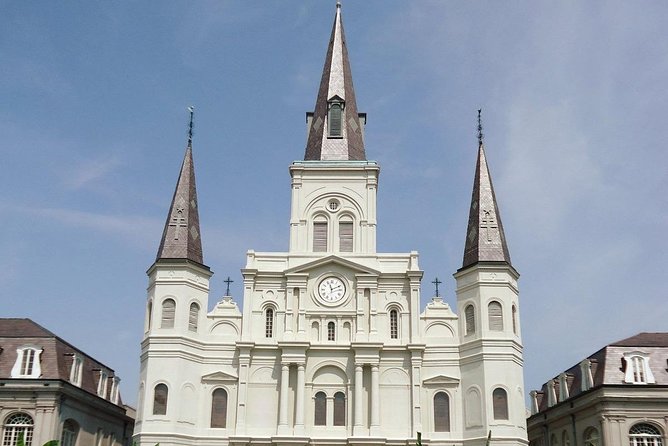
St. Louis Cathedral is the next major stop, and it is one of the most recognizable sights in New Orleans. You spend about 10 minutes here, with admission included.
The cathedral’s story goes well beyond its appearance. The guide connects it with pirate prisons and dueling grounds, while also discussing Pirate’s Alley. If the cathedral is open, the group may take a quick look inside.
The description calls it the oldest cathedral in the country. It is worth noting that the experience here is brief, so do not expect a long architectural lecture or a full interior tour. The value comes from seeing the building in its setting and hearing how religion, crime, and public conflict once overlapped nearby.
This is one of the stops where a guide adds real value. On your own, you may photograph the cathedral and move on. With the stories about prisons and duels, the surrounding streets gain a sharper edge.
The Pontalba Buildings and a family drama
At the Pontalba Buildings, the focus shifts to the Baroness Pontalba. Her family was among the wealthiest in New Orleans, and Spanish nobles paid for the buildings around Jackson Square.
The guide presents her story as a real-life psychological thriller. That is a strong reason to pay attention here. The buildings are easy to treat as handsome apartment blocks, but their connection to one powerful family gives them a more personal story.
You spend about 15 minutes at this stop. It is a good example of the tour’s approach: architecture provides the backdrop, while the people and their odd behavior carry the story.
Jackson Square and the Andrew Jackson statue
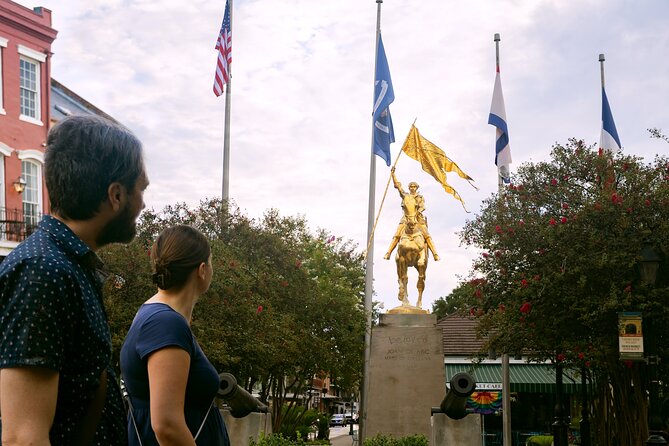
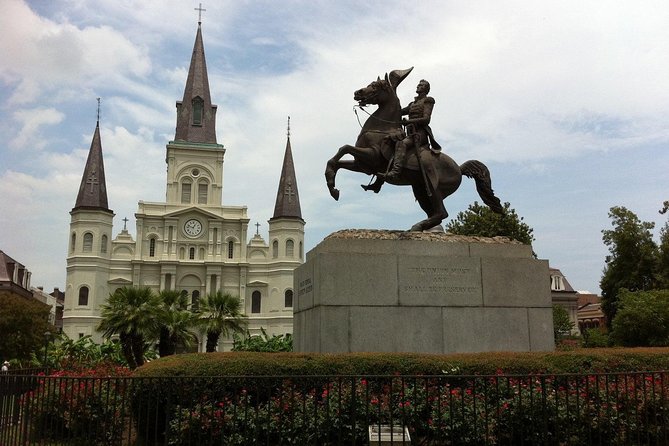
Jackson Square receives about 10 minutes. The guide discusses the statue of Andrew Jackson, described as the only statue in the city erected out of spite.
The square also figures in stories of bizarre punishments during the French colonial period. That detail changes the mood of the place. Today, Jackson Square is one of the most familiar public spaces in the city, but its earlier uses were not nearly as gentle or picturesque.
You will have time to look around, but this is not a dedicated art or garden tour. The point is to understand the square as a public stage where power, punishment, ceremony, and memory all met.
Mini-stops through the French Quarter
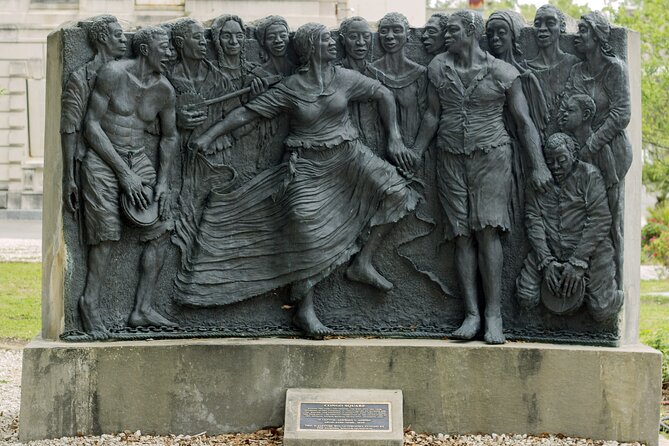
Between the main stops, the guide adds shorter pauses around the French Quarter. These moments are important because they allow the tour to respond to the street rather than follow only a fixed set of monuments.
The content varies with the guide and with what interests the group. You may hear more about a particular building, a local character, or one of the city’s scandals. This flexibility is a strength if you enjoy asking questions, but it also means you should not expect every outing to cover every detail in the same order.
A guide named Tracy has been associated with a particularly strong version of this experience, including coverage of the key sites and the cultural story of New Orleans. Since several guides may lead the tour, Tracy is not guaranteed. Still, the name is useful to know when you book or meet the group.
Lafitte’s Blacksmith Shop and the city’s after-hours stories
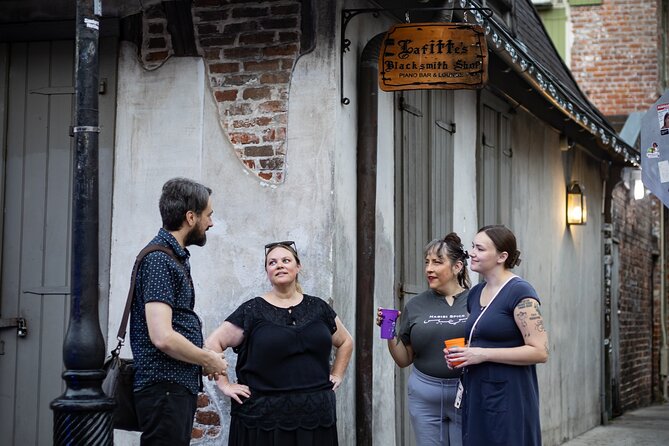
The route stops between Lafitte’s Blacksmith Shop Bar and a nearby coffee shop for about 10 minutes. The building dates to the 1780s and sits at a dead end of Bourbon Street.
Its story is tailor-made for this tour. It was once a business front for smugglers and pirates, and those pirates later enlisted to fight in the War of 1812. Men who reenact that battle still come to drink afterward, according to the tour description.
The bar also had a later life as Cafe Lafitte, a popular gay bar in the 1960s that Tennessee Williams frequented. That detail broadens the story beyond colonial New Orleans. You get a glimpse of the city’s changing social life, from piracy to literary circles and LGBTQ history.
Because this is a short outdoor stop, you should not expect a long interior visit or a drink included in the price. The setting is the attraction. If you want to return for a cocktail, do it separately after the walk.
Louis Armstrong Park and the walk into Tremé
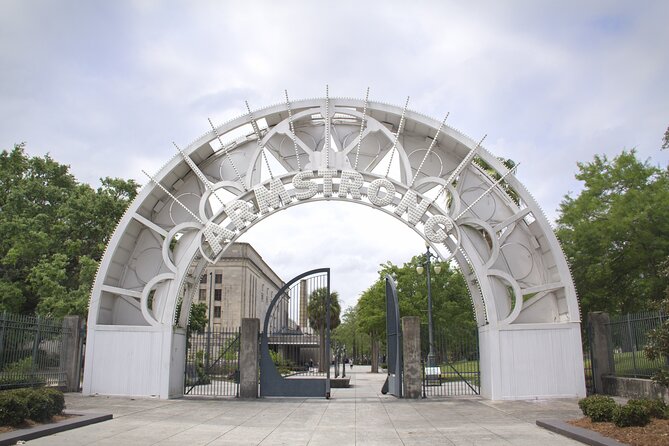
The final section begins with a stroll through Louis Armstrong Park. The park is described as the birthplace of jazz, and the guide uses it to discuss New Orleans history and the city’s beginnings before heading into the heart of the French Quarter.
The end point is the Jazz Statue at 1298 to 1100 St. Ann Street, near the park in Tremé, just outside the French Quarter. This makes the finish different from the start. You do not simply return to the same square. Instead, the route closes by pointing toward the city’s musical and African American cultural story.
The park is scenic, but the stop lasts about 14 minutes. Think of it as a guided introduction rather than a full park visit. You may want to stay afterward if you have time, but the tour itself continues only briefly.
What you get for $35
At $35 per person, the tour offers a fair value if you want stories rather than admission-heavy sightseeing. The price covers about two hours with a local guide, a small group of no more than 16, and access to an organized route through several important parts of New Orleans.
Only St. Louis Cathedral lists an included admission ticket, and the other stops are public places or outdoor locations. That is not a weakness by itself. You are paying for interpretation, pacing, and local context, not a bundle of expensive entries.
I would compare this with the cost of wandering on your own and then paying for several separate attractions. If you are comfortable reading about New Orleans independently, you may prefer to explore at no charge. But if you want the stories of Baroness Pontalba, the pirates, the Chitimacha, and the city’s scandals tied together, $35 is reasonable.
The small group also improves the value. With up to 16 people, you have a better chance of hearing the guide clearly and asking a question than you would on a large street walk.
Who should book this French Quarter history tour
I would recommend it to first-time visitors who want a quick orientation with personality. It suits people who enjoy urban history, old buildings, local scandals, food traditions, and stories about unusual characters.
It is also a good choice if you want more than the standard Jackson Square photo stop. The route reaches the riverfront, Cafe Du Monde, the cathedral, Pontalba Buildings, Bourbon Street, and Louis Armstrong Park in one compact outing.
You may want something else if you prefer long interior visits, a strictly chronological lecture, or a tour devoted only to architecture. The guide may change the content based on the group, and the brief stop times leave little room for lingering.
The 10:30 a.m. start is practical. You can use the tour to get your bearings, then revisit the places that catch your interest later in the day. Wear comfortable shoes and plan for a walking experience with frequent outdoor stops. The tour requires good weather. If poor weather cancels it, you can choose another date or receive a full refund.
Cancellations made at least 24 hours before the start time receive a full refund. Changes or cancellations within 24 hours are not refunded.
My take: book it for stories, not formal sightseeing
Book this tour if you want New Orleans explained through colorful people and surprising connections. The combination of pirates, beignets, dueling grounds, a troubled baroness, Andrew Jackson, and jazz gives you a memorable introduction to the city.
I would be especially likely to choose it near the start of a New Orleans visit. The tour leaves you with a map in your head and a list of places worth revisiting. Skip it only if you need a highly fixed itinerary, extensive indoor access, or a slow architectural study. For most curious visitors, the small group and $35 price make this a practical way to meet the French Quarter on its own strange terms.
FAQ
Where does the French Quarter History Tour start?
The tour starts at Cuban Creations Cigar Bar, 533 Toulouse Street, New Orleans, Louisiana 70130.
Where does the tour end?
It ends at the Jazz Statue near Louis Armstrong Park, at 1298 to 1100 St. Ann Street, New Orleans, Louisiana 70116.
What time does the tour begin?
The start time is 10:30 a.m.
How long does the tour last?
The tour lasts approximately two hours.
How large is the group?
The maximum group size is 16 travelers.
Is the tour offered in English?
Yes. The tour is offered in English.
What happens if bad weather cancels the tour?
Because the experience requires good weather, you will be offered another date or a full refund if poor weather causes cancellation.
Newest New Orleans tours we have written up
- New Orleans : Garden District Architecture Walking tour★ 4.8 · 5 reviews
- Ultimate Denver Day Out: Red Rocks, City Views & Ice Cream★ 5.0 · 7 reviews
- From New Orleans: Whitney and Laura Guided Plantation Tour★ 4.9 · 20 reviews
- Whitney Plantation and Soul of New Orleans City Tour Combo★ 5.0 · 13 reviews
- Treme Bar Crawl & Seafood Experience★ 4.2 · 7 reviews
- True Voodoo History of NOLA’s Congo Square with Local Guide★ 4.9 · 16 reviews
- Witches Coven Walking Tour in New Orleans★ 5.0 · 49 reviews
- Whitney Plantation Tour with Transportation★ 4.0 · 29 reviews
New Orleans French Quarter Tours, compared.

New Orleans Food Walking Tour of the French Quarter with Small-Group Option
Read our review →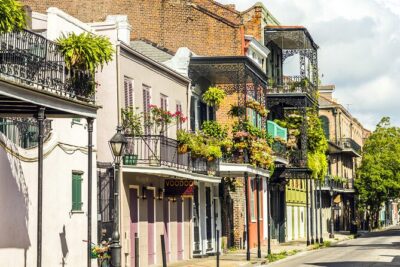
New Orleans French Quarter, Voodoo and Culture Walking Tour
Read our review →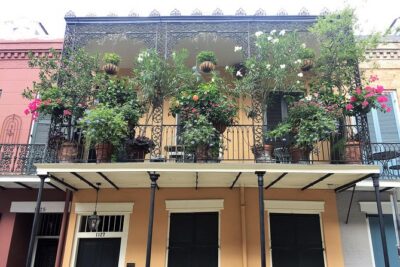
French Quarter Historical Sights and Stories Walking Tour
Read our review →
Ghost and Vampire Walking Tour Of The French Quarter
Read our review →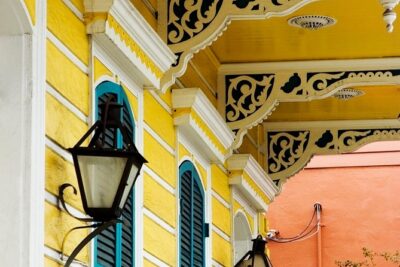
New Orleans City Tour: French Quarter, Garden District & Cemetery
Read our review →
New Orleans French Quarter Food Tour: Cajun, Creole and Culture
Read our review →
New Orleans French Quarter and More Carriage Ride
Read our review →
French Quarter walking Food Tour Famous Flavors of New Orleans
Read our review →Browse the lists this tour appears in