
Reviewed · HISTORICAL TOURS
New Orleans Creole History and Culture Ride
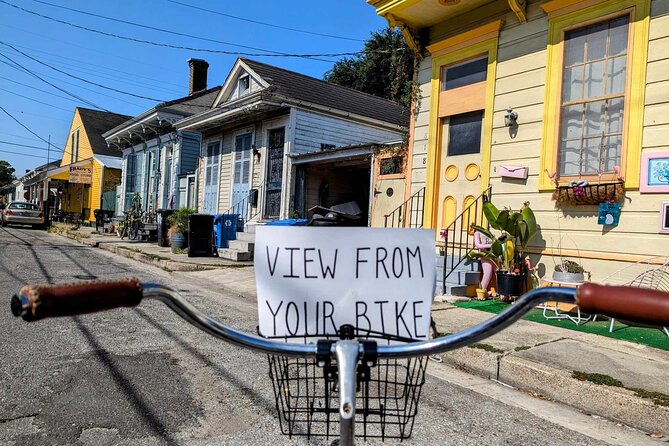
New Orleans reveals itself best away from Bourbon Street, and this three-hour bicycle ride takes you into the streets where local music, food, architecture, and Creole traditions still meet. With guide Danny, you pedal through Washington Square Park, Faubourg Marigny, and Bywater, stopping for stories rather than racing from one landmark to the next.
I like the easy pace, which leaves room to look up at the oak trees, notice the old houses, and ask questions. I also like the local finish at Marie’s Bar and Kitchen, where you can talk about the ride, pick up music schedules, and get food recommendations. The main consideration is weather: the tour needs good conditions, and cycling in New Orleans can be less appealing on a hot, wet, or windy day.
Key points to know before you book
- A small-group ride limited to 10 people keeps the experience personal and makes conversation easier.
- Danny focuses on Creole culture, not just famous buildings and standard city facts.
- Faubourg Marigny and Bywater receive most of the riding time, with about two and a half hours spent exploring these neighborhoods.
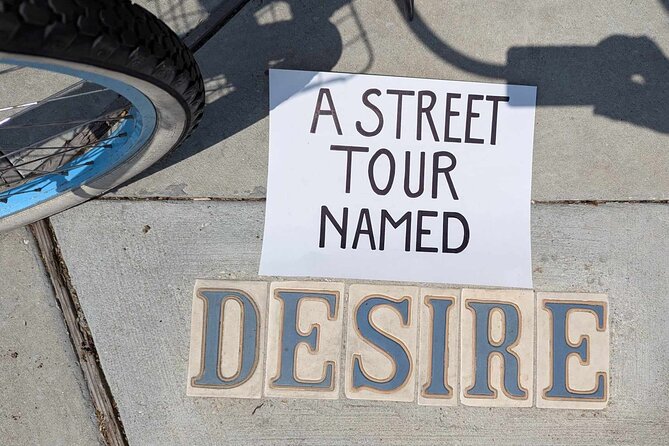
- The route includes the site connected with Plessy v. Ferguson, the levee wall, the Mississippi River, local art, and music-related places.
- Bicycles, bottled water, and a small basket are included, so you do not need to arrange your own bike.
- The drink at the final bar is not included, and you do not have to buy one to take part in the conversation.
Starting under the oaks at Washington Square Park
The ride begins at 10:00 a.m. at 634 Elysian Fields Avenue, near Frenchmen Street. Washington Square Park is a smart place to start because it gives you a quiet patch of New Orleans before the ride moves into the city’s older residential streets.
The park dates to the early 1800s and is lined with the large Louisiana oak trees that give this part of town so much character. You get acquainted with the guide and the rest of the group here, then receive an orientation to New Orleans history and geography.
That opening talk matters. Without some context, the French Quarter, Marigny, Creole identity, and later changes to the city can blur together. The introduction helps you understand why the neighborhoods developed as they did and gives the later stops a clear frame.
You also have time for a short practice lap. If you have not ridden a bicycle in a while, this is useful. The ride is not presented as a strenuous workout, and the first stop gives you a chance to settle onto the bike before heading into the neighborhood.
The start near Frenchmen Street also gives you an early sense of the city’s music culture. The famous clubs are close by, but the tour’s purpose is not to keep you on the main entertainment strip. It uses the area as a starting point for looking at the people, homes, and traditions behind the music.
A few more New Orleans tours worth comparing
- New Orleans Garden District History Walking Tour
★ 5.0 · 2,879 reviews - French Quarter Historical Sights and Stories Walking Tour
★ 5.0 · 2,724 reviews - New Orleans Small-Group Haunted History Carriage Tour
★ 4.5 · 2,289 reviews
A slow ride through 200 years of Faubourg Marigny
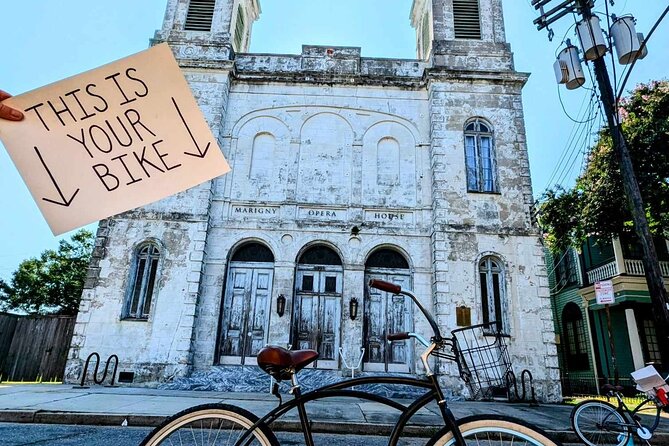
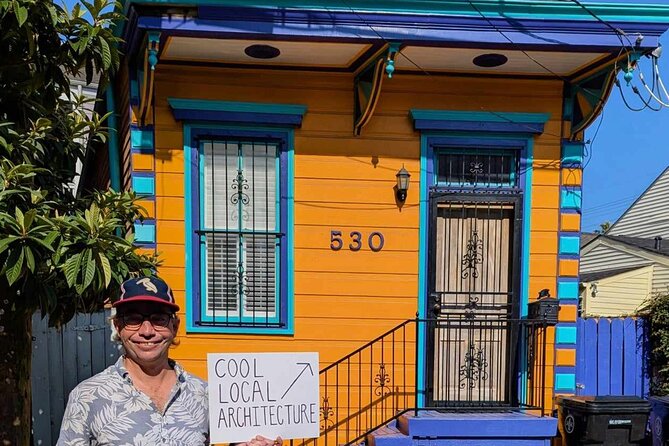
Faubourg Marigny receives about an hour and a half, making it the heart of the experience. The district is one of the oldest suburbs around the French Quarter, and you explore it at a pace that lets the streets do much of the talking.
This is not a quick architectural circuit. You move through quieter residential blocks and get a feel for the neighborhood as a lived-in place. The old buildings, street patterns, and local atmosphere help explain why Marigny remains such an important part of New Orleans culture.
The useful distinction here is between seeing a historic neighborhood and understanding how it functions. You are not only looking at attractive façades. You are hearing about the people who cook the food, play the music, and maintain the traditions that visitors often experience elsewhere in the city.
That local focus is one of the ride’s best qualities. Marigny is presented as a real neighborhood that welcomes people, rather than as a museum display. At the same time, the area is changing, and the tour does not pretend otherwise. You get a look at both the older character and the modern pressures affecting these streets.
For you, the main benefit is time. Ninety minutes gives the guide space to explain details that would be skipped on a drive-by tour. It also gives you time to ask about Creole culture, neighborhood life, food, music, and the way New Orleans has changed.
The drawback is that the tour may feel less satisfying if you want a long list of formal attractions or interior visits. Much of the experience comes from riding, listening, and observing the streets. It is best for someone who enjoys context and local perspective more than checking off major sights.
Bywater, the river, and the city’s difficult past
The route continues into the Bywater Historic District for about an hour. This section adds more direct historical weight, with stops connected to the Plessy v. Ferguson case, the levee wall, and the Mississippi River.
The Plessy v. Ferguson site is especially important. The 1896 Supreme Court case upheld racial segregation under the doctrine of separate but equal, and its effects shaped American life for decades. Seeing the place associated with the case gives the ride a serious civic dimension. New Orleans history is not only architecture, music, and food. It also includes the legal and social struggles that shaped the country.
The stop at the levee and Mississippi River adds physical context. New Orleans has always been tied to the river, both as a source of trade and as a force that shapes how the city is built and protected. The levee is not just a scenic point. It helps you understand the city’s relationship with water and the practical limits of living below sea level.
Bywater also brings in local art and places connected with music. The tour treats these subjects as part of everyday neighborhood life, not as separate museum topics. You might find this section especially useful if you want to connect the city’s creative culture with the streets where it developed.
The neighborhood is changing, and that change is part of the discussion. The ride makes room for the past and the present instead of presenting an untouched version of New Orleans. That balance is valuable, though it also means the experience is not a polished portrait of an unchanging historic district.
Finishing at Marie’s Bar and Kitchen
The final stop is Marie’s Bar and Kitchen, a neighborhood tavern dating to the 1930s. You have about 15 minutes here to relax, ask remaining questions, and discuss what to do next in New Orleans.
A drink is not included in the $55 price, and you do not need to purchase one. That is worth knowing before you book. The stop is partly about having a place to sit and talk, so you can take part in the conversation even if you prefer not to order alcohol.
The bar adds a practical benefit that many city tours miss. Danny can share current music schedules and food recommendations, giving you ideas for the rest of your stay. Since Frenchmen Street is near the starting point, this advice can help you choose an evening music stop, while the neighborhood food suggestions may point you beyond the most obvious tourist choices.
If children are on the tour, the group may use a different location. The important point is that the closing stop can change to fit the group, so you should not treat Marie’s as an absolute promise. The drink stop itself is also short. It is a conversation break, not a full meal or bar visit.
A different side of New Orleans for another evening:
- New Orleans Premier Ghost, Voodoo and Vampire Walking Tour
★ 4.5 · 12,856 reviews - New Orleans Steamboat Natchez Jazz Cruise with Dinner Option
★ 4.0 · 7,533 reviews - Adults-Only New Orleans Ghost, Crime, Voodoo, and Vampire Tour
★ 5.0 · 6,545 reviews - New Orleans Food Walking Tour of the French Quarter with Small-Group Option
★ 5.0 · 6,118 reviews
What the $55 price includes
At $55 per person, the ride offers solid value if you want both transportation and interpretation. The fee includes use of a bicycle, bottled water, and a basket for small bags. You do not have to rent a bike separately or carry your belongings on your back.
The three-hour duration is another strength. You spend only 15 minutes at Washington Square Park and 15 minutes at the bar, leaving most of the time for Faubourg Marigny and Bywater. That ratio makes sense because the neighborhoods themselves are the main attraction.
The small-group limit of 10 people should also improve the experience. A guide can answer questions more easily, and you are less likely to lose the group while moving through neighborhood streets. Danny has also been praised for making personal connections and remembering names, which fits the conversational style of the tour.
The value depends on what you want from a New Orleans outing. If you only want a cheap bicycle rental, $55 may seem high. If you want a guided route, historical explanation, local recommendations, water, and a bike for three hours, the price is reasonable.
You should budget separately for any drink at the final stop. No other paid admissions are listed, and the parks, neighborhoods, riverfront, and historic areas are included in the route without separate ticket charges.
The pace, bikes, and practical comfort
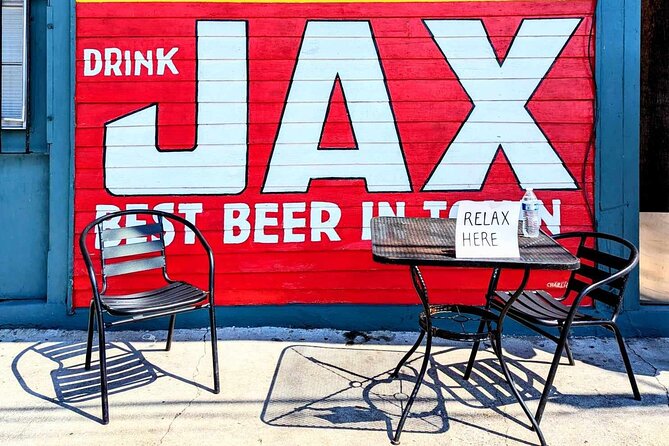
The route is designed for a relaxed ride rather than speed. That makes it suitable for most people who can participate in a standard bike tour, and the practice lap at the beginning helps if you are rusty.
You receive a basket for carrying small bags. Keep your belongings modest, since the basket is intended for small items rather than large luggage. Bottled water is supplied, which is useful during a three-hour outdoor activity.
The tour is offered in English. It begins and ends at the same meeting point, so you do not need to arrange a separate ride back from Bywater or the bar. The start is near public transportation, which makes the 10:00 a.m. meeting time easier to manage if you are staying elsewhere in the city.
The ride requires good weather. If conditions are poor, the provider may offer another date or a full refund. That policy is helpful, but you should still avoid placing the ride on the one day when your schedule has no flexibility.
You can cancel for a full refund up to 24 hours before the start time. Changes or cancellations inside that window are not accepted for a refund. Confirmation normally arrives at booking, though bookings made within six hours of departure are confirmed as soon as possible, depending on availability.
Service animals are allowed, and most people can participate. The experience is not described as wheelchair accessible, so anyone with specific mobility needs should confirm details before booking.
Who will get the most from this ride
I would choose this experience if you want to understand New Orleans beyond Bourbon Street. It suits people who enjoy history told through places, neighborhoods, and ordinary local life.
It is a good fit for:
- First-time visitors who want an orientation before exploring on their own
- Repeat visitors looking for a different side of the city
- People interested in Creole culture, music, food, and neighborhood history
- Couples, families, and small groups who prefer conversation to a large tour
- Anyone who wants local suggestions for music and restaurants
- Riders who prefer a gentle pace over a demanding cycling excursion
You may want something else if you dislike bicycles, need a fully indoor activity, or want formal access to museums and historic buildings. The tour is primarily an outdoor neighborhood ride, and its strongest moments come from the guide’s stories and the character of the streets.
The historical material also includes difficult subjects, including segregation and the legacy of Plessy v. Ferguson. That gives the experience substance, but it may not be what you want from a purely lighthearted sightseeing outing.
My call: book it for the neighborhoods, not just the bike
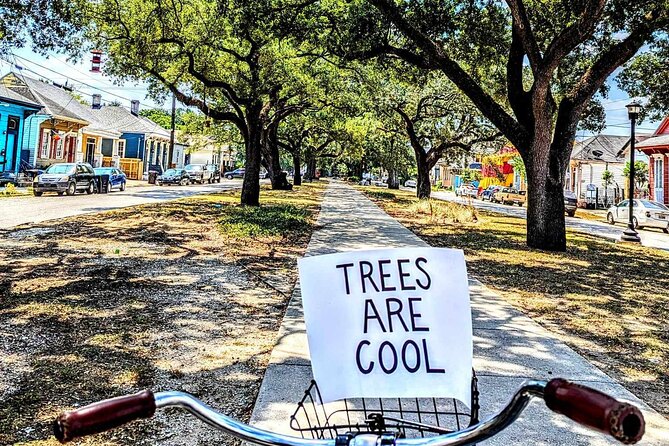
I recommend the New Orleans Creole History and Culture Ride if you want a personal introduction to Marigny and Bywater, with enough history to explain what you are seeing. The excellent 5 out of 5 rating from 50 reviews and 100 percent recommendation rate support the idea that the relaxed pace, local knowledge, and friendly guiding style are working well.
The best reason to book is the combination of three things: a bicycle route through residential districts, serious history at the Plessy v. Ferguson site, and practical advice at the end. Danny’s conversational style, including his habit of remembering names and speaking with each person, adds to the small-group feel.
Book it early if this is central to your plans. It is booked an average of 18 days ahead, and the group is limited to 10 people. Choose a day with a favorable forecast, bring only a small bag, and keep a little extra money available if you want a drink at the final stop.
FAQ
How long does the New Orleans Creole History and Culture Ride last?
The ride lasts approximately three hours.
What time does the tour start?
It starts at 10:00 a.m.
Where does the tour begin?
The meeting point is 634 Elysian Fields Avenue, New Orleans, Louisiana 70116.
Where does the tour end?
The activity ends back at the meeting point.
Is a bicycle provided?
Yes. Use of a bicycle is included in the tour price.
Is water included?
Yes. Bottled water is provided, along with a basket for carrying small bags.
Is the drink at the bar included?
No. The drink at the final stop is not included, and you do not have to buy anything there.
What is the cancellation policy?
You can cancel up to 24 hours before the experience for a full refund. Cancellations or changes made less than 24 hours before the start time are not accepted for a refund. The tour may also be rescheduled or refunded if poor weather or an insufficient number of bookings causes cancellation.
Newest New Orleans tours we have written up
- New Orleans : Garden District Architecture Walking tour★ 4.8 · 5 reviews
- Ultimate Denver Day Out: Red Rocks, City Views & Ice Cream★ 5.0 · 7 reviews
- From New Orleans: Whitney and Laura Guided Plantation Tour★ 4.9 · 20 reviews
- Whitney Plantation and Soul of New Orleans City Tour Combo★ 5.0 · 13 reviews
- Treme Bar Crawl & Seafood Experience★ 4.2 · 7 reviews
- True Voodoo History of NOLA’s Congo Square with Local Guide★ 4.9 · 16 reviews
- Witches Coven Walking Tour in New Orleans★ 5.0 · 49 reviews
- Whitney Plantation Tour with Transportation★ 4.0 · 29 reviews
Historical Tours, compared.
New Orleans Garden District History Walking Tour
Read our review →
French Quarter Historical Sights and Stories Walking Tour
Read our review →
New Orleans Small-Group Haunted History Carriage Tour
Read our review →
Paddlewheeler Creole Queen Historic Mississippi River Cruise
Read our review →
Creole Queen History Cruise with Optional Lunch
Read our review →
Browse the lists this tour appears in