
Reviewed · NEW ORLEANS FRENCH QUARTER TOURS
Creole Louisiana: A French Quarter Walking Tour (English)
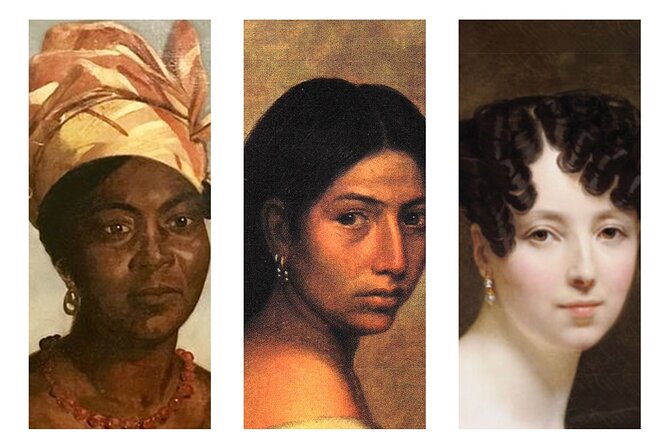
The most useful part of this tour is its focus on the people and ideas that shaped New Orleans, not just its pretty streets. You move from Jackson Square to Congo Square and finish in the courtyard of the Hermann-Grima House, with stories about Creole life, jazz, gumbo, and jambalaya along the way.
I like the clear route through major French Quarter sights and the chance to enter a historic courtyard that you might otherwise pass without seeing. I also like the human scale of the history, especially when guides such as Lawton, Lawson, and Laurent connect food, music, language, and local identity.
The main caution is guide consistency. Most feedback praises the guides’ command of the subject, but one guest felt a substitute guide gave incorrect information about Cajuns and Creoles. Ask questions if a point sounds unclear, particularly when discussing these closely related but distinct identities.
Key points to know before you book
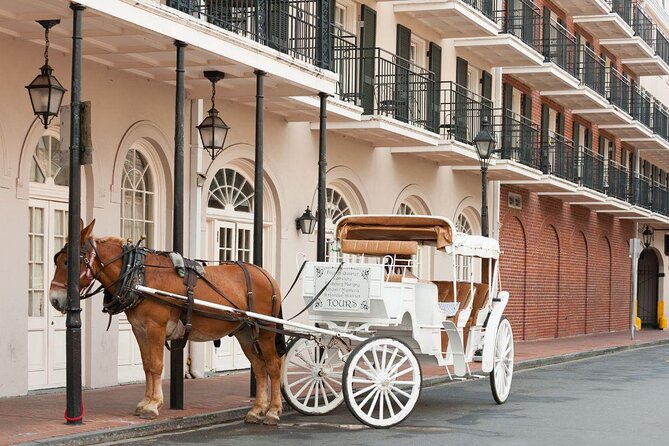
- Jackson Square starts the story: You begin at the central landmark of the Vieux Carré, a useful place to get oriented.
- Congo Square adds cultural depth: The Louis Armstrong Park stop explains why this place matters to New Orleans music and culture.
- The Hermann-Grima House courtyard is included: The tour ends with a 20-minute look at a typical 19th-century courtyard.
- Food and music are part of the history: Expect discussion of jazz, gumbo, jambalaya, Creole culture, and Louisiana’s many communities.
- The tour lasts about two hours: It is long enough for context without taking up most of your day.
- The group may reach 28 people: That is manageable for a city walk, but it may feel less personal than a small private outing.
A people-first introduction to the French Quarter
The French Quarter is easy to admire and easy to misunderstand. Its ironwork, balconies, courtyards, and old churches can turn a walk into a string of attractive views unless someone explains who lived here, how communities changed, and why New Orleans developed such a distinct culture.
This tour gives you that framework. Rather than treating the Vieux Carré as a museum of buildings, it traces the lives and traditions connected to the city. You will hear about Louisiana Creoles, the origins of local dishes, the role of music, and the different meanings attached to Cajun and Creole identity.
That focus makes the walk useful early in your stay. You get your bearings, see several major landmarks, and gain vocabulary that helps the rest of your New Orleans visit make more sense. When a menu mentions gumbo or jambalaya later, you will have a better sense that these foods are tied to history and community, not just restaurant branding.
The tour is conducted in English and uses a mobile ticket. The price is $35 per person, which is reasonable if you want a guided introduction rather than a self-guided walk with scattered facts. Its value depends heavily on the guide, since the route itself is accessible on your own, but the explanations are the main reason to pay.
More French Quarter tours in New Orleans:
- New Orleans Food Walking Tour of the French Quarter with Small-Group Option
★ 5.0 · 6,118 reviews - New Orleans French Quarter, Voodoo and Culture Walking Tour
★ 4.5 · 2,961 reviews - French Quarter Historical Sights and Stories Walking Tour
★ 5.0 · 2,724 reviews
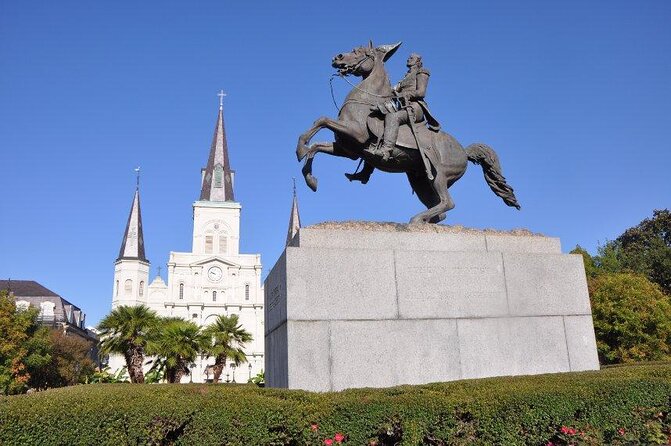
Jackson Square puts the Vieux Carré in context
The tour begins at 2951502 Royal Street, near the heart of the French Quarter. Your first formal stop is Jackson Square, where the guide explains the history of this central public space and its place in the Vieux Carré.
The stop is listed at about five minutes, so do not expect a long examination of every building around the square. Instead, use it as a scene-setting moment. You will learn why this part of town matters and how the square functions as a center for the old quarter.
I like starting here because the French Quarter can feel like a maze on your first morning. A guide gives you a mental map before you wander off toward the river, the market, or the side streets. You also begin with a landmark that ties together architecture, public life, and the city’s past.
The brief timing is both a strength and a limitation. It keeps the walk moving, but anyone hoping for a detailed architectural lecture at Jackson Square may want to spend extra time here afterward.
St. Louis Cathedral adds a spiritual center
From Jackson Square, the tour turns to St. Louis Cathedral. The guide discusses the church as the most historic church in New Orleans, and the stop takes about five minutes.
This is another short explanation rather than a full visit built around interior details. The value lies in seeing the cathedral as part of the French Quarter’s larger story. Its position beside Jackson Square makes clear how closely civic and religious life were linked in the old center of town.
You should expect an outside orientation rather than a separate admission experience, since admission is listed as free and no individual entry time is provided. If you want to attend a service or study the interior, plan that separately and do not assume the two-hour walk leaves time for it.
For me, the cathedral works best as a connecting point between the public square and the cultural story that follows. The tour is not trying to turn every stop into a long museum visit. It gives you enough context to recognize the place, then moves on.
Congo Square explains why music matters here
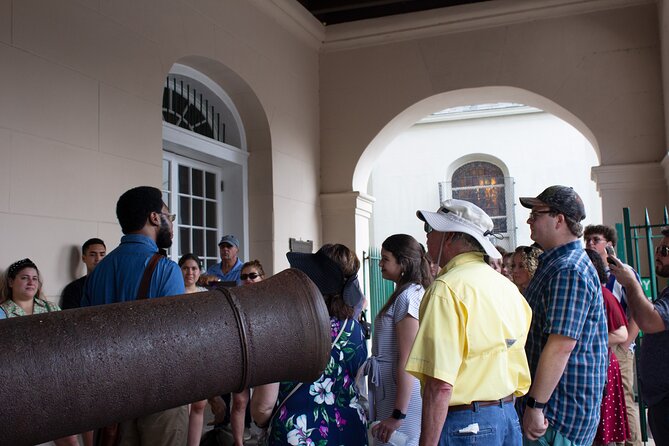
The walk continues to Louis Armstrong Park, with about ten minutes devoted to Congo Square. This is one of the tour’s most important stops because it shifts the focus from buildings to cultural memory.
The guide explains the significance of Congo Square and connects it to the wider culture of New Orleans. The information supplied for the experience specifically links this walk with the origins of jazz, so this is where the music portion of the story becomes especially relevant.
You may find this stop more meaningful than a simple list of famous musicians. The point is to understand how a public place can carry the memory of communities and traditions across generations. The tour presents New Orleans music as part of a longer cultural story, not as a sudden invention confined to clubs.
The ten-minute time slot is still fairly tight. If Congo Square is a major reason you booked, you may want to return later and give the park more time. The guided explanation gives you a useful starting point, but it cannot cover every layer of the site in a short visit.
A few more New Orleans tours worth comparing
- New Orleans Premier Ghost, Voodoo and Vampire Walking Tour
★ 4.5 · 12,856 reviews - St. Louis Cemetery No. 1 Official Walking Tour
★ 4.5 · 3,941 reviews - New Orleans Garden District History Walking Tour
★ 5.0 · 2,879 reviews - Ghost and Vampire Walking Tour Of The French Quarter
★ 4.5 · 2,406 reviews
The Hermann-Grima House courtyard is the tour’s special access
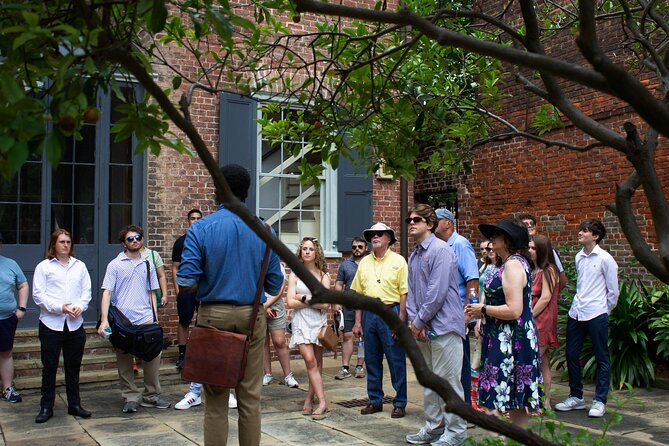
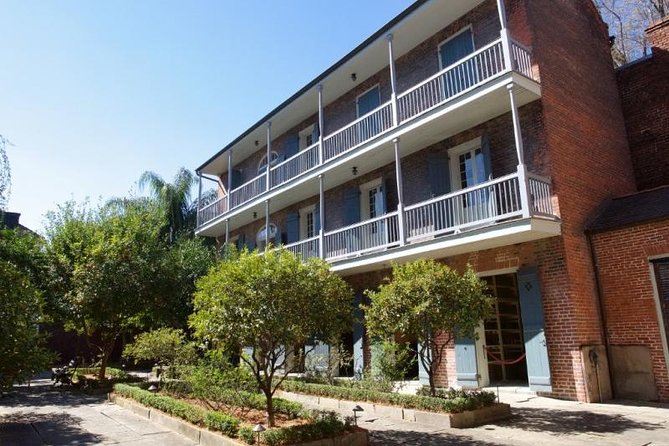
The final stop is the Hermann-Grima House at 820 St. Louis Street. The tour includes entry to its courtyard, with about 20 minutes set aside for a look at this typical 19th-century space.
This is the clearest feature that separates the experience from an ordinary French Quarter orientation walk. Courtyards are part of the visual character of old New Orleans, but they are not always visible from the street. Here, you have a planned opportunity to see one from within and hear how it fits the period setting.
The tour ends at the house, so the courtyard is not simply a quick stop along the way. It gives the walk a calm finishing point after several public landmarks. You can also use the location to continue exploring the nearby French Quarter once the tour ends.
The 20-minute visit will not provide the depth of a full house tour, and the available information specifically promises the courtyard rather than complete access to the building. Still, for $35, this included entry adds useful value. It gives you one interior-looking experience without requiring a separate ticket or a second outing.
Creole, Cajun, food, and music require careful explanation
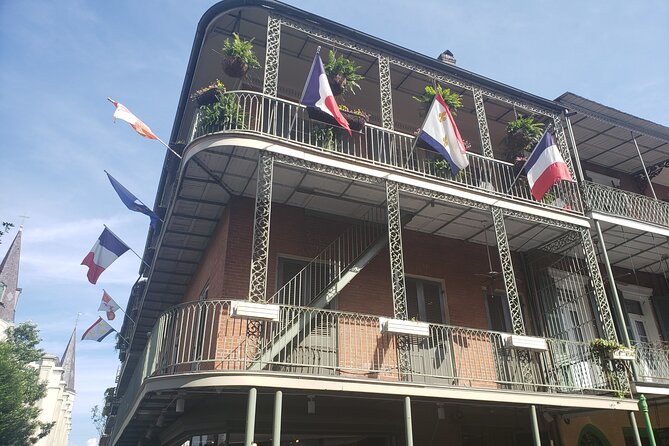
The tour’s subject is not just where to walk. It is how to understand Louisiana’s overlapping cultures. The route promises discussion of Creole history and the origins of jazz, gumbo, and jambalaya, all subjects that can be flattened into tourist slogans if handled poorly.
The strongest guide feedback centers on clear explanations of the terms Creole and Cajun. Lawton is specifically praised for breaking those ideas down in an understandable way. Lawson is also named as a friendly, well-informed guide who gave a strong tour even with only two people in the group. Laurent is praised for tying together food, culture, and history.
There is one important qualification. A guest felt a substitute guide gave too little new information and made inaccurate claims about Cajuns. That does not cancel out the many positive comments, but it does show why the guide matters so much here. These subjects involve family identity, regional background, language, and local pride. A confident but careless explanation can leave you more confused than before.
I would treat the tour as a starting point for understanding Louisiana, not as the final word on every cultural term. Listen for definitions, ask polite questions, and notice how the guide connects broad history to daily life. If the explanations are clear, this is where the experience earns its price.
The two-hour format keeps the day flexible
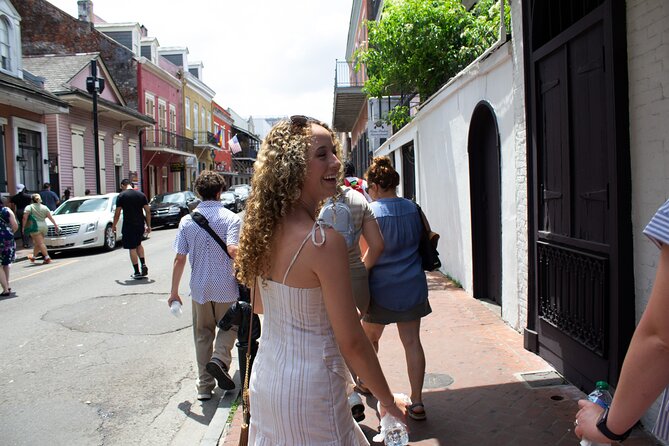
At about two hours, the walk fits neatly into a morning or afternoon. You are not giving up a full day of sightseeing, yet you cover four key areas and end at a specific historic house.
The walking format also saves you from handling directions in streets that can be confusing on a first visit. You move from Royal Street through the French Quarter toward Louis Armstrong Park and then finish on St. Louis Street. Exact walking distances are not provided, so comfortable shoes are a sensible choice.
The group limit is 28 people. That is not a tiny group, and the experience may feel less intimate when it is full. Still, a cap prevents the walk from becoming an uncontrolled crowd and should make it possible to hear the guide at most stops.
The tour is near public transportation, which helps if you are staying outside the French Quarter. It does not provide transportation during the walk, so you should arrive at the starting point on your own and arrange your own onward plans after the Hermann-Grima House.
Who will get the most from this walk
I would recommend this experience to a first-time visitor who wants a broad introduction before choosing which parts of New Orleans to explore in greater detail. It also suits anyone who prefers stories about people, food, and culture over a long architectural survey.
The tour is a good fit if you want:
- A short orientation to the French Quarter
- A guide to explain Creole and Cajun terms
- An introduction to jazz and Congo Square
- A route through several major landmarks
- Access to the Hermann-Grima House courtyard
- A set plan instead of researching your own walk
It may be less satisfying if you want extensive time inside each attraction, a private guide, or a tightly specialized study of architecture. The stops are brief, and several are viewed as part of a moving route rather than as lengthy visits.
The experience is open to most people, and service animals are allowed. The tour requires good weather, so a poor-weather cancellation can lead to a different date or a full refund. If you need to cancel, do so at least 24 hours before the start time for a full refund. Changes or cancellations inside that window are not accepted for a refund.
Is $35 a fair price?
At $35, you are paying for three things: a planned route, a live explanation, and entry to the Hermann-Grima House courtyard. The landmarks themselves do not require admission, so the guided interpretation is the main part of the value.
That makes the quality of the guide important. The best feedback describes guides who are friendly, entertaining, and able to explain complicated cultural terms in plain language. One account even describes a nearly private experience with only two people in the group, though you should not expect that every time because the group can reach 28.
I think the price is fair for an introductory walk, especially if you book it near the start of your visit and use what you learn to plan the rest of your time. It is less compelling if you only want photographs of Jackson Square and the cathedral, since you can see those without paying for a tour.
The included courtyard visit helps tip the balance. You receive more than a street circuit, but you should keep your expectations realistic: this is a two-hour overview, not an all-day study of New Orleans history.
My call: book it for context, not just landmarks
I would book this tour if you want to understand why New Orleans feels different from other American cities. The strongest parts are the cultural connections, the explanation of Creole and Cajun identity, the Congo Square stop, and the included Hermann-Grima House courtyard.
Book it early in your stay if possible. The route gives you orientation, and the food and music background can sharpen everything you do afterward. If you are especially concerned about guide quality, pay attention to the scheduled guide and ask clear questions during the walk.
Skip it if you prefer exploring at your own pace or want long visits inside each landmark. The route is efficient, the stops are short, and the experience depends on the person leading it. For most visitors who want a thoughtful first look at the French Quarter, $35 buys useful context and a well-planned introduction.
FAQ
How long does the Creole Louisiana walking tour last?
The tour lasts approximately two hours.
Where does the tour begin?
It begins at 2951502 Royal Street, New Orleans, Louisiana 70116.
Where does the tour end?
The tour ends at the Hermann-Grima House, 820 St. Louis Street, New Orleans, Louisiana 70112.
Is entry to the Hermann-Grima House courtyard included?
Yes. The fee to enter the courtyard is included in the tour price.
What sights are covered?
The route includes Jackson Square, St. Louis Cathedral, Louis Armstrong Park and Congo Square, and the Hermann-Grima House courtyard. It also passes top French Quarter sights, including St. Louis Cemetery No. 1.
How many people can join the tour?
The maximum group size is 28 people.
What is the cancellation policy?
You can cancel at least 24 hours before the start time for a full refund. Cancellations or changes made less than 24 hours before the start time are not refunded or accepted. Weather or minimum-participant cancellations may result in a different date or a full refund.
Newest New Orleans tours we have written up
- 45-Minute Garden District Highlights Tour in New Orleans★ 5.0 · 33 reviews
- New Orleans City and Swamp Helicopter Tour★ 5.0 · 9 reviews
- 45-Minute Marigny Triangle Highlights Tour in New Orleans★ 5.0 · 12 reviews
- 20 Passenger New Orleans Airport or Hotel Transfer★ 5.0 · 6 reviews
- Private New Orleans 2-Hour Sail Aboard a Luxury Yacht★ 5.0 · 44 reviews
- The New Orleans Darkness Tour★ 4.4 · 9 reviews
- 11 Passenger Executive Van: New Orleans Airport or Hotel Transfer★ 4.0 · 8 reviews
- Spooky Family Ghost Tour★ 3.4 · 9 reviews
New Orleans French Quarter Tours, compared.

New Orleans Food Walking Tour of the French Quarter with Small-Group Option
Read our review →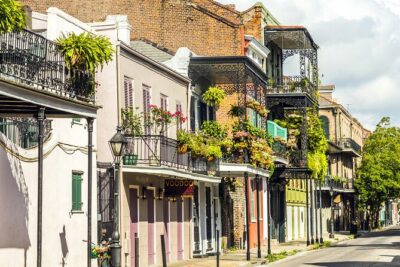
New Orleans French Quarter, Voodoo and Culture Walking Tour
Read our review →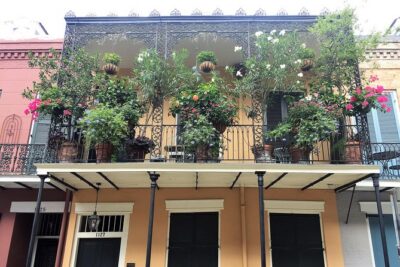
French Quarter Historical Sights and Stories Walking Tour
Read our review →
Ghost and Vampire Walking Tour Of The French Quarter
Read our review →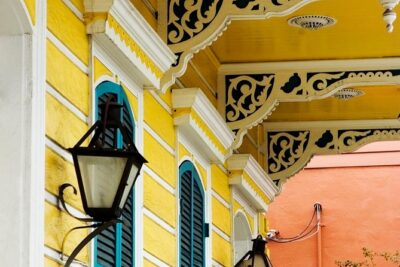
New Orleans City Tour: French Quarter, Garden District & Cemetery
Read our review →
New Orleans French Quarter Food Tour: Cajun, Creole and Culture
Read our review →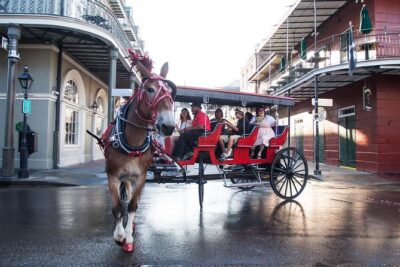
New Orleans French Quarter and More Carriage Ride
Read our review →
French Quarter walking Food Tour Famous Flavors of New Orleans
Read our review →Browse the lists this tour appears in