
Reviewed · NEW ORLEANS FRENCH QUARTER TOURS
More Than Mardi Gras: French Quarter Tour (Small Group)
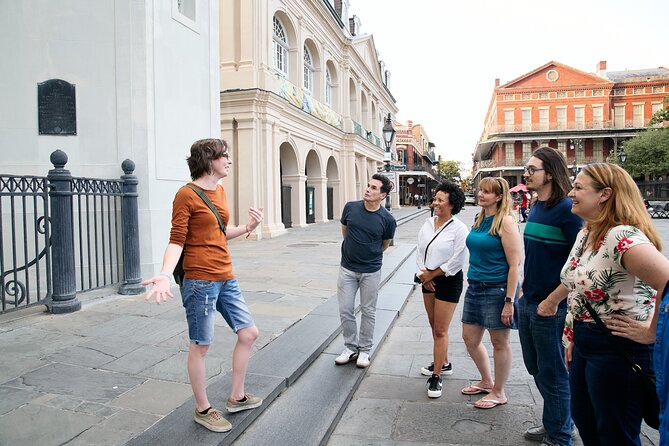
New Orleans reveals itself best on foot, one story and one street corner at a time. This 90-minute French Quarter walk moves from St. Louis Cathedral and the Pontalba Buildings to Pirate Alley, the Ursuline Convent, Royal Street, and Bourbon Street, ending at the Presbytère.
I like two things right away: the route looks beyond Bourbon Street, and the guides bring real subject knowledge to the walk. Andrew helped one repeat visitor see new sides of the city, while Daniel, a history major, gave his group a strong grounding in New Orleans. The possible drawback is pace: 90 minutes is enough for an introduction, not a slow, detailed tour of every site.
Key points at a glance
- Start at Jackson Square: Begin beside New Orleans landmarks, with St. Louis Cathedral as the first major stop.
- See more than party streets: Royal Street, the Ursuline Convent, Pirate Alley, and old government buildings give the Quarter a wider story.
- Hear the human stories: Learn about Michaela Pontalba, local priests, privateers, pirates, and the Catholic roots of Louisiana.
- Get a practical Bourbon Street briefing: The guide explains its sordid past and offers basic advice for seeing it sensibly.
- Finish with Mardi Gras and Katrina: The Presbytère adds museum exhibits on carnival traditions and the city’s recovery after Hurricane Katrina.
- Small group, but not tiny: The maximum is 27 people, so ask questions when the guide pauses and stay close on busy streets.
Why this walk gives you a better first look at the French Quarter
The French Quarter is easy to reduce to balconies, cocktails, and Bourbon Street noise. This tour gives you a more useful starting point. It connects architecture, faith, government, literature, piracy, nightlife, Mardi Gras, and disaster recovery in one compact route.
That range is the main reason I would consider booking it early in a New Orleans visit. After 90 minutes, you should have a clearer map in your head and a better sense of which streets deserve a second look. The walk also points out homes linked with Tennessee Williams and William Faulkner, adding a literary layer to the neighborhood.
The tour begins at 10:30 am at Jackson Square. That morning timing matters. You get the Quarter before the day’s heat and nighttime crowds take over, and you can use the rest of the day to return to the places that caught your eye.
The group can include up to 27 people. That is still more personal than a large bus tour, but it is not an intimate walk for only a handful of guests. You will want to listen closely when the group gathers near a busy street and speak up if you have a question.
More French Quarter tours in New Orleans:
- New Orleans Food Walking Tour of the French Quarter with Small-Group Option
★ 5.0 · 6,118 reviews - New Orleans French Quarter, Voodoo and Culture Walking Tour
★ 4.5 · 2,961 reviews - French Quarter Historical Sights and Stories Walking Tour
★ 5.0 · 2,724 reviews
Jackson Square and the story of St. Louis Cathedral
Jackson Square is a fitting place to begin because it puts several important New Orleans landmarks within view. The first major stop is St. Louis Cathedral, described as the oldest continuously used cathedral in the United States.
The cathedral also introduces the colonial architecture of Louisiana and the role of Catholic faith in the region. That religious story is not a side note here. Catholic institutions shaped the city’s early social and political life, and the tour returns to that subject at the Ursuline Convent and the Presbytère.
I like starting with a building that still functions as a place of worship. You are not simply looking at an old facade. You are learning why the cathedral matters to New Orleans and how colonial design developed in this part of the country.
The stop is primarily an exterior discussion in the supplied route, so do not assume you will receive a long interior visit. If seeing the inside is important to you, ask the guide about the best time to enter on your own.
The Pontalba Buildings and Michaela Pontalba’s struggle
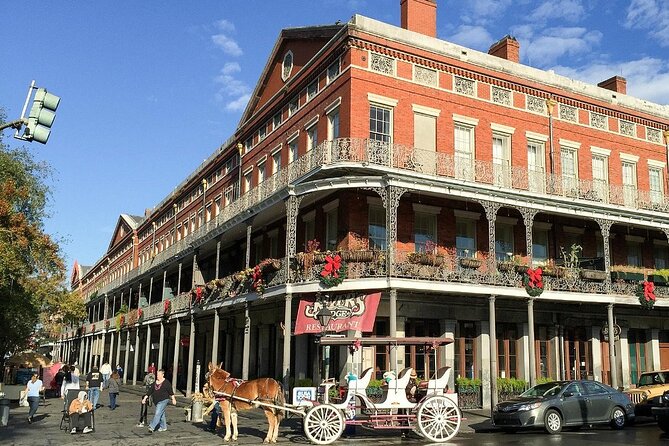
Next, the walk turns to the Pontalba Buildings, often described as some of the first apartments in the United States. Their story centers on Michaela Pontalba and her fight to have the buildings created from her father’s legacy.
This stop adds a personal drama to the architecture. Instead of hearing only dates and construction details, you get a story about money, family control, and a woman determined to shape the property connected to her name.
The Pontalba Buildings also help you read the French Quarter more carefully. Look for how the buildings frame the square and how the upper-level residences relate to the street. A guide can point out details you might otherwise pass without noticing.
The limitation is that this is a walking explanation, not a full architectural tour. You will learn why the buildings matter, but you should not expect access to private apartments.
The Cabildo and New Orleans in three political eras
The Cabildo once served as a seat of government for the French, Spanish, and American administrations. Today it forms part of the Louisiana State Museum system.
This is an important pause because it shows how New Orleans changed hands while retaining layers of its earlier identity. The building is not treated as a decorative backdrop. Its former civic role helps explain why the French Quarter has such a mix of legal, religious, and cultural influences.
The guide also tells you what is worth seeing inside and offers practical advice about visiting. That is useful if you plan to spend more time in the museum district after the walk. You can decide if an interior visit fits your schedule instead of wandering in without a plan.
Admission to the Cabildo is not listed as part of the tour, so treat this stop as an orientation unless the guide tells you otherwise. The route keeps moving, and you will need a separate visit if you want to explore its collections.
More Mardi Gras tours in New Orleans:
- New Orleans Mardi Gras World Behind-the-Scenes Tour
★ 4.5 · 538 reviews - New Orleans Mardi Gras 2026 Experience
★ 3.5 · 9 reviews - Mardi Gras Mambo Tours: Mambo Nights
★ 5.0 · 3 reviews
Pirate Alley, privateers, and the rougher side of New Orleans
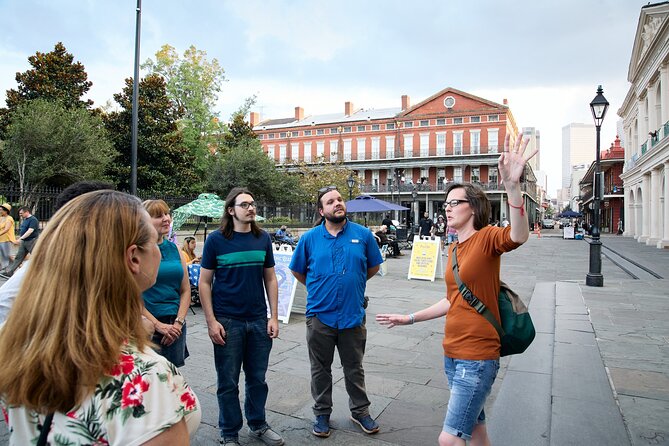
Pirate Alley brings a different tone to the walk. The guide discusses privateers and the role pirates played in the creation of New Orleans.
The distinction matters. Privateers operated with government permission, while pirates did not, though the line could become blurry in the real world. In New Orleans, the connection between trade, smuggling, river traffic, and armed seafaring helps explain why stories of pirates remain tied to the city’s beginnings.
This is also a good example of the tour’s method. It uses a narrow passage and a memorable name to open a larger conversation about the city’s early economy and uncertain law. You get a story that is easy to remember, but it is linked to broader questions about who controlled commerce and power.
Pirate Alley is a quick walking stop rather than a formal attraction with a long visit. Keep your expectations in line with that. You are there to hear the setting explained, take in the atmosphere, and continue through the Quarter.
The Ursuline Convent and Louisiana’s Catholic roots
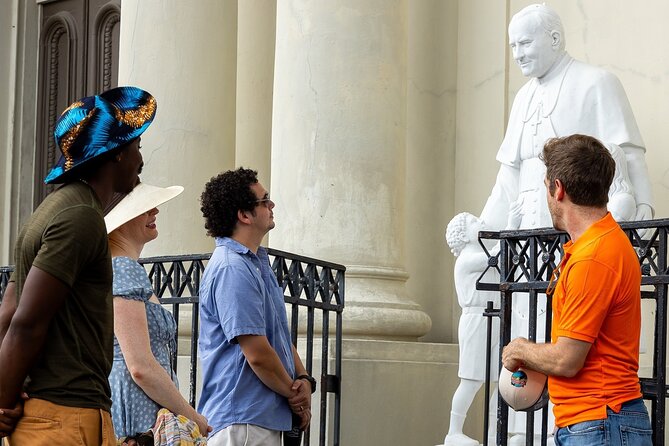
The Old Ursuline Convent Museum is one of the most important architectural stops on the route. It was home to the first religious order to come to New Orleans and remains a fine example of colonial religious architecture.
The convent gives the Catholic story a physical center. After hearing about St. Louis Cathedral, you can see how religious orders influenced education, community life, and the city’s early institutions.
I like that the tour includes this stop rather than focusing only on nightlife. The convent helps correct the common idea that New Orleans is only about music and parties. Its old walls offer a quieter look at the forces that shaped Louisiana.
The tour appears to discuss the building from the outside rather than include a full museum visit. If the architecture interests you, ask the guide about visiting the museum separately. The walk gives you context, but a quick pass will not replace time inside.
Royal Street, literary homes, and French Quarter architecture
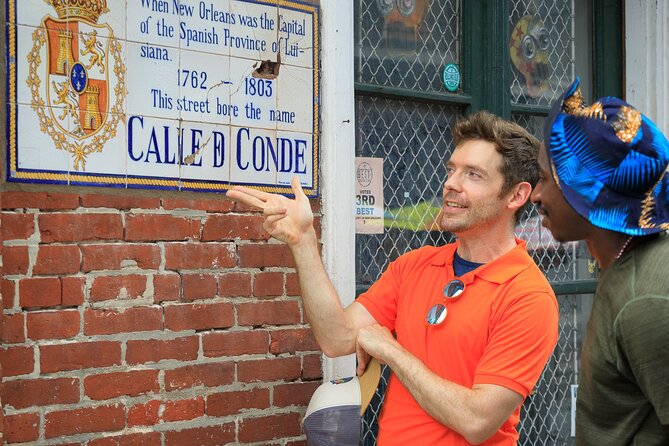
As you move along the Royal Streets, the guide points out the area’s architecture and the live music heard along the way. You will also learn about homes connected with Tennessee Williams and William Faulkner.
Royal Street gives the walk a useful contrast with Bourbon Street. Its buildings, balconies, and street life show how the Quarter can feel cultural and residential as well as commercial. The music adds sound to the experience, while the literary connections remind you that writers have long drawn on the city’s unusual character.
The tour does not promise entry into the writers’ homes. You will see the locations and hear their connection to the neighborhood. That is enough to help you recognize them later if you return for a slower walk.
This is one area where the guide’s skill matters most. The buildings are attractive, but without context they can blur together. Andrew and Daniel are both specifically praised for explaining New Orleans history in a way that held attention, including for teenagers. Guide assignments can change, so those names should not be treated as a guarantee.
Bourbon Street with context and practical advice
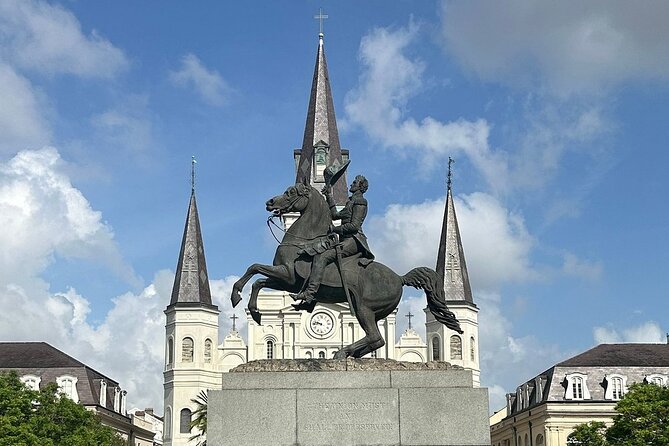
Bourbon Street is included, but it is not the whole point of the tour. The guide discusses its sordid past, its place in American popular culture, and how to approach a visit.
That practical angle is welcome. You get a basic how to instead of being sent into the street without context. The tour can help you separate the historic importance of Bourbon Street from its modern reputation for bars, loud music, and nightlife.
The timing also helps. A 10:30 am walk gives you a look at the street before its late-night character appears in full force. If you want to return after dark, the guide’s advice may help you make a more informed choice, but the tour does not include a nighttime pub crawl or entertainment program.
Do not expect Bourbon Street to be polished or peaceful. Its appeal is tied to excess, noise, and a long, complicated past. The tour treats that honestly rather than pretending the street represents every part of New Orleans.
The Presbytère and the final 20 minutes
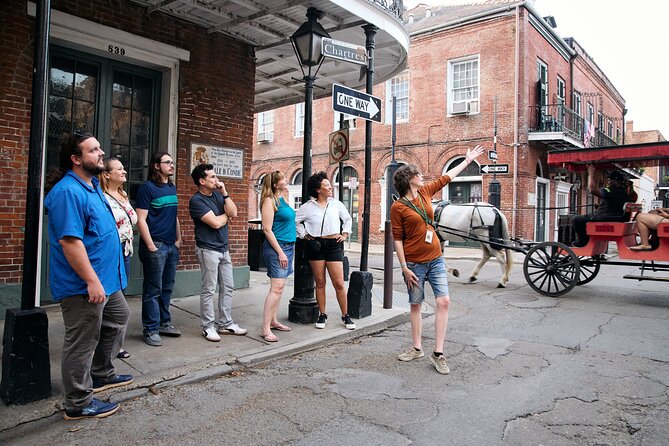
The walk ends at the Presbytère on Chartres Street. The building once served as a home for local priests, and the guide explains the importance of Catholic faith in Louisiana here as well.
The final museum visit focuses on two subjects that help connect the older city to modern New Orleans: Mardi Gras and Hurricane Katrina. The Mardi Gras exhibits explain the traditions behind the celebration, while the Katrina material shows how the city faced and rebuilt after a devastating storm.
This ending works because it moves beyond the standard old-town story. You begin with colonial buildings and religious institutions, then finish with living traditions and a recent event that still shapes how people understand New Orleans.
The museum portion is self-guided and lasts about 20 minutes. The tour information says the guide will have tickets for entry, but the itinerary also marks admission as not included. I would confirm the exact ticket arrangement before booking so there is no confusion at the end.
Is $39 a fair price for 90 minutes?
At $39 per person, this is not the cheapest way to stroll through the French Quarter. You can walk the streets for free and read about major buildings on your own.
The value comes from the route and the explanation. You receive a guided introduction to several subjects that are hard to connect without local help: Catholic institutions, colonial government, family property, piracy, writers, nightlife, Mardi Gras, and Katrina. The Presbytère portion adds a museum visit rather than ending when the walk is over.
I see the price as reasonable if you are new to New Orleans or want a clear historical foundation early in your stay. It is less compelling if you already know the French Quarter well and mainly want a slow photography walk or time inside museums.
The fact that the tour is often booked 23 days ahead suggests you should not leave it until the last minute if your schedule is fixed. Free cancellation is available until 24 hours before the start time, which gives you some flexibility.
Who should book this French Quarter walk?
I would point this tour toward first-time visitors, repeat visitors who want a stronger history base, families with older children, and anyone who wants more than a Bourbon Street party.
It also suits people who prefer a compact morning activity. The route lasts about 90 minutes, and the museum visit adds roughly 20 minutes at the end. You are not committing to a half-day program.
History fans should appreciate the range of subjects. Architecture lovers will get useful context, though not a specialist-level building survey. Food and music fans may enjoy the references to street music and local culture, but this is not a tasting tour or a live performance tour.
I would think twice if you need a private guide, a very small group, or extensive interior access. A maximum of 27 people is manageable, but the walk will not feel custom-built for your interests.
My booking call
Book this tour if you want the French Quarter to make sense before you explore it on your own. The strongest reasons are the broad route, the clear focus on Catholic and colonial New Orleans, the stories of Michaela Pontalba and the city’s pirates, and the closing exhibits on Mardi Gras and Katrina.
Skip it if your priority is a private, slow-paced architectural tour or an evening focused only on Bourbon Street. For most first-time visitors, though, $39 buys a useful orientation, especially when guides such as Andrew or Daniel are leading the walk. Schedule it near the start of your stay, wear comfortable shoes, and keep time afterward for the Presbytère’s exhibits.
FAQ
Where does the tour start?
The tour starts at Jackson Square in New Orleans, Louisiana.
What time does the tour begin?
The scheduled start time is 10:30 am.
How long does the walking tour last?
The walking portion lasts approximately 1 hour and 30 minutes.
Where does the tour end?
The tour ends at the Presbytère, located at 751 Chartres Street in New Orleans.
Is admission to the Presbytère included?
The end information says the guide will have tickets for a self-guided visit to the Mardi Gras and Hurricane Katrina exhibits. Another part of the tour information marks admission as not included, so confirm the ticket arrangement before booking.
How large can the group be?
The tour has a maximum of 27 travelers.
Is the tour suitable for most people?
Yes. The supplied information says most travelers can participate, and the tour is near public transportation.
Can I cancel for a full refund?
You can cancel for a full refund if you cancel at least 24 hours before the experience start time. Changes or cancellations made less than 24 hours before the start are not accepted for a refund.
Newest New Orleans tours we have written up
- 45-Minute Garden District Highlights Tour in New Orleans★ 5.0 · 33 reviews
- New Orleans City and Swamp Helicopter Tour★ 5.0 · 9 reviews
- 45-Minute Marigny Triangle Highlights Tour in New Orleans★ 5.0 · 12 reviews
- 20 Passenger New Orleans Airport or Hotel Transfer★ 5.0 · 6 reviews
- Private New Orleans 2-Hour Sail Aboard a Luxury Yacht★ 5.0 · 44 reviews
- The New Orleans Darkness Tour★ 4.4 · 9 reviews
- 11 Passenger Executive Van: New Orleans Airport or Hotel Transfer★ 4.0 · 8 reviews
- Spooky Family Ghost Tour★ 3.4 · 9 reviews
New Orleans French Quarter Tours, compared.

New Orleans Food Walking Tour of the French Quarter with Small-Group Option
Read our review →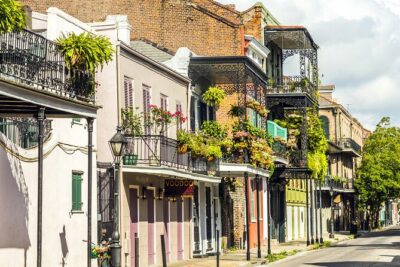
New Orleans French Quarter, Voodoo and Culture Walking Tour
Read our review →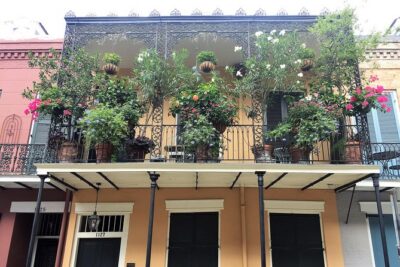
French Quarter Historical Sights and Stories Walking Tour
Read our review →
Ghost and Vampire Walking Tour Of The French Quarter
Read our review →
New Orleans City Tour: French Quarter, Garden District & Cemetery
Read our review →
New Orleans French Quarter Food Tour: Cajun, Creole and Culture
Read our review →
New Orleans French Quarter and More Carriage Ride
Read our review →
French Quarter walking Food Tour Famous Flavors of New Orleans
Read our review →Browse the lists this tour appears in