
Reviewed · NEW ORLEANS VOODOO TOURS
New Orleans French Quarter and Voodoo History Walking Tour
New Orleans voodoo is best understood through people and places, not spooky clichés. This 1-hour-45-minute walk connects Congo Square, the former home of Marie Laveau, Bourbon Street, and Jackson Square while showing how African, Indigenous, French, Spanish, and Caribbean influences shaped the city.
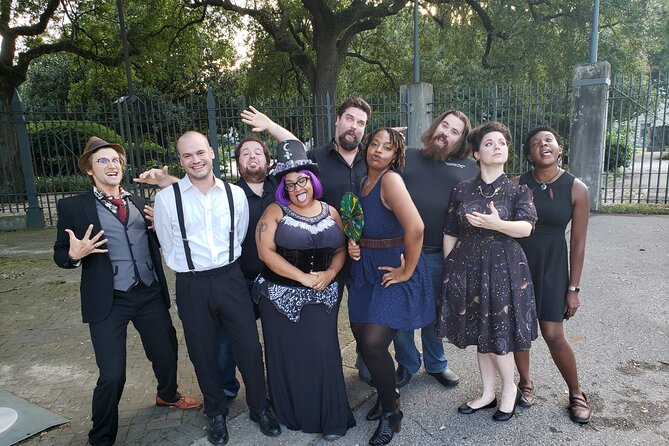
I like the way the tour joins voodoo with music, architecture, politics, and food culture. I also like the strong storytelling style, with guides such as Wolfy, Pepe, Nika, Angela, Erin, and Robert praised for humor, clear explanations, and lively local detail. The main consideration is that the tour can reflect the guide’s personal historical viewpoint, and one guide drew criticism for spending too much time on politics.
Key points to know before you book
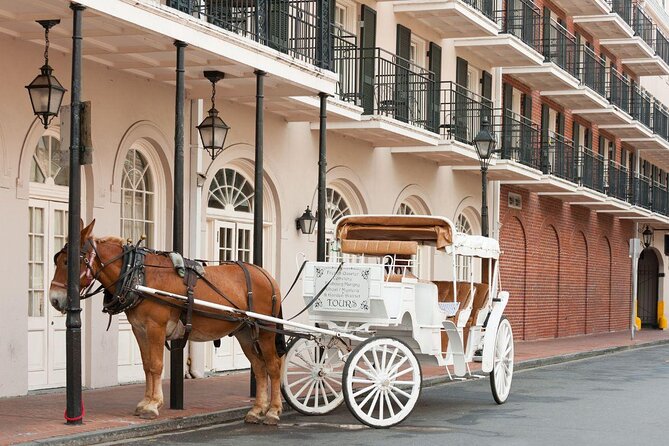
- Marie Laveau’s former home: Visit the site connected with New Orleans’ best-known Voodoo Queen and hear how the house served people in need, including orphans and Choctaw vendors.
- Congo Square sets the tone: The tour begins with slavery, Indigenous peoples, African traditions, and the early roots of voodoo in New Orleans.
- Music is part of the story: Preservation Hall provides a useful link between historic Black musical traditions and the city’s living sound.
- A small group helps: The maximum group size is 20, a practical limit for questions and street-corner storytelling.
- Guides make the difference: Wolfy, Pepe, Nika, Angela, Erin, Robert, Bobby, and others have each been praised for distinct strengths, from humor to careful answers.
- The route ends at Jackson Square: You finish near the cathedral, museums, artists, musicians, and tarot readers, with the French Quarter still at your feet.
Why this New Orleans walk feels different
Many French Quarter walks focus on grand buildings, ghost stories, or famous drinks. This one uses voodoo as a doorway into the city’s wider past. You hear about forced migration, African religious traditions, Indigenous communities, local politics, music, and the people who gave New Orleans its unusual character.
That broader approach is the tour’s greatest strength. You are not simply shown a building and given a date. You are asked to connect a public square with spiritual practice, a music hall with cultural survival, and an elegant street with the complicated political story of Louisiana.
The route begins at Voodoo Lounge, at 718 North Rampart Street, at 11 a.m. From there, you walk toward Congo Square and through several central French Quarter streets before finishing in Jackson Square. The route is about 1 hour and 45 minutes, and the pace is described as comfortable, with shade and breaks handled thoughtfully on hot days.
A group of up to 20 is large enough to create energy but small enough for a guide to answer questions. I would still stay near the guide, especially on busy streets or at crowded corners. This is a talk-and-walk experience, so the quality of the guide matters as much as the places on the route.
More French Quarter tours in New Orleans:
- New Orleans Food Walking Tour of the French Quarter with Small-Group Option
★ 5.0 · 6,118 reviews - New Orleans French Quarter, Voodoo and Culture Walking Tour
★ 4.5 · 2,961 reviews - French Quarter Historical Sights and Stories Walking Tour
★ 5.0 · 2,724 reviews
Congo Square and the roots of voodoo
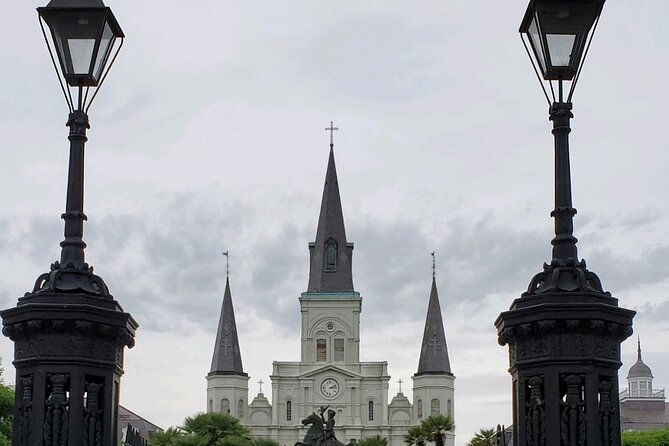
Congo Square is the right place to start because it gives the tour historical weight from the first few minutes. Here, the discussion covers the early history of voodoo, the slave trade, and Indigenous peoples in New Orleans.
This opening helps separate actual cultural history from the theatrical version of voodoo often sold to visitors. You can expect an explanation of how African beliefs and practices survived under slavery and changed as they met Catholic traditions, Caribbean influences, and local customs.
The stop lasts about 10 minutes. That is enough to establish the main ideas, though not enough to cover every part of such a complicated subject. If voodoo is your only interest, you may want a longer specialist program as well. If you want a first look at how voodoo fits into New Orleans history, this is a strong beginning.
The Congo Square discussion also gives later stops more meaning. Marie Laveau is not presented as an isolated spooky figure. Her story makes more sense after you have heard about the communities, beliefs, and social pressures that shaped nineteenth-century New Orleans.
Marie Laveau’s home and the human side of voodoo
One of the most distinctive stops is the original site of Marie Laveau’s former home. Laveau is widely known as the Voodoo Queen, but the important detail here is that the house was also described as a safe place for people in need.
The stop connects her spiritual work with ordinary community service. Orphans and Choctaw vendors found shelter there, adding a practical and human side to a figure often reduced to legend.
You should expect this section to mix documented history with local lore and competing theories. That is not a flaw, as long as you listen for the difference between what can be established and what has been passed down. Some guides are especially good at making that distinction clear.
The stop takes about 10 minutes. It is brief, but it gives the tour a clear center. If you are hoping to see an intact historic house or a museum interior, adjust your expectations. The value is in the location and the explanation, not in a large physical attraction.
Bourbon Street beyond the party reputation
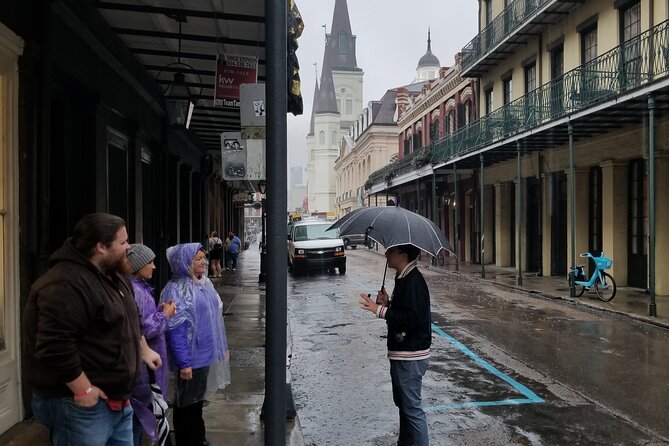
The walk then turns to Bourbon Street, including how it got its name, why it became famous, and why locals have a complicated relationship with its public image. You also hear about the Old French Opera House.
This is a useful correction to the usual Bourbon Street snapshot. You will certainly see the famous nightlife corridor, but the guide also explains how one street can function as a tourist symbol, a working part of the neighborhood, and a source of irritation for people who live nearby.
The stop is a reminder that the French Quarter is not a theme park. Its restaurants, bars, music rooms, homes, churches, and shops share a small area, and those uses do not always fit neatly together. The tour does not treat Bourbon Street as either entirely wonderful or entirely tawdry.
Because this section takes place in an active public area, street noise may compete with the guide. Stay close and ask for clarification if you miss a point. The group limit helps, but this is still a city walk rather than a quiet lecture room.
More voodoo tours in New Orleans:
- New Orleans Premier Ghost, Voodoo and Vampire Walking Tour
★ 4.5 · 12,856 reviews - Adults-Only New Orleans Ghost, Crime, Voodoo, and Vampire Tour
★ 5.0 · 6,545 reviews - New Orleans Adults-Only Ghost, Voodoo and Vampire Tour
★ 5.0 · 3,291 reviews - New Orleans: French Quarter, Voodoo and Cultural Experience
★ 4.5 · 972 reviews
Preservation Hall and the sound of New Orleans
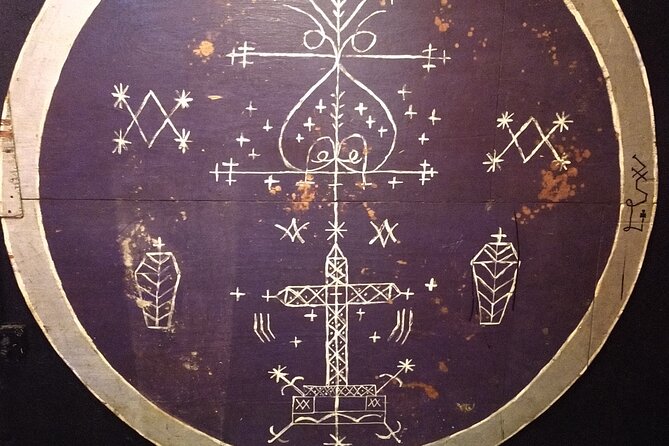
Preservation Hall is one of the strongest stops for anyone who wants to understand the city through music. The guide explains the venue’s place in New Orleans and the work it does to protect local musical traditions.
You learn about the musicians connected with the hall and why the building matters beyond its role as a performance venue. The subject fits naturally with the earlier discussion of Congo Square. The tour shows music not just as entertainment, but as one way culture survives and continues to change.
The stop lasts about 10 minutes and does not include admission to a performance. That matters when you plan your day. You will hear about Preservation Hall, but you should not assume this walking tour provides a concert ticket or an interior visit.
I like this part because it gives the route a different rhythm. After discussions of slavery, voodoo, and Bourbon Street, music shows how New Orleans traditions continue in public life. If you want to hear a performance, ask the tour company about separate options or arrange your own visit.
Royal Street, the courts, and Louisiana politics
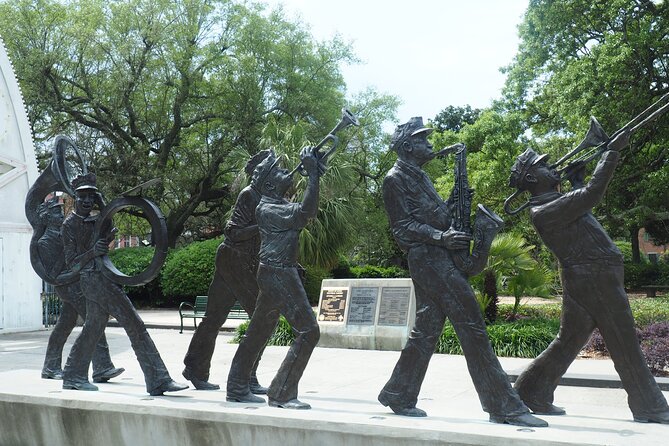
Royal Street brings architecture and politics into the walk. You see the State Supreme Court building and hear about figures such as Huey P. Long and Edwin Edwards, along with the legal and racial history connected with Plessy versus Ferguson.
This is one of the places where the guide’s tone matters most. The political section can add useful context to New Orleans, but it may also feel more opinionated than the other stops. One particularly negative experience centered on a guide’s discussion of President Andrew Jackson and what the participant felt was excessive political commentary.
That criticism is worth keeping in mind, especially if you want a tightly neutral presentation. At the same time, Louisiana politics and court history are part of the city’s story. A guide who explains them with care can show you why local identity is often tied to colorful personalities, legal battles, and arguments over race and power.
The Royal Street section lasts about 15 minutes. Look up as you walk. The buildings matter, but the street also works as a stage for stories about public figures and civic life.
Voodoo Authentica and the living tradition
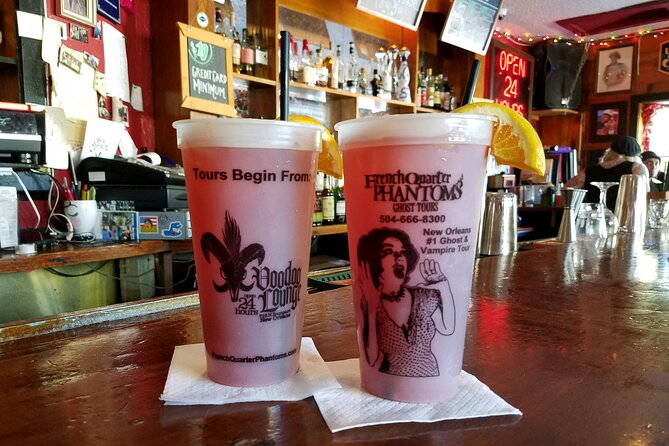
Voodoo Authentica, described as a Voodoo cultural center and collection, returns the tour to its main subject. This stop helps move the discussion away from a single historic figure and toward voodoo as a cultural and spiritual tradition.
You may find this section especially useful if your only previous exposure to voodoo has come through tourist shops or horror-themed entertainment. The tour’s better explanations treat the subject with respect and place it in the daily life of New Orleans.
The stop lasts around 15 minutes. It is not presented as a full class or private consultation, so expect an introduction rather than a complete study of the religion. One person who enjoyed the tour still wanted more time devoted specifically to voodoo. That is a fair expectation to set: the experience covers voodoo in depth for a general city walk, but it also spends substantial time on music, architecture, politics, and local history.
Jackson Square brings the route together
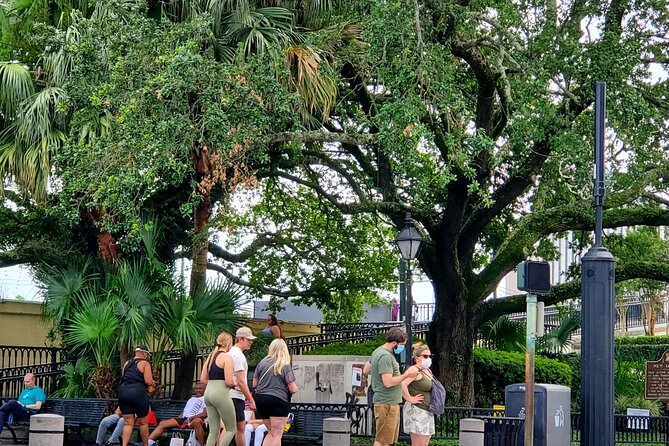
The final stop is Jackson Square, one of the best places in the French Quarter to finish a first walk. The square brings together St. Louis Cathedral, the Cabildo, artists, musicians, tarot readers, and layers of New Orleans history.
You end at the center of the French Quarter, rather than returning to North Rampart Street. That is convenient if you want to continue sightseeing, find lunch, visit a museum, or explore the nearby streets on your own.
The stop lasts about 15 minutes. It is less about one single story and more about learning to read the square. The cathedral and Cabildo give you formal history, while artists, musicians, and tarot readers show how public life continues around them.
Because the tour ends here, pay attention to your guide’s last recommendations. Jackson Square can be a useful orientation point for the rest of your day. You can also use the location to revisit a street or building that went by too quickly earlier.
The guides are a major part of the value
The strongest praise is aimed at the guides, not just the route. Wolfy is repeatedly described as funny, passionate, quick-witted, and deeply engaged with New Orleans history. Pepe is praised for mixing local lore with historical explanation and for moving beyond the most familiar legends.
Nika receives especially strong comments for energy, excitement, and the ability to make a light rain feel manageable. Angela is singled out for storytelling, while Erin is praised for a welcoming manner, comfortable walking speed, and willingness to answer detailed questions.
Robert and Bobby are also described as clear, thoughtful, and entertaining. Another guide was praised for packing a large amount of information into the walk while keeping it fun. These details suggest a company with several strong storytellers, but they also show why your experience may vary by guide.
I would not book this expecting a fixed script delivered in exactly the same way every time. One guide may focus more on voodoo and local stories, while another may give more time to politics, architecture, or music. If a particular guide is available by name when you book, you can consider that useful information, but the supplied details do not establish a guaranteed guide schedule.
Price, pace, weather, and practical value
At $21 per person, the tour is priced reasonably for a small-group city walk lasting nearly two hours. You are paying for a guide’s research, storytelling, and route design rather than for entry to major attractions. The stops themselves are mostly public locations, and admission is free or included at the listed sites.
The value is best if you are new to New Orleans or want a clear introduction early in your stay. Several people wished they had taken the walk near the beginning of their visit because it helped them understand the city. I agree with that strategy. Take it early, then return to the places that interest you most.
You receive a mobile ticket, and the tour is offered in English. Service animals are allowed, public transportation is nearby, and most people can participate. The experience requires good weather, so rain or other poor conditions can lead to a different date or a full refund.
Wear comfortable shoes and prepare for an outdoor walk. The route includes streets, public squares, and stops where you may stand while listening. Guides have made efforts to keep groups in the shade, arrange water or bathroom breaks, and adjust to hot conditions, but the weather remains part of the experience.
Free cancellation is available up to 24 hours before the 11 a.m. start time. Inside that window, refunds are not provided and changes are not accepted.
Who should book this walk
I would choose this tour if you want more than a ghost story but less than a full academic course. It suits first-time visitors, solo visitors who want a guided introduction, families with older children, and anyone interested in the links between religion, music, race, architecture, and local politics.
It is also a good fit if you like a guide who tells stories from memory and welcomes questions. The praise for Wolfy, Pepe, Nika, Angela, Erin, Robert, and Bobby points to a lively approach rather than a dry lecture.
I would hesitate if you want a narrowly focused voodoo study, a museum tour, or a completely apolitical presentation. You should also know that the route covers a lot in less than two hours. The reward is variety, but some subjects receive only 10 or 15 minutes.
Should you book the French Quarter and Voodoo History Walking Tour?
Book it if you want a friendly, story-led introduction to New Orleans that treats voodoo as part of the city’s real cultural past rather than a cheap scare tactic. The combination of Congo Square, Marie Laveau’s former home, Preservation Hall, Royal Street, Voodoo Authentica, and Jackson Square gives you a useful map of the French Quarter’s major themes.
The $21 price is fair, the group is capped at 20, and the finish at Jackson Square works well for the rest of your day. Go early in your visit, stay open to different guide styles, and keep your expectations clear: this is a broad city history walk with a strong voodoo thread, not a specialist seminar.
FAQ
Where does the tour start?
The tour starts at Voodoo Lounge, 718 North Rampart Street, New Orleans, Louisiana 70116.
Where does the tour end?
It ends at Jackson Square in the center of the French Quarter.
What time does the tour begin?
The listed start time is 11 a.m.
How long does the walking tour last?
The tour lasts approximately 1 hour and 45 minutes.
What places are included?
The route includes Congo Square, the original site of Marie Laveau’s home, Bourbon Street, Preservation Hall, Royal Street, Voodoo Authentica, and Jackson Square.
Is the tour offered in English?
Yes. The tour is offered in English.
How many people can join the group?
The maximum group size is 20 people.
Can I bring a service animal?
Yes. Service animals are allowed.
What happens if bad weather cancels the tour?
If poor weather causes a cancellation, you will be offered another date or a full refund. You can also cancel for a full refund if you do so at least 24 hours before the start time.
More Walking Tours in New Orleans
- St. Louis Cemetery No. 1 Official Walking Tour
★ 4.5 · 3,941 reviews - Ghost and Vampire Walking Tour Of The French Quarter
★ 4.5 · 2,406 reviews - New Orleans Adults-Only True Crime and Ghost Walking Tour
★ 5.0 · 1,666 reviews - New Orleans Food and History Walking Tour
★ 5.0 · 1,544 reviews
More Historical Tours in New Orleans
- New Orleans Garden District History Walking Tour
★ 5.0 · 2,879 reviews - New Orleans Small-Group Haunted History Carriage Tour
★ 4.5 · 2,289 reviews - New Orleans Haunted History Ghost Tour
★ 4.5 · 2,084 reviews - Paddlewheeler Creole Queen Historic Mississippi River Cruise
★ 4.5 · 1,948 reviews
Newest New Orleans tours we have written up
- New Orleans: 1.5-Hour Voodoo History Evening Tour★ 4.5 · 34 reviews
- New Orleans: Voodoo History Guided Walking Tour★ 4.8 · 3 reviews
- New Orleans: Voodoo, Storyville, and Treme Walking Tour★ 3.3 · 3 reviews
- New Orleans: Voodoo Legends, Vampires & Magic Walking Tour★ 3.0 · 4 reviews
- New Orleans: 1.5-Hour Vampire Tour of the French Quarter★ 4.8 · 30 reviews
- New Orleans: VIP Bar and Club Crawl Tour with Free Shots★ 4.5 · 39 reviews
- New Orleans: Traditions Cooking Class★ 5.0 · 9 reviews
- New Orleans: Tombs and Mansions of the Garden District★ 4.6 · 4 reviews
New Orleans Voodoo Tours, compared.
New Orleans Premier Ghost, Voodoo and Vampire Walking Tour
Read our review →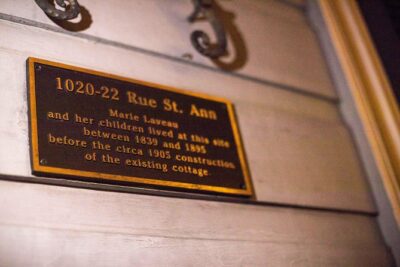
Adults-Only New Orleans Ghost, Crime, Voodoo, and Vampire Tour
Read our review →
New Orleans Adults-Only Ghost, Voodoo and Vampire Tour
Read our review →
New Orleans French Quarter, Voodoo and Culture Walking Tour
Read our review →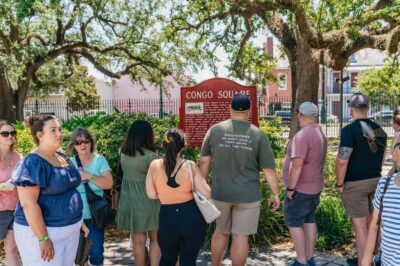

New Orleans Ghost, Vampire, Witch, Voodoo, and Mystery Tour
Read our review →
New Orleans Spirits & Spells: Witchcraft, Voodoo, and Ghost Tour
Read our review →Browse the lists this tour appears in