
Reviewed · NEW ORLEANS FRENCH QUARTER TOURS
New Orleans French Quarter Walking and History Tour
The most useful thing about this tour is its compact route through the French Quarter. In two hours, you move from the Mississippi River levee to Jackson Square, St. Louis Cathedral, Pirate’s Alley, and the French Market, while the guide explains why New Orleans looks and feels so different from other American cities. It is a strong first look, not a full study of the city.
I like the small maximum of nine people, which makes it easier to ask questions and hear the guide on busy streets. I also like the mix of grand landmarks and quieter stories, from the levee system and the 1788 fire to Tennessee Williams, William Faulkner, Creole courtyards, and street musicians. The main consideration is simple: you walk about 2 miles, often outdoors, and the tour depends on clear weather.
Key points
- A two-mile route with a useful city overview: Start near Royal Street, reach the river, then work through the French Quarter’s main historic sights.
- Small groups capped at nine: You get a better chance to speak with the guide and stay close to the group.
- Strong local storytelling: Guides including David Roberts and Davi Higgins bring in music, humor, personal experience, and neighborhood detail.
- More than architecture: The tour addresses slavery, Creole society, placage, colonial settlement, fires, levees, literature, and film sites.
- Good timing choices: Morning and afternoon or evening start times make it easier to fit around meals and other plans.
- A practical first-day activity: It helps you understand the French Quarter’s layout before exploring on your own.
Why this two-hour walk works well on a first day
New Orleans can feel confusing at first. Streets change names, historic buildings sit beside restaurants and bars, and the most important stories are often hidden behind plain walls. This tour gives you a map in your head as well as a history lesson.
You begin near Cafe Beignet on Royal Street, at 334 Royal Street. The tour information also refers to Musical Legends Park as the opening meeting point, so check the exact meeting instructions on your confirmation before setting out. That small detail matters in the French Quarter, where a short address mix-up can cost you valuable time.
From there, the route covers about 2 miles at an easy pace. The walk is broken up by stops, so it is not a forced march. Still, you should wear comfortable shoes and expect to be on your feet for nearly the entire two hours. One useful strategy is to take the tour early in your visit, then return later to the places that caught your attention.
More French Quarter tours in New Orleans:
- New Orleans Food Walking Tour of the French Quarter with Small-Group Option
★ 5.0 · 6,118 reviews - New Orleans French Quarter, Voodoo and Culture Walking Tour
★ 4.5 · 2,961 reviews - French Quarter Historical Sights and Stories Walking Tour
★ 5.0 · 2,724 reviews
From the Mississippi levee to a city built on water

The opening section takes you toward the Mississippi River. This is not just a scenic start. It explains the basic problem New Orleans has always faced: much of the city sits at or near sea level, and the surrounding land was once wet, difficult ground.
Your guide explains how levees changed the area. They helped turn swampland into land suitable for farming, building, and trade. That background makes the rest of the tour easier to understand. The French Quarter is not simply a collection of pretty balconies and old churches. It is part of a city shaped by water control, flooding, shipping, and constant rebuilding.
At the riverbank, you may see paddlewheel steamboats moving along the water. The view connects the city’s past to its long role as a major trade center. The river stop lasts around 15 minutes, while the broader French Quarter introduction takes longer.
I like beginning here because it gives the tour a wider frame. You are not only looking at buildings. You are learning why this location mattered and why the levee system remains central to New Orleans life.
The French Market and the everyday side of the Quarter
The route continues through the French Market, described as the oldest open-air market in the United States. Its story reaches back to a reported Native American bartering market, and its modern stalls offer a look at local produce, fish, and Creole foods.
The market stop is short, about five minutes. That means you should not expect a food tour or a long shopping break. Instead, you get a quick introduction and a chance to notice how commerce still occupies an old part of the city.
This is one place where the tour’s focus helps. It keeps moving, so you see more of the Quarter instead of spending half the morning at one attraction. If you want to browse stalls or eat, plan to return after the walk. Cafe Beignet at the starting point also gives you the option of arriving early for coffee and beignets, though food and drinks are not included in the tour.
Jackson Square, the Cabildo, and the Presbytere
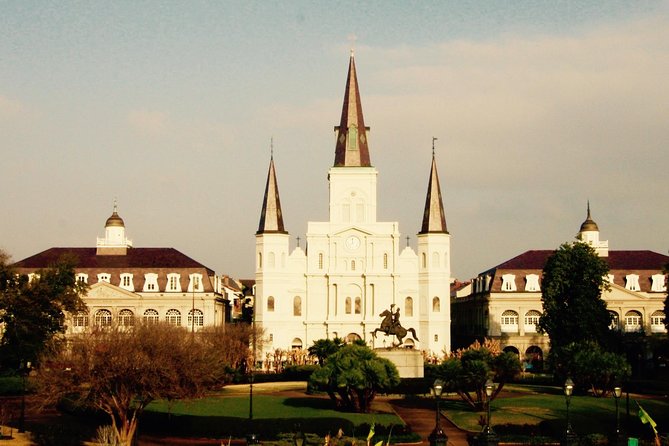
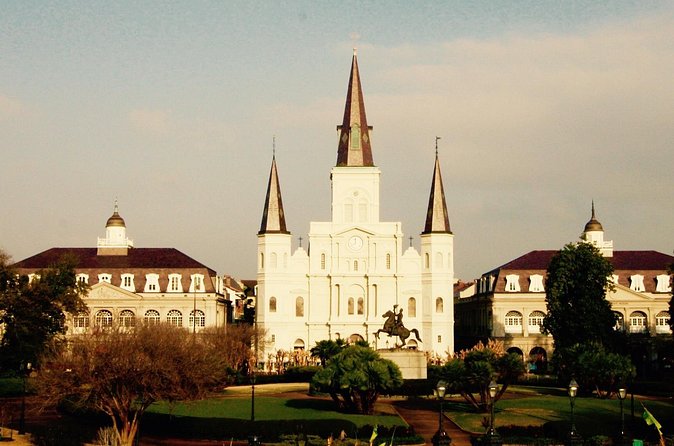
Jackson Square is the visual heart of the French Quarter. The square occupies the site of the original Place d’Armes and honors Andrew Jackson. Its position brings several major buildings together, so your guide can explain the city’s government, religion, architecture, and public life in one concentrated area.
You see the Cabildo, built between 1795 and 1799. It once served as New Orleans’ government center and now houses the Louisiana State Museum. Beside it is the Presbytere, built in 1791 to match the Cabildo. Its permanent exhibits focus on the city’s resilience and celebrations.
The tour does not include extended museum visits, so think of these stops as an architectural and historical introduction. You will learn what the buildings are and why they matter, then decide if you want to return for a longer visit. That is a good arrangement for a first orientation, especially if your time in New Orleans is short.
The Pontalba Apartments form two sides of Jackson Square. Your guide explains their importance as the oldest apartment buildings in the United States. This is the sort of detail you could easily miss while taking photographs of the square. Look upward, too. The balconies and ironwork are part of the Quarter’s visual character, but the guide helps connect the design to the city’s past.
A few more New Orleans tours worth comparing
- New Orleans Garden District History Walking Tour
★ 5.0 · 2,879 reviews - New Orleans Small-Group Haunted History Carriage Tour
★ 4.5 · 2,289 reviews - New Orleans Haunted History Ghost Tour
★ 4.5 · 2,084 reviews - Paddlewheeler Creole Queen Historic Mississippi River Cruise
★ 4.5 · 1,948 reviews
St. Louis Cathedral and the fire that reshaped the Quarter

St. Louis Cathedral is one of the tour’s longer stops, with about 20 minutes set aside. The guide takes you inside and points out the location where the Great New Orleans Fire of 1788 began.
That fire is more than a dramatic local story. Rebuilding after it helped create the architectural style now associated with the French Quarter. The buildings you see today are tied to catastrophe and repair, not just careful preservation.
I appreciate this part of the route because it explains why the Quarter has such a distinctive look. Rather than simply naming the cathedral and moving on, the guide connects the church, the fire, and the rebuilding that followed. If you enjoy architecture, this may be the most useful stop of the walk.
The cathedral is an active religious site, so the tour’s access and timing may need to follow conditions inside. The supplied details say the guide takes you inside, but keep your visit respectful and listen for any instructions during the stop.
Creole courtyards, placage, and difficult history
The tour also makes room for subjects that can be uncomfortable but are necessary. In a Creole courtyard, the guide discusses Creole society and slavery in South Louisiana. You also visit the balcony of the former Quadroon Ballroom and learn about Creole mistresses and the system known as placage.
This section adds needed depth to the tour. New Orleans history is not only music, food, architecture, and colorful legends. It also includes racial inequality, limited choices, and social systems shaped by slavery and colonial power.
The stop is brief, around 10 minutes, but it gives you a starting point for understanding complicated local relationships. If you want a focused study of slavery or Creole society, you will need a longer museum visit or a specialized tour. Here, the subject is part of a broader walk through the Quarter.
Literary landmarks, film locations, and Pirate’s Alley
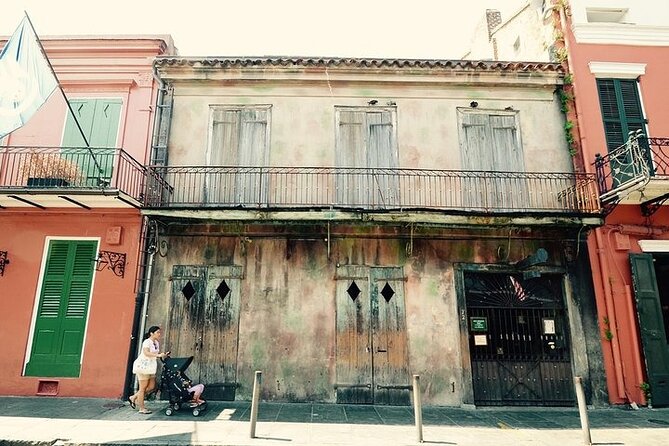
Literary and film connections give the walk a change of pace. The guide points out the building where Tennessee Williams wrote A Streetcar Named Desire and takes you into William Faulkner’s former home. You also walk through Pirate’s Alley, where local stories include prison escapes and dueling.
These stops are useful because they show how the French Quarter has attracted writers and artists, not only politicians and merchants. You see the neighborhood as a setting for creative work and local legend.
Pirate’s Alley is also a good example of the tour’s balance. The guide can tell a memorable story, then place it within the city’s broader past. Street musicians may provide a soundtrack along the way, and one review specifically praised a guide who even played piano. Music is not a separate performance included in the ticket, but it can become part of the walk as you pass through the Quarter.
Guides David Roberts and Davi Higgins receive especially strong praise for their personal style. Their approach includes humor, music, stories from local life, and answers shaped around the group’s interests. That can make a big difference on a small walking tour. The route matters, but the guide’s timing and ability to explain complex subjects in plain language matter just as much.
The Ursuline Convent and early Louisiana
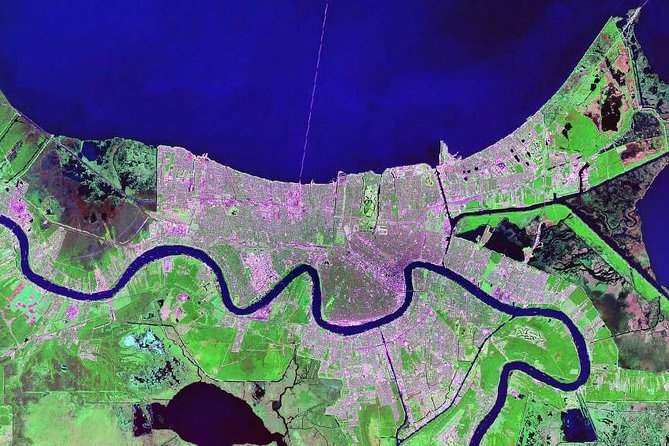
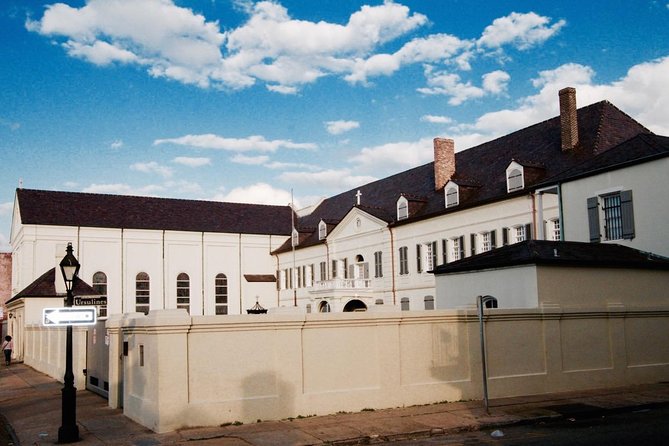
Near the end of the route, you pass the Old Ursuline Convent, described as the oldest building in the Mississippi Valley. The tour views the building from outside and uses it to discuss early colonization efforts in Louisiana.
This is a short stop, about 10 minutes, but it helps broaden the story beyond the familiar French Quarter image. The building represents an earlier period of settlement and religious work, before the neighborhood became a center of tourism and entertainment.
You should not expect a full museum visit here. The value is in seeing the building in context and understanding how early colonial efforts shaped the region.
Pace, group size, and guide quality
The maximum group size is nine. That is a real advantage on narrow sidewalks and crowded streets. You are more likely to hear the guide clearly, stay together, and ask a question without interrupting a large crowd.
The strongest guide comments center on clear delivery, humor, local pride, and a willingness to adjust the talk to the group. David Roberts is praised for combining history, art, architecture, and lived experience. Davi Higgins is described as a musician and comedian who can focus on a group’s interest in music. Those details suggest that the experience can vary by guide, but the best version feels like a walk with a well-informed local friend.
The tour has also worked for solo visitors, couples, and families. Several families found the stories accessible to both adults and children. If you prefer a silent, academic presentation, the humor and personal stories may feel less formal than expected. For most first-time visitors, that relaxed style is likely an advantage.
Is $29 a fair price?
At $29 per person, this is a reasonable price for a two-hour guided walk in a major historic district. You are paying for a local guide, a carefully chosen route, and context that would take time to assemble on your own.
The value is strongest if you are new to New Orleans, have only one full day, or want a quick orientation before exploring alone. A family or couple can use the walk to identify museums, streets, and neighborhoods worth revisiting.
It is less useful if you already know the French Quarter well or want a deep look at one subject. The museum interiors are not the focus, and the French Market stop is too short for serious shopping. You are buying a broad introduction rather than a specialized lecture or food experience.
The tour is offered in English and uses a mobile ticket. Hotel pickup, drop-off, food, and drinks are not included. You make your own way to the meeting point and finish near Jackson Square or the Mississippi River levee, depending on the exact route details provided for your departure.
Timing, weather, and cancellation rules
Morning and afternoon or evening start times give you useful flexibility. A morning tour can help you get oriented before a day of exploring. An afternoon or evening departure may fit better if you want a slower start.
The area can be busy, and one practical tip is to choose a weekday if your schedule allows. The walking route may feel easier when the French Quarter is less crowded.
The tour requires good weather. If the operator cancels because of poor weather, you can choose another date or receive a full refund. You can cancel for a full refund up to 24 hours before the start time. Cancellations or changes inside that 24-hour window are not refunded or accepted.
Who should book this French Quarter walk?
I would choose this tour if you want a friendly introduction with real historical range. It suits first-time visitors, families, solo visitors, couples, and anyone with limited time. It is also a good choice for history fans who want more than attractive buildings, since the route addresses levees, fire, colonial settlement, slavery, Creole society, literature, and music.
You should think twice if you dislike walking, need a fully indoor activity, or want to spend long periods inside museums. The tour covers a lot in two hours, so some topics receive only a short explanation.
My verdict
I recommend booking this tour early in your New Orleans stay, especially if you have never visited the French Quarter. The small group, manageable pace, low price, and mix of major sights make it a useful first layer of understanding.
The best reason to book is the guide-led storytelling. With a strong guide such as David Roberts or Davi Higgins, the route becomes more than a checklist of landmarks. Just wear good shoes, confirm the exact meeting location, bring weather-appropriate clothing, and leave time afterward to revisit the French Market, museums, or Jackson Square at your own pace.
FAQ
How long is the New Orleans French Quarter walking tour?
The tour lasts approximately two hours.
How far do you walk?
The route covers about 2 miles, or 3.2 kilometers, at a leisurely pace.
Where does the tour meet?
The listed start point is Cafe Beignet at 334 Royal Street in New Orleans. The tour information also refers to Musical Legends Park as the meeting location, so check your booking confirmation for the exact instructions.
Where does the tour end?
The listed end point is Jackson Square, in and around the middle of the French Quarter. The route description also says the walk ends near the Mississippi River levee.
What sights are included?
You see the Mississippi River, the French Market, Jackson Square, the Cabildo, the Presbytere, St. Louis Cathedral, Pirate’s Alley, the Old Ursuline Convent, literary locations, and other French Quarter landmarks.
Does the guide take visitors inside St. Louis Cathedral?
The tour information says the guide takes you inside St. Louis Cathedral and explains where the Great New Orleans Fire of 1788 began.
How large is the group?
The activity allows a maximum of nine travelers.
Is food included?
No. Food and drinks are not included, though the tour begins near Cafe Beignet.
Can I cancel for a refund?
Yes. You can cancel at least 24 hours before the start time for a full refund. Cancellations within 24 hours are not refunded. If poor weather causes the operator to cancel, you are offered another date or a full refund.
More Walking Tours in New Orleans
- New Orleans Premier Ghost, Voodoo and Vampire Walking Tour
★ 4.5 · 12,856 reviews - St. Louis Cemetery No. 1 Official Walking Tour
★ 4.5 · 3,941 reviews - Ghost and Vampire Walking Tour Of The French Quarter
★ 4.5 · 2,406 reviews - New Orleans Adults-Only True Crime and Ghost Walking Tour
★ 5.0 · 1,666 reviews
Newest New Orleans tours we have written up
- 45-Minute Garden District Highlights Tour in New Orleans★ 5.0 · 33 reviews
- New Orleans City and Swamp Helicopter Tour★ 5.0 · 9 reviews
- 45-Minute Marigny Triangle Highlights Tour in New Orleans★ 5.0 · 12 reviews
- Private New Orleans 2-Hour Sail Aboard a Luxury Yacht★ 5.0 · 44 reviews
- 20 Passenger New Orleans Airport or Hotel Transfer★ 5.0 · 6 reviews
- The New Orleans Darkness Tour★ 4.4 · 9 reviews
- 11 Passenger Executive Van: New Orleans Airport or Hotel Transfer★ 4.0 · 8 reviews
- Spooky Family Ghost Tour★ 3.4 · 9 reviews
New Orleans French Quarter Tours, compared.

New Orleans Food Walking Tour of the French Quarter with Small-Group Option
Read our review →
New Orleans French Quarter, Voodoo and Culture Walking Tour
Read our review →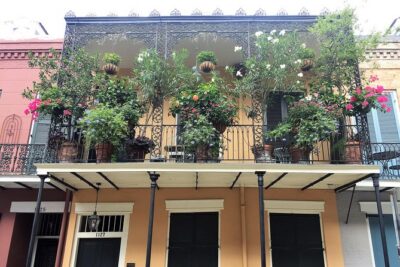
French Quarter Historical Sights and Stories Walking Tour
Read our review →
Ghost and Vampire Walking Tour Of The French Quarter
Read our review →
New Orleans City Tour: French Quarter, Garden District & Cemetery
Read our review →
New Orleans French Quarter Food Tour: Cajun, Creole and Culture
Read our review →
New Orleans French Quarter and More Carriage Ride
Read our review →
French Quarter walking Food Tour Famous Flavors of New Orleans
Read our review →Browse the lists this tour appears in