
Reviewed · NEW ORLEANS JAZZ AND LIVE MUSIC TOURS
New Orleans Jazz History and Music Walking Tour
New Orleans jazz makes more sense when you see where its story began. This 2.5-hour walk links Louis Armstrong Park, Congo Square, the French Quarter, and a live music venue, turning the city itself into part of the lesson. Guides such as Adam, Kristi, and Andre bring different personal angles, with Kristi also drawing on her experience as a musician.
I like the small group limit of 12, which gives you room to ask questions and makes the club stops feel less like a procession. I also like that your booking helps support local musicians and venues. The main caution is the pace: you walk about 14 blocks, or roughly 1.5 miles, and the tour can include a fair amount of standing.
Key points
- Congo Square and Louis Armstrong Park: Begin with the cultural roots of New Orleans music, not just famous names.
- Two possible music routes: Your guide may focus on Bourbon Street or head toward Frenchmen Street, depending on the evening.
- Live music included: Visit at least one selected music venue, and many outings reach two clubs.
- One complimentary drink: Alcohol is not required, but additional drinks and food cost extra.
- Small groups matter: The maximum of 12 allows for questions and a more flexible walking pace.
- Best booked early: The tour is often reserved about 33 days ahead, so popular dates may fill.
Why This Tour Works as a First Night in New Orleans
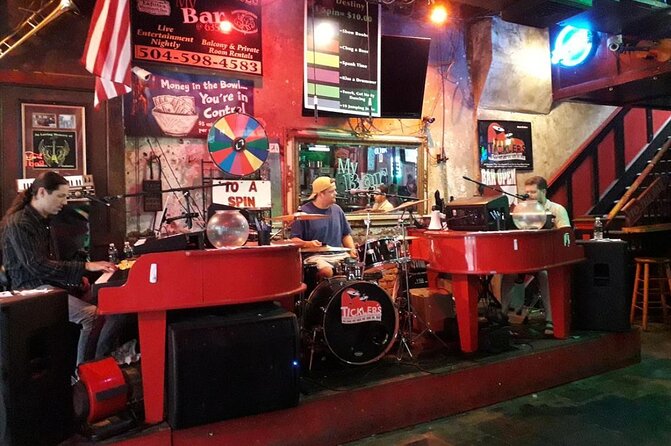
I like this experience because it connects music to place. Instead of treating jazz as a museum subject, you walk through the neighborhoods where New Orleans culture took shape, then hear living musicians in a club.
That makes it especially useful near the start of your stay. You receive practical advice about music venues, listings, timing, and how the local club scene works. Several people who took the tour wished they had done it earlier, since the guide’s suggestions helped shape the rest of their visit.
The tour is also more than a narrow lesson about Louis Armstrong. It covers the cultural forces that formed jazz, including West African and Caribbean sounds, European musical traditions, Creole culture, gospel, blues, and the city’s long history of racial and social change.
This is not a silent museum visit. Expect conversation, street walking, questions, and music. If you want a formal lecture or a full concert evening, this may feel too loose. If you want context before choosing your own clubs, it is a smart introduction.
More jazz and live music tours in New Orleans:
- New Orleans Steamboat Natchez Jazz Cruise with Dinner Option
★ 4.0 · 7,533 reviews - New Orleans Steamboat Natchez Jazz Cruise
★ 4.5 · 5,334 reviews - New Orleans: Evening Steamboat Jazz Cruise + Optional Dinner
★ 4.3 · 4,548 reviews
Starting in Tremé at Louis Armstrong Park
The meeting point is at 701 N Rampart Street, just outside the French Quarter. The first major stop is Louis Armstrong Park in Tremé, a fitting place to begin because the park sits close to Congo Square and carries the name of one of New Orleans’ most famous musicians.
You spend about 35 minutes here. The guide sets out the early story of jazz and explains Armstrong’s role in it. The park also gives you a little breathing room before the longer walk through city streets.
The stop at the Mahalia Jackson Theater adds another layer. The theater honors the New Orleans-born gospel singer, linking jazz to the city’s church music and performance traditions. You will pass by rather than attend a performance, but the name helps place gospel within the wider musical story.
One practical point: the park can be noisy. A reggae event was taking place during one tour, making it hard for everyone to hear music clips played from a phone. If your guide uses recordings to illustrate early jazz, stay close and ask to hear again if street noise gets in the way.
Congo Square and the Roots of Jazz
Congo Square is one of the most important historical stops. The area was a place where enslaved people and free people of color were allowed to gather and socialize. Music, dance, rhythm, and cultural exchange here helped preserve African traditions in a city shaped by many peoples.
The visit lasts about 15 minutes, but its importance is much larger than the clock suggests. Your guide explains how African and Caribbean sounds met European instruments and musical structures, helping produce jazz as a distinct American art form.
This part gives you the right frame for the rest of the night. Jazz did not appear from nowhere, and it was not created by one famous musician. It grew from communities, movement, memory, faith, work, and performance. The tour makes that point while you are standing in the setting connected to those gatherings.
The tradeoff is that Congo Square is an outdoor historical site rather than a preserved building filled with displays. You need to listen closely and use your imagination. For some people, that makes the guide’s storytelling more important than the physical stop itself.
Walking Into the French Quarter
From Louis Armstrong Park, the route heads into the Vieux Carré, the French Quarter. The walk takes about 10 minutes to reach the neighborhood, but the wider French Quarter portion is much longer and may include Bourbon Street, Frenchmen Street, or both.
Your guide points out historic places tied to New Orleans music and explains how the neighborhood’s clubs, homes, theaters, and commercial streets fit into the story. The exact route can change because the guide chooses the music stop for that evening.
That flexibility is useful. A fixed route could take you to a famous street even when the best available performance is elsewhere. Here, the guide can adjust the walk to suit the night’s music.
It also means you should not expect an identical experience each time. One outing may center on Bourbon Street, while another heads to Frenchmen Street. The tour description makes clear that the guide selects a route to find a good music stop, so the evening’s schedule and venues matter.
A few more New Orleans tours worth comparing
- New Orleans Garden District History Walking Tour
★ 5.0 · 2,879 reviews - French Quarter Historical Sights and Stories Walking Tour
★ 5.0 · 2,724 reviews - New Orleans Small-Group Haunted History Carriage Tour
★ 4.5 · 2,289 reviews - New Orleans Haunted History Ghost Tour
★ 4.5 · 2,084 reviews
Bourbon Street, Buskers, and the Commercial Side of Music
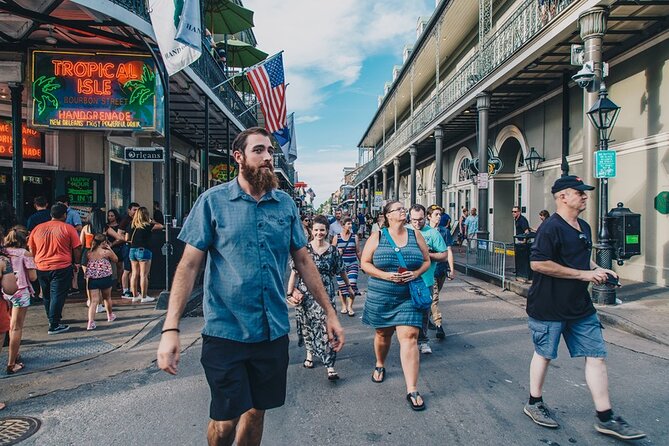
One possible path includes Bourbon Street. The focus is not simply the street’s reputation for nightlife. You hear about its role in New Orleans music and about the residential and commercial places where blues and jazz collaborators worked and performed.
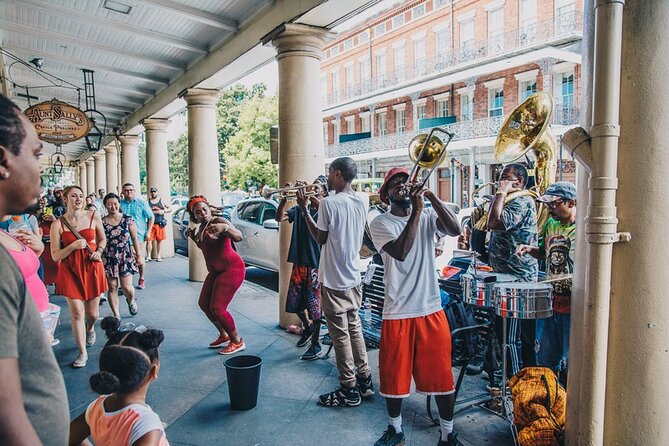
You may also catch a busker near the historic French Market. That possibility gives the walk a useful contrast: one moment you are hearing about major musicians and formal venues, and the next you may encounter music happening in the open air.
Bourbon Street can be loud and crowded, which may make conversation harder. Still, the street helps explain how music functions as part of daily city life, not only as a scheduled show. If you prefer quieter streets and a more focused club experience, the Frenchmen Street route may appeal more.
Frenchmen Street and the Live Music Stop
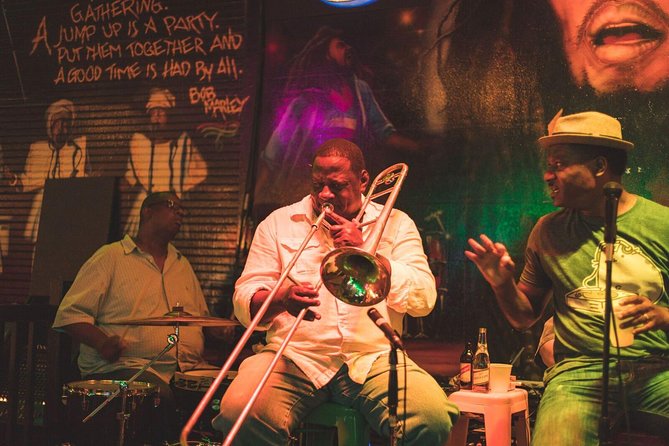
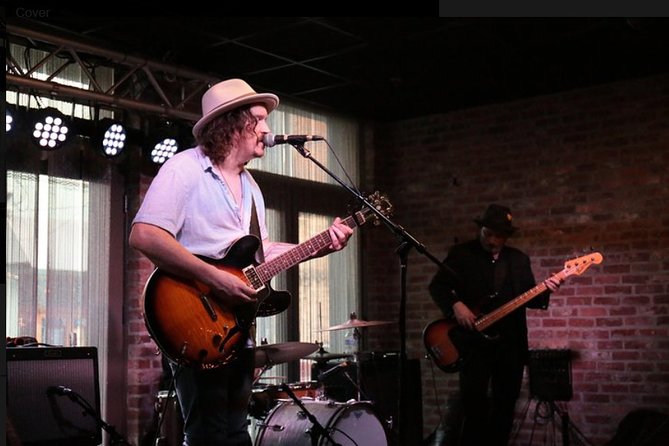
Frenchmen Street has the city’s largest concentration of live music venues, and it is the other main route option. The guide takes you inside a selected jazz or music venue so you can listen to local performers.
The planned stop lasts about 30 minutes, though your evening can develop beyond that. Many outings include two clubs, allowing you to hear different bands and compare rooms. One tour even reached a performance by Delfeayo Marsalis, while another included members of Preservation Hall at a venue.
These details show the value of a local guide. You are not simply being pointed toward a street and left to sort out the choices. The guide handles the first decision, gets you into a suitable music setting, and explains how to continue on your own.
The music is still subject to the night’s program. No tour can promise a certain band or style unless that is specifically stated. Think of this as a guided entry into the local scene, not a guaranteed concert by a named artist.
One drink is included at a music stop. It does not have to be alcoholic, so you can choose a nonalcoholic option. Food and extra drinks are separate, and you should budget for them if you plan to stay out after the tour.
Preservation Hall and the French Quarter Music Tradition
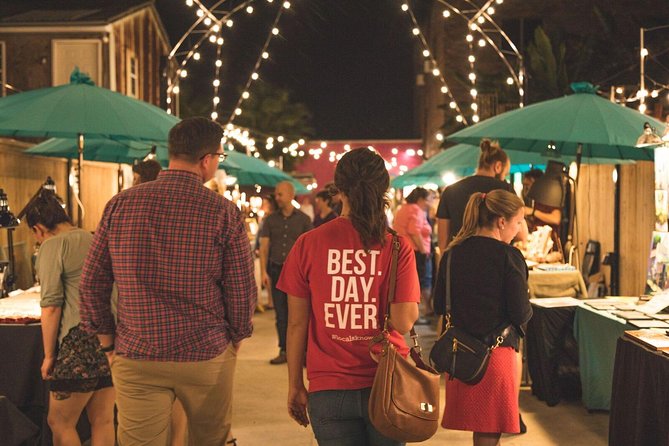
The walk may pass Preservation Hall, the historic French Quarter venue devoted to protecting, preserving, and continuing traditional New Orleans jazz. You do not attend a show there as part of the stated tour, but the stop provides useful context.
Preservation Hall helps explain the difference between seeing a famous name on a map and understanding the city’s ongoing music work. New Orleans jazz is not only a story from the past. Musicians, clubs, and local groups continue to keep the tradition in use.
This is also where the tour’s support for local musicians matters. Your participation helps contribute to the livelihoods of the performers and venues connected with the evening. That support is built into the experience rather than presented as a separate donation.
The Guides Make the Difference
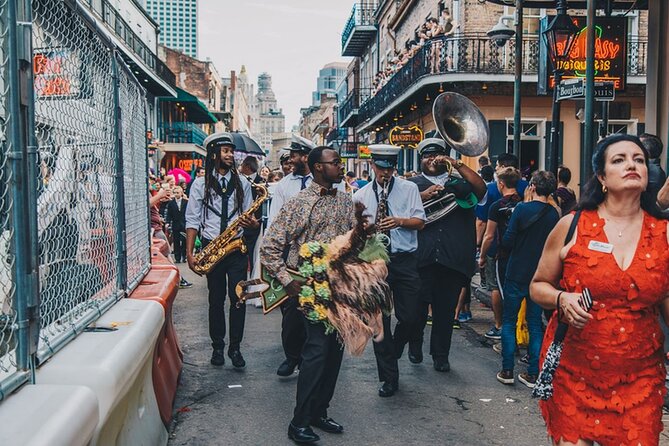
The strongest part of this tour is likely to be the person leading it. Adam is praised for clear explanations, a relaxed pace, and a strong grasp of jazz history. Kristi is described as a local musician with a strong personal connection to both the city and its music. Andre is also noted for combining historical explanation with visits to excellent venues.
You cannot choose the guide from the information provided, so it is best to expect a style that may vary. Some guides may focus more on musical details, while others may spend more time on social history, neighborhoods, or the current economic challenges faced by performers.
That difference can affect your experience. One person found the discussion too focused on political and economic issues and wanted more explanation of jazz genres and musicians. The operator acknowledged the concern and said the guide would receive further coaching.
This is a fair point to consider. The tour aims to explain both where jazz came from and how the music scene works today. If you want only song titles, musicians, and technical details, ask direct questions early. If you enjoy understanding the social conditions around music, the broader approach may suit you well.
How Much Walking and Standing to Expect
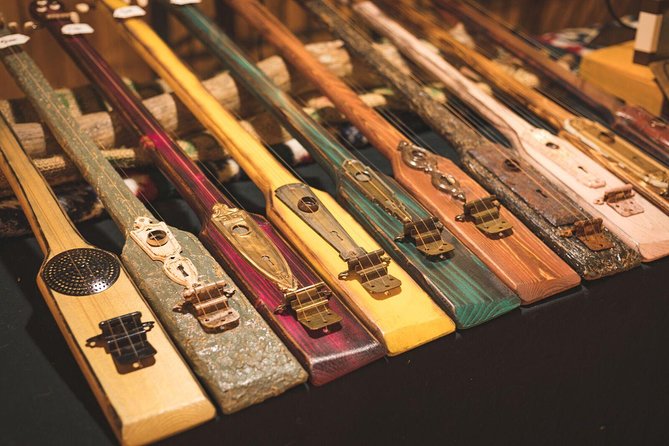
The route covers about 14 blocks, or 1.5 miles, on foot. The total time is about 2 hours and 30 minutes, with stops mixed into the walk.
Wear comfortable shoes. That advice comes up for a reason. You will walk between neighborhoods, spend time outside, and stand inside music venues. The pace is described as manageable, but this is still an active evening rather than a seated performance.
Most people can take part, and the meeting point is near public transportation. The experience is not available to anyone under 21. Since weather can cancel the outing, keep an eye on conditions and have a backup plan for a rainy evening.
The end point is in the French Quarter, around a central area. That makes it easy to continue with dinner, another club, or a walk through the neighborhood after the tour.
Is the $60.56 Price Fair?
At $60.56 per person, this is not the cheapest way to hear music in New Orleans. You can enter some clubs on your own for less, especially if you already know where to go and how to read the evening’s listings.
The price makes more sense when you count what is bundled in. You receive a local guide for 2.5 hours, historical context in Tremé and the French Quarter, an organized route, entry to a selected music venue, one drink, and practical suggestions for the rest of your night.
The small group limit also matters. With no more than 12 people, the guide can answer questions and adjust the pace more easily than a large coach-style group. If the group is only four or six people, the walk can feel close to a private outing without the cost of hiring a private guide.
I see the best value for people who are new to New Orleans music. You are paying to avoid guesswork. If you already have a detailed club plan, know the neighborhoods, and mainly want uninterrupted music, buying tickets directly may be better value.
Group discounts are available, though the exact savings are not stated. The tour is often booked about 33 days ahead, so reserve early if you have a fixed date in mind.
Who Should Book This Experience?
I would recommend it to:
- First-time visitors who want a useful introduction to New Orleans music.
- Solo visitors who want an easy way to find clubs and meet a small group.
- Couples who enjoy history, walking, and live performance in one outing.
- People who want local advice before planning the rest of their evenings.
- Music fans who care about the cultural roots of jazz, not only famous performers.
I would be more cautious if you have limited walking ability, dislike standing, or want a quiet, formal presentation. I would also think twice if your main goal is one specific band or venue, since the route and music stop can change.
The tour suits curious listeners more than specialist jazz scholars. It gives you a strong foundation and access to the local scene, but it is not designed as a technical course in musical theory.
Booking, Cancellation, and Practical Details
You receive confirmation when you book, and mobile tickets are accepted. The tour is offered in English and allows group discounts.
Cancellation is free up to 24 hours before the start time for a full refund. Changes or cancellations made within 24 hours are not refunded or accepted. If poor weather cancels the experience, you can choose another date or receive a full refund.
Bring comfortable shoes and arrive ready for an outdoor walk. Budget for any food or drinks beyond the included beverage, and remember that tips for the guide and musicians are not included.
Should You Book the New Orleans Jazz History and Music Walking Tour?
Book it if you want the city’s music to make sense before you choose your own clubs. The combination of Congo Square, Louis Armstrong Park, French Quarter streets, and live performance gives you both the story and a taste of the present-day scene.
The strongest reasons to go are the small group size, the flexible music route, and the chance to hear two venues on some evenings. The main drawbacks are the walking, the variable guide style, and the fact that no specific band or club can be guaranteed.
For most first visits, I would schedule it early in your stay. You will leave with a better sense of where to listen, how the clubs work, and why New Orleans jazz sounds the way it does. At $60.56, it is a reasonable buy when you value guidance as much as the music itself.
FAQ
How long does the New Orleans Jazz History and Music Walking Tour last?
The tour lasts approximately 2 hours and 30 minutes.
How far do I walk during the tour?
You walk about 14 blocks, or approximately 1.5 miles, through Tremé and the French Quarter.
Where does the tour start?
The meeting point is 701 N Rampart Street, New Orleans, Louisiana 70116, near the French Quarter.
Where does the tour end?
The tour ends in the French Quarter at a central location.
Is a live music performance included?
Yes. The guide takes you inside a selected live jazz or music venue. Many outings include two venues, though the exact route can vary.
Is a drink included?
Yes. One complimentary drink is included at a music stop. It does not have to be alcoholic.
Are food and additional drinks included?
No. Food and any drinks beyond the included beverage cost extra.
Can people under 21 join the tour?
No. Participants must be at least 21 years old.
How many people can join each tour?
The maximum group size is 12 people.
What happens if bad weather cancels the tour?
If poor weather causes a cancellation, you are offered another date or a full refund. You can also cancel up to 24 hours before the start time for a full refund.
More Walking Tours in New Orleans
- New Orleans Premier Ghost, Voodoo and Vampire Walking Tour
★ 4.5 · 12,856 reviews - New Orleans Food Walking Tour of the French Quarter with Small-Group Option
★ 5.0 · 6,118 reviews - St. Louis Cemetery No. 1 Official Walking Tour
★ 4.5 · 3,941 reviews - New Orleans French Quarter, Voodoo and Culture Walking Tour
★ 4.5 · 2,961 reviews
Newest New Orleans tours we have written up
- 45-Minute Garden District Highlights Tour in New Orleans★ 5.0 · 33 reviews
- 45-Minute Marigny Triangle Highlights Tour in New Orleans★ 5.0 · 12 reviews
- New Orleans City and Swamp Helicopter Tour★ 5.0 · 9 reviews
- 20 Passenger New Orleans Airport or Hotel Transfer★ 5.0 · 6 reviews
- Private New Orleans 2-Hour Sail Aboard a Luxury Yacht★ 5.0 · 44 reviews
- The New Orleans Darkness Tour★ 4.4 · 9 reviews
- 11 Passenger Executive Van: New Orleans Airport or Hotel Transfer★ 4.0 · 8 reviews
- Spooky Family Ghost Tour★ 3.4 · 9 reviews
New Orleans Jazz and Live Music Tours, compared.
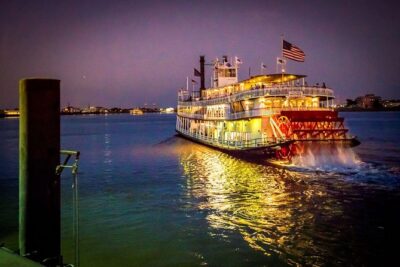
New Orleans Steamboat Natchez Jazz Cruise with Dinner Option
Read our review →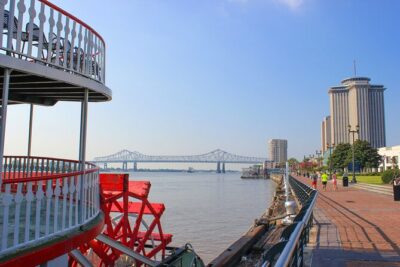
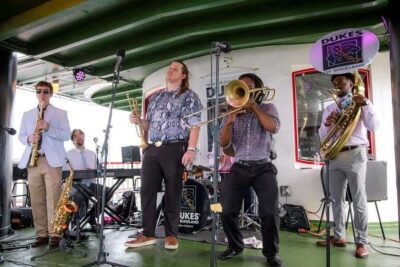
Evening Steamboat Jazz Cruise + Optional Dinner
Read our review →
Daytime Steamboat Jazz Cruise + Optional Lunch
Read our review →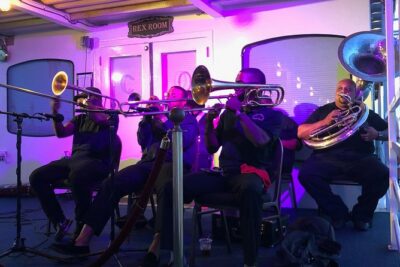
Paddlewheeler Creole Queen Jazz Dinner Cruise in New Orleans
Read our review →
Evening Jazz Boat Cruise with Optional Dinner
Read our review →
VIP Jazz Dinner Cruise with Private Tour and Open Bar Option
Read our review →Browse the lists this tour appears in