
Reviewed · NEW ORLEANS JAZZ AND LIVE MUSIC TOURS
New Orleans Music Heritage Tour
New Orleans music comes alive when you hear the right song beside the place where it was made. This two-hour walk follows that idea through the Marigny, French Quarter, and Treme, with record producer Keith Abel connecting musicians, streets, studios, and social history. His portable speaker supplies about a dozen songs along the way.
I especially like the location-based storytelling and the personal touch. Keith has more than 20 years in the record business, and he adds anecdotes about artists, recording sessions, and the city’s music scene. I also like the finish at Congo Square and Louis Armstrong Park, where the story reaches back beyond modern jazz to the African-American roots of New Orleans culture.
The main consideration is the walk itself. You spend close to two hours on city streets, and the tour can include adult language and frank stories. It suits music-loving adults and older teens better than young children, and hot, wet weather can make the route less comfortable.
Key points at a glance
- Hear the music in place: Keith uses a Bluetooth speaker to play blues, jazz, gospel, soul, and rock connected to the streets and artists you are discussing.
- Three historic districts in two hours: The route links the Marigny, French Quarter, and Treme rather than staying in one small tourist zone.
- A record producer leads the walk: Keith Abel brings more than two decades of record-business experience and plenty of personal stories.
- Congo Square gives the tour depth: Louis Armstrong Park provides the setting for learning about Treme and the African-American foundations of New Orleans music.
- The walk ends near St. Louis Cathedral: At 712 Royal Street, you may find musicians playing outside, which gives the final stop a fitting local soundtrack.
- Small-group feel, with a limit of 28: The group can be larger than a private outing, but the stated maximum keeps it from becoming a huge parade.
Why this walk is different from a standard French Quarter tour
Many New Orleans walks point out handsome buildings, haunted corners, or famous restaurants. This one uses music as the organizing thread. You do not just hear that a musician played in a particular part of town. You stand near the relevant street, hotel, venue, or studio while a song helps put the story in context.
That approach matters in New Orleans, where music is tied to migration, race, religion, nightlife, recording technology, and neighborhood life. The route covers about 300 years of culture, moving from early African-American traditions to brass bands, jazz, blues, rhythm and blues, soul, Motown, rock and roll, and pop.
Keith is the central attraction. He is not simply reading dates from a script. His experience in the record business gives him a working connection to the subject, and he is known for telling stories with humor and a theatrical streak. The result can feel part walking tour, part musical performance, and part informal record-store conversation.
That style will suit you if you like a guide who talks freely and responds to the group. It may be less appealing if you want a quiet, tightly timed lecture with only museum-style facts.
More jazz and live music tours in New Orleans:
- New Orleans Steamboat Natchez Jazz Cruise with Dinner Option
★ 4.0 · 7,533 reviews - New Orleans Steamboat Natchez Jazz Cruise
★ 4.5 · 5,334 reviews - New Orleans: Evening Steamboat Jazz Cruise + Optional Dinner
★ 4.3 · 4,548 reviews
Starting at Louisiana Music Factory on Frenchmen Street
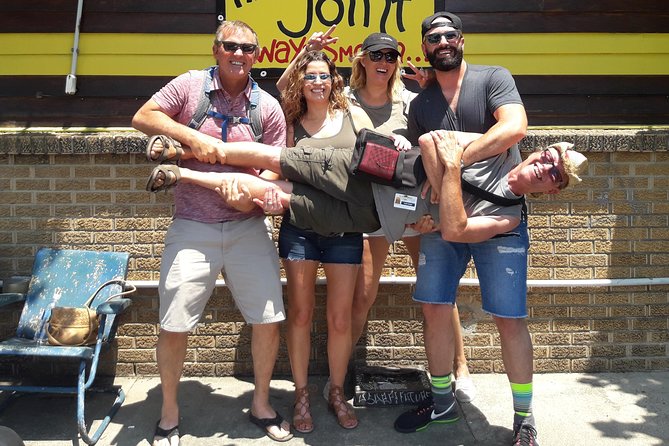
Meet Keith at Louisiana Music Factory, 421 Frenchmen Street. The shop is more than a practical meeting point. It is his favorite record store, and it carries the music discussed on the walk. If a song or artist catches your ear, you can browse for recordings after the tour.
Frenchmen Street is a natural starting place. It is famous for live music, and the opening puts you in the middle of the city’s current music scene before the walk reaches older stories and historic sites. The first portion lasts about 10 minutes, then the route moves toward the French Quarter.
The Bluetooth speaker is an important part of the experience. You hear selected tracks rather than relying only on Keith’s descriptions. That can make the difference between a list of names and a real sense of style, rhythm, and place. Expect around a dozen songs across the walk, not a full concert.
The guide also takes photos on some outings and may send them afterward, along with a playlist or bibliography. Those extras are not listed as guaranteed inclusions, so consider them a pleasant possibility rather than part of the promised package.
Crossing into the French Quarter
After crossing Esplanade Avenue, the route turns onto Chartres Street and begins connecting individual people with the neighborhood around you. One early stop concerns the boyhood home of Danny Parker and the story of his wife, Blue Lu. The account focuses on the effort to preserve New Orleans brass-band traditions and shows how music often survives because of determined individuals, not just famous institutions.
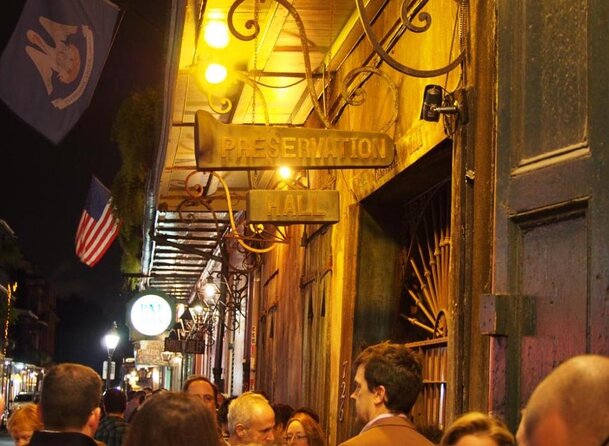
The walk continues through the Place de Armes, past Preservation Hall, and along Bourbon Street. These are familiar names, but the music angle changes what you notice. Bourbon Street was once filled with jazz from performers such as Louis Prima, Al Hirt, and Pete Fountain. You hear about that older nightlife while walking through the present-day street.
The route also includes Mister New Orleans and J&M Studios, described as the home of rock and roll. Recording studios are especially useful stops because they show how New Orleans music moved from local performance spaces onto records heard around the world.
Do not expect to enter every place you pass. The tour is mainly an outdoor walking experience, with stops and stories rather than a series of interior visits. Preservation Hall includes time for a photo and a look at the gift shop, but the supplied details do not promise a live performance or backstage access.
Preservation Hall and the human side of music
The brief stop at Preservation Hall adds a story about Sandra and Allan Jaffe, who visited New Orleans on their honeymoon and later made the hall their life’s work. This is a useful reminder that music history is also shaped by listeners, organizers, club owners, and preservation efforts.
You get about five minutes here, so think of it as a story and photo stop rather than a full venue visit. If you want to attend a performance at Preservation Hall, that would be a separate plan.
Keith’s style works best when you allow time for the story to unfold. Some outings begin slowly before finding their rhythm, especially if the group is large or the first explanations cover a lot of background. Once the music and locations begin working together, the walk becomes more animated.
A few more New Orleans tours worth comparing
- New Orleans Garden District History Walking Tour
★ 5.0 · 2,879 reviews - French Quarter Historical Sights and Stories Walking Tour
★ 5.0 · 2,724 reviews - New Orleans Small-Group Haunted History Carriage Tour
★ 4.5 · 2,289 reviews - New Orleans Haunted History Ghost Tour
★ 4.5 · 2,084 reviews
Bourbon Street, old sounds, and a possible refreshment stop
The Bourbon Street portion looks back at a time when the street was celebrated as one of the world’s great music corridors. The names are big, but the point is not simply to collect famous musicians. You hear how clarinet-led jazz, brass bands, and nightlife shaped the sound associated with New Orleans.
Some groups have stopped at Lafitte for a drink and history lesson, and others have paused at a coffee shop or restroom halfway through. These stops appear to vary with the day and the group, so do not book the tour expecting a guaranteed drink break. Still, they show how the walk can adapt to weather and group needs.
For comfort, wear shoes suited to pavement and bring water. The reviews repeatedly describe getting plenty of steps, and New Orleans weather can be hot and humid. The tour requires good weather, so poor conditions can lead to a new date or a full refund.
Louis Armstrong Park and the story of Treme
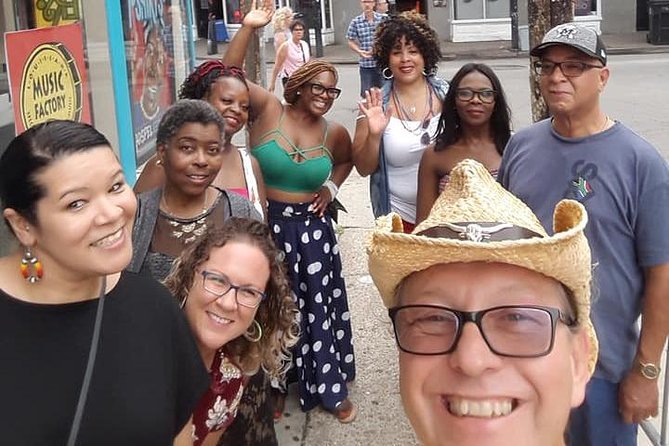
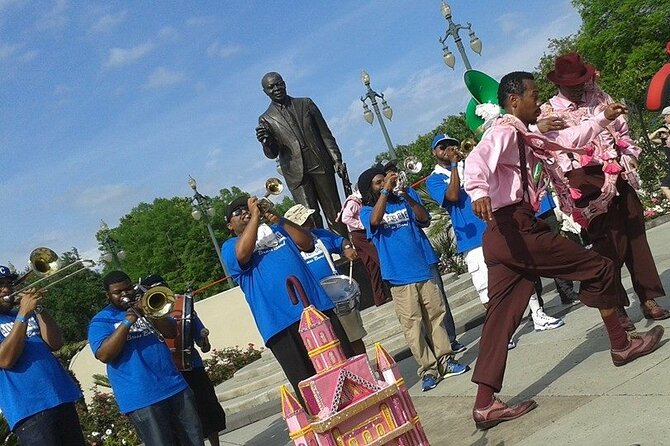
The route reaches Louis Armstrong Park for about 15 minutes. You see the statue of Louis Armstrong and learn about Treme, described as America’s first African-American neighborhood. This is one of the most important parts of the walk because it shifts the focus from famous performers to the communities that built New Orleans music.
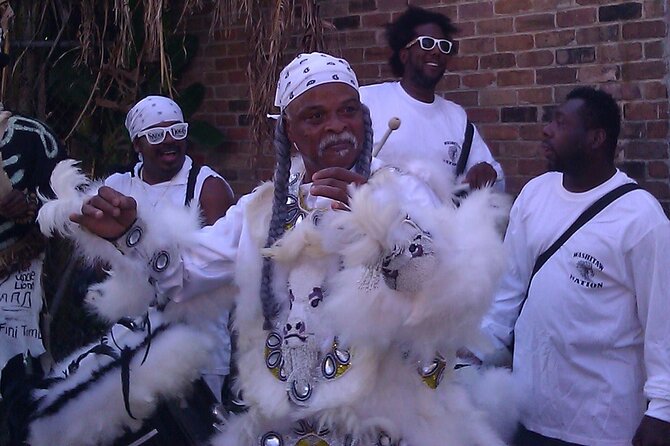
The park also includes Congo Square, where the stop lasts about five minutes. The square’s importance lies in the long connection between African cultural traditions, communal performance, rhythm, and later New Orleans music. Keith uses this setting to connect early heritage with jazz, blues, brass bands, and later styles.
The stop is short, but its meaning is large. If you are mainly interested in recording studios and rock history, this may feel like a change of subject. If you want to understand why New Orleans music sounds like New Orleans music, Congo Square is essential.
The walk finishes at 712 Royal Street, behind St. Louis Cathedral. Musicians often play in the street nearby, giving you a chance to continue listening after the formal tour ends. That ending feels right: the story moves from historic places back into living street music.
Keith Abel’s guide style
Keith receives the strongest praise for his storytelling, humor, and personal connection to the material. He can move from music history to politics, social change, anthropology, and city life without treating those subjects as separate boxes. That wider context helps explain why certain sounds and artists mattered.
He also aims to include the whole group. Solo participants may find the experience quite personal, while couples and families can expect questions and conversation rather than a silent march. Some outings have had only a few people, but the maximum group size is 28.
One review refers to the guide as Vinny, but the response identifies him as Keith, the tour owner. The supplied tour information names Keith Abel as the main guide, so that is the person you should expect.
The language can be uncensored. One group specifically noted that the tour suited adults because of the language and the amount of walking. Families with older teens have also enjoyed it, including teenagers aged 16 and 20. I would use your judgment for younger children, since the subject matter and delivery are not designed as a children’s program.
Is $30 a good value?
At $30 per person, this is a modestly priced two-hour experience. You are paying for a guided walk, a live soundtrack of selected recordings, and a guide with more than 20 years in the record industry. You are not paying for admission to a concert, a meal, or entry into a collection of venues.
The value is strongest if you want a musical framework for exploring the city. Keith covers several neighborhoods and many decades, so you get more than a single club visit. The music clips also give the walk something a standard history talk does not have.
The value is weaker if you already know New Orleans music well and want access to private recording studios or a live show. This is an outdoor orientation and storytelling experience. It gives you names, places, songs, and context, then leaves you to explore concerts and record shops on your own.
I would place it early in a New Orleans visit. The route can help you decide which artists to hear, which venues to investigate, and which records to look for at Louisiana Music Factory. It also makes the French Quarter feel less like a backdrop and more like a working part of the city’s musical story.
Who should book this experience
You are a strong match if you:
- Like jazz, blues, gospel, soul, rhythm and blues, or rock and roll.
- Enjoy learning through stories instead of a formal museum talk.
- Want to connect famous artists with actual streets and buildings.
- Are comfortable walking for about two hours.
- Appreciate a guide with a strong personality and a sense of humor.
- Want to understand Treme and Congo Square as part of the city’s musical development.
You may want another option if you prefer a quiet tour, dislike adult language, have difficulty walking on city streets, or mainly want a live performance. Children can attend only with an adult, but the material is better suited to adults and older teens.
Booking about 28 days ahead is common, so reserve early if your New Orleans dates are fixed. Free cancellation is available up to 24 hours before the start time. Changes or cancellations inside that window are not refunded, and the provider may reschedule or refund the tour if weather is poor or too few people sign up.
Should you book the New Orleans Music Heritage Tour?
Book it if music is one of the reasons you are coming to New Orleans. The strongest part is the way Keith pairs a song with a street, studio, neighborhood, or musician. You get a useful introduction to jazz and blues, but also to brass bands, gospel, soul, rock, and the people who kept those traditions moving.
I would especially recommend it for a first visit, a solo traveler who wants a friendly introduction, or a music-loving couple looking for something beyond a night in a club. Go with comfortable shoes, an open mind, and room in your schedule for Keith’s stories to take their own rhythm.
FAQ
How long does the New Orleans Music Heritage Tour last?
The tour lasts approximately two hours.
Where does the tour begin?
It begins at Louisiana Music Factory, 421 Frenchmen Street, New Orleans, Louisiana 70116.
Where does the tour end?
It ends at 712 Royal Street, behind St. Louis Cathedral. Musicians are often playing in the street nearby.
Which neighborhoods does the tour visit?
The route passes through the Marigny, the French Quarter, and Treme.
Does the tour include music?
Yes. Keith uses Bluetooth speaker capability to play roughly a dozen songs connected to the artists and places discussed.
Who leads the tour?
The tour is led by Keith Abel, a Louisiana record professional with more than 20 years of experience in the record business.
What music styles are covered?
The tour covers New Orleans jazz, blues, gospel, brass-band music, rhythm and blues, soul, Motown, rock and roll, and pop.
Does the tour visit Congo Square?
Yes. Congo Square is included within Louis Armstrong Park, along with the Louis Armstrong statue and information about Treme.
Are children allowed?
Children must be accompanied by an adult. The tour may be better suited to adults and older teens because of the walking and possible adult language.
What is the cancellation policy?
You can cancel at least 24 hours before the start time for a full refund. Cancellations or changes made less than 24 hours before the start time are not refunded. If poor weather or an insufficient number of participants cancels the tour, you are offered another date or a full refund.
Newest New Orleans tours we have written up
- 45-Minute Garden District Highlights Tour in New Orleans★ 5.0 · 33 reviews
- New Orleans City and Swamp Helicopter Tour★ 5.0 · 9 reviews
- 45-Minute Marigny Triangle Highlights Tour in New Orleans★ 5.0 · 12 reviews
- 20 Passenger New Orleans Airport or Hotel Transfer★ 5.0 · 6 reviews
- Private New Orleans 2-Hour Sail Aboard a Luxury Yacht★ 5.0 · 44 reviews
- The New Orleans Darkness Tour★ 4.4 · 9 reviews
- 11 Passenger Executive Van: New Orleans Airport or Hotel Transfer★ 4.0 · 8 reviews
- Spooky Family Ghost Tour★ 3.4 · 9 reviews
New Orleans Jazz and Live Music Tours, compared.
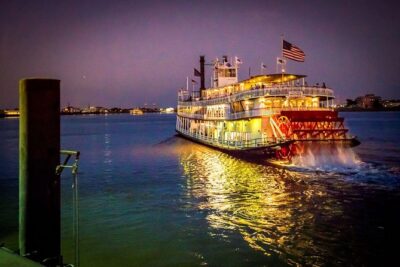
New Orleans Steamboat Natchez Jazz Cruise with Dinner Option
Read our review →
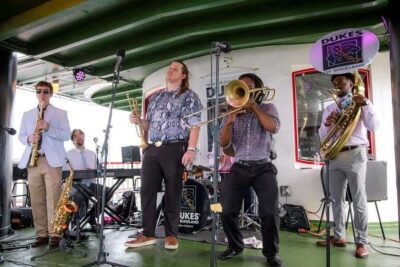
Evening Steamboat Jazz Cruise + Optional Dinner
Read our review →
Daytime Steamboat Jazz Cruise + Optional Lunch
Read our review →
Paddlewheeler Creole Queen Jazz Dinner Cruise in New Orleans
Read our review →
Evening Jazz Boat Cruise with Optional Dinner
Read our review →
VIP Jazz Dinner Cruise with Private Tour and Open Bar Option
Read our review →Browse the lists this tour appears in