
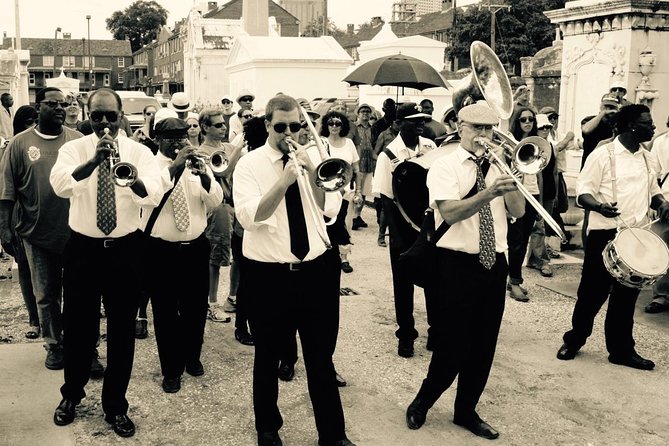
Reviewed · NEW ORLEANS JAZZ AND LIVE MUSIC TOURS
New Orleans Music Tour
New Orleans music is not confined to a club. It grew from burial grounds, dance gatherings, churches, saloons, recording studios, and street corners. This two-hour walk follows that trail, from the musicians’ tomb at St. Louis Cemetery No. 1 to Congo Square and the building that once held J&M Studios. David is the guide most often praised for his energy, humor, and command of the subject.
I like two things here: the tour gives you a quick city orientation through music, and it links sound to food, dancing, politics, religion, and architecture. I also like the small maximum of 15 people, which gives a strong guide room to answer questions and even invite a piano-playing moment when the setting allows.
The main catch is simple: this is a history and storytelling walk, not a concert. Live music is not promised, and the route may not always match every planned stop. In hot weather, the 2 pm start can also be hard on both visitors and guides.
Key points to know before you book
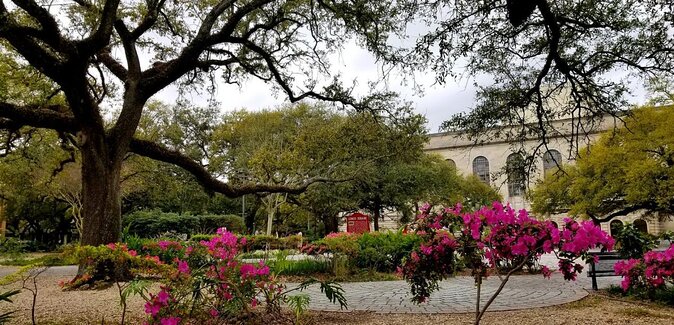
- Congo Square is the heart of the story: The tour explains why this gathering place matters to New Orleans music and to later popular music.
- The former J&M Studios adds a great recording angle: You hear about Professor Longhair, Fats Domino, Allen Toussaint, Little Richard, Ray Charles, and others connected to the New Orleans sound.
- St. Louis Cemetery No. 1 offers a modern musicians’ connection: The New Orleans Musicians Tomb began with a 2004 burial and honors the city’s musical community.
- Storyville is discussed through the music born around it: The tour connects the old red-light district with King Oliver, Buddy Bolden, Jelly Roll Morton, and Sidney Bechet.
- David is a major strength: His storytelling, passion, and broad musical knowledge receive the strongest praise.
- Bring the right expectation: You may hear recorded examples or stories, but live jazz is not part of the guaranteed program.
Why this walk matters to New Orleans
A standard city tour can show you buildings and street names. This one gives you a way to hear the city in your head as you walk. It treats music as a record of who had power, who was excluded, how people worshipped, and how communities kept traditions alive.
That approach is especially useful in New Orleans, where jazz cannot be separated from African musical traditions, Caribbean influence, racial history, migration, religion, and nightlife. You are not simply checking off famous musicians. You are following the places and conditions that helped their music form.
The tour starts at 2 pm and lasts about two hours. It begins and ends at 806 N Rampart Street, near Louis Armstrong Park. There is no hotel pickup, and food and drinks are not included, so plan to arrive fed and ready to walk.
At $25 per person, the price is modest for a small-group city introduction. You are paying for a guide’s interpretation rather than admission to a major attraction. Since the stops themselves are listed as free, the value depends heavily on the person leading the walk. That is why David’s ability to connect many subjects matters so much.
More jazz and live music tours in New Orleans:
- New Orleans Steamboat Natchez Jazz Cruise with Dinner Option
★ 4.0 · 7,533 reviews - New Orleans Steamboat Natchez Jazz Cruise
★ 4.5 · 5,334 reviews - New Orleans: Evening Steamboat Jazz Cruise + Optional Dinner
★ 4.3 · 4,548 reviews
St. Louis Cemetery No. 1 and the musicians’ tomb
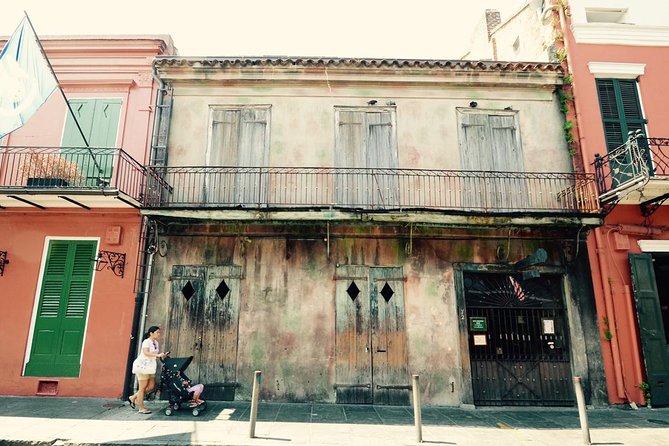
The first stop is St. Louis Cemetery No. 1, reached through the area sometimes called the Tango Belt. The focus here is the New Orleans Musicians Tomb, a place with a direct connection to the city’s working musicians.
The Barbarin family, a New Orleans musical dynasty, donated the tomb for free burial to musicians. The first burial was Lloyd Washington of the Ink Spots, on October 23, 2004. That detail gives the tour a useful present-day link. You are not only hearing about early jazz pioneers from a distant past. You are also seeing how New Orleans continues to honor people who helped shape its sound.
The cemetery stop is scheduled for about 30 minutes. That is enough time for a focused explanation, but not a long cemetery visit. Admission is listed as free, which keeps the tour affordable.
One practical point matters here: the cemetery is a historic place, not a music performance venue. You will get context and stories rather than a song in the tomb area. Treat the site with care and listen closely. The value is in understanding the connection between family, place, and musical identity.
Storyville, saloons, and the birth of jazz
From the cemetery, the route turns toward the remains of Storyville, the old red-light district. The district is gone, but its role in New Orleans music remains central to the city’s story.
The tour points to the former location of Frank Early’s My Place Saloon, associated with the writing of Pretty Baby. It also connects Storyville’s parlors with musicians such as King Oliver, Buddy Bolden, Jelly Roll Morton, and Sidney Bechet. These names help you place the music in a real social setting, where performers worked in clubs and saloons rather than in polished concert halls.
I like this stop because it avoids treating jazz as something that appeared fully formed. Music developed through places where people gathered, drank, danced, worked, and listened. Storyville provides a clear setting for that process.
Still, you need to keep your expectations realistic. You will see remains and locations, not a preserved entertainment district. Much of what makes the stop worthwhile comes from the explanation. If you want a visual parade of intact historic buildings, this part may feel thin. If you want to understand how musicians and nightlife shaped each other, it is much more useful.
The planned time is about 30 minutes. The walk helps you get your bearings in an area that many people pass through without understanding its role in local music.
Louis Armstrong Park and Basin Street Station
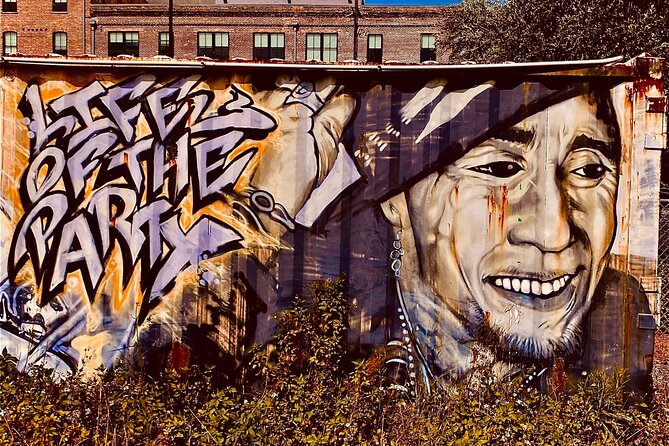
The next section leads toward Basin Street Station and Louis Armstrong Park. The park is a key setting for the tour because it brings several strands of New Orleans history together in one place.
Louis Armstrong Park includes Congo Square, and the tour uses the park to discuss the roots of local music, the Tremé area, and the musicians represented by statues and memorials. The park also offers a change of pace from street walking. You can pause, look around, and connect the spoken history to the physical setting.
This is also the point where the tour’s actual route may differ from the planned outline. One account describes spending the full two hours in Louis Armstrong Park rather than visiting each stop as listed. That may be frustrating if you want a strict point-by-point walk, but the park can support a longer conversation when the guide has a lot to explain.
The park has been a high point for strong guides. David is praised for making the material lively and for connecting music with religion, politics, architecture, and daily life. Another guide, Cindy, received a much less favorable account after a summer tour that ended early. That contrast shows how much the quality depends on the guide and the conditions.
The scheduled time for this part is roughly 30 minutes, though the real timing can vary. A small group helps here. With no more than 15 people, you can usually hear the guide and ask questions without the feel of a large bus tour.
A different side of New Orleans for another evening:
- New Orleans Premier Ghost, Voodoo and Vampire Walking Tour
★ 4.5 · 12,856 reviews - Adults-Only New Orleans Ghost, Crime, Voodoo, and Vampire Tour
★ 5.0 · 6,545 reviews - New Orleans Food Walking Tour of the French Quarter with Small-Group Option
★ 5.0 · 6,118 reviews - New Orleans Swamp and Bayou Boat Tour with Transportation
★ 5.0 · 5,399 reviews
Congo Square and the roots of New Orleans sound
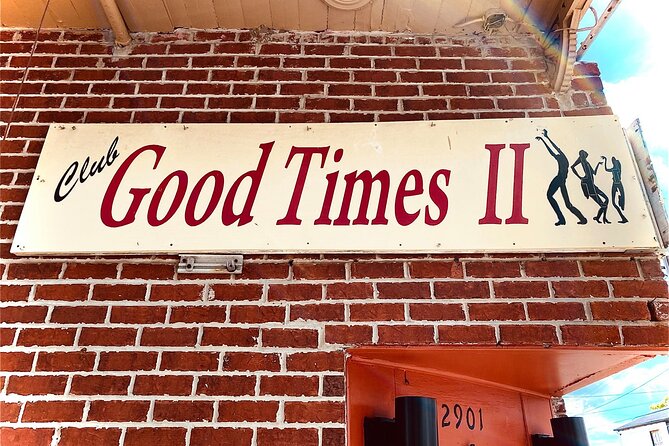
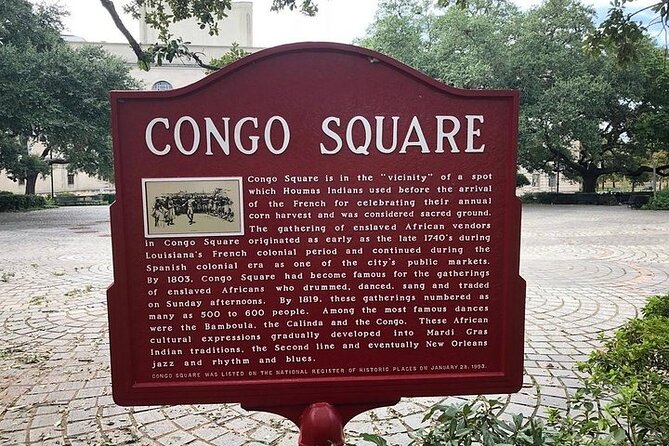
Congo Square is the intellectual center of the walk. It is described as the wellspring of New Orleans music because it was a place where African musical and religious traditions were performed by enslaved people and their descendants.
The site is important not just for drumming or dancing. It helps explain how rhythm, call-and-response, movement, and communal performance fed later New Orleans styles. The tour presents Congo Square as a link between early African traditions and the popular music that followed.
You will also hear that Congo Square was the site of the first New Orleans Jazz and Heritage Festival in 1970 and that the Municipal Auditorium is nearby. That gives the place a long arc, from forced displacement and restricted gatherings to major public celebrations of local culture.
Some of the language used to describe Congo Square can sound broad, especially the idea that it is the source of all New Orleans music and much of popular music. A good guide should help you understand that as a central influence rather than a claim that every later style came from one location alone. David’s strength is his ability to explain these connections through stories rather than a dry list of dates.
Plan for another 30 minutes here. The area is best appreciated when you listen for the links between place, rhythm, movement, and community.
J&M Studios and the New Orleans recording sound
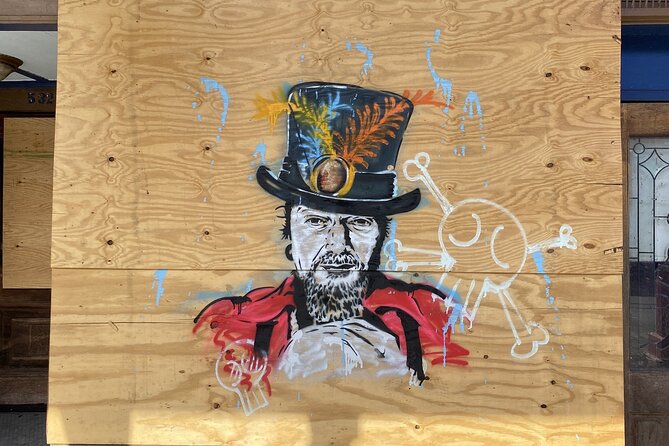
After Armstrong Park, the tour enters the building that housed J&M Studios. This is one of the most appealing parts for anyone who likes recorded music and studio history.
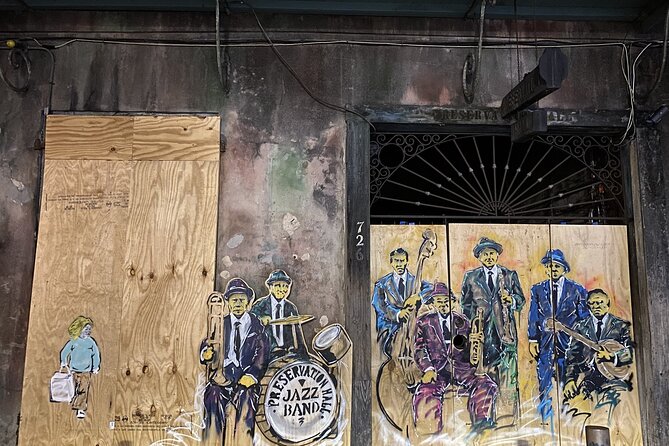
J&M helped create what is often called the New Orleans sound. The names connected with the studio form an impressive list: Professor Longhair, Dave Bartholomew, Fats Domino, Guitar Slim, Shirley and Lee, Lloyd Price, Ernie K-Doe, and Allen Toussaint. Visiting musicians included Little Richard, Ray Charles, and Jerry Lee Lewis.
You may not recognize every name, but the guide’s job is to show how these performers fit together. The stop can turn a list of artists into a story about rhythm and blues, piano styles, local songwriting, recording technology, and the way New Orleans musicians influenced national music.
This is also where the tour reaches more recent local sound. You hear about the origins of New Orleans bounce music and the street musicians who continue the city’s performance tradition.
The biggest possible disappointment comes here if you expect a live demonstration. One person specifically wanted live music and found the experience lacking for that reason. Another account criticized the tour for having no jazz music at all. Take those warnings seriously. You may get musical examples, discussion, or a guide who uses performance to explain a point, but the tour does not promise a live set.
If you want to hear music after the walk, use this tour as your background lesson, then choose a club or street performance on your own. The guide can help you understand what you are hearing, but the evening performance is separate.
How the guides shape the experience
David is the clearest name associated with this tour. He is praised for being energetic, funny, artistic, and able to adjust to different groups. His strongest quality is not simply knowing many musicians. He connects music to the city’s wider culture, which makes the walk feel like a New Orleans history lesson told through sound.
That matters because the itinerary covers a lot in two hours. You move from cemeteries to Storyville, Basin Street, Armstrong Park, Congo Square, J&M Studios, and bounce music. Without a strong storyteller, that could become a fast pile of names.
Group size helps. The maximum is 15 people, and some departures may feel almost private if attendance is low. A small group can make it easier to ask questions, keep up with the guide, and spend more time on a subject that interests you.
The tour is offered in English. Most people can participate, but the information provided does not promise a fully step-free route or describe specific accessibility features. If mobility is a concern, ask before booking.
Weather, timing, and what to bring
The 2 pm start works well in cooler weather and gives you time to explore New Orleans before or after the walk. In summer, the heat can be a real issue. One account describes a guide becoming tired and ending after about an hour, so I would avoid treating this as a casual hot-weather activity without preparation.
Wear comfortable walking shoes and check the forecast. The walk has continued in cold, damp, windy weather, but poor conditions can make the storytelling harder to enjoy. Carry water, especially in warm months.
Allow the full two hours, even though the route may run differently from the planned sequence. The walk returns to the starting point, so you do not need to arrange a ride from a separate finish location.
Free cancellation is available if you cancel at least 24 hours before the start time. Changes or cancellations inside that window are not accepted for a refund.
Is the New Orleans Music Tour worth $25?
I would book this if you want context before spending your evenings in New Orleans music venues. It is especially good for first-time visitors, music fans who want the cultural story behind the sound, and families with older children who enjoy history when it is tied to real people and places.
I would not book it if your main goal is live jazz. You could leave disappointed, even after a good tour, because the program centers on explanation rather than performance.
The best reason to go is the chance to understand how Congo Square, Storyville, the musicians’ tomb, J&M Studios, and modern bounce music fit into one long story. Ask for David if guide information is available at booking, prepare for outdoor walking, and keep your expectations focused on music history. At $25, that is a fair price for a thoughtful introduction, with the usual warning that the guide and weather matter a great deal.
FAQ
How long is the New Orleans Music Tour?
The tour lasts approximately two hours.
How much does the tour cost?
The price is $25 per person.
Where does the tour start?
It starts at 806 N Rampart Street, New Orleans, Louisiana 70116.
What time does the tour begin?
The scheduled start time is 2 pm.
Where does the tour end?
The activity ends back at the meeting point on N Rampart Street.
Is the tour offered in English?
Yes. The tour is offered in English.
Is live music included?
Live music is not listed as an included feature. The experience focuses on musical history, storytelling, locations, and cultural context.
What is included in the price?
A local guide is included. Hotel pickup and drop-off, food, and drinks are not included.
Can I cancel for a full refund?
Yes, if you cancel at least 24 hours before the experience start time. Cancellations or changes made less than 24 hours before the start time are not accepted for a refund.
Newest New Orleans tours we have written up
- New Orleans : Garden District Architecture Walking tour★ 4.8 · 5 reviews
- Ultimate Denver Day Out: Red Rocks, City Views & Ice Cream★ 5.0 · 7 reviews
- From New Orleans: Whitney and Laura Guided Plantation Tour★ 4.9 · 20 reviews
- Whitney Plantation and Soul of New Orleans City Tour Combo★ 5.0 · 13 reviews
- Treme Bar Crawl & Seafood Experience★ 4.2 · 7 reviews
- True Voodoo History of NOLA’s Congo Square with Local Guide★ 4.9 · 16 reviews
- Whitney Plantation Tour with Transportation★ 4.0 · 29 reviews
- Witches Coven Walking Tour in New Orleans★ 5.0 · 49 reviews
New Orleans Jazz and Live Music Tours, compared.
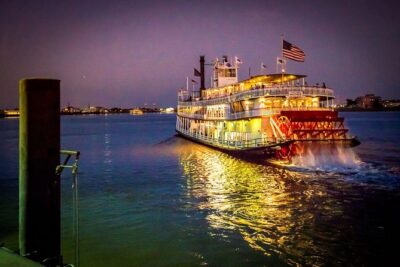
New Orleans Steamboat Natchez Jazz Cruise with Dinner Option
Read our review →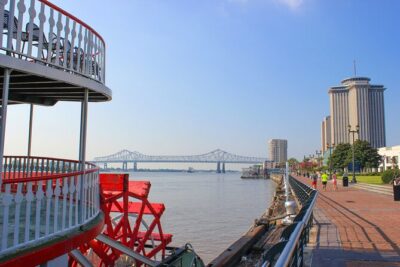
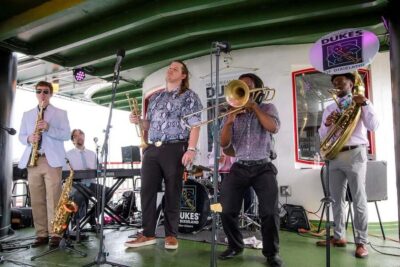
Evening Steamboat Jazz Cruise + Optional Dinner
Read our review →
Daytime Steamboat Jazz Cruise + Optional Lunch
Read our review →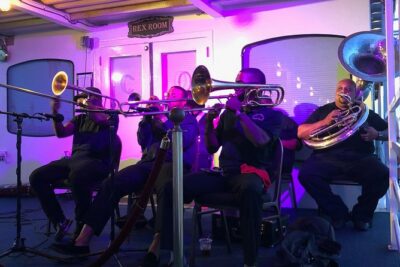
Paddlewheeler Creole Queen Jazz Dinner Cruise in New Orleans
Read our review →
Evening Jazz Boat Cruise with Optional Dinner
Read our review →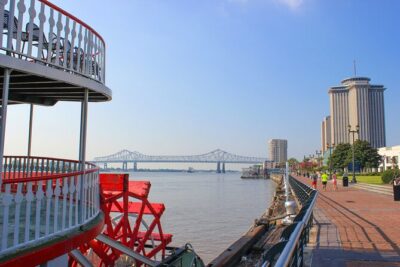
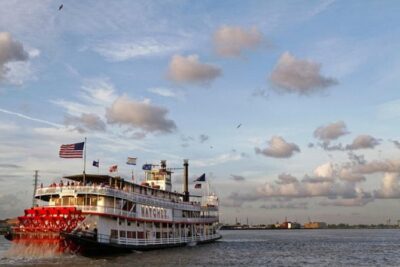
VIP Jazz Dinner Cruise with Private Tour and Open Bar Option
Read our review →Browse the lists this tour appears in