
Reviewed · NEW ORLEANS GARDEN DISTRICT TOURS
Private New Orleans Garden District Highlights Tour
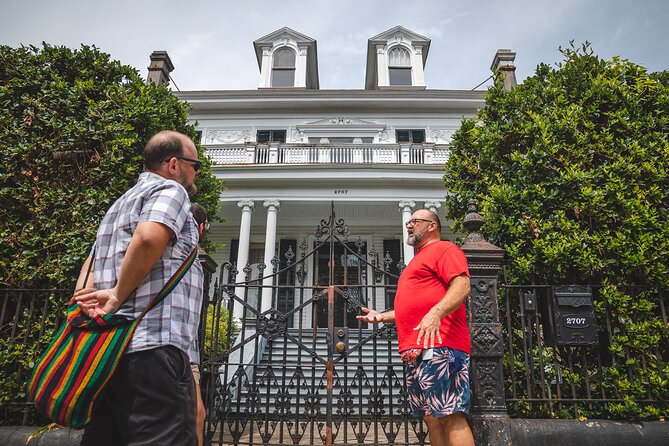
The most interesting part of this private New Orleans tour is the contrast. You begin among grand Garden District mansions, turreted porches, and Spanish moss, then cross Magazine Street into the working-class Irish Channel. Along the way, you learn how plantations became residential streets, why New Orleans buries people above ground, and how the city’s film industry uses these old homes.
I like the private format, since your guide can adjust the pace and answer your questions. I also like the cemetery visit and the move into the Irish Channel, which keeps this from being just a parade of pretty houses. The main consideration is the $143 per-person price for roughly two hours, plus the fact that this is a walking tour in a hot, uneven city.
Key points to know before you book
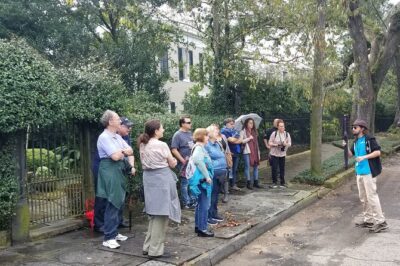
- A private walk with a local guide: Only your group participates, and guides have included Walter, Bonnie, Chip, and Logan.
- More than mansion watching: The route connects plantation land, wealthy homes, cemeteries, restaurants, Irish immigration, and shotgun houses.
- Lafayette Cemetery No. 1 is a major stop: You get an explanation of New Orleans’ above-ground, multiple-burial customs.
- Commander’s Palace is viewed from outside: The tour admires the famous turreted building but does not include a meal or restaurant admission.
- A useful counterpoint to the French Quarter: The Garden District is quieter and leafy, while the Irish Channel adds working-class history.
- Good shoes and weather planning matter: Streets and sidewalks can be difficult, and one review describes a heat index of 119 degrees.
Why the Garden District gives you a different New Orleans
If the French Quarter is your first picture of New Orleans, the Garden District gives you a useful second one. The streets here are lined with large 19th-century homes, gardens, ironwork, porches, and old trees. It is calmer than the bar-heavy parts of the city, though you are still walking on public streets with traffic, uneven pavement, and the ordinary noise of an urban neighborhood.
Your guide starts at 2729 Prytania Street, in the heart of the district. The area began as a family plantation. In the mid-1800s, the land was divided into smaller lots for private homes. Smaller is relative: these were still generous parcels, planned around gardens and imposing houses.
That origin explains the district’s look. You are not simply seeing a collection of old buildings. You are seeing a change in New Orleans society, from plantation land to a neighborhood of private homes built for wealthy residents. The homes help tell that story, especially when your guide points out how the area developed and who had the money to build here.
I like this opening because it offers context before the architecture starts to blur together. Without a guide, you can admire a handsome porch and move on. With Walter, Bonnie, Chip, or Logan, you get the social and local details that make the streets easier to read.
More Garden District tours in New Orleans:
- New Orleans Garden District History Walking Tour
★ 5.0 · 2,879 reviews - New Orleans City Tour: French Quarter, Garden District & Cemetery
★ 4.5 · 2,209 reviews - New Orleans Small-Group Garden District Walking Tour
★ 5.0 · 1,384 reviews
Strolling past antebellum homes and film locations
The first section lasts about 1 hour and 15 minutes, making it the main part of the tour. You pass a series of antebellum homes and other historic residences, with time to look at architectural details and hear stories tied to individual properties.
Some homes have connections to Hollywood productions. New Orleans is a popular filming location, and several Garden District houses have appeared in films. The tour does not turn the neighborhood into a movie set, though. The film links are an added layer, not the whole point.
That balance is useful. If you enjoy cinema, you may recognize certain houses or appreciate hearing how the district has been used on screen. If you care more about architecture and local history, the homes still work without knowing any film titles.
The route also includes famous or celebrity-associated houses. Exact houses and stories can vary with the guide, so you should expect a guided look at the neighborhood rather than a fixed museum exhibit. The private setup helps here. You can ask about a house that catches your eye, stop for a photograph, or request more detail about a particular story.
The scenery is a large part of the appeal. Spanish moss and mature trees soften the streets, and the area offers a break from New Orleans’ louder tourist zones. I would not call the walk effortless, though. New Orleans sidewalks can be challenging, and you should wear shoes that are comfortable on uneven pavement.
Lafayette Cemetery No. 1 and the city’s above-ground burials
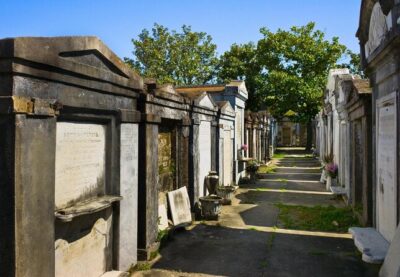
After the Garden District homes, you reach Lafayette Cemetery No. 1. This stop lasts about 30 minutes and shifts the subject from private houses to burial customs and family history.
New Orleans cemeteries are known for above-ground tombs and multiple-burial practices. Your guide explains why these methods became such a recognizable part of the city and points out some of the families buried in this cemetery. That makes the stop more than a quick photo opportunity.
The cemetery also helps you understand how New Orleans relates to water, ground, family, and ritual. The tour data specifically promises insight into cultural practices, but it does not provide a detailed explanation of every custom in advance. The quality of this section depends heavily on the guide’s storytelling and your questions.
I like the change of pace. A tour that only visits mansions can feel polished but thin. Lafayette Cemetery adds a more personal side of the city, where questions of family, death, and ritual sit alongside architecture and tourism.
Keep in mind that the cemetery is a historic burial place, not a themed attraction. You should treat it with respect, stay attentive to your guide, and avoid treating the tombs as simple props. The tour offers access to the grounds without a separate admission charge.
Commander’s Palace, seen from the street
The route continues to a view of Commander’s Palace, one of New Orleans’ best-known upscale restaurants. Its turreted Victorian exterior is easy to recognize, and the building has hosted many wedding receptions and dinners over the years.
This is a short exterior stop rather than a dining experience. Your guide tells you about the restaurant and the events connected with it, but food, drinks, and restaurant admission are not included. If you want to eat there, plan that separately.
That limitation is worth noting because the restaurant is a major New Orleans name. You should not book this tour expecting a table, tasting, or inside visit. Think of Commander’s Palace as an architectural and cultural landmark along the walking route.
Still, it fits the tour well. The restaurant shows how the Garden District’s grand buildings continue to function as part of modern New Orleans life. You see a historic-looking structure that is not frozen in the past, but still used for celebrations and dining.
A few more New Orleans tours worth comparing
- VIP Jazz Dinner Cruise with Private Tour and Open Bar Option
★ 4.5 · 838 reviews - Private Airport Transfer From New Orleans
★ 5.0 · 702 reviews - New Orleans Private Carriage Tour of the French Quarter
★ 5.0 · 537 reviews - New Orleans Private Luxury Airport Transfer to Downtown Hotels
★ 4.5 · 400 reviews
Crossing Magazine Street into the Irish Channel
The final section takes you across Magazine Street into the Irish Channel and lasts about 15 minutes. This is a brief stop, but it gives the tour its best social contrast.
The Garden District is associated with large homes, gardens, and wealth. The Irish Channel developed in the early 1800s as Irish immigrants came to New Orleans for work connected with shipping, alcohol, and brewing. Here, your guide points out shotgun-style homes, a very different form from the palatial houses seen earlier.
The area’s name and buildings help explain how labor shaped New Orleans. The city was not built only by wealthy families who owned grand homes. It also depended on immigrant workers and working-class neighborhoods near its industries.
I especially like having this contrast at the end. You leave with a broader picture of the city instead of the idea that New Orleans history is only mansions, music, and cocktails. The tour’s description mentions hanging beads and interesting old tales in the Irish Channel, so this closing walk may include a more informal look at neighborhood life.
The 15-minute timing means you should not expect an extensive Irish Channel tour. It is a compact final chapter that rounds out the Garden District story. If you want a much longer exploration of Magazine Street or the Irish Channel, you would need to do that separately.
The guides and what the private format changes
The tour has used several guides, including Walter, Bonnie, Chip, and Logan. Walter is described as offering strong local knowledge and following up with restaurant and sightseeing suggestions. Bonnie adapted well when a small booking became a tour for one person, which shows how the private format can change the feel of the walk.
Chip led a December tour, a useful reminder that cooler weather can make the route more comfortable. Logan is described as bringing energy and passion for New Orleans, while also warning that city streets and sidewalks can be difficult to navigate.
These details matter because a private tour is not a scripted group lecture. Your experience can depend on the guide’s style and your own interests. Ask questions if you want more detail on architecture, films, cemeteries, food, or neighborhood history. The guides can respond to your pace and interests more easily than a guide leading a large group.
A private tour also works well for solo bookings or small groups. The price is still charged per person, but your group is not mixed with strangers. If you are traveling with family or friends and want to talk freely, stop for photographs, or ask a lot of questions, that privacy has real value.
Is $143 per person a fair price?
At $143 per person, this is not a budget walk. The tour lasts about two hours, and no food, drinks, souvenirs, or gratuities are included. There are no separate admission fees for the Garden District walk or Lafayette Cemetery, so you are mainly paying for the private guide and the focused route.
The value is strongest if you want a personal introduction to the area and plan to use the guide’s advice for the rest of your New Orleans stay. Walter, for example, has offered follow-up restaurant and sightseeing suggestions. That kind of local orientation can be useful early in a visit.
The value is weaker if you are comfortable reading plaques, walking on your own, and looking up homes as you go. You can see the streets and exterior buildings without paying for a tour. What you cannot easily reproduce is the connected explanation of how plantation land, grand homes, burial customs, restaurants, immigrant workers, and shotgun houses fit together.
For a couple or family, the private format may justify the price more easily than for one person. For a solo visitor, the cost is harder to defend unless you strongly prefer a private guide or have limited time. A solo booking can still be tailored, as Bonnie’s one-person tour showed, but the per-person price remains significant.
Timing, weather, and practical details
The meeting point is easy to identify at 2729 Prytania Street. The end point is listed as the Garden District, so you should not assume the tour returns to the starting address. Public transportation is nearby, and a mobile ticket makes the booking simple.
Plan for a real walk. You will be outside for about two hours, moving through streets, sidewalks, a cemetery, and neighborhood areas. Wear comfortable shoes, bring water, and check the forecast. One participant dealt with a heat index of 119 degrees, so summer heat can change the experience from pleasant to punishing.
December has been described as a nice time for the walk, which makes sense for a route with substantial outdoor time. Still, the tour operates in the local weather conditions, and the supplied details do not promise a weather adjustment or indoor alternative.
Most people can participate, and service animals are allowed. Gratuities are not included, so you should budget for that separately if you feel the guide has earned it. You can cancel for a full refund up to 24 hours before the start time. Changes or cancellations inside that window are not accepted for a refund.
Who should book this Garden District walk?
I would choose this tour if you want more than pretty houses and prefer a guide who can connect places to people and events. It is especially suitable for first-time visitors, couples, families, solo visitors who like private touring, and anyone looking for a calmer counterpoint to the French Quarter.
It is also a good choice if you enjoy asking questions. The private format lets you steer the conversation toward films, architecture, burial rituals, food, or local recommendations. The guides’ different styles mean the experience may feel conversational rather than fixed.
I would hesitate if you dislike walking in heat, have difficulty with uneven city sidewalks, or want a long visit inside historic buildings. Most of the tour is outdoors, Commander’s Palace is viewed from the exterior, and no meal or drink is part of the booking.
Should you book it?
Book this private tour if you want a compact, guided introduction to the Garden District that includes both grand homes and the working-class Irish Channel. Its best feature is the range of subjects packed into two hours: plantation lots, antebellum architecture, film locations, cemetery customs, a famous restaurant, Irish immigration, and shotgun houses.
Skip it if $143 per person feels too high for an exterior walking tour or if you would rather explore at your own pace. For most visitors who value personal storytelling and practical local advice, the price is defensible, especially when shared by a small group.
FAQ
How long is the Private New Orleans Garden District Highlights Tour?
The tour lasts approximately two hours.
Where does the tour begin?
It begins at 2729 Prytania Street, New Orleans, Louisiana 70130.
Where does the tour end?
The end point is listed as the Garden District in New Orleans.
Is this a private tour?
Yes. Only your group participates in the activity.
Which guides may lead the tour?
Guides have included Walter, Bonnie, Chip, and Logan. The assigned guide may vary.
Does the tour enter Lafayette Cemetery No. 1?
Yes. The route includes a visit to Lafayette Cemetery No. 1, with about 30 minutes devoted to the cemetery and New Orleans burial customs.
Is food or drink included?
No. Additional food and drink are not included. The tour also does not include souvenirs or personal shopping.
Can I cancel for a full refund?
Yes. You can cancel at least 24 hours before the start time for a full refund. Cancellations or changes made less than 24 hours before the start time are not accepted for a refund.
Newest New Orleans tours we have written up
- 45-Minute Garden District Highlights Tour in New Orleans★ 5.0 · 33 reviews
- New Orleans City and Swamp Helicopter Tour★ 5.0 · 9 reviews
- 45-Minute Marigny Triangle Highlights Tour in New Orleans★ 5.0 · 12 reviews
- 20 Passenger New Orleans Airport or Hotel Transfer★ 5.0 · 6 reviews
- Private New Orleans 2-Hour Sail Aboard a Luxury Yacht★ 5.0 · 44 reviews
- The New Orleans Darkness Tour★ 4.4 · 9 reviews
- 11 Passenger Executive Van: New Orleans Airport or Hotel Transfer★ 4.0 · 8 reviews
- Spooky Family Ghost Tour★ 3.4 · 9 reviews
New Orleans Garden District Tours, compared.
New Orleans Garden District History Walking Tour
Read our review →
New Orleans City Tour: French Quarter, Garden District & Cemetery
Read our review →
New Orleans Small-Group Garden District Walking Tour
Read our review →
New Orleans City and Cemetery Tour with Garden District Stroll
Read our review →
New Orleans Highlights of the Garden District Walking Tour
Read our review →
Browse the lists this tour appears in