
Reviewed · NEW ORLEANS SCANDALOUS HISTORY TOURS
Walking Tour about The Good, The Bad and The Beautiful Women of New Orleans
New Orleans women have shaped the city through politics, piracy, religion, business, writing, science, food, entertainment, and less respectable work. This one-hour walk gives those women center stage, with guide Mikko bringing plenty of energy, humor, and useful local tips.
I like the focused theme and the compact route. You get Bourbon Street from a different angle, then move through Jackson Square and the French Quarter’s quieter corners. I also like the mix of famous names and women whose work has often been pushed into the background.
The main drawback is the outdoor format. You walk about a mile and stand outside at each stop, so New Orleans heat, humidity, rain, and uneven streets can affect the experience. The tour also needs at least four people to run.
Key points to know before booking
- Bourbon Street gets a different history: The tour looks at the women connected with the street through business, pleasure, and survival.
- Mikko is the named guide: His fast, story-driven style includes humor, local history, restaurant suggestions, and plenty of room for questions.
- Henriette Delille’s story reaches toward sainthood: At St. Louis Cathedral, you’ll learn about her work and the process of becoming a saint.
- Baroness Pontalba was no passive heiress: Her story at Jackson Square is one of the tour’s most memorable stops.
- The walk ends near the LaLaurie Mansion: You hear a fuller account of Madame LaLaurie, but the private home is viewed from outside.
- The $10 price is unusually modest: For an hour of guided history in the French Quarter, it offers strong value, provided you can handle the weather.
New Orleans history through its women
Many French Quarter tours lean on ghosts, architecture, drinking, and male political figures. This walk takes another route. It asks what the city looks like when women are treated as the main actors rather than supporting characters.
That change matters in New Orleans, where women worked across every level of society. Some built religious institutions and schools. Others ran businesses, wrote books, entertained crowds, endured violent marriages, or gained power in ways that polite society preferred not to discuss.
I like that the subject is broad. The tour is not limited to saints or famous authors. It also reaches into piracy, politics, culinary work, science, entertainment, and the more shadowy jobs attached to the French Quarter.
The tone appears designed to be lively rather than academic. Mikko’s approach, as described in the tour material, is high-energy and packed with anecdotes. You should expect a guide who keeps the hour moving, answers questions, and may offer dining suggestions along the way.
That makes this a good choice early in your New Orleans stay. You get history, but you may also pick up ideas for where to eat after the walk. The route ends near shopping and dining in the lower French Quarter, so you can continue exploring without arranging another ride.
More scandalous history tours in New Orleans:
- New Orleans Lewd Spirits Haunted Tour with Bar Stops
★ 5.0 · 823 reviews - The Bad Broads Tour of New Orleans
★ 5.0 · 298 reviews - Saints and Sinners Walking Tour in New Orleans
★ 4.5 · 136 reviews
Meeting at 820 St. Louis Street
The walk begins at 820 St. Louis Street. You are asked to arrive 15 minutes before the start time. If the gates are closed, meet by the sign.
That extra time is useful. The tour lasts only about an hour, and late arrivals could miss the opening context or have trouble finding the group. The exact end point can vary slightly because the guide may disband the group near lower French Quarter shops and restaurants.
The experience uses a mobile ticket, which keeps the booking process simple. Confirmation is provided at booking, and the tour accepts service animals. Public transportation is nearby, though no specific transit route is provided.
The group can reach 20 people. That is large enough to create a little energy but small enough for a walking guide to keep the presentation personal. Since the tour requires at least four people, a cancellation is possible if that minimum is not reached. In that case, you are offered another date or experience, or a full refund.
Bourbon Street beyond the usual party story
Bourbon Street is usually presented as a corridor of bars, music, neon, and late-night misbehavior. This walk asks you to look past that surface and consider the women who made their living there or passed through it.
Many of the women discussed had ties to Bourbon Street through business or pleasure. That phrase covers a wide range of lives. Some women held respectable public roles, while others worked in fields that polite histories often avoid. The value here is not in cleaning up the past. It is in showing how complicated life in the French Quarter could be.
You should expect to walk along the street while listening rather than enter a particular attraction. No buildings are included in the tour, and no food or drink is served. The stories are the main event.
This part may appeal most if you have already seen the standard French Quarter sights and want a fresh angle. It also works for first-time visitors who prefer social history to a basic list of dates and buildings.
The tradeoff is that Bourbon Street can be noisy and crowded. That may make it harder to hear at certain moments. Stay close to the guide and pay attention to the meeting instructions so you do not lose the group.
Baroness Pontalba at Jackson Square
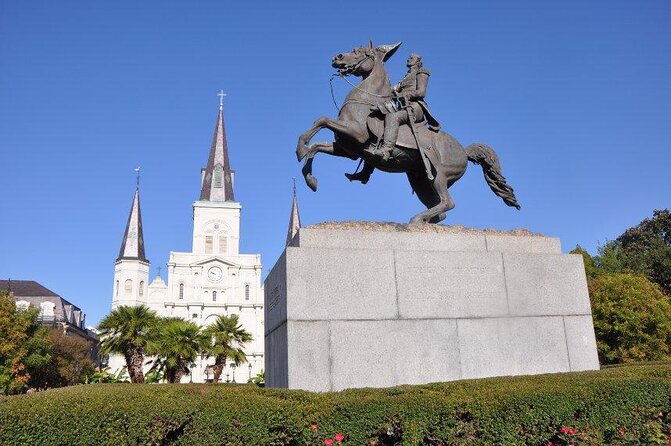
At Jackson Square, the story shifts to Baroness Pontalba, a woman whose life was anything but meek or dependent. Her connection to the square gives the guide a chance to discuss wealth, family pressure, marriage, and personal will within the old French Quarter.
The appeal of this stop is the contrast between the calm, formal setting of Jackson Square and the force of Pontalba’s story. You are not simply looking at a grand urban space. You are connecting it with a woman who resisted the role expected of her.
This is one of the stronger reasons to take the walk. The subject feels tied to the place beneath your feet, rather than added as a detached biography. You also get a useful reminder that women’s power in New Orleans did not always come through official political office.
Expect to stand outside for this part of the tour. There is no indoor admission included, so wear comfortable shoes and be ready for sun or rain.
A few more New Orleans tours worth comparing
- New Orleans Premier Ghost, Voodoo and Vampire Walking Tour
★ 4.5 · 12,856 reviews - New Orleans Food Walking Tour of the French Quarter with Small-Group Option
★ 5.0 · 6,118 reviews - St. Louis Cemetery No. 1 Official Walking Tour
★ 4.5 · 3,941 reviews - New Orleans French Quarter, Voodoo and Culture Walking Tour
★ 4.5 · 2,961 reviews
Henriette Delille and the road to sainthood
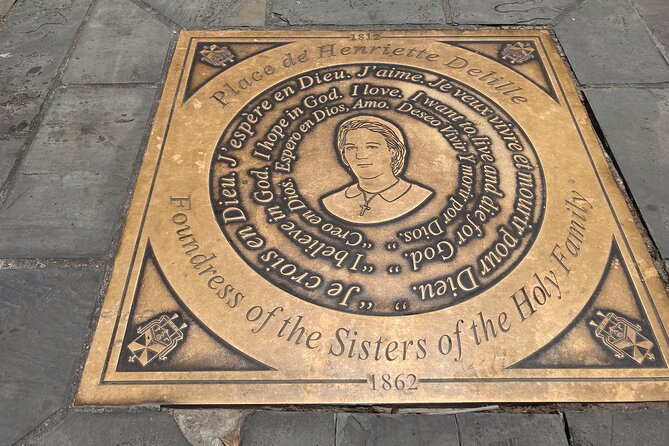
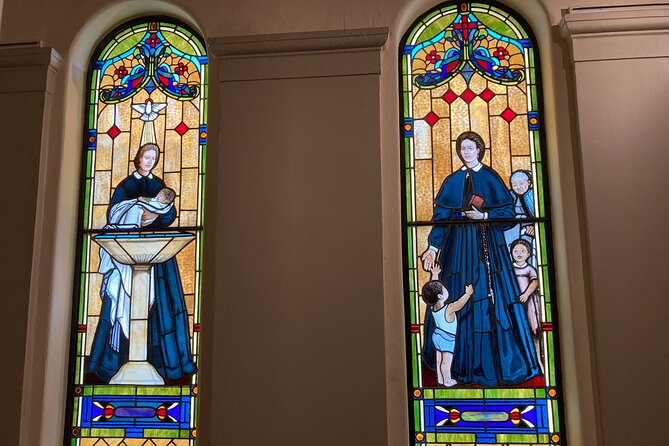
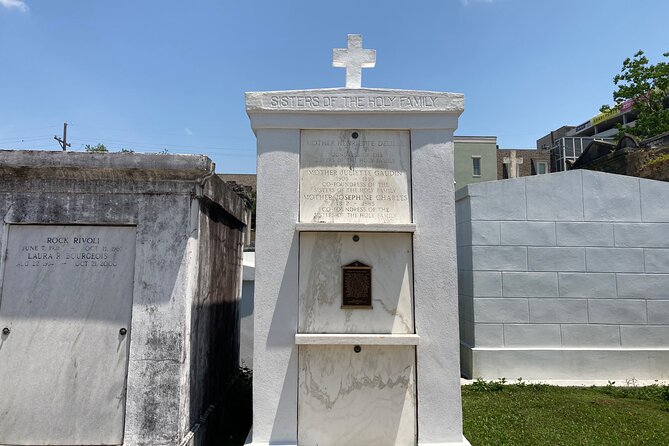
The tour pauses for about 10 minutes at St. Louis Cathedral. Here you learn about Henriette Delille, founder of the Sisters of the Holy Family, and her bid for sainthood.
This stop gives the walk a more serious tone. Delille’s story connects religion, service, race, education, and the long work of building an institution. The guide explains the sainthood process and how far it has progressed.
Because the stop is at the cathedral, you get a strong sense of place even without entering. The building provides a clear setting for a story about faith and public service. Admission is free, but the tour does not promise interior access.
I would pay close attention here, especially if you want more than scandal and colorful French Quarter anecdotes. Henriette Delille adds moral purpose to the route and shows how one woman’s work affected the city for generations.
The stop is outdoors, and the tour notes that each listed location involves at least 10 minutes outside. In hot weather, that can feel longer than it sounds. Bring water and use sunscreen.
The Ursuline nuns and women’s education
Another stop covers the Ursuline convent and the nuns who came to New Orleans to educate young women. Their work forms an important part of the city’s early social and educational story.
The tour presents their arrival and mission as remarkable, even miraculous. You will hear about the risks and demands tied to establishing a religious and educational community in a young colonial city.
This stop broadens the meaning of women’s history. It is not only about individual personalities. It is also about networks, schools, religious orders, and the steady work required to shape civic life.
You should not expect to go inside a convent or other building. The guide stops at the relevant locations, but the experience remains a street-level walking tour. If you want extended interior visits, this is not the right format. If you like connecting buildings with the people who used them, it works well.
Frances Parkinson Keyes and the writer’s home
The route includes the former home of Frances Parkinson Keyes, a well-known author who lived and wrote there. The guide discusses the house and the works associated with her time in New Orleans.
This stop will appeal to readers and anyone interested in how place shapes creative work. You are not simply hearing that a famous writer once lived in the French Quarter. You are seeing the setting connected to her daily life and writing.
Again, the home is viewed from outside. The tour does not include entry to private residences, and the itinerary makes clear that the stops are exterior visits. That limitation is worth keeping in mind if you expect museum-style access.
Still, the stop adds variety. After religious history and public figures, you get a literary connection. The route keeps moving across different kinds of work, which helps prevent the theme from feeling narrow.
Madame LaLaurie and the story beyond the horror tale
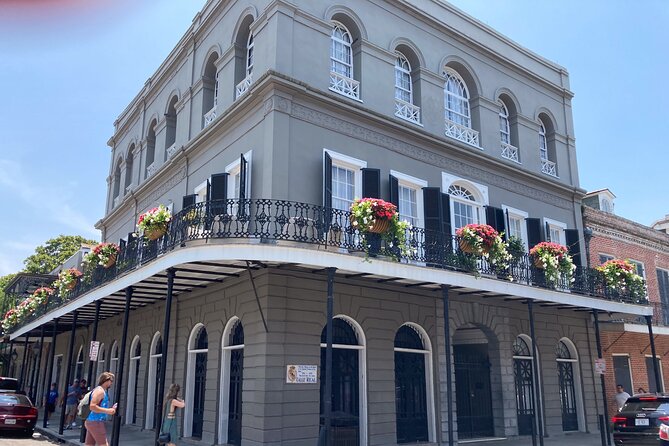
The tour ends at the LaLaurie Mansion on Royal Street. Madame LaLaurie is often reduced to a gruesome horror story, but this walk offers another side of her life and another account of her connection to New Orleans.
That promise is useful. The French Quarter has plenty of dramatic legends, yet legends can flatten real people into villains or curiosities. A fuller account gives you room to question the familiar version and consider the person behind the tale.
The mansion is a private home, so there is no entry. You view it from the street and listen to the guide. The end point is practical because it leaves you close to lower French Quarter shopping and dining.
This final stop also fits the tour’s wider purpose. The women discussed are not placed into simple good and bad categories. Their lives include ambition, faith, money, work, scandal, courage, and choices that remain difficult to judge.
What the $10 price really buys you
At $10 per person, this is one of the lower-cost guided activities in the French Quarter. You are paying for roughly an hour of live interpretation, not admission to a museum, a meal, transportation, or access to historic interiors.
That distinction helps you judge the value fairly. If you want a guide to make the streets and buildings meaningful, the price is strong. If you want a long tour with several indoor attractions, it will feel limited.
The tour’s value also depends on the guide. Mikko is the named guide connected with the experience, and the descriptions of his style point to quick storytelling, humor, thoughtful answers, and practical restaurant advice. A good guide matters a great deal on a short walking tour because there is no time for slow orientation.
Tips are not included, but they are appreciated. Since the base price is modest, you may want to budget a gratuity if the guide gives you a lively, useful hour.
Heat, walking, and the one-mile route
The route is about one mile, but distance is not the only physical issue. You will walk and stand outdoors at several stops, with at least 10 minutes outside at each listed location.
New Orleans humidity can make a short walk feel demanding. The tour specifically warns that dehydration can spoil your day and recommends sunscreen, a hat, an umbrella, and sunglasses. Those are sensible supplies even when the forecast looks mild.
The experience is not recommended for people with walking or standing problems. It is also not recommended for people with breathing problems during the summer months because of the humidity.
Wear shoes you can walk in comfortably. Bring water before you meet the guide, since no drinks are included. An umbrella can serve two purposes, offering shade in strong sun and cover during a sudden shower.
The route is near public transportation, but you should plan to arrive at the start point rather than assume the guide can wait. The tour has a maximum of 20 people, and keeping pace with the group matters on busy French Quarter streets.
Who will get the most from this walk
I would choose this tour if you want New Orleans history told through individuals rather than through dates and architecture alone. It suits people interested in women’s roles in religion, writing, business, politics, entertainment, and the less polished corners of city life.
It is also a good fit if you have already seen the French Quarter and want a new way to read familiar places. The Bourbon Street section and the stories of Pontalba and LaLaurie offer a different frame for streets you may otherwise see only as nightlife districts.
Families with older children may find the variety appealing, but some subjects and jobs are left deliberately unmentioned rather than fully detailed in advance. Use your judgment based on the ages and interests in your group.
I would skip it if you dislike outdoor walking, need frequent indoor breaks, or want to enter historic buildings. You should also think twice about booking in the hottest summer weather if humidity affects your breathing or stamina.
Booking, cancellation, and timing advice
You can cancel for a full refund up to 24 hours before the start time. Changes or cancellations made inside that 24-hour window are not accepted for a refund.
Because the tour needs at least four people, keep an eye on any notice from the provider if your plans are tight. A cancellation caused by the minimum not being met results in an alternative date or experience, or a full refund.
The tour is often booked well ahead, with an average booking time of about 220 days. That suggests you should reserve early if your New Orleans dates are fixed, especially if you want a particular day or guide.
I would schedule it near the start of your visit. The walk can give you context for the French Quarter and may point you toward places to eat afterward. Morning or cooler hours are likely more comfortable, though the supplied details do not promise a specific departure time.
Should you book The Good, The Bad and The Beautiful Women of New Orleans?
Book it if you want an affordable, lively hour of French Quarter history centered on women who shaped the city in very different ways. The route has a strong mix: Bourbon Street, Baroness Pontalba, Henriette Delille, the Ursuline nuns, Frances Parkinson Keyes, and Madame LaLaurie.
The best reason to go is the storytelling. Mikko’s style is described as energetic, funny, thoughtful, and open to questions, with useful food suggestions folded into the walk. The biggest caution is practical: expect heat, standing, outdoor stops, and no building entry.
At $10, the risk is small. Bring water, arrive 15 minutes early at 820 St. Louis Street, and book at least a day ahead if your schedule may change. For a compact introduction to the women behind New Orleans, this is a smart addition to a French Quarter visit.
FAQ
How long does the walking tour last?
The tour lasts approximately one hour.
How far do you walk?
The route covers approximately one mile through the French Quarter.
Where does the tour begin?
Meet at 820 St. Louis Street, New Orleans, Louisiana 70112, 15 minutes before the scheduled start.
Where does the tour end?
The tour ends at the LaLaurie Mansion at 1138 Royal Street. The group may disband near shopping and dining in the lower French Quarter, at the guide’s discretion.
Do you enter the buildings?
No. The tour stops at the listed locations, but the buildings are not entered. The LaLaurie Mansion is a private home.
Is admission to St. Louis Cathedral included?
The stop at St. Louis Cathedral has no admission charge. The tour information does not promise interior access.
Who is the named guide?
Mikko is the guide named in the tour information and accompanying feedback.
What should I bring?
Bring water, sunscreen, a hat, an umbrella, and sunglasses. The tour is outdoors, and humidity can be intense.
Is the tour suitable for people with limited mobility?
The tour is not recommended for people with walking or standing problems. A moderate level of physical fitness is advised.
What happens if I need to cancel?
You can receive a full refund if you cancel at least 24 hours before the start time. Cancellations or changes made less than 24 hours before the start are not refunded.
Newest New Orleans tours we have written up
- New Orleans : Garden District Architecture Walking tour★ 4.8 · 5 reviews
- Ultimate Denver Day Out: Red Rocks, City Views & Ice Cream★ 5.0 · 7 reviews
- From New Orleans: Whitney and Laura Guided Plantation Tour★ 4.9 · 20 reviews
- Whitney Plantation and Soul of New Orleans City Tour Combo★ 5.0 · 13 reviews
- Treme Bar Crawl & Seafood Experience★ 4.2 · 7 reviews
- True Voodoo History of NOLA’s Congo Square with Local Guide★ 4.9 · 16 reviews
- Whitney Plantation Tour with Transportation★ 4.0 · 29 reviews
- Witches Coven Walking Tour in New Orleans★ 5.0 · 49 reviews
New Orleans Scandalous History Tours, compared.

New Orleans Lewd Spirits Haunted Tour with Bar Stops
Read our review →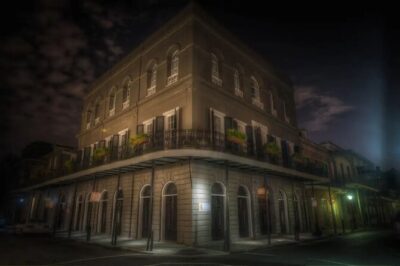


New Orleans Brothels, Bordellos, and Ladies of the Night Tour
Read our review →

New Orleans Voodoo, Storyville, Treme, Walking Tour
Read our review →
Browse the lists this tour appears in