

Reviewed · NEW ORLEANS PLANTATION TOURS
Half-Day Oak Alley Plantation Tour
Oak Alley Plantation offers a quick, striking look at rural Louisiana before the Civil War. You’ll see the grand main house and its famous garden approach, but the visit also addresses the enslaved people whose labor supported the sugar industry, which gives the site more weight than a simple antebellum mansion stop.
I like the ease of hotel pickup from most New Orleans hotels, and I like the mix of house tour, grounds, slave cabins, and cane sugar theater. Guides can add a lot, too. Anthony is specifically praised for being kind, professional, punctual, and informative.
The main drawback is time. The full outing lasts about five hours, but only about two hours are allotted at the plantation. If your bus has many pickups, or if you like to read every sign and take your time, the visit may feel rushed.
Key points to know before booking

- A two-hour visit covers the main house, gardens, slave cabins, and cane sugar theater
- The tour explains how slavery supported Louisiana’s plantation economy
- Hotel pickup and return transport make this simple from New Orleans
- Anthony is one named driver praised for professionalism and punctual service
- The $79 price includes transportation and admission
- Free cancellation is available up to 24 hours before departure
Why Oak Alley is worth the ride from New Orleans
New Orleans is full of French, Spanish, Creole, and American stories, but its connection to plantation agriculture is just as important. Oak Alley takes you outside the city for a look at the rural economy that helped shape Louisiana before the Civil War.
The first thing you notice is the contrast. The city is dense, noisy, and easy to explore on foot. Oak Alley gives you open grounds, a large historic house, gardens, and the long approach framed by oak trees. The setting is graceful, but the subject is not simple. Sugar production created wealth for plantation owners through the forced labor of enslaved people.
That balance matters. You should not treat this as only a pretty house with old furniture. The experience is most useful when you take time to consider both sides of the plantation system: the wealth displayed in the main house and the human cost that made it possible.
The tour is also a practical choice if you have limited time in New Orleans. You do not need to arrange a rental car, work out directions, buy separate admission, or find your way back after visiting. A licensed driver handles the trip, and the activity begins at about 8:00 am before returning to the New Orleans meeting area later that day.
More Oak Alley Plantation tours:
- Swamp Boat Ride and Oak Alley Plantation Tour from New Orleans
★ 5.0 · 3,303 reviews - Oak Alley Plantation Tour with Transportation from New Orleans
★ 4.5 · 1,747 reviews - New Orleans: Bayou Swamp Tour and Oak Alley Plantation Tour
★ 4.7 · 1,147 reviews
The morning ride from New Orleans

Your day begins with pickup in New Orleans. The exact pickup process depends on your hotel and the local arrangement, but the tour is designed to collect you from most New Orleans hotels and bring you back to the starting area at the end.
That convenience is a major part of the value. At $79 per person, you are paying not only for entry to Oak Alley but also for transportation and the time saved by having someone else manage the route. For a short visit, that can be easier than renting a car for a single day.
The vehicle may carry up to 41 people, so this is not a private plantation visit. A larger group keeps the price moderate, but it also means several pickups can affect the start of the day. One past departure had more pickups than usual because of a temporary operational issue, and the added stops made the ride feel less relaxed.
I would build in patience at the start. The advertised start time is 8:00 am, and the trip is planned to run about five hours, but hotel pickup tours are rarely as nimble as a private car. If you have lunch reservations, museum tickets, or an afternoon flight, leave a generous buffer.
The driver can shape the ride. One particularly well-regarded driver, Anthony, was described as kind, professional, and punctual, with enough information to make the journey more useful. Another driver was praised for being funny, informative, and careful, as well as for keeping the bus clean and comfortable.
Those comments point to an important distinction. The plantation itself is the main attraction, but a good driver can turn the road time into part of the experience rather than dead time. The quality of that commentary can vary by departure, so think of it as a welcome bonus rather than a guaranteed lecture.
Arriving at Oak Alley Plantation
You have about two hours at Oak Alley. That sounds generous until you divide it among several parts of the property.
The visit includes the main house, gardens, slave cabins, and the cane sugar theater. You also have time to walk around and, according to the supplied details, possibly stop for food. The practical challenge is choosing your priorities before you start.
I would begin with the scheduled guided house tour. The house is the most formal part of the visit, and the guided format helps you understand how the building functioned and how the plantation’s wealth appeared in daily life. You are not left to wander without context.
Next, use the grounds to get a sense of the property as a whole. The gardens and oak-lined approach provide the classic photographs, but do not let the prettiest views take all your time. The cabins and interpretive areas help connect the polished main house to the people who lived and worked on the plantation.
The cane sugar theater is another worthwhile stop. It explains the crop and industry that made the plantation economy possible. If you are interested in the connection between agriculture, wealth, and forced labor, this may be one of the most useful parts of the visit.
The order may be set by the site’s daily schedule, so you cannot assume you will move through everything in exactly the order you prefer. Still, knowing what you want to see helps. If you wander for an hour among the trees and then find yourself rushing through the interpretive displays, the visit will feel incomplete.
The main house and the plantation story
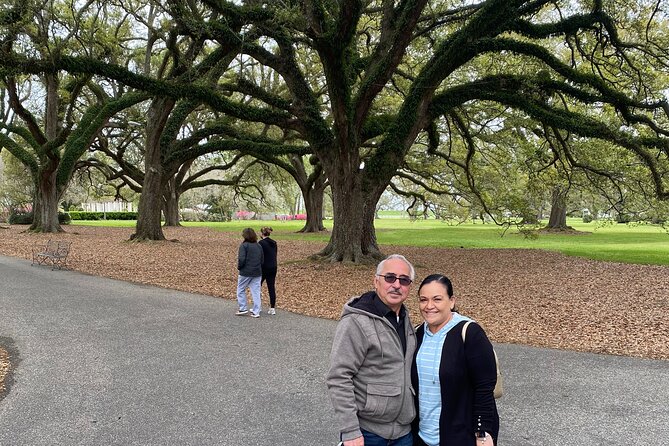
The main house is the visual centerpiece, and it is easy to understand why. Its scale and setting present the plantation as a place of wealth, control, and status.
A guided tour gives you more than a quick look at rooms. It frames the house within the period before the Civil War and helps explain how plantation life worked. You can expect the emphasis to include the building, its former occupants, and the economic system around it.
That last part is essential. The house did not exist apart from the fields, processing, trade, and labor that sustained it. The tour description directly addresses how the American slave trade supported plantation industries, so this is not presented as a purely decorative heritage stop.
You should still approach the visit with clear eyes. A two-hour stop cannot explain every aspect of slavery, sugar production, family life, and the Civil War era in Louisiana. Think of Oak Alley as one focused piece of a larger story, not a complete lesson on the region.
The most useful way to visit is to look for connections. Notice the difference between the main house and the worker accommodations. Consider who benefited from the sugar economy and who was forced to maintain it. The contrast between elegant surroundings and harsh labor conditions is part of what makes this stop worth the trip.
More River Road plantation tours:
- Whitney Plantation Tour with Transportation from New Orleans
★ 4.5 · 1,351 reviews - Laura Creole Plantation Guided Tour
★ 5.0 · 1,279 reviews - Airboat and Plantations Tour with Gourmet Lunch from New Orleans
★ 4.5 · 1,246 reviews - New Orleans: Oak Alley Plantation & Airboat Swamp Combo Tour
★ 4.7 · 906 reviews
Gardens, cabins, and the cane sugar theater

The gardens offer the easiest part of the visit. You can walk, take photographs, and enjoy the famous oak setting without needing a long explanation. If you want a calm pause after the house tour, this is the place to take it.
Do not spend the entire two hours outdoors, though. The slave cabins are a key part of the visit because they keep the focus from settling only on the owners’ lifestyle. They help show the physical and social divisions built into the plantation system.
The cane sugar theater adds another practical layer. Sugar was not simply a crop growing in the background. It was an industry with demanding work and an economic structure tied to slavery. The theater helps you see how production supported the plantation’s wealth.
You may also have time for food on the property. The exact amount of free time depends on how efficiently the visit moves and how much you want to see. If eating there matters to you, keep an eye on the clock rather than assuming you can fit lunch in at the end.
The property rewards a planned visit. I would keep the first few minutes for orientation, then attend the house tour, visit the cane sugar theater and cabins, and use the remaining time for gardens and food. That order may need adjusting, but it protects the most informative parts of the experience.
Is $79 a fair price?

At $79, this is a mid-priced half-day outing rather than a bargain attraction. The value depends on how much you value convenience.
The price includes admission and round-trip transportation from the New Orleans area. You also get a driver, a planned visit, and a return to the meeting point. For someone without a car, that removes several hassles and makes the plantation accessible within a single morning and early afternoon.
A rental car could give you more freedom and perhaps more time, but it also brings fuel, parking, navigation, and the work of driving outside the city. If you are traveling alone, the organized tour may be easier to justify. If you already have a car and want to stay several hours, an independent visit could offer better control over your schedule.
The group size is another value question. With a maximum of 41 people, you are paying for shared transport, not personal guiding. That keeps the price below a private tour, but it means the pickup route and timing are not entirely yours to control.
The strongest value comes when your schedule is tight. You can see a major plantation site, learn about sugar and slavery, and return to New Orleans without giving up a full day. The weaker value appears if you want slow photography, extended reading, or a long meal on the property.
Timing, pace, and the two-hour limit
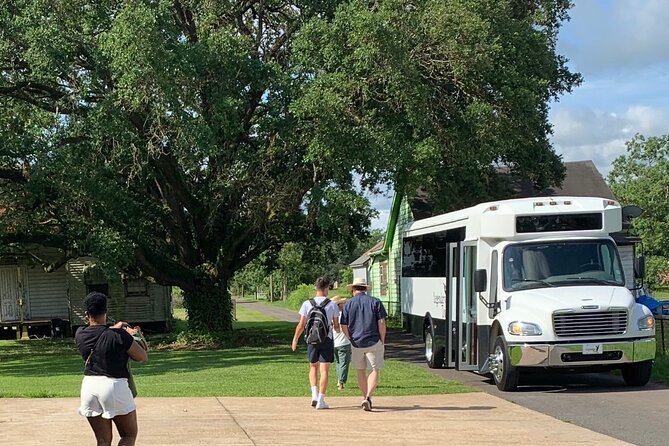
The advertised duration is about five hours, with roughly two hours at Oak Alley. The remaining time covers pickup, the ride there, and the return trip.
That makes this a true half-day experience, not an all-day history outing. It fits well into a New Orleans schedule if you want to keep the afternoon open for the French Quarter, a museum, or a meal. It is less suitable if you prefer to linger at every historic site.
One person found the visit about 30 minutes too short and felt rushed after several pickups. Another person had enough time to enjoy the plantation and said the trip began and ended punctually. Both points can be true because timing depends on the day, pickup pattern, and your personal pace.
I would treat two hours as enough for the main highlights, but not enough for a leisurely examination of every display. Arrive ready to make choices. Take photographs after you have seen the interpretive areas, not before.
The good news is that the tour is built around a clear, manageable stop. You are unlikely to spend an entire day on the road. The tradeoff is that Oak Alley receives a fixed amount of time, and the site itself cannot be expanded to fit your interests.
Who should book this plantation tour?
I would recommend this outing if you want a straightforward introduction to plantation Louisiana from New Orleans. It suits first-time visitors, people without rental cars, and anyone who wants a half-day activity with transport already arranged.
It also works well for history-minded visitors who want the plantation story presented alongside the beauty of the property. The inclusion of the slave cabins and cane sugar theater is important, especially if you want more than photographs of the house and trees.
Families and mixed-interest groups may find the format useful. One person can focus on architecture and gardens, while another pays closer attention to slavery, labor, and sugar production. Most people can participate, and service animals are allowed.
I would hesitate if you dislike group transport, need a very flexible schedule, or want several hours for quiet exploration. A larger vehicle and multiple pickups can slow the morning, and the fixed two-hour visit may not satisfy a serious plantation-history reader.
The English-language format is also worth noting. If you need another language, this is not the right choice based on the information available.
Practical details before you reserve
Confirmation is provided when you book, and the activity uses a mobile ticket. The tour is offered in English and returns to the New Orleans meeting point after the plantation visit.
Most people can take part, and service animals are allowed. The group can be as large as 41 people, so expect a shared outing rather than a small private group.
Free cancellation is available if you cancel at least 24 hours before the 8:00 am start time. Changes made within 24 hours are not accepted, and the amount paid is not refunded for a late cancellation.
The outing depends on good weather and a minimum number of participants. If poor weather cancels the trip, or if the minimum is not met, you are offered another date or experience, or a full refund.
Should you book Oak Alley Plantation?
Book it if you want an efficient half-day trip from New Orleans that combines a grand plantation house with the harder story of slavery and sugar production. The transportation, admission, and planned return make $79 reasonable for visitors without a car.
Go in with realistic expectations. You will see the key parts of Oak Alley, but two hours is a working visit, not a slow one. Keep your focus on the house tour, slave cabins, cane sugar theater, and gardens, and do not count on unlimited free time.
If that balance suits you, Oak Alley is a useful addition to a New Orleans itinerary. If you want privacy, a longer stop, or complete control of the schedule, choose a self-drive visit instead.
FAQ
Where does the Oak Alley Plantation tour start?
The tour starts in New Orleans, Louisiana, with pickup from most New Orleans hotels. The listed start time is 8:00 am.
Where does the tour end?
The activity ends back at the New Orleans meeting point.
How long does the experience last?
The full tour lasts approximately five hours. About two hours are allotted at Oak Alley Plantation.
What is included in the price?
The $79 price includes transportation, admission to Oak Alley Plantation, and the organized tour service.
What can I see at Oak Alley Plantation?
You can see the main house, gardens, slave cabins, and cane sugar theater. The visit also addresses rural Louisiana before the Civil War and the role of the American slave trade in plantation industries.
How many people can join the tour?
The activity has a maximum group size of 41 people.
Can I cancel for a full refund?
Yes. You can cancel at least 24 hours before the start time for a full refund. Cancellations or changes made within 24 hours are not refunded or accepted.
More Half-Day in New Orleans
- Oak Alley Plantation Half-Day Tour from New Orleans
★ 4.5 · 162 reviews - New Orleans: Whitney Plantation Half-Day Tour (Guided Tour)
★ 5.0 · 19 reviews - Laura Plantation Half-Day Tour from New Orleans
★ 5.0 · 12 reviews
Newest New Orleans tours we have written up
- New Orleans : Garden District Architecture Walking tour★ 4.8 · 5 reviews
- Ultimate Denver Day Out: Red Rocks, City Views & Ice Cream★ 5.0 · 7 reviews
- From New Orleans: Whitney and Laura Guided Plantation Tour★ 4.9 · 20 reviews
- Whitney Plantation and Soul of New Orleans City Tour Combo★ 5.0 · 13 reviews
- Treme Bar Crawl & Seafood Experience★ 4.2 · 7 reviews
- True Voodoo History of NOLA’s Congo Square with Local Guide★ 4.9 · 16 reviews
- Witches Coven Walking Tour in New Orleans★ 5.0 · 49 reviews
- Whitney Plantation Tour with Transportation★ 4.0 · 29 reviews
New Orleans Plantation Tours, compared.

Swamp Boat Ride and Oak Alley Plantation Tour from New Orleans
Read our review →
Oak Alley Plantation Tour with Transportation from New Orleans
Read our review →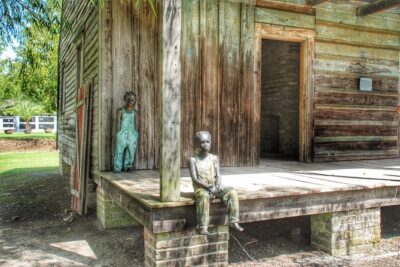
Whitney Plantation Tour with Transportation from New Orleans
Read our review →

Airboat and Plantations Tour with Gourmet Lunch from New Orleans
Read our review →
Bayou Swamp Tour and Oak Alley Plantation Tour
Read our review →
Oak Alley Plantation & Airboat Swamp Combo Tour
Read our review →
Oak Alley Plantation and Large Airboat Swamp Tour from New Orleans
Read our review →Browse the lists this tour appears in