
Reviewed · NEW ORLEANS PLANTATION TOURS
Whitney Plantation Tour from New Orleans with Pickup
The Whitney Plantation does something important: it tells the story of slavery from the viewpoint of the people who were forced to live and work there. You walk among slave cabins, memorials, restored buildings, and art installations while hearing first-person accounts of enslaved people. This is not a polished plantation-house tour that puts the owners at center stage.
I like the self-guided format, which lets you pause at difficult or moving exhibits instead of keeping pace with a group. I also like the included pickup and the ride through sugar-cane country, swamps, levees, and the areas near Louisiana’s industrial corridor. The main drawback is that the visit is not led step by step by a guide, and two hours may feel short for such serious material.
Key points to know before booking
- The focus is slavery: Whitney is Louisiana’s only plantation museum devoted specifically to the lives of enslaved people.
- The audio guide sets the pace: Use the handheld narrator to explore numbered stops on your own.
- Hotel pickup saves time and money: Transportation from New Orleans is included, so you do not need to rent a car.
- The ride adds context: Drivers such as Edward and Ernest have provided commentary on sugar cane, levees, Hurricane Katrina, and local history.
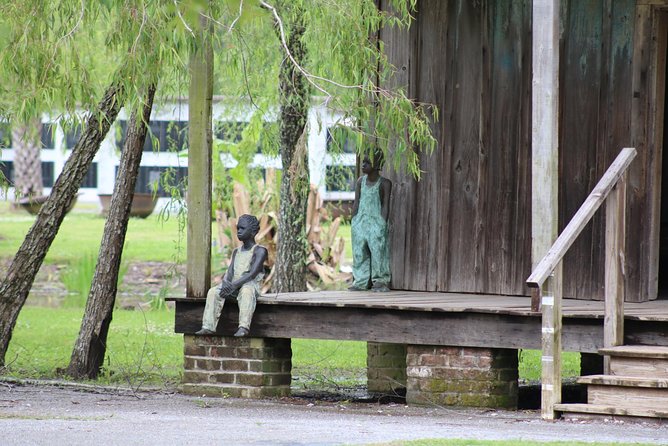
- Expect a moving visit: Memorials, slave cabins, children’s statues, and stories of resistance make this a serious historical experience.
- Plan for outdoor walking: There are some benches, but weather can affect your comfort and the tour may be canceled in poor conditions.
Why Whitney Plantation feels different
Many plantation sites in Louisiana give considerable attention to grand houses, wealthy owners, gardens, and architecture. Whitney Plantation takes another route. Its purpose is to help you understand the people who were enslaved at the former Habitation Haydel, along with the wider system that shaped their lives.
The Haydel family were German immigrants who owned the plantation, and their story is presented alongside the stories of the enslaved people they held. That pairing matters. It shows that the plantation was not simply a historic home. It was a place where wealth depended on forced labor, discipline, family separation, dangerous work, and constant control.
The museum opened to the public in 2014, after 262 years of private history. Its exhibits, memorial artwork, restored buildings, and hundreds of first-person slave narratives give you several ways to approach the past. Some information is factual and direct. Other parts are personal and painful.
I would not treat this as a light sightseeing stop between New Orleans attractions. The subject is slavery, and the experience asks you to pay attention. That is precisely its value.
More Whitney Plantation tours:
- Whitney Plantation Tour with Transportation from New Orleans
★ 4.5 · 1,351 reviews - New Orleans: Whitney Plantation Tour with Transportation
★ 4.7 · 619 reviews - Small-Group Laura and Whitney Plantation Tour from New Orleans
★ 4.5 · 446 reviews
The 8:00 a.m. pickup from New Orleans
The tour begins around 8:00 a.m., with pickup included from New Orleans. The full outing lasts about five hours, with roughly two hours at Whitney Plantation and the rest used for transportation.
That arrangement is useful if you are staying in the city and do not want to drive. You avoid finding the plantation, navigating unfamiliar roads, or arranging a separate rental car. At $79 per person, the price is reasonable for a half-day trip that includes transportation and admission to the plantation experience.
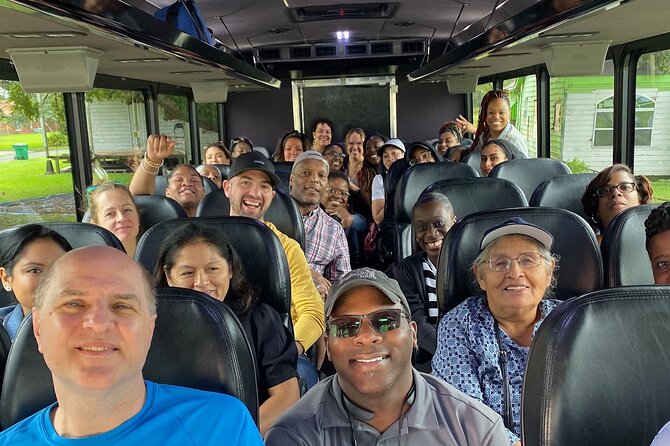
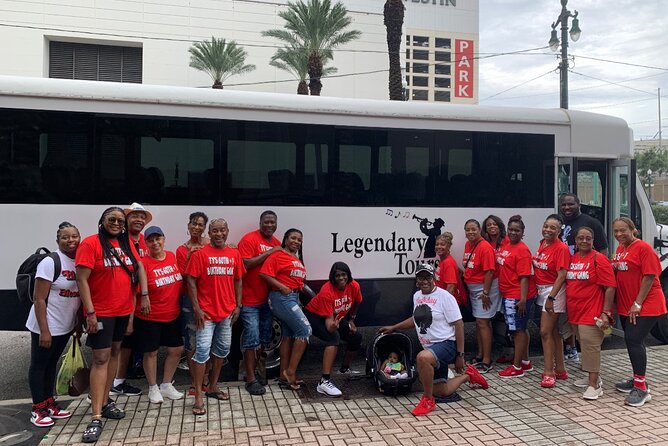
The group can reach a maximum of 41 people. That means the ride may feel like a standard coach excursion rather than a private outing, but the size does not prevent you from exploring independently once you arrive.
Pickup communication appears to be an important part of the service. The operator may call the morning before or on the day of the tour to confirm your pickup point, identify the driver, and describe the bus. That is helpful in New Orleans, where hotel entrances and street pickup points can be confusing.
There has been at least one serious scheduling failure in which a reserved passenger was not picked up because the booking did not appear in the operator’s system. I would keep your confirmation handy and make sure you are waiting at the stated meeting point. If the vehicle is late, contact the operator rather than quietly leaving.
The ride through southern Louisiana
The journey is more than a transfer. Drivers have provided commentary on the areas between New Orleans and the plantation, including swamps, Lake Pontchartrain, levees, bridges, sugar-cane fields, and the damage caused by Hurricane Katrina.
Driver Edward receives especially strong praise for explaining Louisiana history in a clear, entertaining way. His commentary has included the hard labor once required to harvest sugar cane with machetes and the way modern machines handle the crop today. That comparison gives you a sharper sense of the physical demands placed on enslaved workers.
The route can also pass near the industrial area sometimes called Cancer Alley. The ride commentary has addressed the plants, pollution concerns, and the long history of industrial activity close to residential communities. This connects the plantation past with more recent questions about work, safety, and environmental harm.
Other drivers have added their own touches. Ernest has been praised for pointing out filming locations associated with Django Unchained, while also keeping the ride lively. Brian has been described as funny and engaging. The quality of the narration can depend on who drives, and one account noted that a driver spoke too quickly to follow easily. Still, the ride is a useful part of the day, not dead time.
There are no USB ports on the bus, so charge your phone before pickup. The route may be scenic on the way out and faster on the highway on the return.
Walking the Whitney grounds

Once you arrive, you receive a handheld audio device for the numbered stops. This is not a traditional guided walk with one person leading the entire group. Instead, you move through the property at your own pace and listen as each stop explains what you are seeing.
I find that format particularly useful at Whitney. The subject matter can require a pause. You may want extra time at a memorial, or you may prefer to move quietly after hearing a personal account. A fixed tour schedule can make that difficult, while the audio system gives you some control.
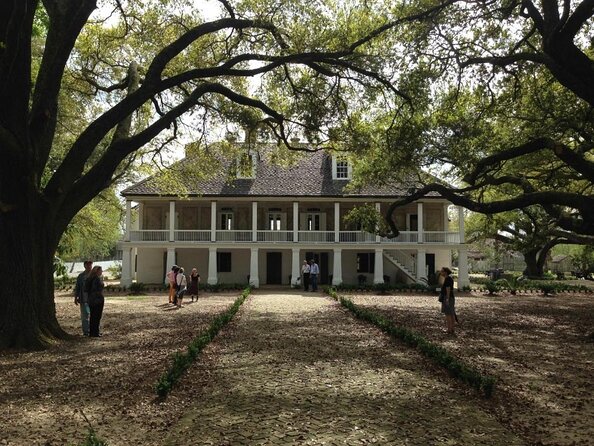
The grounds include original or restored plantation buildings, slave cabins, museum displays, memorials, and art installations. The property is easy to follow, with clear signage at the stops. There are some benches, but much of the visit takes place outdoors, so wear comfortable shoes and check the weather.
The audio content includes interviews with formerly enslaved people recorded after emancipation. These accounts help turn a large historical subject into individual lives. You are not just hearing about labor statistics or plantation economics. You are hearing about people who worked, suffered, resisted, raised families, and tried to survive under slavery.
The audio tour is detailed, though not everyone prefers handheld narration. If you want a guide speaking directly to the group and answering questions as you walk, this may feel less personal. If you like setting your own speed, the system works well.
More River Road plantation tours:
- Swamp Boat Ride and Oak Alley Plantation Tour from New Orleans
★ 5.0 · 3,303 reviews - Oak Alley Plantation Tour with Transportation from New Orleans
★ 4.5 · 1,747 reviews - Laura Creole Plantation Guided Tour
★ 5.0 · 1,279 reviews - Airboat and Plantations Tour with Gourmet Lunch from New Orleans
★ 4.5 · 1,246 reviews
Memorials, cabins, and difficult evidence
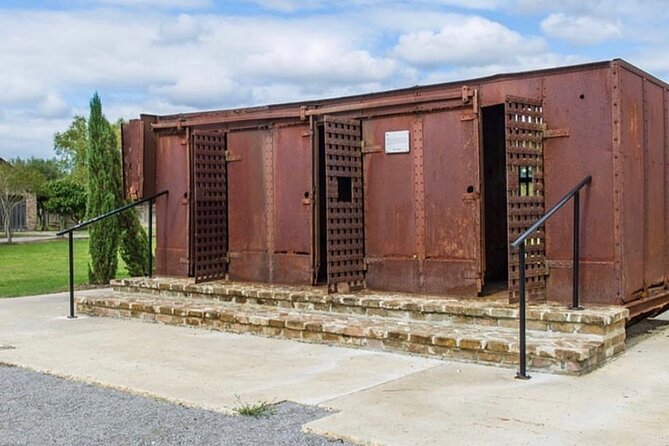
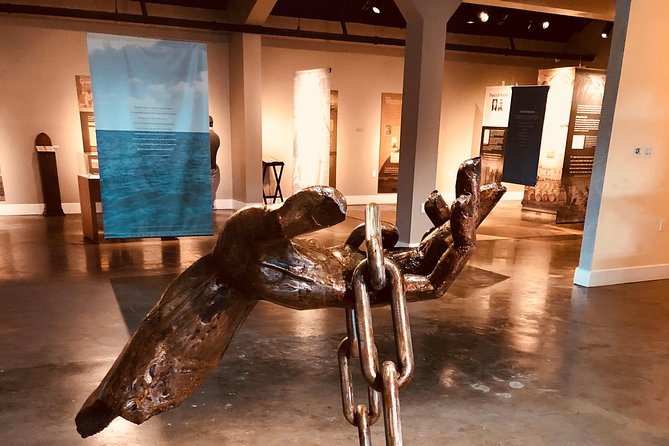
The most powerful parts of Whitney are often the ones that make the history physical. The slave cabins show the basic conditions in which enslaved families lived. Exhibits about restraints, including metal collars with spikes used on people who tried to escape, make the violence of control impossible to soften.
Memorials honor adults and children whose lives were damaged or ended by slavery. Sculptures of children are especially affecting because they put young lives at the center of the story. The memorials do not let you reduce slavery to an abstract argument about the past.
Some displays are graphic. Replicas of heads on pikes refer to the brutal response to the 1811 German Coast uprising, one of the largest slave revolts in United States history. I would prepare younger children before visiting and decide in advance how much context they need.
The site also presents resistance in several forms. Revolts receive attention, but so do escape attempts and the daily ways enslaved people tried to preserve family, dignity, and control over their own lives. That wider view is valuable because it avoids portraying enslaved people only as victims. They endured oppression, but they also resisted it.
The museum and first-person stories
The small museum provides context for the transatlantic slave trade and the system that brought Africans into bondage in Louisiana. It helps connect what happened at one plantation to a much larger economic and political structure.
The collection of first-person narratives is one of the strongest reasons to visit. Written records and historical objects can tell you what happened, but personal testimony helps you grasp how slavery affected ordinary days, families, work, punishment, and hopes for freedom.
The plantation’s focus also corrects a common imbalance in heritage tourism. The main house and owners receive little attention compared with the enslaved community. If your main interest is grand architecture, decorative interiors, or the private lives of plantation owners, Whitney may disappoint. The house itself has not been restored in the way some other plantation properties have been.
That limitation is also a deliberate choice. Whitney uses its space and resources to tell a different story. You come away with less information about elegant rooms and more understanding of the people whose labor made plantation wealth possible.
How much time you need
The visit at the property lasts about two hours. That is enough to follow the main audio route and see the primary exhibits, but it is not enough for a slow reading of every display.
I suggest treating the two hours as a focused introduction rather than a complete study of Whitney Plantation. You may want to linger at the wall of interviews, the memorials, or the sections on resistance. If you read every panel carefully, the clock can move quickly.
The self-guided format means you are not rushed from stop to stop by a walking guide. Still, the vehicle has a return schedule, so you cannot simply stay all afternoon. Keep track of the departure time and leave space for the gift shop if books or educational material interest you.
Who will get the most from this tour

This trip suits you if you want an honest account of Louisiana plantation life and prefer history that centers enslaved people. It is especially useful for visitors who want more than attractive grounds and period buildings.
It can work well for families with older children and teenagers because the audio format allows each person to take in the material at a personal pace. One parent traveling with a 16-year-old found that the teenager became more engaged as the visit continued. Younger children may need preparation because several displays are emotionally and visually difficult.
It also suits solo visitors. The independent route makes it easy to move quietly and stop when you want. You can listen, read, and reflect without needing to keep up with a group.
You may want another plantation experience if your main goal is a detailed house tour, formal gardens, or a guide-led walk. You should also think carefully about the weather. This is an outdoor site, and heat or rain can change the experience.
Is $79 a fair price?
At $79, I see the main value in the transportation and the focused access to Whitney Plantation. A rental car would add cost and planning, while driving yourself would mean missing the local commentary provided by drivers such as Edward. The five-hour schedule also fits neatly into a New Orleans visit.
The price does not buy a private guide or a long, leisurely stay. Much of the plantation visit is self-guided, and the group may include as many as 41 people. For some people, that is a drawback. For others, the audio system is more useful than a large group clustered around one speaker.
The ride adds value when the driver explains sugar production, the levees, Hurricane Katrina, and the communities along the route. The quality of that commentary can vary by driver, but the strongest accounts describe a clean vehicle, punctual pickup, clear communication, and an enjoyable ride.
Free cancellation is available up to 24 hours before the start time. Changes or cancellations inside that window are not accepted for a refund. The experience depends on good weather and a minimum number of bookings, so a cancellation by the operator may lead to a new date, another experience, or a full refund.
Should you book the Whitney Plantation tour?
Book it if you want a serious, respectful visit that places enslaved adults and children at the center of Louisiana plantation history. The memorials, first-person narratives, cabins, and audio stops offer far more than a quick look at an old property.
I would book this tour for the included New Orleans pickup, the useful ride commentary, and the freedom to explore at your own pace. I would not book it expecting a polished mansion tour or a fully guided walk. Bring charged devices, comfortable shoes, weather protection, and enough emotional space to listen carefully.
For anyone trying to understand what plantation life meant to the people who had no choice in living it, Whitney is a worthwhile half-day choice.
FAQ
How long does the Whitney Plantation tour take?
The full experience lasts approximately five hours, including transportation from New Orleans. About two hours are spent at Whitney Plantation.
What time does the tour start?
The stated start time is 8:00 a.m. Pickup is offered from New Orleans.
Is transportation from New Orleans included?
Yes. Pickup and transportation are included, so you do not need to rent a car for this experience.
Is the plantation tour guided?
The plantation visit uses a handheld audio guide and is mainly self-guided. You explore the numbered stops at your own pace rather than following a guide for the entire walk.
What does Whitney Plantation focus on?
Whitney focuses on the lives of enslaved people. Exhibits and memorials cover the Haydel plantation, the transatlantic slave trade, first-person narratives, resistance, slave cabins, and the effects of slavery on adults and children.
Is the tour suitable for everyone?
Most people can participate, and service animals are allowed. The experience includes outdoor walking and some difficult displays, so consider the weather and the serious subject matter before booking.
Can I cancel for a refund?
You can cancel up to 24 hours before the start time for a full refund. Cancellations or changes made less than 24 hours before the experience are not accepted for a refund.
Newest New Orleans tours we have written up
- 45-Minute Garden District Highlights Tour in New Orleans★ 5.0 · 33 reviews
- New Orleans City and Swamp Helicopter Tour★ 5.0 · 9 reviews
- 45-Minute Marigny Triangle Highlights Tour in New Orleans★ 5.0 · 12 reviews
- Private New Orleans 2-Hour Sail Aboard a Luxury Yacht★ 5.0 · 44 reviews
- 20 Passenger New Orleans Airport or Hotel Transfer★ 5.0 · 6 reviews
- The New Orleans Darkness Tour★ 4.4 · 9 reviews
- 11 Passenger Executive Van: New Orleans Airport or Hotel Transfer★ 4.0 · 8 reviews
- Spooky Family Ghost Tour★ 3.4 · 9 reviews
New Orleans Plantation Tours, compared.

Swamp Boat Ride and Oak Alley Plantation Tour from New Orleans
Read our review →
Oak Alley Plantation Tour with Transportation from New Orleans
Read our review →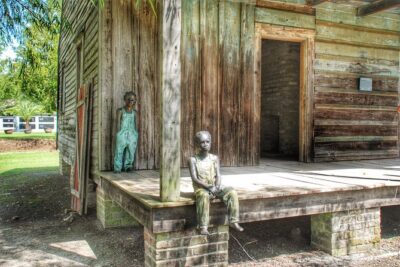
Whitney Plantation Tour with Transportation from New Orleans
Read our review →

Airboat and Plantations Tour with Gourmet Lunch from New Orleans
Read our review →
Bayou Swamp Tour and Oak Alley Plantation Tour
Read our review →
Oak Alley Plantation & Airboat Swamp Combo Tour
Read our review →
Oak Alley Plantation and Large Airboat Swamp Tour from New Orleans
Read our review →Browse the lists this tour appears in