
Reviewed · TREME WALKING TOURS
60-minute Tremé Walking Tour & Photo Experience
Tremé gives you a different New Orleans in a hurry. On this private walk, local guide Hollis leads you through old Storyville, the Tremé neighborhood, the legacy of Charity Hospital, and a small Mardi Gras museum, with time to stop for photos and hear the city’s story from a local Black perspective. This is an off-the-main-route experience, not a quick pass through the French Quarter.
I like two things right away: the one-on-one format, which lets Hollis adjust the pace and answer questions, and the direct attention to places shaped by African American life, music, Mardi Gras, storms, and urban change. I also like that photo help is part of the experience, so you are not left trying to frame a group selfie.
The main consideration is the short length. The walk is advertised at about one hour to one hour and 30 minutes, with several stops packed into that time. If you want a long historical walk with extensive interior visits, this may feel brief. The Mardi Gras Museum is included, but most other stops are viewed from outside.
Key points at a glance
- Hollis leads a private walk: Your group has the guide’s full attention, with no strangers added to the booking.
- Tremé takes center stage: The route looks at the neighborhood’s Black history, the damage caused by the raised I-10, and the push to restore North Claiborne Avenue.
- Old Storyville sets the tone: Backatown Coffee Parlour and the former red-light district connect New Orleans music, social life, and city regulation.
- Photos are part of the service: Hollis helps you take better pictures during the walk, a useful touch for solo visitors and couples.
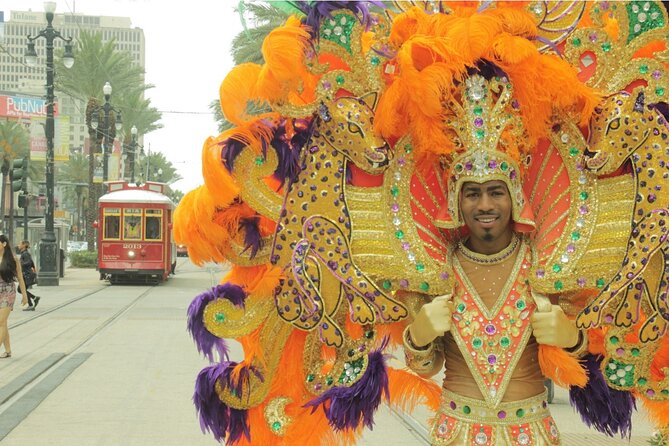
- The Mardi Gras Museum is included: The final 20-minute stop adds costumes, pageantry, and grassroots carnival traditions.
- The price is modest: At $15 per person, the tour offers a low-cost way to add Tremé context to a New Orleans visit.
Why this short Tremé walk feels different
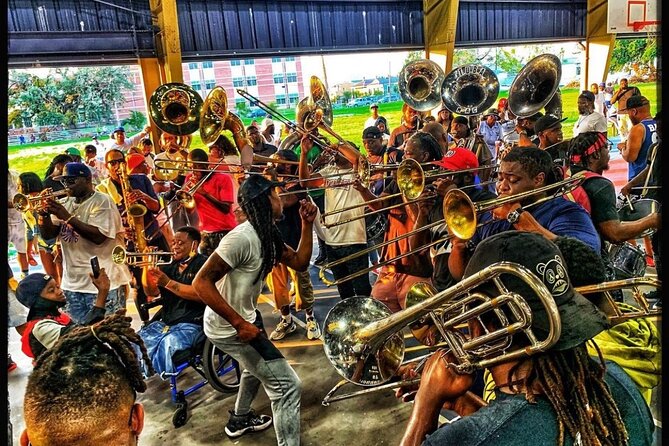
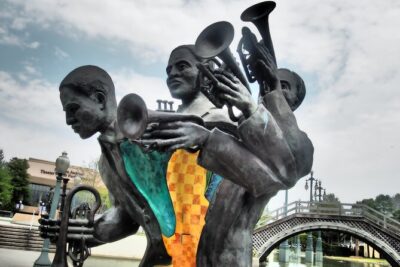
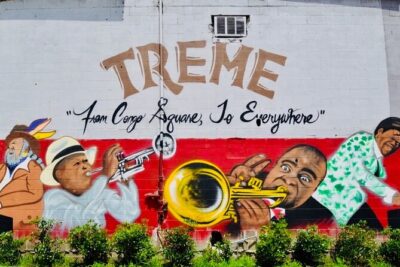
New Orleans has no shortage of tours. Many focus on the French Quarter, grand houses, haunted tales, or famous music venues. This experience heads toward Tremé and old Storyville, where the stories are less polished and more connected to the city’s Black residents, working communities, musicians, hospitals, and neighborhood traditions.
I like the private setup because Tremé deserves questions. You may want to ask about the meaning of North Claiborne Avenue, the history of Storyville, or how Hurricane Katrina changed Charity Hospital. With a private guide, you can spend more time on the subjects that matter to you instead of following a fixed speech meant for a large group.
Hollis is the guide named for this experience, and his role goes beyond pointing out buildings. The strongest part of the tour is the chance to hear local history from a Black New Orleans perspective. That matters in a city where African American culture shaped the music, food, parades, and neighborhood life, yet is often reduced to a few familiar names.
The tour also includes help with photography. That does not mean a professional photo shoot is promised, but Hollis can assist with taking better pictures as you go. For a couple, family, or solo visitor, that small service can make the walk feel more personal.
More walks through the Treme:
- New Orleans Treme’ Walking Tour
★ 5.0 · 240 reviews - New Orleans: Tremé African American & Creole History Tour
★ 4.9 · 208 reviews - New Orleans Voodoo, Storyville, Treme, Walking Tour
★ 4.5 · 58 reviews
Starting near Backatown Coffee Parlour
The meeting point is at 301 Basin Street, near public transportation. The first listed stop is Backatown Coffee Parlour, located on the site of old Storyville. You get about 10 minutes here, and admission is not included.
Backatown is more than a coffee stop in the story of this route. Its location recalls the era when Storyville was home to music, nightlife, and people from many parts of society. The names linked to this setting include Jelly Roll Morton, Louis Armstrong, and King Oliver, musicians whose work helped define New Orleans sound.
The coffee parlour is presented as a local gathering place for conversation and ideas. That gives you a useful opening to the tour. Instead of starting with a list of dates, you begin with the feel of a neighborhood meeting point and the connection between music and daily life.
Do not assume this part is a full café tasting or a long sit-down break. The scheduled time is only 10 minutes, and admission is not included. If coffee or food is important to you, plan to pay for it separately and keep the visit moving.
Storyville and the city’s attempt to regulate vice
The next 10-minute stop covers the Storyville District, New Orleans’ municipal red-light district from 1897 to 1917. The district was created by city ordinance, with regulations intended to control prostitution. Its name came from Sidney Story, a city alderman who wrote the guidelines.
This is a useful reminder that New Orleans history is not only about jazz, cocktails, and pretty balconies. Storyville grew from an official attempt to manage vice within city limits, and its story connects law, commerce, race, class, nightlife, and music.
The stop is short, so expect an introduction rather than a full lecture on every aspect of the district. I would listen for how Hollis connects Storyville to the people who lived and worked around it, rather than treating it as a colorful footnote. The nearby coffee parlour and the Storyville stop work best together, linking music and social life to the city’s rules.
Admission is not included at this stop, but the supplied details do not indicate a separate paid attraction you must enter. Much of the value comes from the explanation and setting.
Charity Hospital and the post-Katrina story
The route then spends about 10 minutes at the Medical Center of Louisiana at New Orleans East Campus, listed as a free stop. The history here centers on Charity Hospital, once one of two teaching hospitals connected with the Medical Center of Louisiana at New Orleans. The other was University Hospital.
Hurricane Katrina changed Charity Hospital’s future. Three weeks after the storm, Governor Kathleen Blanco said the hospital would not reopen as a functioning hospital. The Louisiana State University System, which owned the building, did not plan to reopen it in its original location. The replacement medical center in lower Mid-City was completed in August 2015 and named University Medical Center New Orleans.
This part gives the walk a serious turn. You are not only hearing about old New Orleans. You are also looking at how a major storm, public decisions, and medical needs reshaped the city.
The stop is free and brief, so the value depends on the guide’s explanation. If you are interested in Katrina, public policy, or the changing shape of New Orleans, this may be one of the most useful portions of the walk. If you prefer only music and food stories, it may feel more somber than the other stops.
More photo shoots in New Orleans:
- New Orleans French Quarter Photo Shoot
★ 5.0 · 462 reviews - New Orleans Private Photo Shoot with Professional Photographer
★ 5.0 · 81 reviews - New Orleans: French Quarter Photo Shoot and Walking Tour
★ 5.0 · 74 reviews - New Orleans VIP City Tour w/ a Jazz Musician + Pro Photos
★ 5.0 · 4 reviews
Tremé, North Claiborne Avenue, and the highway overhead
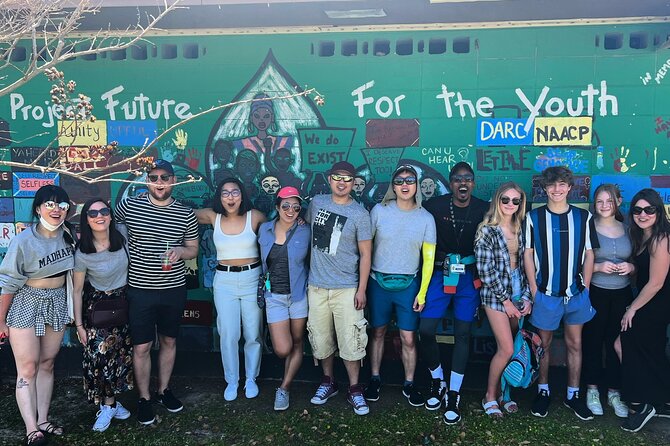
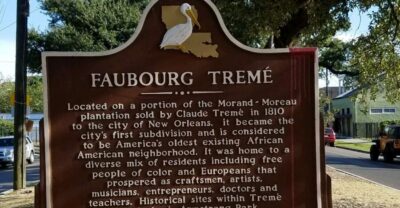
The heart of the walk is Tremé. The route examines the stretch of Interstate 10 above North Claiborne Avenue, an important issue in the neighborhood’s modern story.
When the highway was built more than half a century ago, it took many homes and businesses and removed a major line of oak trees. For generations, people in Tremé have imagined removing the highway, or at least closing it to traffic, and restoring North Claiborne Avenue to something closer to its former role.
Federal infrastructure funding has since set aside money to help neighborhoods affected in this way. The topic is still about more than concrete and traffic. It raises questions about urban planning, community power, displacement, and how public projects can damage established African American neighborhoods.
I appreciate this stop because it gives you a way to look at Tremé beyond its musical reputation. You see a neighborhood shaped by policy as well as culture. Hollis can also put the issue into a local frame, which is hard to get from a guidebook paragraph.
This is also a good place to use the photo assistance. The highway, street, and remaining neighborhood details can make strong documentary-style pictures, but the images mean more once you understand what changed and why.
The Mardi Gras Museum’s 20-minute finale
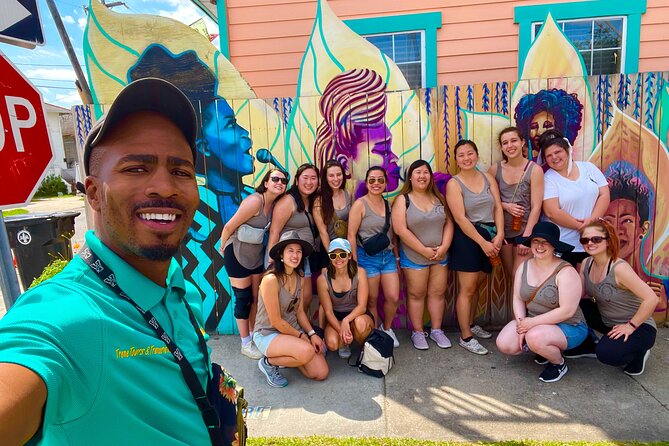
The final stop is the Mardi Gras Museum of Costumes and Culture at 1010 Conti Street. Admission is included, and the scheduled visit lasts about 20 minutes.
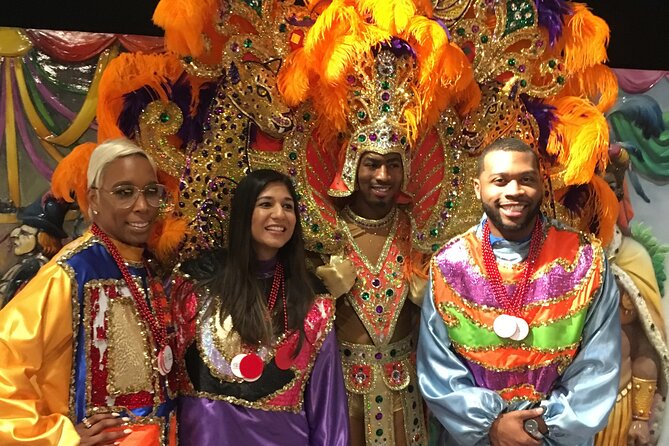
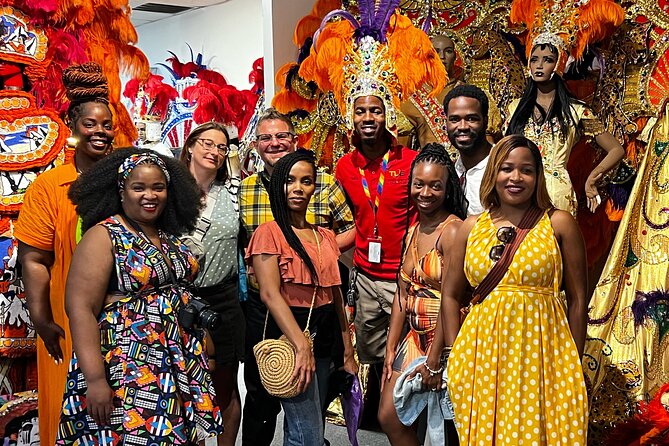
This museum focuses on the grassroots side of Mardi Gras. You can expect costumes, pageantry, and the creative traditions that make New Orleans carnival culture so distinctive. It is a lively change of mood after the heavier subjects of Katrina, Charity Hospital, and the North Claiborne highway.
The museum is a good finish because Mardi Gras is not just a parade for spectators. Costumes and neighborhood traditions show how people create, organize, and pass along their own celebrations. The stop gives the tour a clear link between history and present-day culture.
Twenty minutes is enough for an introduction, but not a long museum visit. If you enjoy costume design, local festivals, or New Orleans traditions, you may want to return on your own if the opening schedule works for you. The available hours shown for this experience are Tuesday from 8:00 to 10:00 in the morning and 6:30 to 8:00 in the evening, covering the period from June 28, 2022 through March 5, 2027.
What the private format adds
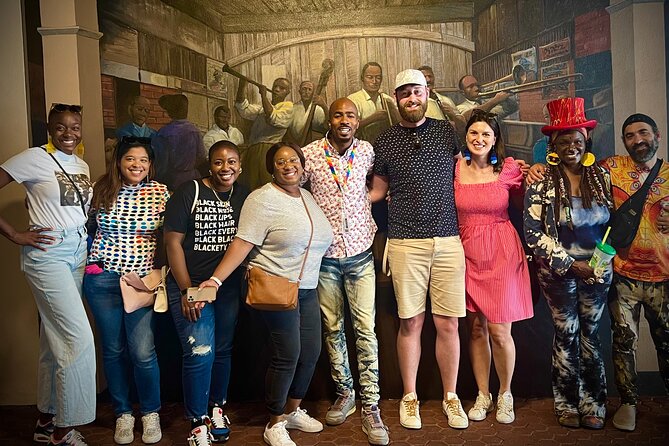
A private tour means only your group participates. That changes the feel of a one-hour walk. You can ask for more detail at Storyville, move along when you have enough at a particular stop, or ask Hollis to help with a picture without worrying about holding up a busload of people.
The format is especially useful for couples and small groups who want a conversation rather than a performance. It also suits anyone looking for a more direct account of New Orleans history from a local African American viewpoint.
The tradeoff is that private does not mean long. The route lists roughly 10 minutes at Backatown Coffee Parlour, 10 minutes at Storyville, 10 minutes at the medical center, 10 minutes in Tremé, and 20 minutes at the Mardi Gras Museum. Those listed times total about 60 minutes, while the full experience may run closer to 90 minutes depending on walking and conversation.
Is $15 good value?
At $15 per person, this is an inexpensive way to add a focused neighborhood experience to your New Orleans plans. The Mardi Gras Museum admission is included, and you get a private guide rather than joining a large group.
The price is strongest if you care about context. Hollis adds value through local stories, historical explanation, recommendations for food spots, and help with photos. The experience can also point you toward places you may want to explore later.
It is less of a bargain if you expect several paid attractions, a full meal, or a long museum program. Backatown Coffee Parlour does not include admission or food, and the other stops are mainly outdoor points of interest. Think of the $15 as payment for a guided introduction to Tremé and its connected stories, not as a full day of sightseeing.
The tour is often reserved about eight days ahead. That timing suggests you should not leave it until the last minute if the schedule matters, though availability can change.
Practical details before you reserve
The tour is offered in English and uses a mobile ticket. Confirmation is provided at booking, and the meeting point is near public transportation. Most people can participate, according to the supplied information.
Wear shoes that are comfortable for walking and bring weather protection. The experience requires good weather, and poor conditions can lead to cancellation. In that case, you are offered a different date or a full refund.
The standard cancellation policy is strict. The experience is non-refundable and cannot be changed for any reason if you cancel or request an amendment. That makes weather protection and schedule planning important.
The route begins at 301 Basin Street and ends at 1010 Conti Street, at the Mardi Gras Museum of Costume and Culture. Since the start and finish are different, check your plans before and after the walk. The route is near public transportation, but the supplied details do not specify a particular bus or streetcar line.
Who will enjoy this Tremé experience?
I would choose this tour if you want to move beyond the usual French Quarter circuit and hear about New Orleans from a local Black perspective. It suits people who care about neighborhood change, music, Mardi Gras, Hurricane Katrina, and the way public decisions affect communities.
It is also a good fit for anyone who wants a private guide at a low price. Couples, families, and small groups can ask questions freely, and the photo help is practical.
I would be more cautious if you need a fully accessible route, since the information only says most people can participate and does not give detailed accessibility guidance. I would also choose another experience if you want a long walking tour, extensive indoor sightseeing, or a schedule built around food tastings.
The tone is not all light entertainment. Storyville may interest you, the Mardi Gras Museum may lift the mood, and Tremé offers strong cultural context, but the Charity Hospital and highway discussions deal with loss and displacement. That mix is part of the value.
Should you book it?
Book this tour if you want a compact, personal introduction to Tremé, old Storyville, and the local forces that shaped New Orleans. Hollis’ local perspective, photo assistance, and recommendations make the $15 fee easy to justify, especially for a first visit or a short stay.
Skip it if you want a major museum tour, a long route, or guaranteed indoor shelter in uncertain weather. For everyone else, this is a smart add-on: short, affordable, private, and more thoughtful than a simple photo stop in the French Quarter.
FAQ
How long does the Tremé walking tour last?
The experience lasts approximately one hour to one hour and 30 minutes. The listed stop times add up to about 60 minutes, with extra time possible for walking and conversation.
How much does the tour cost?
The price is $15 per person.
Is the tour private?
Yes. Only your group participates in the private activity.
Who is the guide?
The guide named for this experience is Hollis, from Treme Luxury Experience.
What language is the tour offered in?
The tour is offered in English.
Where does the tour start?
The meeting point is 301 Basin Street, New Orleans, Louisiana 70112.
Where does the tour end?
The tour ends at 1010 Conti Street, New Orleans, Louisiana 70112, at the Mardi Gras Museum of Costume and Culture.
Is admission to the Mardi Gras Museum included?
Yes. Admission to the Mardi Gras Museum of Costumes and Culture is included.
What happens if bad weather cancels the tour?
Because the experience requires good weather, poor conditions may lead to cancellation. You will be offered a different date or a full refund.
More Walking Tours in New Orleans
- New Orleans Premier Ghost, Voodoo and Vampire Walking Tour
★ 4.5 · 12,856 reviews - New Orleans Food Walking Tour of the French Quarter with Small-Group Option
★ 5.0 · 6,118 reviews - St. Louis Cemetery No. 1 Official Walking Tour
★ 4.5 · 3,941 reviews - New Orleans French Quarter, Voodoo and Culture Walking Tour
★ 4.5 · 2,961 reviews
Newest New Orleans tours we have written up
- 45-Minute Garden District Highlights Tour in New Orleans★ 5.0 · 33 reviews
- New Orleans City and Swamp Helicopter Tour★ 5.0 · 9 reviews
- 45-Minute Marigny Triangle Highlights Tour in New Orleans★ 5.0 · 12 reviews
- 20 Passenger New Orleans Airport or Hotel Transfer★ 5.0 · 6 reviews
- Private New Orleans 2-Hour Sail Aboard a Luxury Yacht★ 5.0 · 44 reviews
- The New Orleans Darkness Tour★ 4.4 · 9 reviews
- 11 Passenger Executive Van: New Orleans Airport or Hotel Transfer★ 4.0 · 8 reviews
- Spooky Family Ghost Tour★ 3.4 · 9 reviews
Treme Walking Tours, compared.
New Orleans Voodoo, Storyville, Treme, Walking Tour
Read our review →
Walking the Tremé: A Self-guided Audio Tour of New Orleans
Read our review →
Browse the lists this tour appears in