
Reviewed · TREME WALKING TOURS
New Orleans: Tremé African American & Creole History Tour
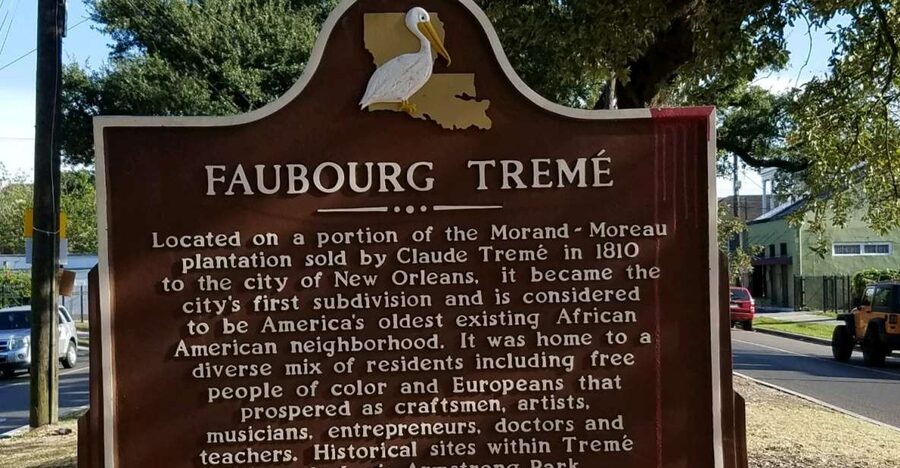
Tremé is where New Orleans history gets personal. This walking tour links African American and Creole life to jazz, civil rights, Congo Square, and the brass band sound you hear across the city. Guides such as Erin, Nika, Kweku, and Angela bring different voices and stories to the route.
I like the use of music during the walk, with guides sometimes playing carefully chosen songs from a portable speaker before explaining their place in Tremé culture. I also like the honest look at history, including enslaved Africans, free people of color, segregation, Plessy v. Ferguson, and places that were destroyed or pushed aside.
The main drawback is simple: this is a walking tour in New Orleans weather. It runs rain or shine, and the streets can be hot, wet, or cold. At 105 minutes, it is manageable, but you need comfortable shoes, sun protection, and room in your schedule in case the conversation runs long.
Key points to know before you book
- Congo Square connects music to memory: Learn how gatherings in this area helped shape New Orleans music traditions.
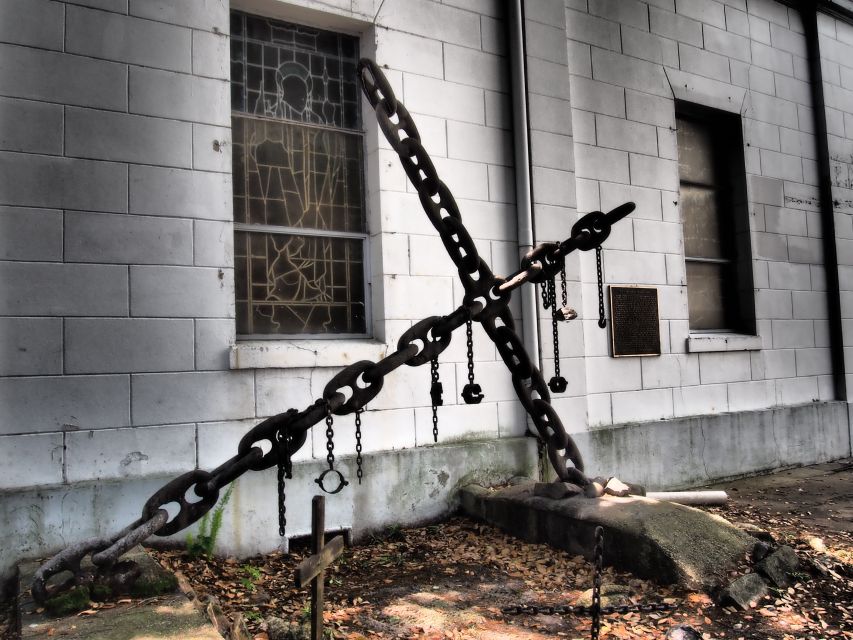
- St. Augustine Church and the Tomb of the Unknown Slave add weight: These are not quick photo stops, but places tied to Black Catholic life and the memory of enslaved people.
- Music is part of the teaching: Guides may use recordings to introduce jazz, brass band traditions, and musicians from Tremé.
- The tour reaches beyond jazz trivia: Expect discussion of slavery, free people of color, segregation, civil rights, and the stories New Orleans has often neglected.
- You begin at the French Quarter edge: Meet inside the Voodoo Lounge at 718 N. Rampart Street, near Orleans Street.
- The value is strong at $22: For less than the cost of many sit-down meals, you get 105 minutes with a licensed local historian and a useful orientation to Tremé.
Why Tremé deserves a full morning or afternoon
Many first-time visits to New Orleans stay inside the French Quarter. That district matters, but it can leave you with a narrow picture of the city. Tremé gives you another lens, one centered on Black New Orleans, Creole culture, music, faith, neighborhood life, and resistance.
This is not a tour that treats jazz as a soundtrack floating above the city. You learn how music grew from real communities and social conditions. Jelly Roll Morton, Alphonse Picou, and Trombone Shorty are among the musicians connected to Tremé, and the tour places their work within the neighborhood that helped produce it.
I find that approach far more useful than a simple list of famous names. You hear about the music, but you also hear about the people who made it, the spaces where they gathered, and the barriers they faced.
The tour also gives you a better sense of the Creole identity of New Orleans. That word can mean different things depending on family, language, race, and period. A good guide helps you avoid simple definitions and shows how the city’s cultures overlap without pretending they are all the same.
More walks through the Treme:
- New Orleans Treme’ Walking Tour
★ 5.0 · 240 reviews - 60-minute Tremé Walking Tour & Photo Experience
★ 5.0 · 72 reviews - New Orleans Voodoo, Storyville, Treme, Walking Tour
★ 4.5 · 58 reviews
Starting at the Voodoo Lounge on North Rampart Street
The meeting point is The Voodoo Lounge, 718 N. Rampart Street, at the corner of North Rampart and Orleans Street. It sits at the upper edge of the French Quarter, making it a practical starting point if you are already near Bourbon Street, Jackson Square, or the French Market.
Check in inside the lounge at the box office. You receive a wristband before the walk begins. This small detail matters because you do not want to arrive, wander outside, and wonder where the group is forming.
The route is conducted in English by a licensed guide who works as a local historian. Names that have appeared among the guides include Erin, Nika, Kweku, Angela, Eva, Claire, Malika, and others. The exact guide is not something you should assume in advance, but the strongest teaching style across the tour comes from guides who combine personal warmth with careful historical explanation.
Plan to arrive ready to walk. Large bags and luggage are not allowed, so leave your suitcase at your accommodation rather than trying to bring it along.
Congo Square and the roots of New Orleans music
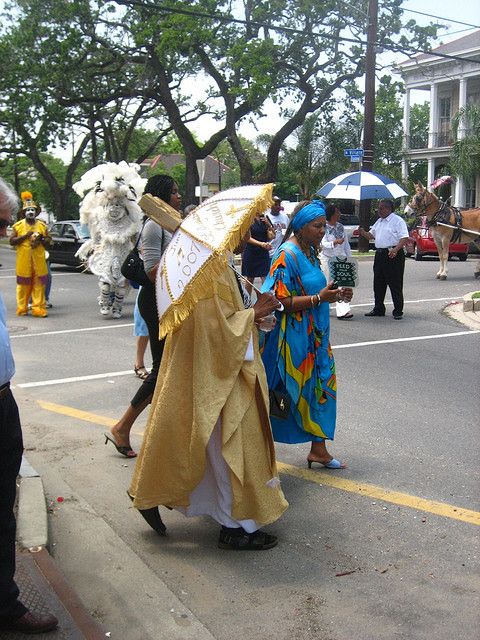
Congo Square is one of the tour’s most important places. Guides use it to explain how African traditions, movement, rhythm, ceremony, and community shaped the music of New Orleans.
The value here is not just learning that jazz was born in the city. You begin to see that New Orleans music came from a long process of cultural exchange, pressure, survival, and creativity. The tour connects earlier African and African American traditions to later jazz and brass band forms.
Some guides bring a small speaker and play music while walking between stops. That works well because the sound gives you an entry point before the historical explanation. You are not simply told that a rhythm mattered. You hear the style and then learn why it mattered.
Congo Square is also a place where a guide may pause to discuss memory and ceremony. A past guide even led a special prayer ritual at the prayer tree. That is not something to count on every time, but it shows how the tour can move beyond a fixed list of facts when the setting allows it.
You should not expect a concert. The music supports the story rather than replacing it. If you want a long live performance, book a club or brass band show separately.
Armstrong Park and the cost of erasing a neighborhood
Louis Armstrong Park is another major part of the route. It is a pleasant public space today, but the tour asks you to consider what existed before the park took its present form.
A particularly striking point comes near the former intersection of St. Claude and Dumaine. Guides may show images of the neighborhood that was razed and explain how streets and communities changed. This gives the park a second meaning. You are looking at a public landmark while also confronting the homes, businesses, and memories removed to create it.
That contrast is one of the strongest reasons to take this tour early in your New Orleans visit. It helps you read the city more carefully afterward. A park is no longer just a park. A broad street or open space may also reflect a decision about whose homes were valued and whose history was pushed away.
The tour does not treat Tremé as a frozen museum. The neighborhood still has musicians, artists, and craftspeople, and the story continues. That point keeps the walk from becoming a trip through a vanished past.
More Black heritage tours in New Orleans:
- Soul of New Orleans City Tour: Enslavement to Modern Day Culture
★ 5.0 · 393 reviews - Urban Enslavement Tour at Hermann Grima House
★ 5.0 · 171 reviews - True Voodoo History of NOLA’s Congo Square with Local Guide
★ 5.0 · 133 reviews
St. Augustine Church and the Tomb of the Unknown Slave
St. Augustine Church brings religion into the story. It is an important stop for understanding Black Catholic life in New Orleans and the role of churches within the city’s African American and Creole communities.
The Tomb of the Unknown Slave adds a quieter, more solemn pause. The memorial honors enslaved people whose names and individual stories were not preserved. It gives the tour a place for reflection rather than another piece of entertainment.
Expect your guide to connect these sites to larger questions about faith, enslavement, freedom, and public memory. The strongest guides do not rush through these stops or soften the difficult parts. They explain the facts clearly and leave room for questions.
This is also where the tone of the tour matters. Erin, Nika, and other guides have been praised for answering difficult questions with care and for explaining complicated subjects in plain language. You do not need a background in American history to follow along.
Civil rights, segregation, and the history left out
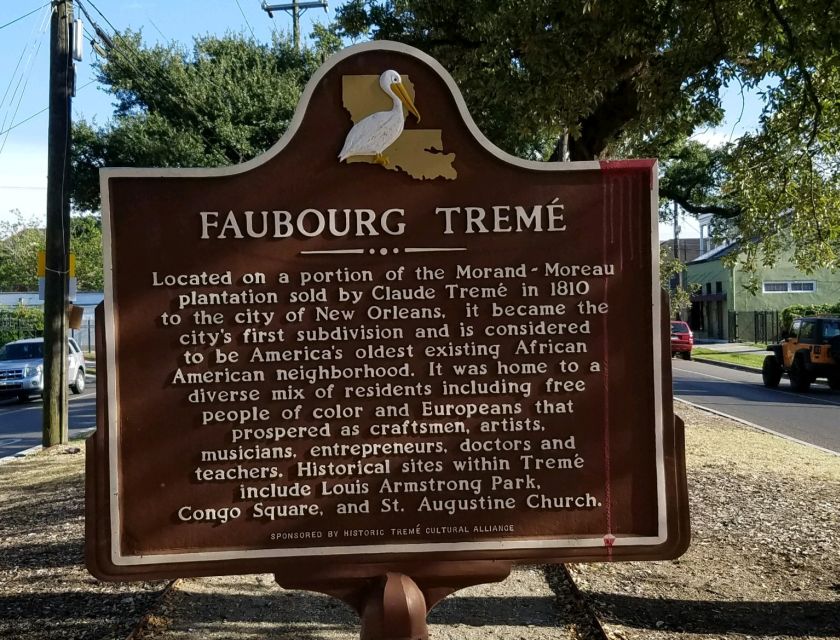
The tour reaches into the civil rights movement and the legal history of segregation. Plessy v. Ferguson may come up, along with the ways New Orleans and other American cities handled race differently while still enforcing unequal systems.
This section gives the music story a needed frame. Jazz did not develop in a carefree vacuum. Black New Orleanians made art while facing restrictions on movement, housing, education, work, and public life.
A guide may also discuss the history of enslaved Africans and free people of color in the eighteenth and nineteenth centuries. That period is essential to understanding why New Orleans developed such a distinct social and cultural structure.
I appreciate that the tour is willing to address the city’s attempts to bury or simplify parts of its past. You should expect a direct presentation rather than a polished version made only for sightseeing. The subject matter can be painful, but the tour treats it as central to understanding Tremé, not as an optional footnote.
Jazz legends and the modern brass band sound
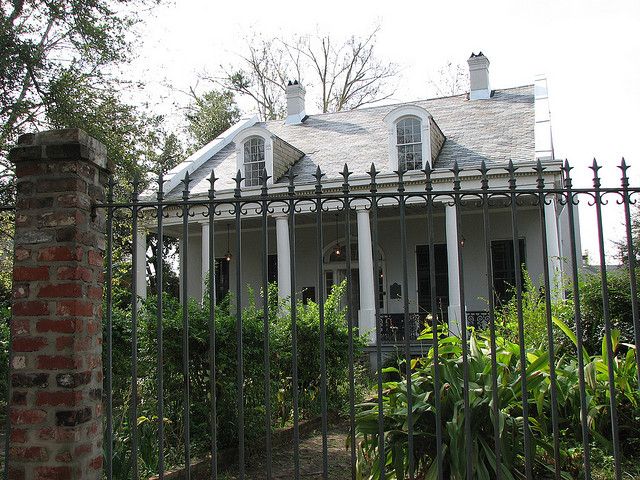
Music lovers will enjoy the names and connections, but you do not need to know jazz before booking. The tour introduces figures such as Jelly Roll Morton, Alphonse Picou, and Trombone Shorty while explaining how Tremé helped shape the city’s sound.
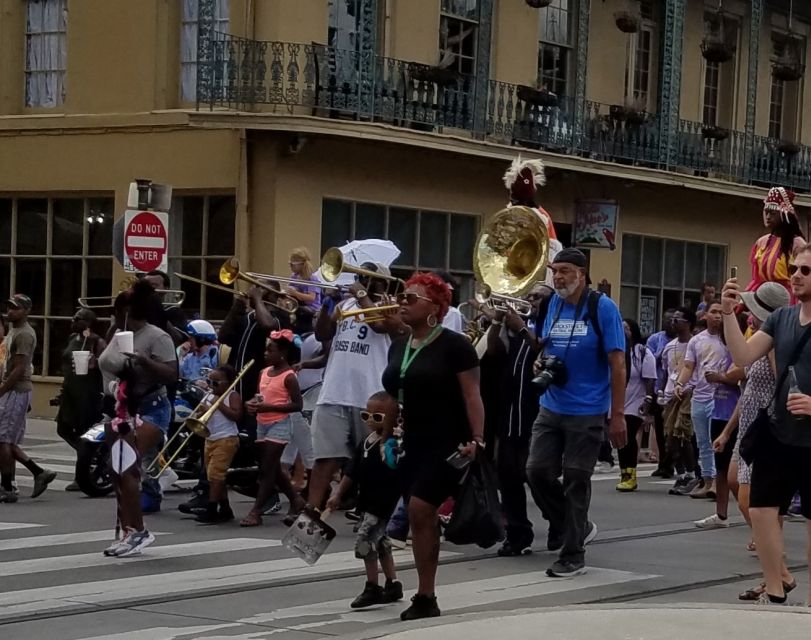
The modern brass band tradition receives attention too. That matters because New Orleans music is not confined to old recordings or famous clubs. Brass bands remain part of the city’s public life, and the tour shows how older traditions continue to influence current musicians.
The most useful guides connect several genres across time. One guide may move from early African musical practices to jazz, while another may focus more on brass bands, neighborhood musicians, or family traditions. You get a clearer sense of continuity rather than a series of unrelated facts.
The music stops also make the walking easier. Instead of listening to a lecture at every corner, you move, hear a selection, then discuss it at the next location. This change of pace helps the 105 minutes pass quickly.
Locations from HBO’s Tremé
Fans of the HBO series Tremé will recognize places used in the show. These stops add a pop-culture layer, but the tour does not depend on your having watched the program.
If you know the series, you get extra pleasure from seeing the real streets and understanding the neighborhood behind the filming locations. If you do not know it, the sites still function as part of the wider discussion of Tremé.
I would treat this as a bonus, not the main reason to book. The tour’s strongest material concerns real people, historic events, music, and community life. The television references help make those subjects familiar, but they do not replace them.
How the walking feels in real New Orleans weather
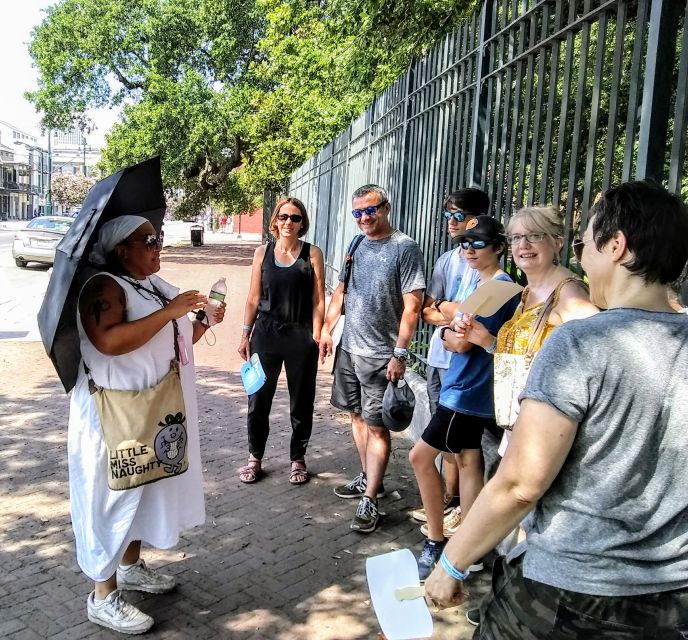
The tour lasts 105 minutes and is designed as a walking experience. That is long enough to cover several important places without turning into a full-day outing.
You should wear shoes that can handle uneven city sidewalks and bring sun protection. New Orleans heat can make a short walk feel longer, and one past group appreciated a guide who kept people in shaded spots while explaining each stop.
Rain does not automatically cancel the tour. It operates rain or shine, so carry suitable protection and avoid scheduling a tight connection immediately afterward. In colder weather, bring layers. One January group found the walk worthwhile despite a very cold morning, while summer participants appreciated shade and thoughtful pacing.
The tour is listed as wheelchair accessible. Still, walking conditions can vary by street and weather, so if you have specific mobility needs, it is sensible to confirm details when booking.
What $22 buys you
At $22 per person, this is one of the better-value ways to add context to a New Orleans visit. You receive 105 minutes with a licensed local historian, and the price does not depend on buying food, drinks, or optional add-ons during the walk.
Food and beverages are not included. A stop at Tremé Coffee Shop has occurred on some tours, and one guide recommended its chicken sandwich, but you should not book this expecting a meal stop every time. Eat beforehand or plan lunch afterward.
The price also reflects what you are not getting. This is not a private tour, a museum admission, or a live music performance. If you want a quiet, highly personalized route, a private guide may suit you better. For a low-cost introduction to Tremé with room for questions, $22 is fair.
You can reserve now and pay later, which helps if your schedule is still shifting. Cancellation is free up to 24 hours before the start time for a full refund.
Who will get the most from this walk
I recommend this tour to anyone who wants more than the usual French Quarter story. It is especially useful if you care about Black history, Creole culture, jazz, civil rights, architecture, community memory, or the way cities decide which stories to display.
Music fans should book it before visiting a jazz club. The tour gives you background that can make a later performance feel less like a stand-alone show and more like part of New Orleans’ long musical conversation.
It also suits families with older children and adults who like asking questions. Guides have handled subjects ranging from slavery to music history and local misconceptions, so a curious group will get more from the time than a group looking only for quick photo stops.
I would be more cautious if you dislike walking, heat, historical discussion, or serious subject matter. The tour has humor and music, but it is not a light sightseeing loop. It asks you to pay attention.
Should you book the Tremé history tour?
Yes, if you want to understand New Orleans through the people and communities that shaped its music. The route covers Congo Square, Armstrong Park, St. Augustine Church, the Tomb of the Unknown Slave, civil rights history, jazz figures, brass bands, and television locations in a little under two hours.
Book it near the start of your visit so the rest of your time in New Orleans has more context. Wear comfortable shoes, carry sun or rain protection, and leave space afterward rather than planning another fixed appointment.
The tour is not flawless for every kind of visitor. Weather can be rough, the subject matter can be heavy, and the exact guide shapes the tone. But at $22, with strong guides such as Erin, Nika, Kweku, Angela, and Eva among the names associated with the experience, it offers a thoughtful and affordable way to see beyond the French Quarter.
FAQ
How long does the Tremé tour last?
The tour lasts 105 minutes.
How much does the tour cost?
The listed price is $22 per person.
Where does the tour meet?
Meet inside The Voodoo Lounge at 718 N. Rampart Street, on the corner of North Rampart Street and Orleans Street.
Where is the meeting point in relation to the French Quarter?
The meeting point is at the top of the French Quarter, near North Rampart Street and Orleans Street.
What language is the tour conducted in?
The live tour is conducted in English.
Is the tour wheelchair accessible?
Yes, the activity is listed as wheelchair accessible.
Does the tour operate in bad weather?
Yes. Tours operate rain or shine.
What should I bring?
Bring comfortable walking shoes and sun protection. You should not bring luggage or large bags.
Is food or drink included?
No. Food and beverages are not included in the tour price.
Can I cancel for a refund?
Yes. You can cancel up to 24 hours in advance for a full refund. You can also reserve now and pay later.
More Historical Tours in New Orleans
- New Orleans Garden District History Walking Tour
★ 5.0 · 2,879 reviews - French Quarter Historical Sights and Stories Walking Tour
★ 5.0 · 2,724 reviews - New Orleans Small-Group Haunted History Carriage Tour
★ 4.5 · 2,289 reviews - New Orleans Haunted History Ghost Tour
★ 4.5 · 2,084 reviews
Newest New Orleans tours we have written up
- New Orleans: 1.5-Hour Voodoo History Evening Tour★ 4.5 · 34 reviews
- New Orleans: Voodoo History Guided Walking Tour★ 4.8 · 3 reviews
- New Orleans: Voodoo, Storyville, and Treme Walking Tour★ 3.3 · 3 reviews
- New Orleans: Voodoo Legends, Vampires & Magic Walking Tour★ 3.0 · 4 reviews
- New Orleans: 1.5-Hour Vampire Tour of the French Quarter★ 4.8 · 30 reviews
- New Orleans: VIP Bar and Club Crawl Tour with Free Shots★ 4.5 · 39 reviews
- New Orleans: Traditions Cooking Class★ 5.0 · 9 reviews
- New Orleans: Tombs and Mansions of the Garden District★ 4.6 · 4 reviews
Treme Walking Tours, compared.
New Orleans Voodoo, Storyville, Treme, Walking Tour
Read our review →
Walking the Tremé: A Self-guided Audio Tour of New Orleans
Read our review →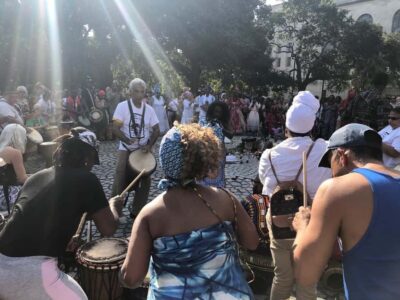
Browse the lists this tour appears in