
Reviewed · NEW ORLEANS MUSEUM AND ATTRACTION TICKETS
The National WWII Museum Admission Ticket New Orleans
The National WWII Museum tells the story of the war through aircraft, personal accounts, battle scenes, films, and hands-on displays. It is less a quick museum stop than a serious half-day or full-day appointment, with several buildings to explore.
I like the first-person storytelling, which connects large battles to individual soldiers and families. I also like the freedom to set your own pace, pause for food, and return to displays that need more time. The drawback is size: the advertised two to three hours will cover only part of the museum.
- See an authentic C-47 aircraft in the Louisiana Memorial Pavilion.
- Follow European and Pacific campaigns through large, time-ordered galleries.
- Use dog tag stations to connect with individual wartime stories.
- Visit the US Freedom Pavilion for preserved military vehicles and aircraft.
- Allow four to seven hours if you read exhibit panels and watch the films.
- Add two paid experiences, Beyond All Boundaries and Final Mission, for $7 each according to the supplied admission details.
What the $37.80 Admission Really Buys You
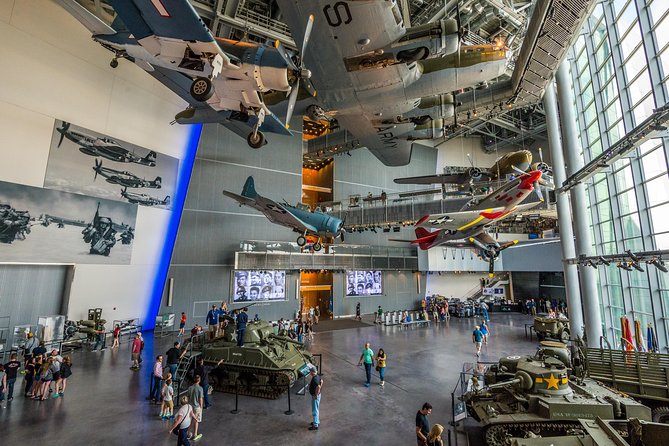
Your ticket covers general admission to the National WWII Museum in central New Orleans. You make your own way there, show your mobile ticket, and explore during opening hours, listed as 9 a.m. to 5 p.m. daily.
At first glance, $37.80 may feel high for a museum ticket. The value becomes clearer once you see the scale. This is not one hall with a few display cases. It includes several major exhibition areas, large machinery, aircraft, films, oral histories, interactive stations, and carefully built wartime settings.
The practical catch is that the stated visit time of two to three hours is only enough for a brisk introduction. If you read panels, stop for films, and follow personal stories, plan on at least four hours. Several people have needed six or seven hours and still had more to see.
That makes the ticket a strong buy for a full museum day, but less attractive if you have only a short gap between other New Orleans plans. You can get value from a quick visit, yet you will need to choose carefully.
Begin in the Louisiana Memorial Pavilion
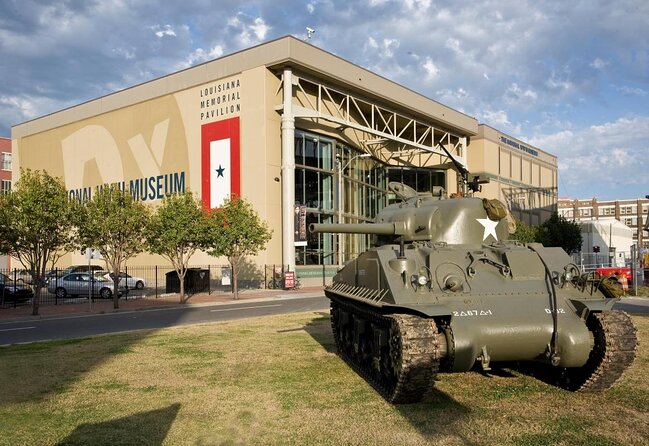
The Louisiana Memorial Pavilion is a useful starting point because it introduces both the war itself and the museum’s approach. Here, you encounter exhibits about D-Day and the American Home Front, along with an authentic C-47 aircraft.
The aircraft gives the experience a physical anchor. You are not looking only at small objects behind glass. Large wartime machines help you understand the scale of transport, supply, and military planning.
You can also use the mini-train experience to learn how to activate your dog tag. The train recalls the military rail journeys that carried American service members toward the war. It is a simple idea, but it shifts the story from dates and campaigns to movement, uncertainty, and departure.
The dog tag system is one of the museum’s most useful features. It gives you a personal thread to follow as you move through the galleries. Instead of trying to absorb every name and statistic, you can pause at selected story points and connect the larger events to a specific person.
If you are visiting with children or teenagers, this opening section can help them understand what they are seeing before the battle galleries become more intense. The museum includes actual footage, casualty information, and emotionally difficult material, so a little preparation helps younger visitors.
More museum and attraction tickets in New Orleans:
- French Quarter Walking Tour With Comp 1850 House Museum Admission
★ 5.0 · 781 reviews - New Orleans: The National WWII Museum Ticket
★ 4.8 · 704 reviews - The National WWII Museum Campus Pass plus 4-D Film
★ 5.0 · 672 reviews
Follow the Road to Berlin
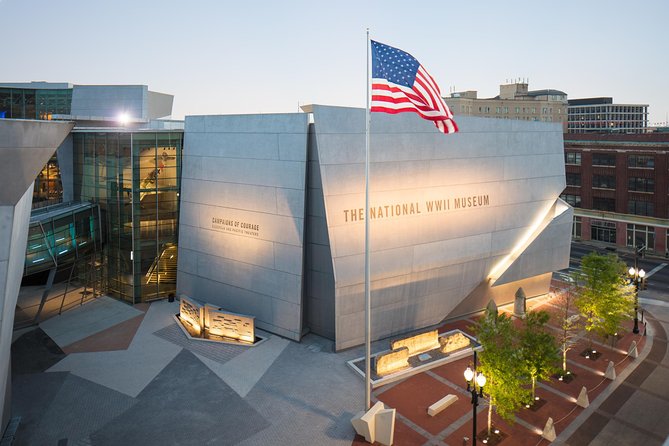
From the second-floor walkway, you reach the European Theater galleries in the Campaigns of Courage collection. The Road to Berlin section follows the American experience through the European war in chronological order.
The displays combine set pieces, period newsreels, narrated film, oral-history stations, digital objects, and written explanations. This mix gives you several ways to learn. You can read a panel, watch a short film, examine an artifact, or listen to a personal account.
The strength of this approach is variety. A long row of text panels can wear you down, especially during a visit lasting several hours. Here, the change between objects, sound, film, and built environments helps keep the story moving.
The weakness is sensory overload. Short films may play in several places at once, with lights, sound, and other effects adding to the bustle of the galleries. If you are sensitive to noise or tire easily in media-heavy spaces, take breaks and do not feel obliged to watch every screen.
The European galleries also ask you to place the American campaign in a wider sequence of events. You see how the United States entered the war, how the campaign developed, and how the war reached its final stages. The museum’s stated focus is the American experience, so this is not a neutral survey of every nation’s role, but it offers substantial context about why the war was fought and how it was won.
Continue to the Road to Tokyo
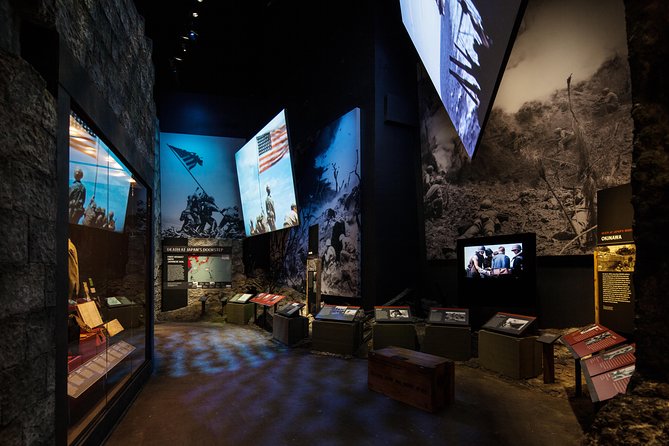
The Pacific Theater galleries offer a separate route through the war against Japan. Road to Tokyo follows the campaign with the same blend of environments, film, artifacts, and individual accounts.
This section matters because the Pacific war can be harder to understand from a simple list of island names. The galleries give you a sense of the conditions and decisions behind the campaign. Personal stories help bring the human cost into view.
The museum does not treat the Pacific and European campaigns as one interchangeable story. They involved different locations, military problems, and experiences. Give yourself enough time to make that distinction clear.
If you have only two or three hours, you may need to choose between a careful look at one theater and a faster walk through both. I would rather see one section properly than race through every room simply to claim that I saw the whole museum.
Stop at the US Freedom Pavilion
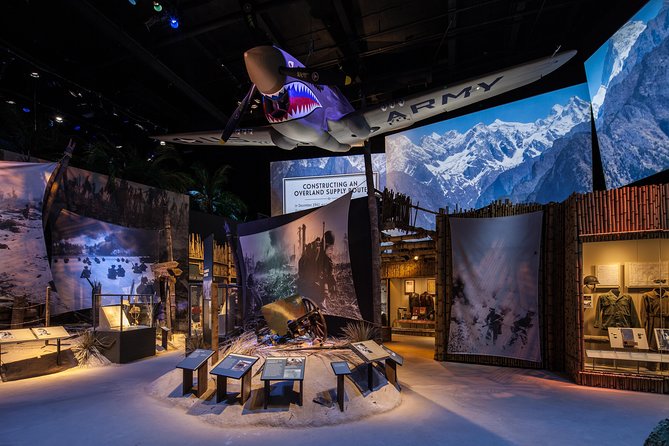
The US Freedom Pavilion focuses on preserved war machines and the people who served. It is one of the more visually powerful areas because large vehicles and aircraft show the industrial scale of the conflict.
The pavilion also honors American service members in a more direct and reflective way. After the machinery and campaign displays, this change in tone gives you room to think about the people behind the equipment.
The museum can be emotionally heavy. Casualty displays, liberation material, and accounts of wartime suffering are not treated as light entertainment. You may want a quiet pause after the most difficult sections, especially if you are visiting with children.
That seriousness is part of the museum’s value, but it is also a reason to plan your day sensibly. This is not the best attraction for someone seeking a quick, cheerful indoor diversion. It works better when you can give the subject attention and take breaks as needed.
A few more New Orleans tours worth comparing
- New Orleans Storyville Museum All Access Ticket
★ 5.0 · 73 reviews - New Orleans: Whitney Plantation & Museum Tour
★ 4.8 · 59 reviews - Storyville Red-Light District Museum: All Access Ticket
★ 5.0 · 3 reviews - New Orleans: Guided Museum and Voodoo Walking Tour
★ 4.2 · 3 reviews
Add Beyond All Boundaries and Final Mission
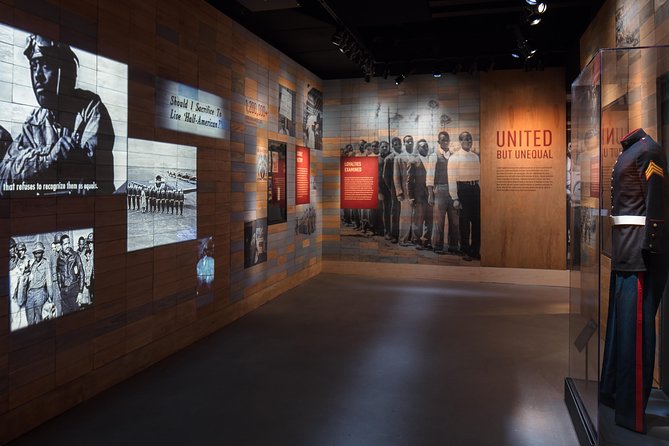
General admission does not include Beyond All Boundaries or Final Mission: USS Tang Submarine Experience. The supplied price information lists these additions at $7, so check the current price when booking.
Beyond All Boundaries is a roughly 50-minute 4D documentary produced by Tom Hanks. It uses first-hand accounts from battle and the Home Front, with effects designed to make the presentation more physical and dramatic.
The film can add useful structure to a museum visit, especially if you want a broad overview before returning to the galleries. It also takes nearly an hour, so include that time in your schedule rather than treating it as a quick extra.
Final Mission focuses on USS Tang, one of the most successful American submarines of World War II. This is an interactive experience rather than a standard gallery, and it offers a different way to think about life at sea and the risks faced by submarine crews.
I would add one or both only if you have enough time and the extra fee fits your plans. If your main goal is to see the core galleries, general admission already provides plenty for one visit.
Take Breaks at the American Sector Restaurant
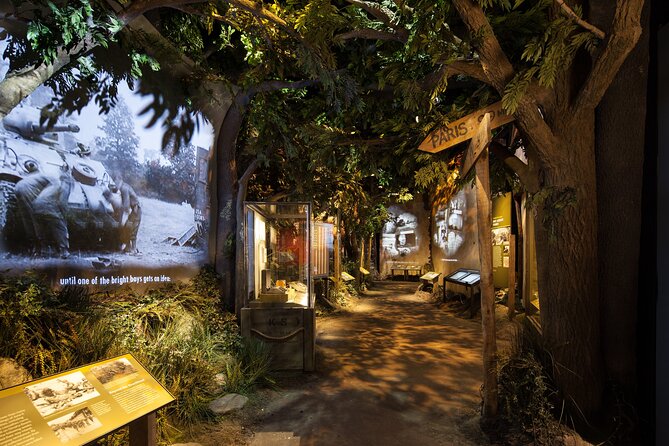
The museum includes the American Sector Restaurant and Soda Shop, allowing you to stop without ending your visit. Food and drinks cost extra.
This matters because the museum is large and mentally demanding. A meal or snack break can help you return to the exhibits with more attention instead of rushing through the final galleries.
BB’s Stage Door Canteen offers a 1940s-style setting with music and performers connected to the war years. It provides a change of pace from battlefield material and may appeal to families who need a lighter interlude.
Do not build your entire day around eating here, since the key reason to visit is the museum itself. Still, having food on site makes a long visit easier, particularly if you plan to stay from morning into the afternoon.
How Much Time Should You Set Aside?
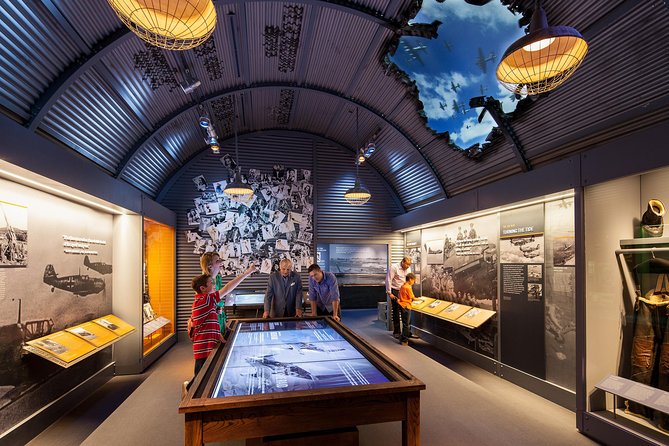
For a quick overview, two to three hours is possible. You can enter the main buildings, see several headline exhibits, and sample both major theaters.
For a satisfying first visit, I would allow four hours. That gives you time to read selected panels, watch some films, use the dog tag stations, and stop for a break.
For a serious history visit, plan on most of the day. The museum has enough material for six or seven hours, especially if you are the sort of person who reads every label and listens to every personal account.
The museum is open daily from 9 a.m. to 5 p.m. Going early gives you the best chance of using your time well. You may also want to choose a few priorities before entering, such as the European galleries, Pacific galleries, aircraft, or submarine experience.
A single visit does not need to cover everything. The scale can feel overwhelming, and that is not a failure on your part. It is better to leave with a clear grasp of several sections than with a hurried blur of every building.
Who Will Get the Most From This Museum?
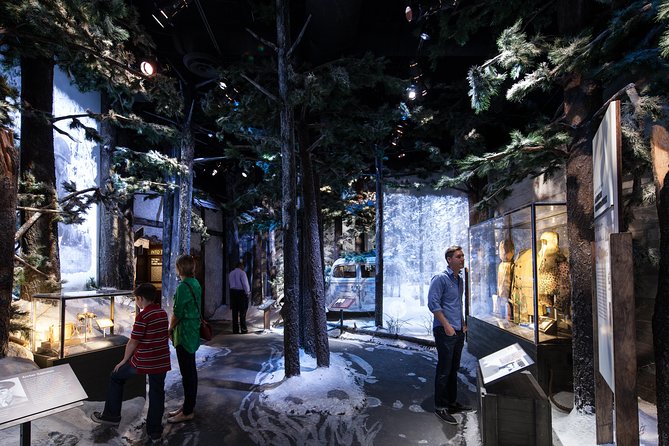
History enthusiasts will find the greatest depth here, but you do not need specialist knowledge to follow the exhibits. The displays explain the causes, major campaigns, American participation, and aftermath in a clear sequence.
The museum also suits families with older children and teenagers. It gives students a strong visual and personal connection to material they may otherwise meet only in textbooks.
Use caution with young children. The museum includes death, destruction, actual wartime footage, and emotionally painful accounts. Children around 10 and under may find the noise, imagery, and subject matter too intense, and older children may benefit from a conversation before the visit.
It is also a good rainy-day choice in New Orleans, but do not mistake that for a casual indoor stop. The subject is serious, and the museum rewards patience.
The museum is not ideal if you dislike video, sound, or interactive displays. There are many short films playing throughout the galleries, and the combination of light, noise, and effects can cause sensory fatigue. Taking regular breaks is sensible.
Practical Details Before You Go
The ticket is mobile, confirmation is provided at booking, and the experience is offered in English. There is no guided tour or arranged transport listed, so you make your own way to the museum and explore independently.
A moderate level of physical fitness is recommended. You will spend much of the visit walking and standing across a large museum complex.
Free cancellation is available if you cancel at least 24 hours before the scheduled start time. Changes or cancellations inside that window are not refunded, and poor weather may result in a different date or a full refund.
The museum is in central New Orleans, making it easy to pair with other city plans, but avoid scheduling a tight follow-up appointment. If you become interested in one campaign or personal story, you will want the freedom to stay longer.
Is the National WWII Museum Worth Booking?
Book it if you want a serious, detailed museum experience and can spare at least half a day. The strongest reasons are the authentic aircraft, personal story stations, large campaign galleries, and the clear connection between military events and individual lives.
I would be cautious if you have only two hours, are traveling with very young children, or prefer light attractions. You can still visit, but you will see only a slice of the museum and may find the subject matter heavy.
For most history-minded visitors to New Orleans, the $37.80 admission offers strong value because the museum can fill an entire day. Go early, choose your priority galleries, take breaks, and do not pressure yourself to see every room in one visit.
FAQ
What does the National WWII Museum admission ticket include?
The ticket includes general admission to the National WWII Museum and access to its main exhibitions, aircraft, artifacts, personal histories, and interactive displays.
How much does admission cost?
The listed price is $37.80 per person.
How long does a visit take?
The approximate visit time is two to three hours, but you should allow four hours or more for a fuller visit. Some people spend six or seven hours and still do not see everything.
What are the museum’s opening hours?
The museum is open Monday through Sunday from 9 a.m. to 5 p.m.
Are Beyond All Boundaries and Final Mission included?
No. Beyond All Boundaries and Final Mission: USS Tang Submarine Experience cost extra. The supplied admission details list the additional price as $7.
Is food included with admission?
No. Food and drinks cost extra at the American Sector Restaurant, Soda Shop, and other on-site venues.
Is the museum suitable for children?
The museum can suit older children and teenagers, but the material includes death, wartime footage, casualty information, and intense sound and visual effects. Younger children may find it overwhelming.
Is transportation to the museum included?
No. You make your own way to the museum in central New Orleans.
Can I cancel the ticket for a refund?
Yes. You can receive a full refund if you cancel at least 24 hours before the experience start time. Cancellations or changes made within 24 hours are not refunded.
Newest New Orleans tours we have written up
- 45-Minute Garden District Highlights Tour in New Orleans★ 5.0 · 33 reviews
- New Orleans City and Swamp Helicopter Tour★ 5.0 · 9 reviews
- 45-Minute Marigny Triangle Highlights Tour in New Orleans★ 5.0 · 12 reviews
- 20 Passenger New Orleans Airport or Hotel Transfer★ 5.0 · 6 reviews
- Private New Orleans 2-Hour Sail Aboard a Luxury Yacht★ 5.0 · 44 reviews
- The New Orleans Darkness Tour★ 4.4 · 9 reviews
- 11 Passenger Executive Van: New Orleans Airport or Hotel Transfer★ 4.0 · 8 reviews
- Spooky Family Ghost Tour★ 3.4 · 9 reviews
New Orleans Museum and Attraction Tickets, compared.

French Quarter Walking Tour With Comp 1850 House Museum Admission
Read our review →
The National WWII Museum Campus Pass plus 4-D Film
Read our review →
New Orleans Mardi Gras World Behind-the-Scenes Tour
Read our review →


Browse the lists this tour appears in