
Reviewed · NEW ORLEANS MUSEUM AND ATTRACTION TICKETS
New Orleans: The National WWII Museum Ticket
New Orleans built the landing craft that carried Allied troops onto Normandy’s beaches, and the National WWII Museum makes that local connection the doorway to a much bigger story. Inside five soaring pavilions, you follow the war from Pearl Harbor to Tokyo, from the American home front to the battlefields of Europe. The D-Day exhibits and restored aircraft are the big draws.
I like two things right away: the museum tells military history through personal stories, not just dates and battle maps, and the collection is large enough to reward a full day. The dog tag program, short films, uniforms, vehicles, and first-hand accounts give you a human thread to follow. Beyond All Boundaries, the optional 4-D film narrated by Tom Hanks, adds a powerful sensory finish.
The catch is simple: this is not a quick stop between a beignet and a streetcar ride. The buildings are extensive, the displays require reading, and a late afternoon booking can leave you rushing. Crowds can also make some exhibit areas tight, especially when school-age groups are present.
Key points to know before you go
- New Orleans and D-Day: Landing craft used in the Normandy invasion were designed and built in New Orleans, giving the museum a strong local link.
- Five pavilions: Plan for several hours, and preferably a full day, to cover the main exhibits without racing through them.
- Campaigns of Courage: The Road to Tokyo and Road to Berlin galleries recreate the Pacific and European campaigns with battlefield settings and personal accounts.
- Aircraft overhead: The U.S. Freedom Pavilion displays wartime aircraft, tanks, and trucks, with high catwalks for a closer look.
- Optional 4-D film: Beyond All Boundaries uses moving effects, physical props, and 3-D screens to tell the war story. It requires a separate ticket option.
- Good family flexibility: Student tickets cover children ages 5 to 18 and students age 19 or older with identification. Wheelchair access is available.
Starting with New Orleans’ D-Day connection

Enter through the main museum entrance on the north side of Andrew Higgins Boulevard. Your barcode is scanned there, and staff point you toward the proper pavilion and provide a visitor guide. The process is straightforward, though the museum’s size means you should get your bearings before charging ahead.
The Louisiana Memorial Pavilion is a natural starting point. Its D-Day Invasion of Normandy exhibit explains the planning, equipment, and human cost of the Allied landing. The New Orleans connection matters here: landing craft for the invasion were designed and built in the city, so this is not just a distant European story presented in a local building.
The pavilion also covers the American Home Front. That section shifts attention away from soldiers and battlefields to the factories, families, workers, and communities supporting the war effort. I like this balance. It helps you see the war as a national undertaking, not simply a series of operations carried out overseas.
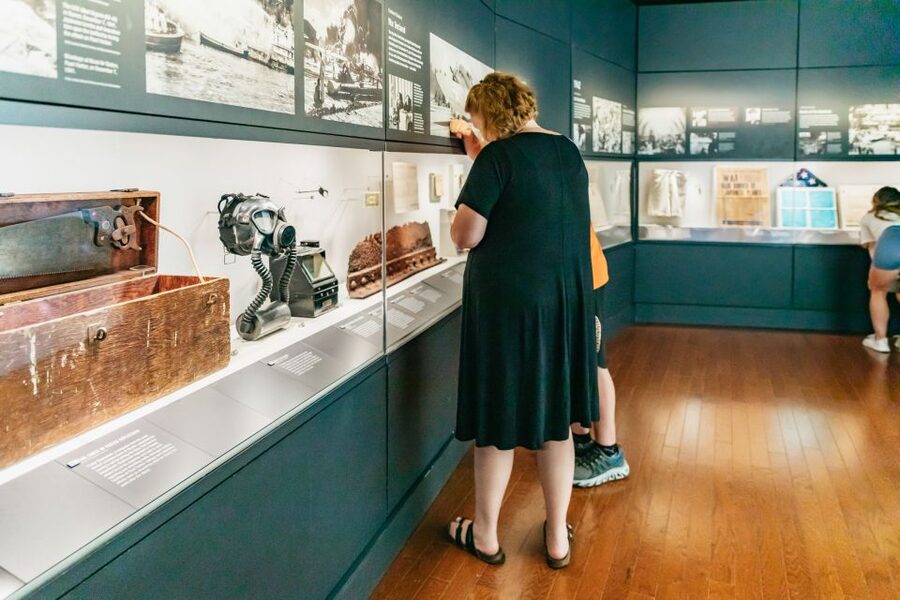
The displays use artifacts, photographs, film clips, and explanatory text. You can move at your own pace, but do not expect to read everything quickly. The museum rewards patient visitors, and that is why a three-hour visit can feel frustratingly short.
More museum and attraction tickets in New Orleans:
- The National WWII Museum Admission Ticket New Orleans
★ 5.0 · 2,202 reviews - French Quarter Walking Tour With Comp 1850 House Museum Admission
★ 5.0 · 781 reviews - The National WWII Museum Campus Pass plus 4-D Film
★ 5.0 · 672 reviews
Following one person through a global war
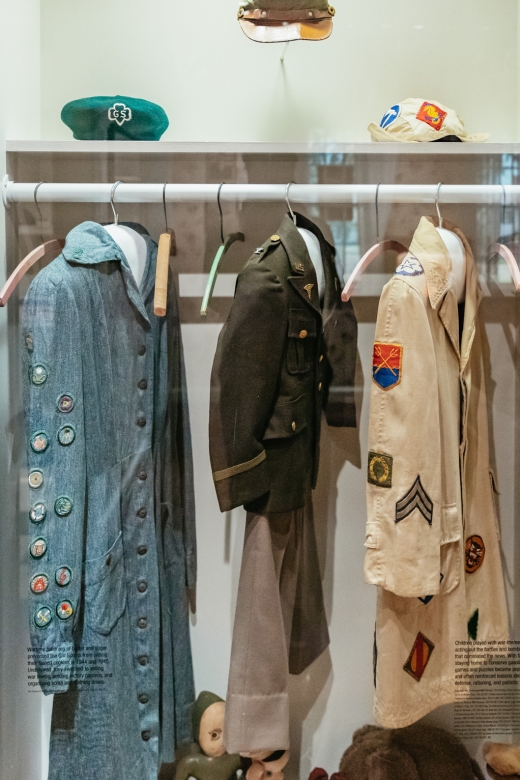
A useful way to handle the museum is to choose a paper dog tag and follow the wartime story attached to it. This gives the visit a personal path through a huge amount of material. Instead of trying to absorb every map and equipment label, you have one individual experience to keep returning to.
That approach works especially well for families. Younger visitors may not want to read every panel, but a personal story gives them a reason to stop and look. Teenagers can also connect the military events to an actual person’s choices, fears, and responsibilities.
The museum’s broader aim is to explain why the war was fought, how the Allies won, and what the conflict still means. It does not treat World War II as a tidy adventure. The displays are often moving, and some material may be heavy for younger children.
Road to Tokyo and Road to Berlin
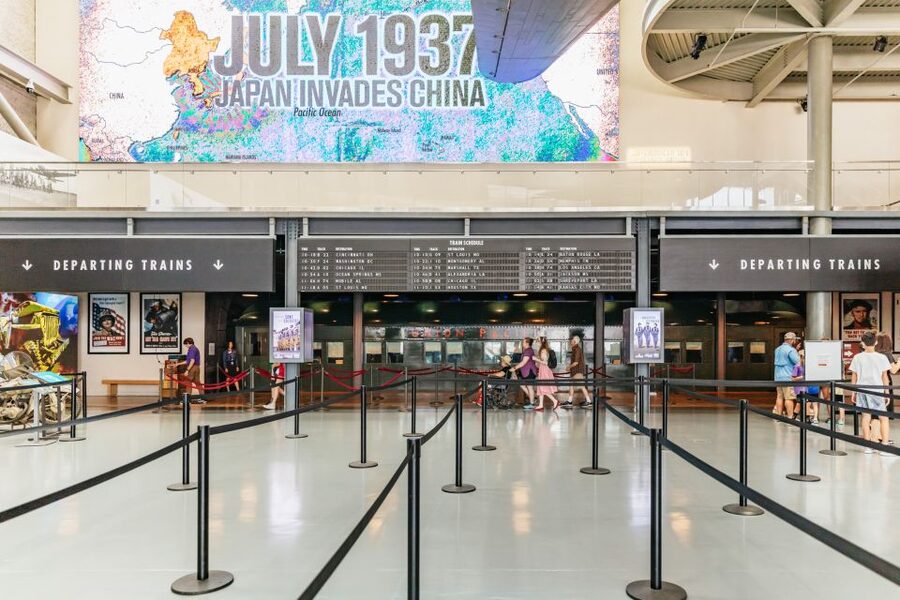
The Campaigns of Courage galleries carry the main combat story. Road to Tokyo follows the Pacific war from Pearl Harbor toward Japan. Road to Berlin traces the European campaign through actual battle settings and recreated villages.
These sections are valuable because they show how different the two theaters were. The Pacific campaign involved enormous distances, island fighting, and harsh conditions. The European campaign brought American forces through North Africa and Europe toward Germany. You get a clearer sense of the scale and variety of the war than you would from a single chronological hallway.
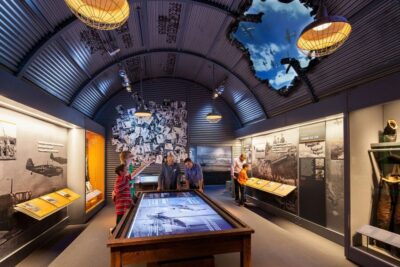
The recreated settings help place military decisions in a physical world. You can see how terrain, villages, roads, and weather affected the people fighting there. Short films and first-hand accounts add voices to the maps and equipment.
You can visit these exhibits independently, or choose the two-hour Campaigns of Courage guided tour. A docent leads the tour through Road to Tokyo and Road to Berlin, which is a good choice if you want more explanation and a planned route. The guided option does mean committing two hours at a set time, so check your ticket carefully before scheduling the rest of the day.
The U.S. Freedom Pavilion and its aircraft
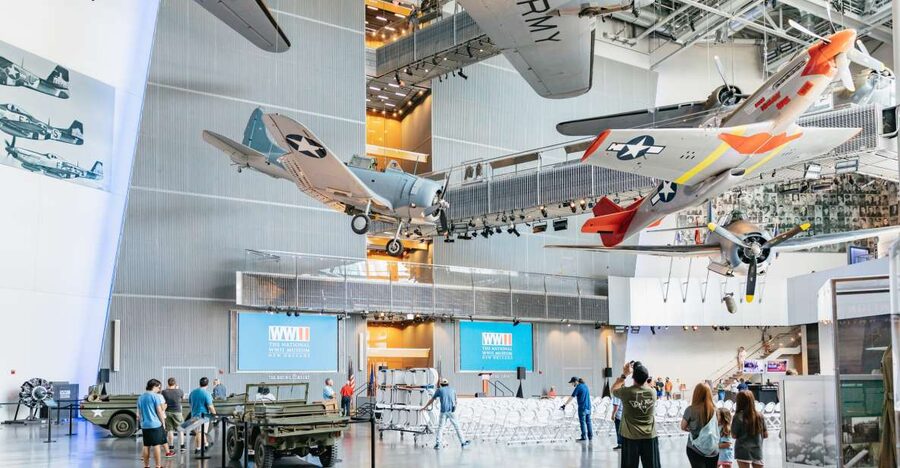
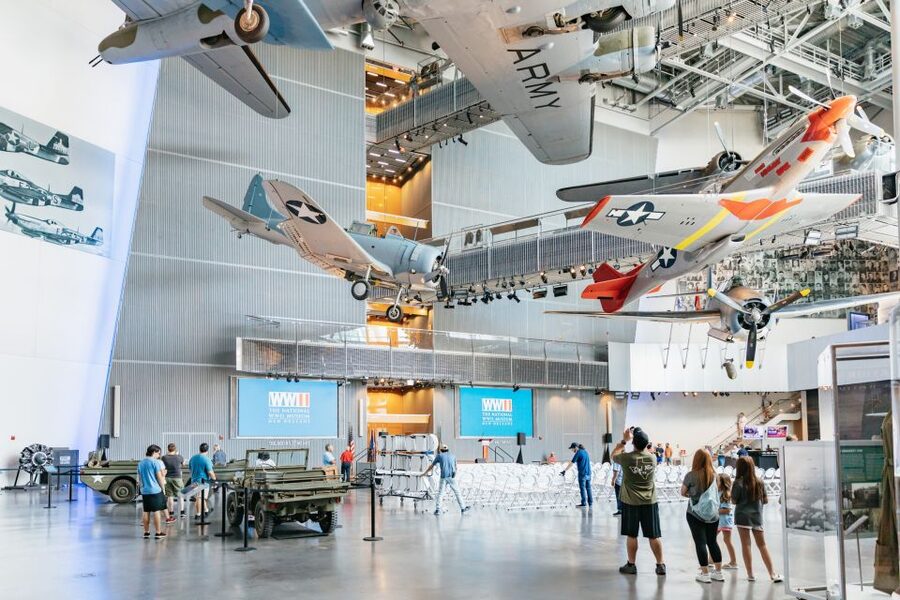
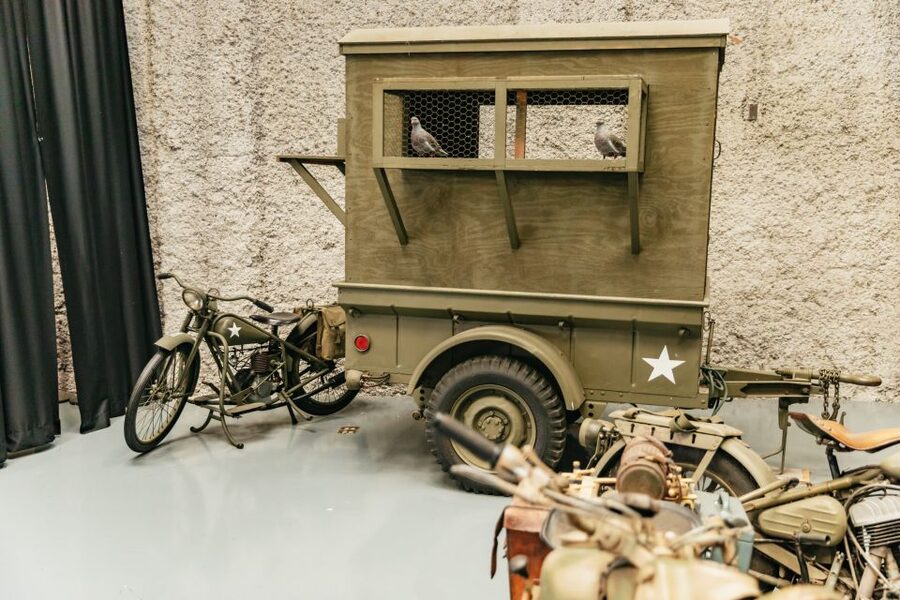
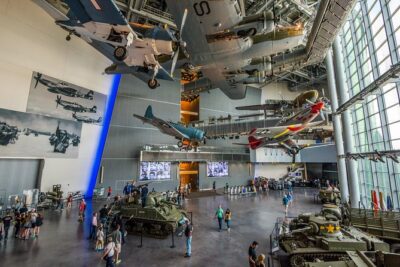
The U.S. Freedom Pavilion changes the scale of the visit. Here, actual World War II aircraft hang overhead, including a B-17E Flying Fortress, with tanks and trucks displayed below. The aircraft are restored to wartime condition, and the high catwalks let you see them from unusual angles.
I especially like this setup because a large aircraft can be hard to understand when viewed only from the floor. From the catwalks, you get closer to the fuselage, wings, and crew positions. The exhibit also helps explain the cramped working conditions inside machines that look enormous from the ground.
The high walkways are a highlight, but they may not suit everyone. If heights or long periods of walking are difficult for you, take your time and ask staff for directions. The museum is wheelchair accessible, and a limited number of wheelchairs are available on a first-come basis.
The aircraft are not isolated objects. Their placement within the larger story connects engineering and production to the people who flew, maintained, and supported them. Tanks and trucks add the land-war side of the picture, so the pavilion feels more like a working military collection than a room of decorative aircraft.
A few more New Orleans tours worth comparing
- New Orleans Storyville Museum All Access Ticket
★ 5.0 · 73 reviews - New Orleans: Whitney Plantation & Museum Tour
★ 4.8 · 59 reviews - Storyville Red-Light District Museum: All Access Ticket
★ 5.0 · 3 reviews - New Orleans: Guided Museum and Voodoo Walking Tour
★ 4.2 · 3 reviews
Beyond All Boundaries: worth the upgrade?

The Solomon Victory Theatre presents Beyond All Boundaries, an exclusive 4-D film narrated by Tom Hanks. The experience combines film, 3-D screens, physical props, and effects designed to let you hear and feel parts of the wartime story.
I would add this option if you have time and are comfortable with a more theatrical presentation. It is not simply another short museum film. The combination of moving effects and large-screen images gives the war a physical force that static displays cannot match. The film has also moved many visitors to tears, so do not treat it as a light entertainment break.
The film requires its own ticket option. If you choose it, the time printed on your ticket is the reserved movie time. Your museum admission is good for entry at any time that day, so you do not need to enter the museum at that exact hour.
Leave a buffer before the show. The five-pavilion layout can make it easy to underestimate how long it takes to walk from one gallery to another. If your movie time is early, start with the areas closest to the theatre or ask staff to help you plan.
Liberation Pavilion and the end of the war
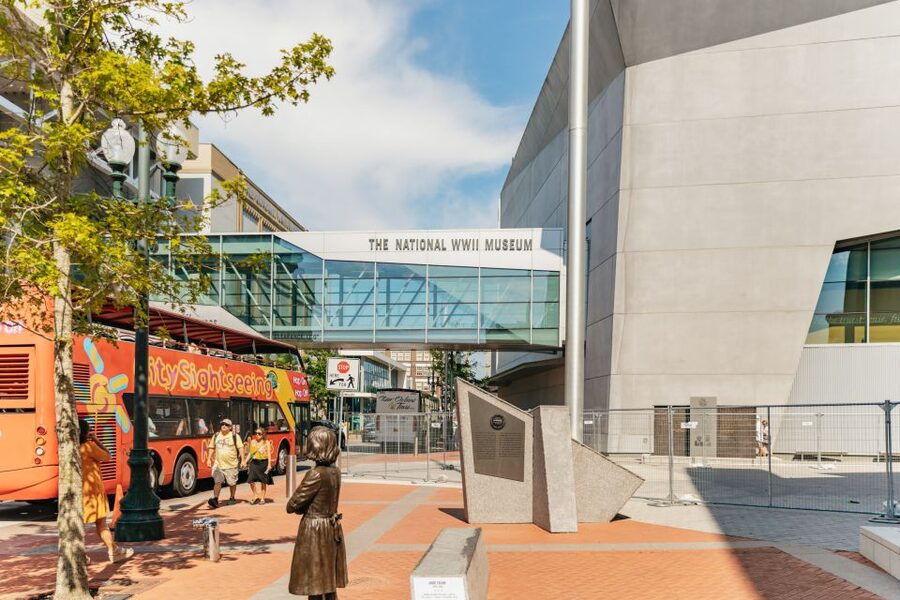
Liberation Pavilion covers the closing months of World War II and the immediate postwar years. Its purpose is to connect the end of the fighting with the world that followed, including the ways the war still relates to life today.
That final shift is important. A museum about World War II can become a parade of battles, weapons, and victory dates. The postwar material asks you to consider what victory solved, what it failed to solve, and how the conflict shaped later generations.
Because the museum is large, you may not reach every pavilion in one visit. Several hours will give you a strong introduction, but a full day is more realistic if you want to read the panels, watch the films, attend the 4-D presentation, and pause for lunch.
How much time should you allow?
Treat this as a full-day museum, even though admission is valid for one day and a shorter visit is possible. Four hours can provide a solid first visit, but you will still need to make choices. People who read closely or take breaks may need most of the day and still leave sections for a future visit.
Arriving early is the best practical choice. Reservations made after 3:00 PM should expect a shortened visit, and that warning is worth taking seriously. A 1:00 PM entry can work if you choose only a few areas, but it is not a good plan for seeing all five pavilions.
The museum is designed for breaks. Restrooms are easy to find, and the American Sector Restaurant & Bar serves lunch from 11:00 AM to 2:00 PM Sunday through Friday and from 11:00 AM to 3:00 PM on Saturday. There are also places for snacks, including Jeri’s, which offers chocolate shakes and beignet fries.
The restaurant gives you a chance to keep your admission useful instead of leaving for a meal and losing time. You can also ask staff for help with directions. Volunteers are stationed around the museum and are particularly helpful when you are trying to work out which building comes next.
Price, booking, and practical details
At $37 per person, basic admission is not a bargain attraction, but the price makes more sense when you treat it as a daylong museum visit. You are paying for five pavilions, restored aircraft and vehicles, films, recreated settings, and a large collection of original material.
The value improves if you plan to stay for several hours. If you only have an hour or two, the price may feel high because you will see only a fraction of the museum. Families should check the student ticket option, which applies to children ages 5 to 18 and students age 19 or older with identification.
Timed tickets are useful for securing a preferred entry or movie time. Depending on the option you select, admission may be timed or non-timed. If you add a guided tour or the 4-D film, the reserved time applies to that activity, while museum admission remains valid for entry at any time that day.
The paid parking garage is at 1024 Magazine Street. Informational booklets are available in Chinese, English, French, Japanese, and Spanish. Flash photography and video are not allowed.
The museum is wheelchair accessible, but the number of loaner wheelchairs is limited. If you need one, ask as soon as you arrive. The large campus and long visit can be tiring for older adults, so plan regular pauses rather than trying to push through every gallery.
Who will get the most from this museum?
History enthusiasts will find plenty to study, but you do not need a military background to appreciate the visit. The museum works well for families, veterans, students, and anyone interested in the personal cost of a global conflict.
Teenagers may respond to the equipment, aircraft, and recreated settings, while adults may spend more time with the letters, photographs, and home-front stories. The mix gives families room to move at different speeds and meet again at major exhibits.
I would be cautious about bringing very young children for a full day. The subject is serious, and many displays require reading. Older children and teenagers are more likely to understand the material and stay engaged, especially if you use the dog tag program as a guide.
The museum can also be emotionally demanding. The 4-D film intensifies that effect, and the personal stories make the war feel close rather than safely distant. Build in quiet time, especially if you are visiting with someone who has a family connection to World War II or military service.
Should you book the National WWII Museum?
Yes, if you can give it at least half a day, and ideally a full day. The museum is one of New Orleans’ strongest indoor attractions, especially when you want something beyond the French Quarter’s food, music, and architecture.
Book the basic ticket if you mainly want freedom to explore. Add Beyond All Boundaries if you enjoy film presentations and want the most dramatic version of the museum’s central story. Choose the Campaigns of Courage guided tour if you prefer a docent-led route through the Pacific and European galleries.
Skip it only if your schedule allows for a very short visit, you dislike museums with substantial reading, or the subject matter feels too heavy for your group. Otherwise, arrive early, wear comfortable shoes, take a real lunch break, and let the museum set the pace. You will get far more from it by seeing fewer exhibits carefully than by racing through all five pavilions.
FAQ
Where is the National WWII Museum located?
The museum is in downtown New Orleans, Louisiana. Enter through the main entrance on the north side of Andrew Higgins Boulevard.
How much does admission cost?
The listed admission price is $37 per person. Options that include the 4-D film or a guided tour cost more than basic entry.
How long is the museum visit?
Admission is valid for one day. Plan at least half a day, though a full day is better if you want to cover the five pavilions, read the displays, and take breaks.
Is the Beyond All Boundaries film included?
The 4-D film is not included with basic admission. You must select the option that includes a timed ticket for Beyond All Boundaries.
Is the film narrated by Tom Hanks?
Yes. Beyond All Boundaries is narrated by Tom Hanks and uses 4-D effects, physical props, and 3-D screens.
Can I take a guided tour?
Yes. The two-hour Campaigns of Courage guided tour covers the Road to Tokyo and Road to Berlin exhibits. A guided option must be selected when booking.
Are children eligible for student tickets?
Student tickets are valid for children ages 5 to 18 and for students age 19 or older who have identification.
Is the museum wheelchair accessible?
Yes, the museum is wheelchair accessible. A limited number of wheelchairs are available for use on a first-come basis.
Can I cancel my reservation?
You can cancel up to 24 hours in advance for a full refund. Reserve-now, pay-later booking is also available for selected options.
Newest New Orleans tours we have written up
- 45-Minute Garden District Highlights Tour in New Orleans★ 5.0 · 33 reviews
- New Orleans City and Swamp Helicopter Tour★ 5.0 · 9 reviews
- 45-Minute Marigny Triangle Highlights Tour in New Orleans★ 5.0 · 12 reviews
- 20 Passenger New Orleans Airport or Hotel Transfer★ 5.0 · 6 reviews
- Private New Orleans 2-Hour Sail Aboard a Luxury Yacht★ 5.0 · 44 reviews
- The New Orleans Darkness Tour★ 4.4 · 9 reviews
- 11 Passenger Executive Van: New Orleans Airport or Hotel Transfer★ 4.0 · 8 reviews
- Spooky Family Ghost Tour★ 3.4 · 9 reviews
New Orleans Museum and Attraction Tickets, compared.
The National WWII Museum Admission Ticket New Orleans
Read our review →
French Quarter Walking Tour With Comp 1850 House Museum Admission
Read our review →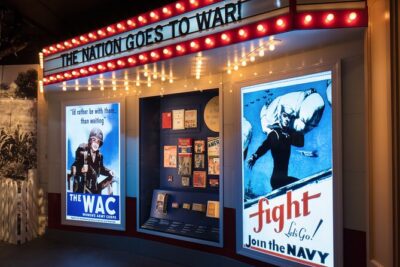
The National WWII Museum Campus Pass plus 4-D Film
Read our review →
New Orleans Mardi Gras World Behind-the-Scenes Tour
Read our review →


Browse the lists this tour appears in