
Reviewed · NEW ORLEANS BLACK HERITAGE TOURS
Urban Enslavement Tour at Hermann Grima House
New Orleans history can look polished from the street. Inside Hermann-Grima House, the story turns harder and more human. This one-hour tour uses an 1831 French Quarter home to explain how enslaved people worked, lived, and tried to protect family ties in an urban setting.
I like two things right away: the original open-hearth kitchen makes daily labor easier to picture, and the tour gives you a needed comparison with rural plantation slavery. Guides including Robert and Kelsy have been praised for clear explanations and moving personal connections. The main drawback is that the surviving records focus heavily on owners, so some parts of enslaved people’s lives remain frustratingly hard to recover.
Key points to know
- Urban slavery is the focus: Learn how domestic work, cooking, sewing, child care, and skilled labor shaped city life.
- The house is an original setting: See a Federalist façade, period rooms, courtyard, open-hearth kitchen, and urban slave quarters.
- Robert and Kelsy have led memorable tours: Their approach can add personal context and invite questions.
- The tour lasts about one hour: It fits neatly into a French Quarter sightseeing day.
- Admission costs $17: That is fair value for a guided visit centered on a subject many general city tours barely address.
- The carriage house adds another layer: The Exchange Shop connects the property to one of the South’s oldest women-led nonprofit organizations.
Why Hermann-Grima House tells a different slavery story
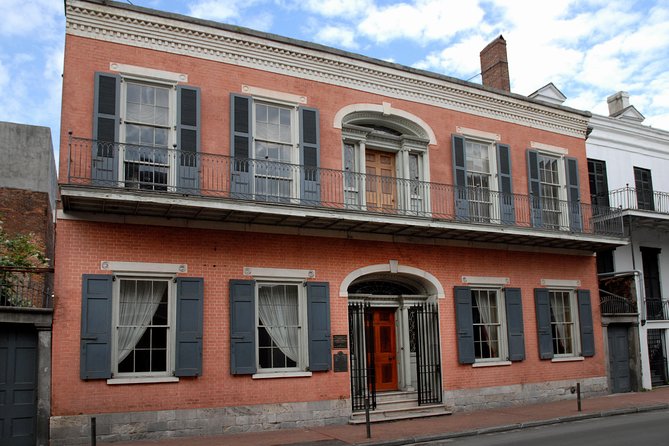
Many people first meet New Orleans history through plantation tours outside the city. Those places matter, but urban slavery had its own patterns, pressures, and routines. At Hermann-Grima House, you look at enslavement inside a wealthy city home, where domestic workers prepared food, cared for children, washed clothing, ironed garments, sewed, and maintained the household.
That setting changes the questions you ask. Instead of picturing only large fields and plantation labor, you see how slavery operated behind a respectable French Quarter façade. A city home could contain elegant rooms for the owners and cramped work areas for the people who made that comfort possible.
The tour also explains that urban enslavement was not gentler simply because it happened in town. The work could stretch from cooking for 12 to 16 hours a day to caring for children, repairing clothing, and serving every member of the household. Enslaved children could be separated from parents and sold, sometimes at a young age.
That contrast between appearance and reality is the core of the experience. The architecture is attractive. The human system that supported it was cruel.
More Black heritage tours in New Orleans:
- Soul of New Orleans City Tour: Enslavement to Modern Day Culture
★ 5.0 · 393 reviews - New Orleans: Tremé African American & Creole History Tour
★ 4.9 · 208 reviews - True Voodoo History of NOLA’s Congo Square with Local Guide
★ 5.0 · 133 reviews
Entering the 1831 French Quarter house
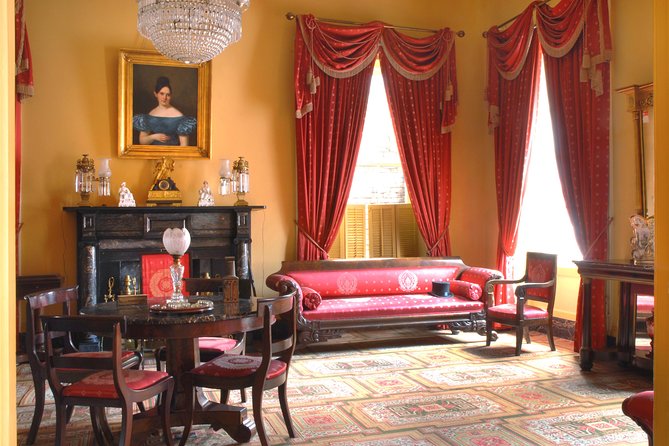
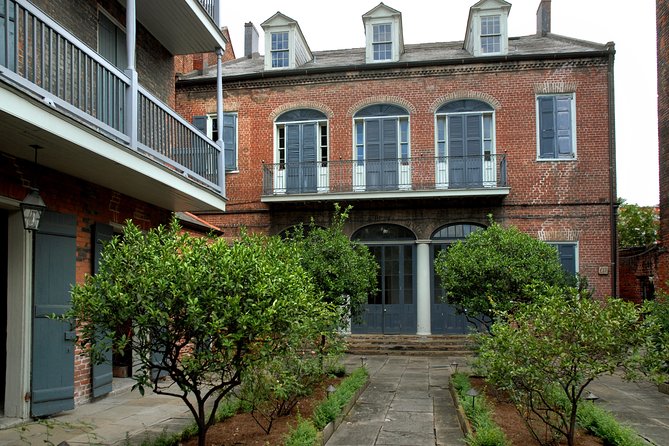
Hermann-Grima House was built in 1831 and presents a formal Federalist façade. Its rooms and furnishings give the tour a physical setting, not just a series of dates and names. You move through the home while learning how space itself enforced social rank.
The layout helps you notice who belonged where. Fine rooms, porches, and verandas were designed for the family and their social world. Other areas were tied to work, service, and control. One particularly useful detail is the division between places enslaved people could enter and areas reserved for the owners.
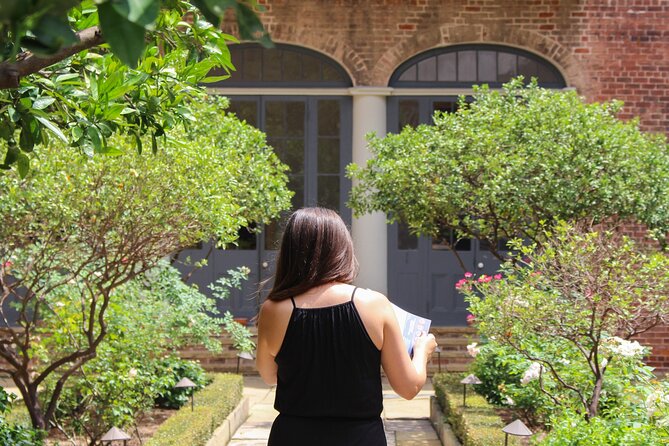
The house also includes a large courtyard and a giant water cistern. These details may seem small at first, but they help you picture how the household functioned before modern utilities. The courtyard was not simply a pretty outdoor space. It was part of the working life of the property.
I appreciate tours that let the building do some of the explaining. Here, the rooms show wealth while the guide explains who cooked, cleaned, carried, repaired, and cared for the people living in them. The result is more effective than a lecture in a modern room.
The open-hearth kitchen makes labor visible
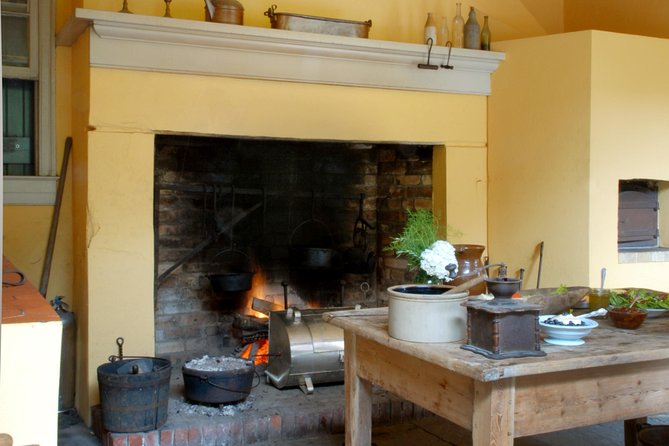
The original operating open-hearth kitchen is one of the strongest parts of the visit. It gives you a direct way to think about heat, time, smoke, preparation, and physical effort. Food did not arrive from a restaurant or a modern appliance. Someone had to produce it, often over long hours and under demanding conditions.
The kitchen also brings the subject of food closer to everyday life. Recipes connected with the house have been part of the tour experience, adding a practical detail to the history. You may leave thinking not only about who ate at the dining table, but who prepared the meal and what that work required.
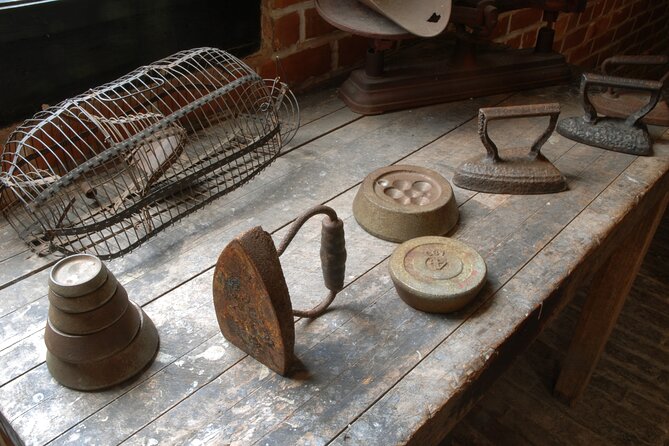
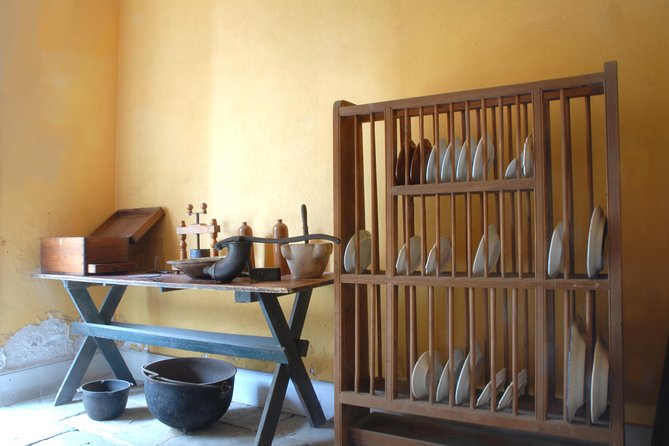
Cooking was only one task. Enslaved women and men could also wash, iron, mend, and resew clothing. A detail about ironing and resewing sleeves shows how even a small repair could become part of an endless cycle of household work.
The kitchen is valuable because it avoids making slavery feel distant. You can connect the history to heat, tiredness, repetition, and the demand that everything be ready for someone else.
Urban quarters and the limits of the record
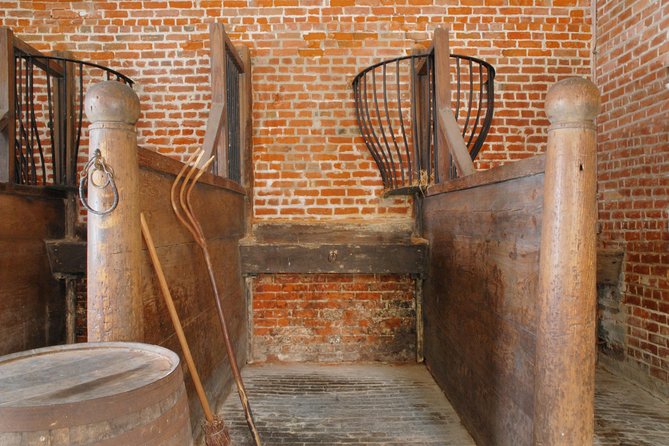
The property includes urban slave quarters, an essential part of the tour’s purpose. These spaces help show that the enslaved population was not an invisible background to the household. People lived on the property, worked there, and formed relationships within a system that denied them freedom and control over their families.
One practical caution is worth keeping in mind: the exact amount of time spent in each part of the house can depend on the guide and the group. Some visitors have wanted more time focused on the quarters and on individual enslaved people. If that is your priority, ask questions during the tour.
The records also create a real challenge. Names, financial transactions, ownership changes, and family connections are often easier to document than personality, hope, fear, friendship, or private resistance. That can make the tour feel more focused on the owners than you expected, even when the guide is trying to center enslaved lives.
This is not a reason to skip the house. It is a reason to arrive with clear expectations. You will learn much about daily conditions and the structure of the household, but you may not receive a full biography of every enslaved person who lived and worked there.
A different side of New Orleans for another evening:
- New Orleans Premier Ghost, Voodoo and Vampire Walking Tour
★ 4.5 · 12,856 reviews - New Orleans Steamboat Natchez Jazz Cruise with Dinner Option
★ 4.0 · 7,533 reviews - Adults-Only New Orleans Ghost, Crime, Voodoo, and Vampire Tour
★ 5.0 · 6,545 reviews - New Orleans Food Walking Tour of the French Quarter with Small-Group Option
★ 5.0 · 6,118 reviews
Robert, Kelsy, and the human side of the tour
The guide can make a major difference here. Robert has been singled out for connecting the history to personal family experience, especially in his closing comments. That kind of connection can give the final minutes real emotional weight without turning the tour into a performance.
Kelsy has also been praised for a well-supported narrative and for welcoming questions. Her approach links the opulent life of the owners with the hard daily life of enslaved people, letting you hold both realities in view at once.
The experience is offered in English. Because the tour is only about an hour, a strong guide matters. There is not time for every detail, so the best tours use the house carefully, explain the larger context, and leave room for questions.
You may find the group small. One account describes only two couples on a particular departure. Group size can vary, but a small group usually gives you a better chance to ask about the kitchen, the quarters, family separation, or the connection between this property and other sites.
How urban slavery differed from plantation slavery
The tour is especially useful after a plantation visit. One family described it as a helpful follow-up to Whitney Plantation, since the two experiences present different settings. A plantation tour often emphasizes agricultural labor, large-scale production, and the geography of forced work. Hermann-Grima House brings the focus inside the city.
Here, enslaved people supported a household and its public standing. Their labor could include:
- Cooking and preparing food
- Caring for children, including the owner’s children
- Washing, ironing, and repairing clothes
- Cleaning and maintaining rooms
- Serving family members and visitors
- Performing skilled domestic work
The urban setting could also create different forms of contact. Enslaved people might encounter shops, streets, free people of color, other households, and city institutions. That did not make them free or safe. It did mean that slavery operated within a dense social environment rather than only across farmland.
The tour also touches on complicated cases of freedom and re-enslavement. One story concerns a person who had been granted freedom but was later sold to pay debts, then bought back. It is a painful reminder that legal status and personal security could be taken away through financial dealings.
The owners’ story is useful, but it needs balance
Hermann-Grima House includes the stories of the people who built, owned, and occupied it. You hear about the builder, his financial problems, his wife’s wealth, their daughter and son-in-law, and the family that later purchased the house.
Those details help explain how the property came to exist and how wealth moved through families. They also show that slavery was tied to money, marriage, inheritance, debt, and status. The owners’ personal stories are not separate from slavery. They are part of the system that made the household possible.
Still, I understand why some people want less attention on owners and more on enslaved people. The surviving material can pull the narrative toward names and transactions that were recorded by the powerful. A good guide has to work against that imbalance.
If you want the strongest experience, listen for how the guide connects owner wealth to enslaved labor. Ask who performed the work, where that person lived, and what the records reveal or leave out. Those questions can shift the focus from the house as an heirloom to the people who sustained it.
The carriage house and The Exchange Shop
The property’s 19th-century carriage house now holds The Exchange Shop. It was originally founded in 1881 by The Woman’s Exchange, described as one of the oldest women-led nonprofit organizations in the South.
This is a useful extra stop after the main tour. The shop brings the site into the present through women’s art and handmade work. You might meet one of the artists and find a small piece of New Orleans to take home. That gives the visit a living connection beyond the historical rooms.
Do not confuse the shop with the central purpose of the Urban Enslavement Tour. The tour’s main subject is slavery and African American contributions to New Orleans. The carriage house is an added part of the property, and its current use offers a different tone after an intense hour.
Is $17 a fair price for one hour?
At $17 per person, this is a reasonable price for a guided museum experience in the French Quarter. You are paying for access to a historic home, an original kitchen, courtyard, quarters, and a focused interpretation rather than a quick look at attractive rooms.
The value is strongest if you want context. A self-guided visit might show you the architecture, but it would be much harder to understand the labor behind the household or the difference between urban and rural slavery.
The one-hour length also works well. It is long enough to build a serious story but short enough to fit around other New Orleans plans. I would not treat it as a full study of slavery in Louisiana. Think of it as a focused case study that can sharpen what you learn at plantations, museums, or historical sites elsewhere.
The experience has a 4.8 rating from 171 reviews, with 94 percent recommending it. Those numbers suggest strong overall satisfaction, but the more useful point is why the tour works: visitors repeatedly praise the guides’ preparation, clarity, openness to questions, and ability to make the subject personal.
Who should book this experience?
I would recommend it to anyone who wants a more serious view of New Orleans than architecture and music alone can provide. It suits history fans, families with older children, solo visitors, and people who have already toured a plantation and want an urban comparison.
It is also a good choice for students and younger visitors. The house makes the subject concrete, while the one-hour format keeps the scope manageable. The tour does not soften the facts, but it presents them through rooms, work, and family stories rather than only through abstract numbers.
You should think twice if you want a light, purely architectural house tour. The home is beautiful, but the main purpose is difficult history. You should also expect some limits in the surviving documentation and ask questions if you want more attention on named enslaved people.
Booking about two weeks ahead is sensible since the tour averages 13 days of advance booking. Confirmation is provided at booking, and you can cancel for a full refund up to 24 hours before the start time. Service animals are allowed, public transportation is nearby, and most people can participate. Poor weather can lead to a new date or a full refund.
Should you book the Urban Enslavement Tour?
Yes, if you want to understand how slavery shaped an urban New Orleans household. The strongest reasons are the original kitchen, the clear comparison with plantation life, and guides such as Robert and Kelsy who bring care and personal connection to a hard subject.
Go with patience and curiosity. The owner-centered records may frustrate you, and the tour cannot recover every detail about the people who were enslaved there. But the house gives you a useful setting for seeing how domestic work, family separation, wealth, and daily control fit together.
For $17 and one hour, this is a worthwhile addition to a French Quarter visit. I would pair it with another site focused on plantation slavery or African American history, then use Hermann-Grima House to understand what enslavement looked like behind a city home’s elegant front door.
FAQ
Where does the Urban Enslavement Tour take place?
The tour takes place at Hermann-Grima House in New Orleans, a restored French Quarter home built in 1831.
How long does the tour last?
The experience lasts approximately one hour.
What does the tour focus on?
It focuses on the experiences of enslaved people in an urban setting, how urban enslavement differed from rural enslavement, and how people of African descent shaped New Orleans.
What parts of Hermann-Grima House are included?
The property includes the Federalist-style façade, original operating open-hearth kitchen, urban slave quarters, historic rooms, and expansive courtyard. Admission to the house is included.
Is the tour offered in English?
Yes. The tour is offered in English.
How much does the tour cost?
The listed price is $17 per person.
Can I cancel for a refund?
Yes. You can cancel at least 24 hours before the start time for a full refund. Cancellations or changes made less than 24 hours before the start time are not refunded.
Is the experience available in poor weather?
The experience requires good weather. If it is canceled because of poor weather, you will be offered another date or a full refund.
Newest New Orleans tours we have written up
- 45-Minute Garden District Highlights Tour in New Orleans★ 5.0 · 33 reviews
- New Orleans City and Swamp Helicopter Tour★ 5.0 · 9 reviews
- 45-Minute Marigny Triangle Highlights Tour in New Orleans★ 5.0 · 12 reviews
- 20 Passenger New Orleans Airport or Hotel Transfer★ 5.0 · 6 reviews
- Private New Orleans 2-Hour Sail Aboard a Luxury Yacht★ 5.0 · 44 reviews
- 11 Passenger Executive Van: New Orleans Airport or Hotel Transfer★ 4.0 · 8 reviews
- The New Orleans Darkness Tour★ 4.4 · 9 reviews
- Spooky Family Ghost Tour★ 3.4 · 9 reviews
New Orleans Black Heritage Tours, compared.
Soul of New Orleans City Tour: Enslavement to Modern Day Culture
Read our review →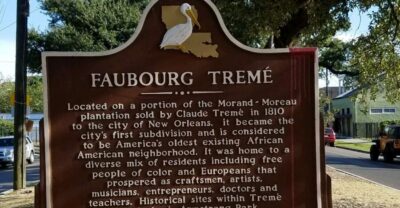
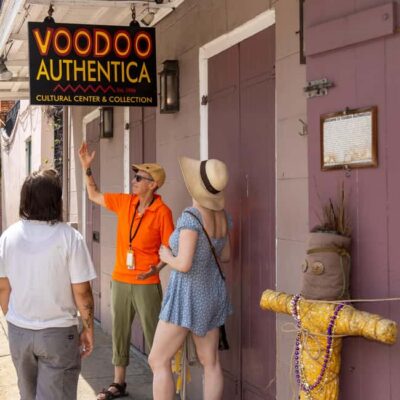
True Voodoo History of NOLA’s Congo Square with Local Guide
Read our review →
Soul of New Orleans City Tour:Enslavement to modern culture
Read our review →
Browse the lists this tour appears in