
Reviewed · NEW ORLEANS BLACK HERITAGE TOURS
Soul of New Orleans City Tour: Enslavement to Modern Day Culture
New Orleans history is not confined to the French Quarter. This tour follows the city’s Black story from enslavement and Congo Square to jazz, school desegregation, Katrina, and modern art. Tremé and the Lower Ninth Ward give the experience its emotional weight, while guide-led storytelling ties the places together.
I like the air-conditioned ride, which saves you from piecing together far-flung neighborhoods by bus or taxi. I also like the guides’ personal approach: Jay brings a native New Orleanian perspective, while Dennis is praised for his careful explanations and attention to the group. The main drawback is its serious subject matter. This is not a light sightseeing loop, and the 2-hour-45-minute schedule leaves little time for long independent exploration at each stop.
Key points to know before booking
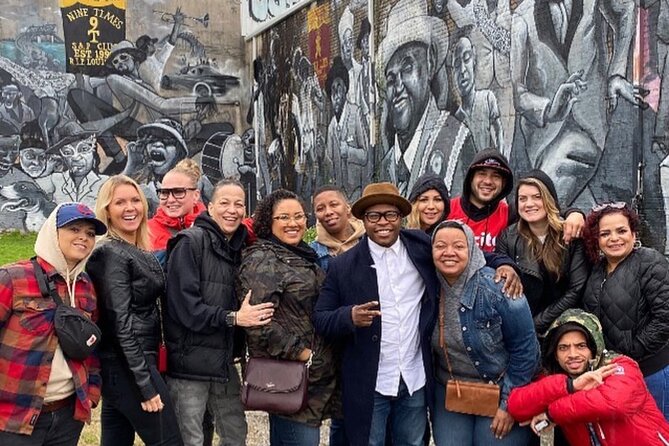
- Tremé connects jazz, Black community life, and civil rights in one of the city’s most important neighborhoods.
- Congo Square puts African music and dance at the center of New Orleans history, rather than treating them as a footnote.
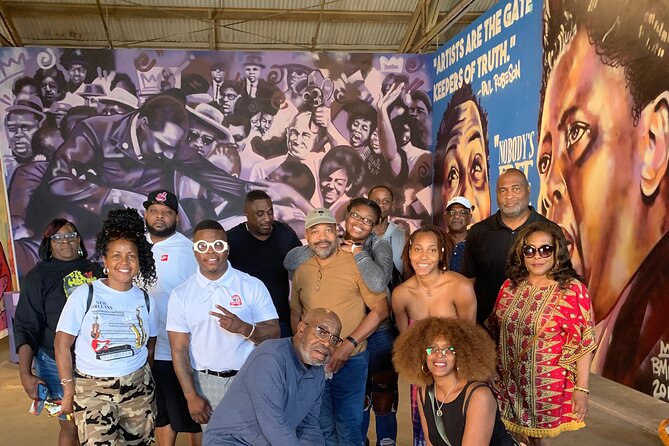
- Studio BE supplies a strong visual stop, with large murals that make recent history easier to see and discuss.
- Katrina and the Lower Ninth Ward add difficult but essential context about flooding, levees, displacement, and recovery.
- Jay and Dennis use videos, personal stories, and questions to make the ride more like a moving classroom than a standard bus tour.
- The $55 price includes transportation and guiding, with a maximum of 24 people and a return to the Canal Street starting point.
Why this tour looks beyond the postcard New Orleans
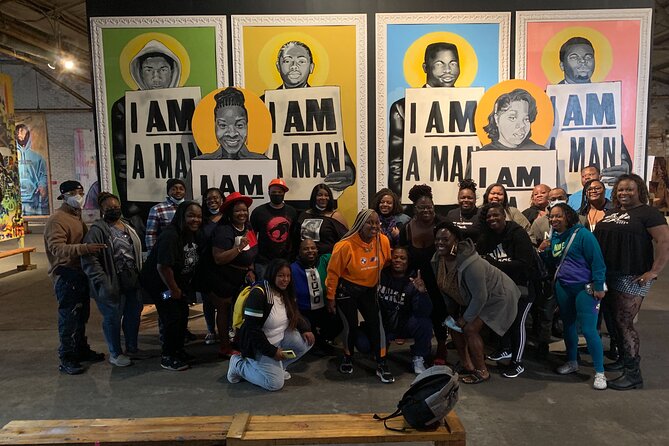
Many first-time trips to New Orleans focus on architecture, cocktails, food, and music. Those are real parts of the city, but they do not explain who created its sound or why its neighborhoods developed as they did.
The Soul of New Orleans City Tour takes a wider view. Its title, Enslavement to Modern Day Culture, is a fair description of the route. You hear about the forced movement of Africans, the endurance of Black communities, the birth of jazz, the fight for school integration, the damage caused by Hurricane Katrina, and the creative work still shaping the city.
That range is the tour’s greatest strength. You are not simply driven past landmarks and given dates. The guide connects music, race, religion, food, art, education, and neighborhood life. A stop may begin with a building or mural, then lead into a discussion of the people and events attached to it.
The experience is especially useful early in your stay. I would take it near the start of a New Orleans visit, then use the food, music, and neighborhood suggestions from Jay or Dennis to shape the next few days. The tour gives you a framework, so later visits to restaurants, clubs, museums, or historic sites carry more meaning.
More Black heritage tours in New Orleans:
- New Orleans: Tremé African American & Creole History Tour
★ 4.9 · 208 reviews - Urban Enslavement Tour at Hermann Grima House
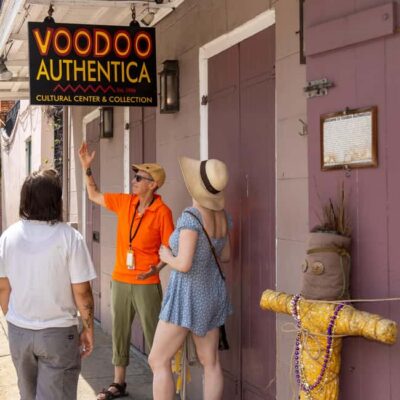
★ 5.0 · 171 reviews - True Voodoo History of NOLA’s Congo Square with Local Guide
★ 5.0 · 133 reviews
Tremé: where music and civil rights meet
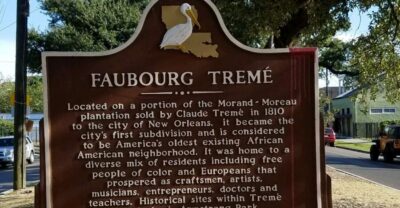
Tremé is the first listed stop, and it is an excellent place to begin. The neighborhood is described as America’s oldest Black community, with an important role in civil rights and the development of jazz.
Expect a short stop of about five minutes, though the guide commentary continues to do much of the work. You may pass live music venues and hear about the jazz figures connected with the area. The point is not simply that jazz began in New Orleans. The point is that music grew from community, worship, hardship, celebration, and cultural exchange.
That distinction matters. A typical music tour can leave you with a list of famous names. This experience places music inside the lives of the people who made it. African rhythms, Creole traditions, marching bands, and neighborhood gatherings all form part of the story.
Tremé also helps correct the idea that New Orleans culture appeared fully formed for tourists. The neighborhood’s role in civil rights shows that this is not only a story about the past. It is also about residents defending their schools, homes, traditions, and right to shape the city.
Do not expect a long walking tour here. The stop is brief, and the air-conditioned vehicle remains the main way you move between areas. That is practical in New Orleans heat, but anyone hoping for extended time inside each neighborhood may find the schedule quick.
Congo Square: the sound of survival
Congo Square is one of the most meaningful points on the route. The tour explains how enslaved people gathered there to share music, dance, and culture, despite the brutal system that controlled their lives.
You also hear how African rhythms met Creole customs and other cultural influences. This is where the tour’s larger argument becomes clear: New Orleans culture did not come from one source. It formed through contact, pressure, adaptation, and survival.
The stop itself is listed at about five minutes. That may sound short for a place with such weight, so pay close attention to the guide’s explanation rather than expecting a long self-guided visit. The setting gives you a physical reference point, but the stories provide the meaning.
I appreciate that Congo Square is treated as a place of agency, not only suffering. Enslaved people endured immense violence, yet they continued to make music, maintain traditions, and build community. That balance helps you understand why New Orleans music feels connected to both grief and celebration.
Studio BE and the power of public art
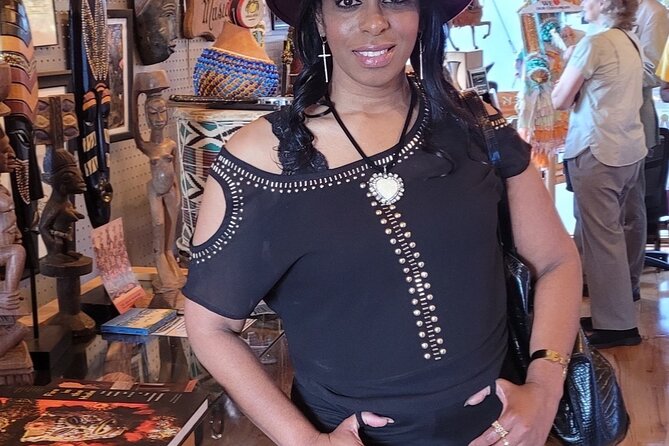
Studio BE offers a change in pace. After the historical discussion of enslavement, Tremé, and Congo Square, the murals give you a bold visual way to think about Black identity, memory, struggle, and hope.
The stop is known for some of New Orleans’ most striking murals. The art is large, direct, and suited to a tour that asks you to connect past events with present-day culture. It is also one of the most photographable parts of the experience, although the subject matter deserves more than a quick picture.
Studio BE becomes even more useful when paired with the tour’s other themes. You have heard how communities preserved culture under pressure. Here, you see modern artists using walls to tell stories in public, outside the traditional museum setting.
The available timing lists about five minutes, so do not expect a long gallery visit. The tour may provide an introduction rather than a full art lesson. Still, this stop gives the route visual variety and helps prevent the experience from becoming a continuous series of spoken explanations.
A few more New Orleans tours worth comparing
- New Orleans City Sightseeing Hop-On Hop-Off Bus Tour
★ 4.5 · 4,943 reviews - New Orleans Sightseeing City Tour
★ 5.0 · 3,038 reviews - City Tour of New Orleans with Pickup
★ 4.5 · 2,407 reviews - New Orleans City Tour: French Quarter, Garden District & Cemetery
★ 4.5 · 2,209 reviews
The Ninth Ward, Katrina, and the cost of forgetting
The strongest emotional section appears to be the material connected with Hurricane Katrina and the Lower Ninth Ward. The official stop list is brief, but the tour experiences described by participants include the Ninth Ward, broken levees, and the lasting effects of the disaster.
This part can be difficult. You are asked to picture the scale of the flooding and to consider how long recovery can take. The point is not disaster tourism. It is to understand that Katrina was not only a storm. It exposed failures in protection, planning, housing, and public response, with poor communities suffering heavily.
The guide’s use of videos is particularly helpful here. Jay and Dennis have used footage and visual material inside the vehicle to add context to what you are seeing outside. That approach can make the story easier to follow, especially when the physical signs of damage are not obvious from a quick drive past.
One practical note: this is not a route designed to give you a long independent walk through the Ninth Ward. You see the area as part of a guided city tour. That keeps the schedule manageable, but it also means the explanation must carry much of the experience.
If you prefer only cheerful sightseeing, this section may feel heavy. I think that is a reason to take the tour, not a flaw, but you should know the tone in advance. New Orleans culture cannot be understood without confronting the unequal effects of Katrina and the work still required after it.
School integration and the people behind the history
A valuable feature of the tour is its attention to school desegregation. The stories include Leona Tate, one of the students who helped integrate New Orleans schools, along with the McDonogh Three.
This is the sort of detail that can disappear in a broad city overview. The tour gives you names and individual courage instead of reducing civil rights to a handful of famous national images. One particularly memorable possibility is meeting Leona Tate herself, when circumstances allow. That kind of encounter can turn a distant history lesson into a personal one.
The focus also widens the story beyond music and food. New Orleans is famous for cultural expression, but the city’s Black history includes organized resistance, education, legal battles, and daily bravery. Learning about these events helps you see the city as a place shaped by citizens who challenged unfair systems.
The tour does not pretend that the work ended with one court decision or one school opening. Its movement from enslavement to modern culture shows how past policies continue to affect neighborhoods and opportunities.
Jay, Dennis, and the value of a strong guide
The guide can make or break a history tour. Here, Jay and Dennis receive especially strong praise for their presentation style, warmth, and command of the subject.
Jay is described as a native of New Orleans and a serious researcher of its past. His approach includes humor, personal perspective, questions, and unexpected touches. He also offers food suggestions, music ideas, and practical advice for the rest of your visit. If you enjoy a guide who talks with the group rather than simply reciting facts, Jay appears to fit that style.
Dennis is praised for explaining the African American journey in New Orleans with care. His presentation can be emotional, but it remains focused on community and cultural survival. He has also used videos and personal interactions to make each stop clearer.
Because the group can include up to 24 people, the experience is not private. Still, that is a modest size for a city tour, and the guide-led format gives you a chance to ask questions. Families, solo visitors, couples, and mixed-age groups have all found the subject accessible. A teenager can follow it, and older family members can take part without needing to walk long distances between neighborhoods.
The guides’ personality is part of what you are paying for. A less engaging presenter would make the short stops feel rushed. Jay and Dennis appear to understand that good storytelling needs pace, humor, visuals, and room for questions.
What $55 buys you
At $55 per person, the tour is priced above a basic sightseeing ride but below many longer specialty experiences. The value comes from combining several neighborhoods and difficult-to-reach subjects in one organized trip.
You receive about 2 hours and 45 minutes of guided time, air-conditioned transportation, and commentary across areas that would be awkward to connect on foot. You also avoid the cost and effort of figuring out public transportation or arranging separate rides to Tremé, the Ninth Ward, and other sites.
The tour is a good buy if you want context more than free time. It is less suitable if your main goal is shopping, eating, or taking extended photographs. One useful suggestion has been adding time for a market or meal, but that is not part of the current experience, so plan those separately.
The price also reflects the guide’s role as a historian, driver, storyteller, and local adviser. If you only want to see major buildings from a vehicle, cheaper options may exist. If you want an organized explanation of New Orleans’ Black history and modern culture, $55 is reasonable.
Meeting point, timing, and practical details
The tour starts and ends at Adventures in New Orleans, 414 Canal Street. Returning to the same point makes it easy to continue into the French Quarter or arrange transportation back to your lodging.
The activity is offered in English and uses a mobile ticket. Confirmation arrives when you book. Service animals are allowed, and the tour is near public transportation. Most people can participate, but the schedule includes short stops and time in a vehicle, so you should be comfortable with that format.
The experience requires good weather and a minimum number of participants. If poor weather or low enrollment cancels the tour, you can choose another date or receive a full refund. You can cancel for a full refund up to 24 hours before the start time. Inside that window, the payment is not refunded, and changes are not accepted.
Since the tour is often booked about 19 days ahead, I would not leave it until the last moment if your New Orleans dates are fixed.
Who should book the Soul of New Orleans tour?
I recommend this tour if you want the city’s culture explained through the people who built it. It suits first-time visitors, families with older children or teenagers, solo visitors, and anyone who wants more than the usual French Quarter introduction.
It is especially useful for people interested in jazz, civil rights, African American history, public art, and the effects of Katrina. The air-conditioned vehicle also helps if heat, distance, or unfamiliar streets would make a self-guided route tiring.
I would choose something else if you want a relaxed ride with little discussion of slavery, racism, disaster, and inequality. The subject is serious, and some sections may stay with you long after the tour ends.
For most readers, I would book it near the beginning of a New Orleans trip. Come ready to listen, ask questions, and accept a version of the city that is more honest than a postcard. This is a history and culture tour first, with sightseeing along the way.
FAQ
How long does the Soul of New Orleans City Tour last?
The tour lasts approximately 2 hours and 45 minutes.
How much does the tour cost?
The listed price is $55 per person.
Where does the tour begin and end?
It begins at Adventures in New Orleans, 414 Canal Street, New Orleans, Louisiana 70130, and returns to the same meeting point.
What language is the tour offered in?
The tour is offered in English.
Is transportation included?
Yes. Air-conditioned transportation is included, so you do not need to arrange public transportation between the neighborhoods.
What places are included on the route?
The listed stops are Tremé, Congo Square, and Studio BE. Tour experiences also include discussion or visits connected with the Lower Ninth Ward, Katrina, school integration, and other New Orleans history sites.
How many people can join the tour?
The maximum group size is 24 participants.
Can I cancel for a refund?
You can cancel at least 24 hours before the start time for a full refund. Cancellations or changes made less than 24 hours before the start time are not refunded or accepted. If weather or the minimum number of participants causes cancellation, you will be offered another date or a full refund.
Newest New Orleans tours we have written up
- 45-Minute Garden District Highlights Tour in New Orleans★ 5.0 · 33 reviews
- New Orleans City and Swamp Helicopter Tour★ 5.0 · 9 reviews
- 45-Minute Marigny Triangle Highlights Tour in New Orleans★ 5.0 · 12 reviews
- 20 Passenger New Orleans Airport or Hotel Transfer★ 5.0 · 6 reviews
- Private New Orleans 2-Hour Sail Aboard a Luxury Yacht★ 5.0 · 44 reviews
- The New Orleans Darkness Tour★ 4.4 · 9 reviews
- 11 Passenger Executive Van: New Orleans Airport or Hotel Transfer★ 4.0 · 8 reviews
- Spooky Family Ghost Tour★ 3.4 · 9 reviews
New Orleans Black Heritage Tours, compared.

True Voodoo History of NOLA’s Congo Square with Local Guide
Read our review →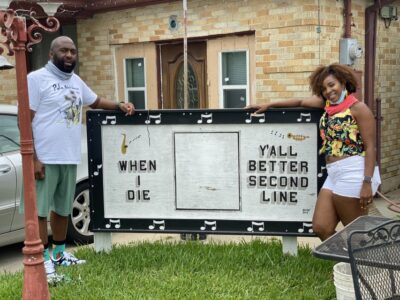
Soul of New Orleans City Tour:Enslavement to modern culture
Read our review →
Browse the lists this tour appears in