
Reviewed · TREME WALKING TOURS
Black History & Tremè Neighborhood Walking Tour
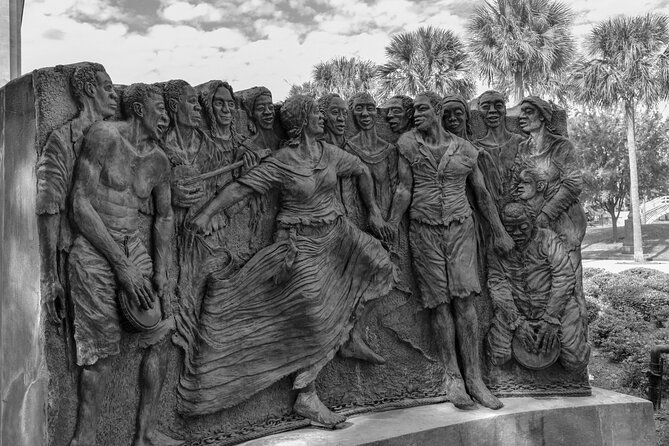
Congo Square is the heart of this walk. Here, you hear how enslaved and free Black people gathered, worshipped, traded, married, and made music in a city that tried to control nearly every part of their lives. The tour connects that past to the musicians, churches, foodways, and neighborhoods you see in New Orleans today.
I especially like the focus on real Black New Orleans history, not a softened version built around legends alone. I also like the guides’ personal delivery. LaToya and Malika receive repeated praise for their humor, warmth, and storytelling. The main consideration is pace: you cover several important places in only 1 hour and 45 minutes, so this is an introduction rather than a full day in Tremé.
Key Points
- Congo Square gives the tour its emotional center, linking West African drum circles to the musical traditions of New Orleans.
- The guides bring personal feeling to the subject, with LaToya and Malika noted for lively, direct storytelling.
- You visit four meaningful stops, including the Tomb of the Unknown Slave at St. Augustine Church.
- The walk looks beyond music, covering faith, enslavement, Black-owned businesses, architecture, food, and neighborhood life.
- The group can reach up to 28 people, large enough for energy but possibly less intimate than a private walk.
- The $40 price is reasonable for a focused introduction, especially if you want context before exploring Tremé on your own.
Why This Tremé Walk Matters
New Orleans is often sold through a short list of familiar images: brass bands, balconies, cocktails, and Creole food. Those things are part of the city, but they do not explain where the culture came from.
This walking tour puts Black New Orleans at the center. You spend time in Tremé, one of the city’s most important Black communities, and connect landmarks to the people who built the traditions that visitors come to see and hear.
The tour also avoids treating history as a row of dates. Your guide explains how music, religion, family life, business, and public gathering all shaped one another. That approach helps you understand why a park, church, or square can matter far beyond what you see on its surface.
The guides are a major part of the experience. LaToya is repeatedly singled out for her quick humor, warmth, and ability to keep a group involved. Malika is praised for her command of local history, ethnomusicology, New Orleans culture, and Vodou traditions. Another review names Malik as a clear and well-organized guide.
You may not receive the same guide every time, so do not book on the assumption that one particular person is guaranteed. Still, the tour company’s strongest asset appears to be its guides’ personal connection to the subject. They do not simply point at buildings and repeat dates. They explain why the places matter.
More walks through the Treme:
- New Orleans Treme’ Walking Tour
★ 5.0 · 240 reviews - New Orleans: Tremé African American & Creole History Tour
★ 4.9 · 208 reviews - 60-minute Tremé Walking Tour & Photo Experience
★ 5.0 · 72 reviews
Starting at the New Orleans Jazz National Historical Park
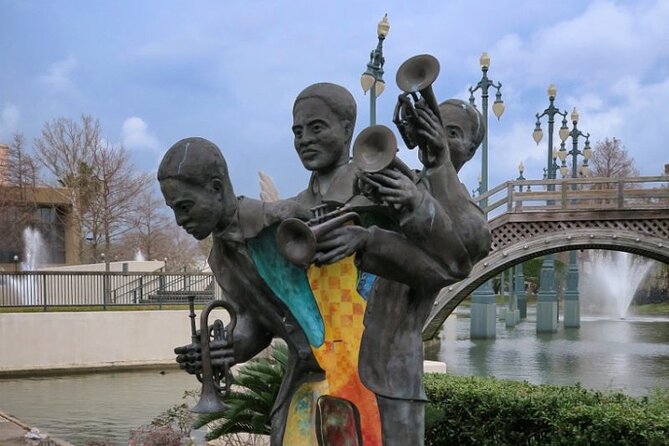
The walk begins at 801 North Rampart Street at 10:30 in the morning. The first stop is the New Orleans Jazz National Historical Park, where you spend about 30 minutes.
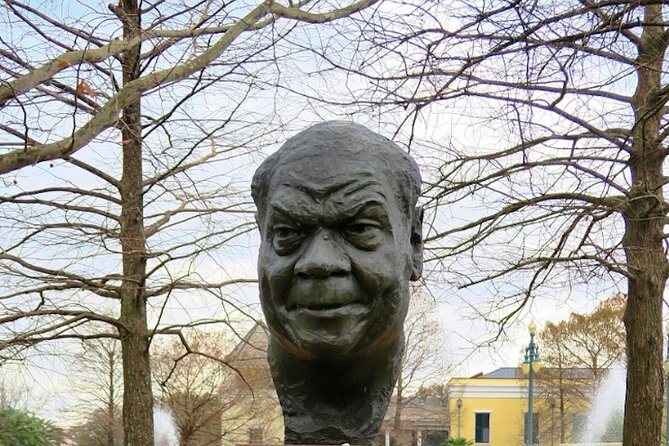
This is a good opening because it gives you a musical frame for the rest of the walk. Your guide discusses figures such as Louis Armstrong, Mahalia Jackson, Buddy Bolden, and Moses Hogan. These names represent different parts of New Orleans musical life, from early jazz to gospel and later choral traditions.
The stop is not simply a list of famous performers. The larger point is that New Orleans music came from Black communities that created, protected, and passed on musical forms through difficult circumstances. Your guide helps connect the people in the stories to the streets and gathering places around you.
Admission is included at no extra charge. Since the stop lasts about half an hour, expect a guided introduction rather than a long museum visit. If you want a detailed study of each musician, you will need more time later. For a short walking tour, though, this opening gives you useful names and themes to carry into the next stops.
I like this part because it keeps the tour from becoming a narrow cemetery or architecture walk. Music is present throughout New Orleans, but here you get a clearer sense of how Black musicians shaped the city’s public identity.
Congo Square and the Power of Gathering
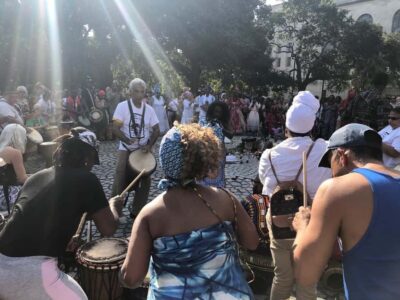
The next stop is Congo Square, for about 30 minutes. This is the most important pause on the route, both historically and emotionally.
The tour presents Congo Square as the place where West African drum circles were held on Sundays beginning in 1724. It also explains that enslaved people were allowed to gather here in ways that were unusual within the United States. They married, held church, traded goods, and maintained social connections.
That detail changes how you see the space. It was not only a place for music or dancing. It was a rare public setting where people could preserve community, exchange news, practice faith, and maintain traditions under slavery.
Your guide uses the square to explain how Black cultural life survived and developed. The connection to jazz is central, but the discussion reaches further. You learn how rhythm, movement, oral tradition, spirituality, and collective gathering helped form the culture associated with New Orleans.
This is also where the tour’s honest tone matters. The story includes joy and creativity, but it does not hide the violence and restrictions surrounding enslaved life. Several guides have been praised for explaining difficult subjects plainly, including slavery, Vodou, and the difference between popular myths and historical reality.
Give Congo Square your full attention. It can be easy to look at an open park and think there is not much to see. The value is in the explanation. Without a guide, you might walk through quickly. With context, the place becomes central to understanding the city.
St. Augustine Church and the Tomb of the Unknown Slave
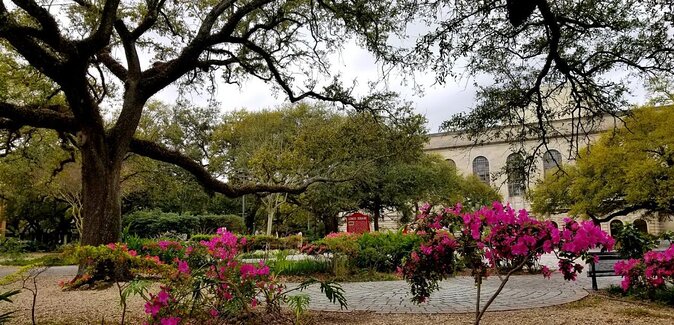
The tour then moves to St. Augustine Catholic Church in Tremé. You spend about 15 minutes here, paying respects at the Tomb of the Unknown Slave on the church grounds.
This is a quieter stop. After the music and public gathering of Congo Square, the tomb shifts the mood toward remembrance. It asks you to think about the people whose names were not preserved, even though their work and endurance helped shape New Orleans.
The church is identified as being in Tremé, described on the tour as the oldest Black neighborhood in the nation. The stop helps place Black Catholic life within the wider story of the area. Faith was not separate from community life. It was one of the ways people created belonging and continuity.
Do not expect a long church tour. The scheduled time is brief, and the focus is the tomb and its meaning. Your guide may spend more or less time here depending on the group and conditions, but this is meant as a respectful stop rather than a full architectural visit.
I appreciate that the route includes a memorial site. A discussion of jazz and cultural achievement can easily overlook the people who lived through enslavement and whose names are lost. The tomb provides a place to pause and remember them directly.
More Black heritage tours in New Orleans:
- Soul of New Orleans City Tour: Enslavement to Modern Day Culture
★ 5.0 · 393 reviews - Urban Enslavement Tour at Hermann Grima House
★ 5.0 · 171 reviews - True Voodoo History of NOLA’s Congo Square with Local Guide
★ 5.0 · 133 reviews - Soul of New Orleans City Tour:Enslavement to modern culture
★ 4.7 · 29 reviews
Louis Armstrong Park and the Wider Story
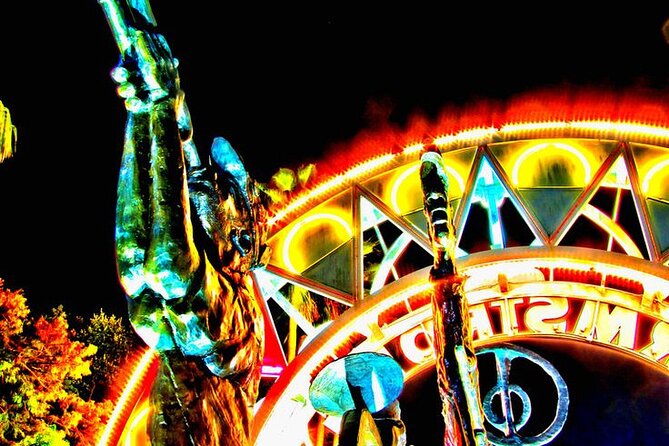
The final listed stop is Louis Armstrong Park, with about 15 minutes set aside for the visit. The park is tied to the foundation of New Orleans music, cuisine, architecture, and culture.
The tour description notes that the history behind the park can be surprisingly hard to find. That is an important point for you as a visitor. You may pass through the park and see lawns, statues, paths, and historic references without knowing how the pieces connect.
Your guide supplies that connection. The park becomes a place to discuss the people, traditions, and neighborhood life that shaped New Orleans. The discussion is not limited to Louis Armstrong, despite the park’s name. It reaches into the broader cultural foundations of the city.
This is also where the short schedule becomes most noticeable. Fifteen minutes is enough for a focused explanation, but not enough to explore every corner or linger over each monument. If the park interests you, plan to return after the tour. One guide may also point you toward nearby Black-owned businesses or cultural sites, based on the style of guiding described by past participants.
The route ends back at the starting point. That makes the tour easy to fit into a morning plan, especially if you want lunch or another activity afterward.
What the Guides Add
A history walk succeeds or fails on the guide. Here, the guide’s personality appears to be the strongest reason to book.
LaToya is described as approachable, energetic, and deeply invested in New Orleans. Her style mixes facts, humor, personal references, and present-day observations. She also answers questions and adjusts to unexpected moments, such as a closed coffee stop or an unpleasant encounter with another guide.
Malika is praised for a different but related strength. She brings a strong academic background and personal connection to the subject, with particular skill in ethnomusicology, local history, Vodou, and Tremé culture. Her delivery is described as warm, funny, and direct.
You may hear stories about Black-owned homes and businesses that remain part of the neighborhood. That gives the walk a present-day angle. Tremé is not treated as a museum piece. It is a living community with current businesses, residents, and ongoing cultural work.
The guide style is accessible for families, too. A family with parents and tweens or teens found the subject understandable and engaging. The material includes sobering moments, but the tone is not gloomy throughout. Humor and warmth help keep the walk moving.
Is $40 a Fair Price?
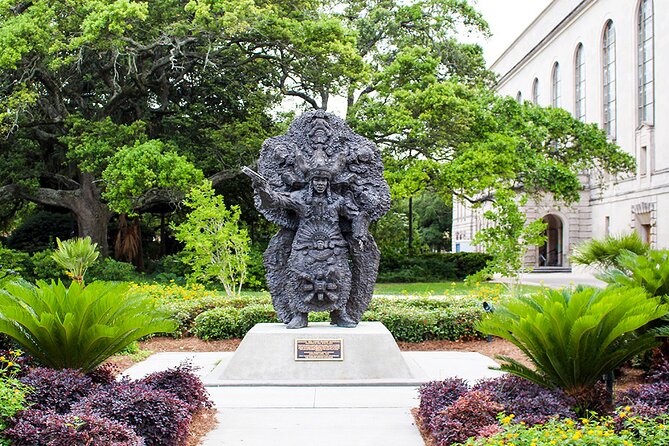
The cost is $40 per person. For a 1-hour-45-minute guided walk, that is not the cheapest way to see a park and a neighborhood. The value comes from the interpretation.
You could visit Congo Square, Louis Armstrong Park, and St. Augustine Church on your own. You would not receive the same connected explanation of how enslavement, music, religion, gathering, and neighborhood life relate to one another.
At roughly two hours, the tour gives you a concentrated introduction without taking over your day. I think the price works best if you treat the walk as a foundation. Afterward, you can revisit the places that caught your attention and explore nearby sites at your own pace.
The maximum group size is 28 people. That is manageable, but it is not a private experience. You may need to stand where you can hear, especially if the full group attends. The upside is a livelier public walk with room for questions. If you want long conversations at every stop, a smaller tour may suit you better.
Practical Details Before You Book
The tour begins at 10:30 in the morning and returns to the meeting point. It is offered in English, and you receive a mobile ticket when booking.
The walk is near public transportation, and most people can participate. Service animals are allowed. The available information does not give a detailed distance, surface, or step count, so contact the provider if you need specific mobility information before booking.
Wear shoes you can walk in and prepare for outdoor conditions. The experience requires good weather. If poor weather forces cancellation, you are offered another date or a full refund.
The tour requires a minimum number of participants. If that minimum is not met, you can choose another date or experience, or receive a full refund. You can also cancel up to 24 hours before the start time for a full refund. Changes or cancellations inside that 24-hour window are not accepted.
The tour is booked, on average, 22 days in advance. That does not guarantee every date sells out, but it is a useful reason to reserve ahead if your schedule is fixed.
Who Will Get the Most From This Walk?
I would choose this tour if you want New Orleans history told from a Black perspective and tied to specific places. It is especially useful early in your visit, before you spend more time in Tremé or explore the city’s music and food scene.
It suits solo visitors, couples, families with older children, and anyone who prefers stories over a long list of dates. The guides encourage questions, so curious people will get the most from it.
You may want a different experience if you are looking for an in-depth museum tour, a lengthy music lecture, or a private walk at a slow pace. The route covers four stops quickly. Its strength is connection and context, not exhaustive detail.
Should You Book the Black History and Tremé Neighborhood Walking Tour?
Yes, if you want to understand the forces behind New Orleans culture rather than simply consume its most famous images.
For $40, you receive a focused two-hour introduction to Congo Square, Tremé, Black Catholic history, New Orleans music, and Louis Armstrong Park. The guides, especially LaToya and Malika, bring humor and personal commitment to material that deserves care.
Book it early in your stay if possible. Then use the rest of your visit to follow up on the places and names that catch your interest. Just remember that the walk moves at a steady pace and gives each stop limited time. If that tradeoff works for you, this is one of the more useful ways to begin understanding New Orleans.
FAQ
How long is the Black History and Tremé Neighborhood Walking Tour?
The tour lasts approximately 1 hour and 45 minutes.
Where does the tour begin?
It begins at 801 N Rampart Street, New Orleans, Louisiana 70116.
What time does the tour start?
The scheduled start time is 10:30 am.
Where does the tour end?
The activity ends back at the meeting point.
How much does the tour cost?
The price is $40 per person.
What language is the tour offered in?
The tour is offered in English.
What places are visited?
The route includes the New Orleans Jazz National Historical Park, Congo Square, St. Augustine Catholic Church, and Louis Armstrong Park.
Is admission to the stops included?
The listed stops have no separate admission charge. The tour price covers the guided experience.
How large can the group be?
The maximum group size is 28 people.
Can service animals join the tour?
Yes. Service animals are allowed.
What happens if the weather is poor?
The experience requires good weather. If it is canceled because of weather, you are offered a different date or a full refund.
More Walking Tours in New Orleans
- New Orleans Premier Ghost, Voodoo and Vampire Walking Tour
★ 4.5 · 12,856 reviews - New Orleans Food Walking Tour of the French Quarter with Small-Group Option
★ 5.0 · 6,118 reviews - St. Louis Cemetery No. 1 Official Walking Tour
★ 4.5 · 3,941 reviews - New Orleans French Quarter, Voodoo and Culture Walking Tour
★ 4.5 · 2,961 reviews
More Historical Tours in New Orleans
- New Orleans Garden District History Walking Tour
★ 5.0 · 2,879 reviews - French Quarter Historical Sights and Stories Walking Tour
★ 5.0 · 2,724 reviews - New Orleans Small-Group Haunted History Carriage Tour
★ 4.5 · 2,289 reviews - New Orleans Haunted History Ghost Tour
★ 4.5 · 2,084 reviews
Newest New Orleans tours we have written up
- Private Hotel & Airport Transfers in New Orleans Area One Way★ 5.0 · 7 reviews
- New Orleans : Best of Ghost & Voodoo Experience Walking Tour★ 3.0 · 8 reviews
- New Orleans African American Heritage Walking Tour★ 5.0 · 20 reviews
- Private Transfer: Louis Armstrong Airport MSY to New Orleans in Luxury SUV★ 5.0 · 5 reviews
- N’awlins Luxury: Whitney Plantation Tour with Transportation★ 4.5 · 20 reviews
- N’awlins Luxury: Whitney Plantation & Pontoon Swamp Tour w/Transportation★ 5.0 · 15 reviews
- Full-Day Laura Plantation & Airboat Swamp Tour with Pick up★ 4.5 · 3 reviews
- Full-Day Oak Alley Plantation & Airboat Swamp w/Transfer★ 4.5 · 5 reviews
Treme Walking Tours, compared.
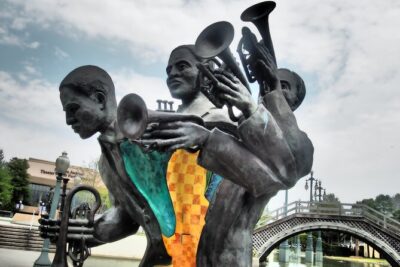
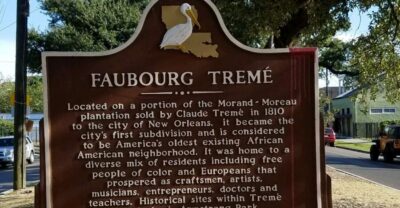
New Orleans Voodoo, Storyville, Treme, Walking Tour
Read our review →
Walking the Tremé: A Self-guided Audio Tour of New Orleans
Read our review →
Browse the lists this tour appears in