
Reviewed · NEW ORLEANS COOKING CLASSES
New Orleans Cooking Class and Cocktail Walking Tour
New Orleans cuisine and cocktails tell the city’s story better than any museum label. This four-hour outing begins with a chef preparing gumbo, jambalaya, pralines, and other local favorites, then shifts into the French Quarter for drinks tied to the city’s past. You watch rather than cook, so expect a lively food lesson, not a hands-on class.
I like the generous food samples, which can serve as a late lunch, and the practical extras: recipes, a custom spice packet, and a store discount. I also like the change of pace between the two halves. Chef Eric, Dianne, Michael, Lynn, Vivian, and others have earned especially warm praise for mixing cooking tips with personal stories and local history.
The main drawback is that the cooking room can feel crowded, with blocked views from some seats. The cocktail walk may also run long for anyone with a dinner reservation, and the published package includes three cocktails, while some past departures have been described as including only two. Confirm the drink count when booking.
Key points to know before booking
- You watch the cooking rather than prepare it: The class is a demonstration, with no hands-on work.
- The food can replace lunch: Expect samples of dishes such as gumbo, jambalaya, crawfish étouffée, crab bisque, and pralines, depending on the demonstration.
- The French Quarter walk links drinks to places: Stops include the Court of Two Sisters, Peychaud’s, St. Louis Cathedral, and Fritzel’s European Jazz Bar.
- Three cocktails are advertised: A Sazerac is included, along with two other classic New Orleans drinks.
- The tour is adults-only: Everyone must be at least 21, and the maximum group size is 18.
- You finish near the French Quarter: The ending leaves you close to restaurants, bars, and Fritzel’s jazz.
Start with gumbo at the New Orleans School of Cooking
Meet at 2 p.m. at the New Orleans School of Cooking on St. Louis Street. It is an easy walk from many downtown hotels, and walking is encouraged because the French Quarter works best without a car.
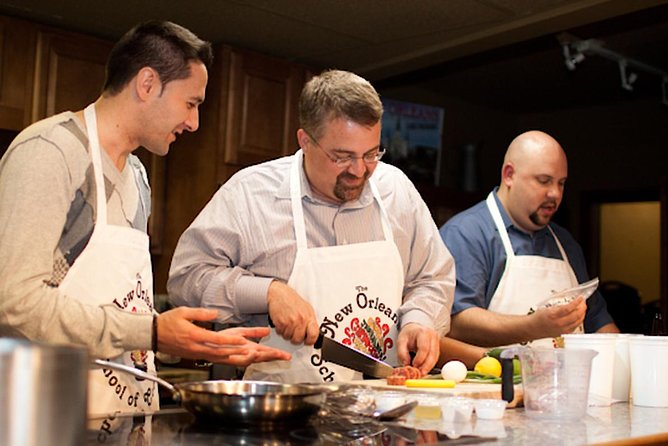
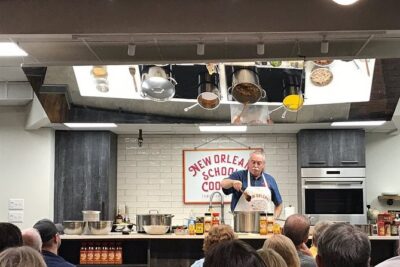
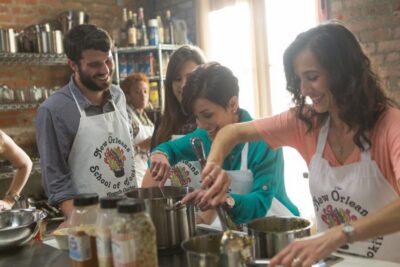
The first two hours are built around a professional chef, a demonstration counter, and a seated audience. The chef prepares classic Cajun and Creole dishes while explaining ingredients, methods, and the cultural forces that shaped New Orleans cooking. French, Spanish, Native American, and African traditions all appear in the story.
This is not a quiet technical lesson. The strongest chefs use humor, personal memories, and stories about New Orleans to keep the room moving. Chef Eric has been particularly effective at turning the lesson into a performance, while Dianne, Michael, Lynn, Vivian, and others have been praised for answering questions and making the food accessible.
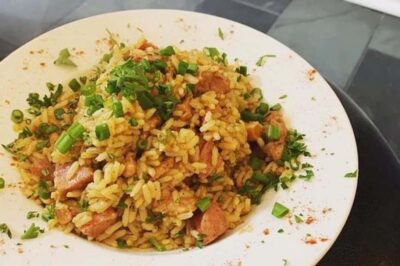
You may see gumbo, jambalaya, crawfish étouffée, crab bisque, and pralines. The exact menu can vary, but the focus is firmly on local staples rather than generic Southern cooking. Gumbo offers a lesson in slow-building flavor and regional ingredients. Jambalaya shows how rice carries a meal. Pralines provide the sweet finish.
The demonstration gives you something a standard restaurant meal cannot: context. You learn why certain spices matter, how Cajun and Creole traditions differ, and how food reflects the city’s past. You also get to see the finished dishes prepared in front of you before tasting them.
More cocktail tours in New Orleans:
- New Orleans Cocktail and Food History Tour
★ 5.0 · 819 reviews - New Orleans Original Craft Cocktail Walking Tour
★ 4.5 · 675 reviews - New Orleans Cocktail History Walking Tour in the French Quarter
★ 5.0 · 604 reviews
The food samples are more useful than a small tasting
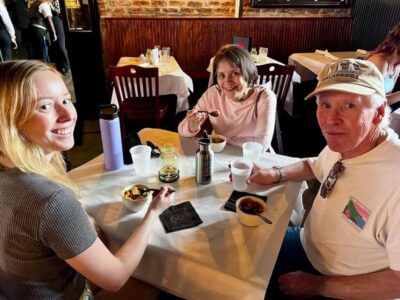
The samples are described as generous, and several people have treated the class as a late lunch. You receive food from the dishes prepared, along with complimentary coffee, iced tea, and beer. If you arrive hungry, that is a plus.
Do not schedule a large lunch immediately before the class. The portions are substantial enough to take the edge off, and the cooking demonstration works better when you are ready to taste everything.
The cooking school also gives you a recipe booklet and a custom spice packet. That makes the experience more useful after you leave New Orleans. You can try to recreate the gumbo or jambalaya at home instead of leaving with only a full stomach and a few photographs.
The store discount and drink special coupon add modest value. They are not reasons to book by themselves, but they are helpful if you want to buy ingredients, seasoning, or souvenirs connected to the lesson.
Know the difference between a demonstration and a cooking class
The most important booking detail is simple: you do not cook. You watch the chef prepare the dishes, listen to the explanation, and eat the results.
That format suits you if you enjoy food stories, demonstrations, and social conversation. It is less suitable if you want to chop vegetables, stir a pot, or make a dish under direct instruction. A few people have expected an interactive class and felt disappointed, even though they still enjoyed the food and presentation.
Seating also matters. The room may hold a large audience, and a full session can feel tight. One attendee had a pillar blocking the view, while others found the tables and aisles cramped. Arrive early enough to improve your chance of a clear sightline, though a specific seat cannot be guaranteed.
The cooking school portion is indoors, which helps on hot, rainy, or cold afternoons. Once the food demonstration ends, you meet the cocktail guide outside before 4:15 p.m. Keep your phone available and pay attention to the transition, since the second half is a separate walking experience.
Follow the cocktail story through the French Quarter
The second half turns from food to drinks and lasts about two hours. A local guide leads you through the French Quarter, connecting cocktails with old buildings, bars, apothecaries, and the people who helped shape New Orleans drinking culture.
Guides have included Robert, Robi, Roni, Tim, Sandi, Kimberly, and others. Their styles differ, but the best guides bring humor and a strong sense of place. Robert has been praised for explaining cocktail origins alongside architecture and city history. Tim is known for keeping the group engaged, even in cold weather. Sandi brings a local point of view and an easy conversational manner.
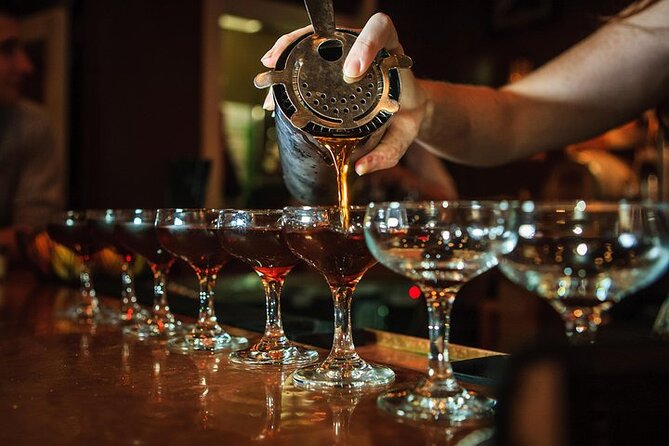
The published package includes three classic cocktails, including a Sazerac, with taxes and service gratuities covered. Additional drinks cost extra. The drinks are full cocktails rather than tiny samples, so pace yourself. This is especially important because you have already eaten and because New Orleans pours can be strong.
Some past descriptions of the experience refer to two included cocktails instead of three. Since the official details specify three, ask for confirmation if the exact number matters to your budget or plans.
More cooking classes in New Orleans:
- New Orleans Demonstration Cooking Class with Meal
★ 5.0 · 3,000 reviews - New Orleans Hands-On Cooking Class with Meal
★ 5.0 · 1,183 reviews - New Orleans: Cajun and Creole Cooking Class
★ 4.9 · 730 reviews - Hands-on Cajun Roux Cooking Class in New Orleans
★ 5.0 · 356 reviews
Court of Two Sisters and the old French Quarter atmosphere
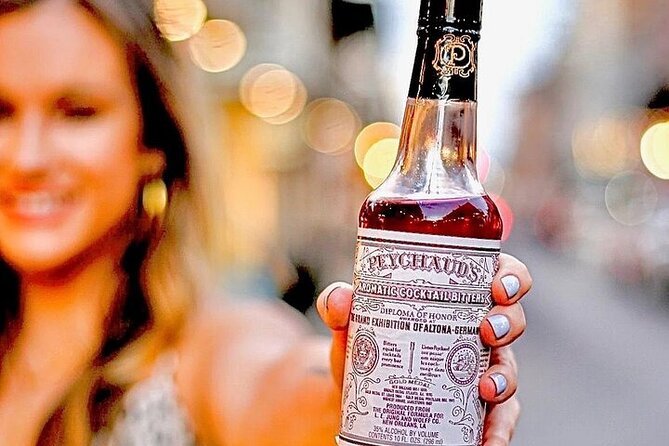
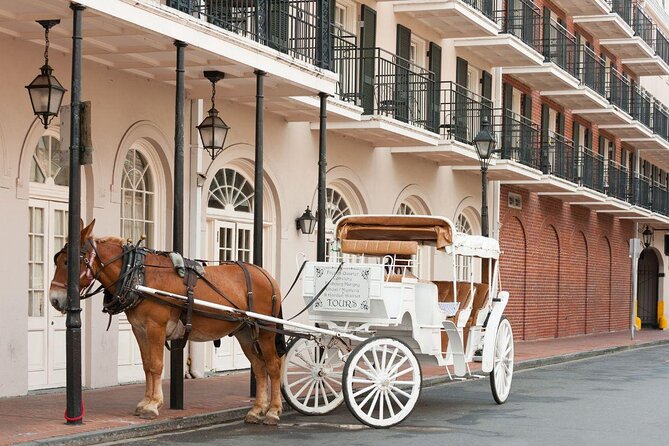
The Court of Two Sisters is one of the named stops. Its carriageway entrance has gates associated with Spain and Queen Isabella, and the restaurant is known for jazz brunch and a courtyard covered by an old wisteria vine.
The stop gives the walking portion a useful sense of place. You are not simply moving from bar to bar. You are looking at buildings and courtyards that have held social life for generations, while the guide explains how restaurants, drinks, and the quarter’s architecture fit together.
The French Quarter is compact, but cobblestones and uneven walking surfaces can slow the pace. Wear shoes that are comfortable for two hours on foot. The tour does not provide transportation between the stops, and the point is to experience the neighborhood at street level.
Peychaud’s and the Sazerac connection
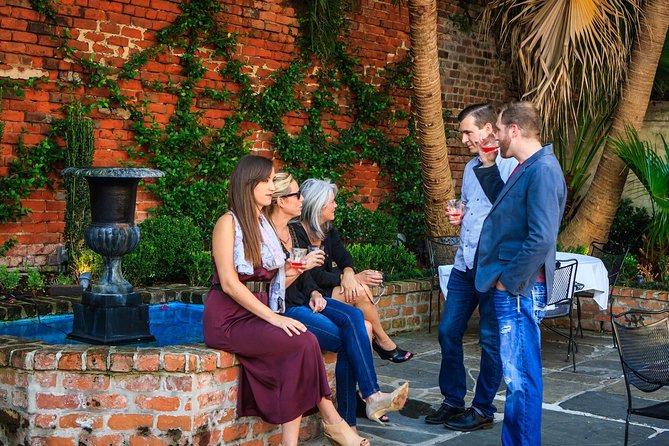
Peychaud’s refers to the former home of Antoine Peychaud, the Creole apothecary associated with Peychaud’s Bitters. Those bitters became a key ingredient in the Sazerac, one of New Orleans’ signature drinks and a cocktail with a strong claim to being America’s first.
This stop gives the Sazerac more meaning than it would have on a bar menu. You learn how an ingredient, a person, and a place became part of the city’s drinking identity.
The guide also discusses Southern Comfort, which was invented in New Orleans in 1874. These details make the cocktail walk more than a sequence of alcohol tastings. You begin to see how commercial brands, local traditions, and old bars overlap.
St. Louis Cathedral and the green fairy
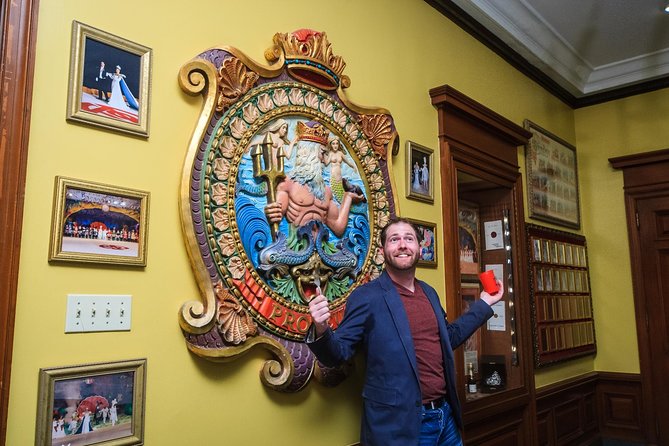
Near St. Louis Cathedral, the walk reaches the story of absinthe, known as the green fairy. The setting is tied to old pirate legends and the narrow alleys around the cathedral.
This is one of the more atmospheric sections of the walk. The cathedral, alleyways, and drink lore show why the French Quarter works so well as a backdrop for a cocktail tour. The guide can use the setting to explain how writers, artists, poets, and musicians connected absinthe with creative life.
The experience does not promise a full visit inside every landmark. You should think of these locations as outdoor stops and story points woven into the walk.
Fritzel’s European Jazz Bar provides the finish
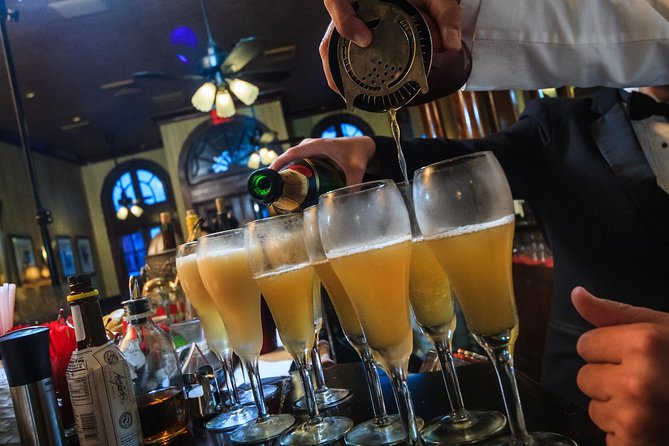
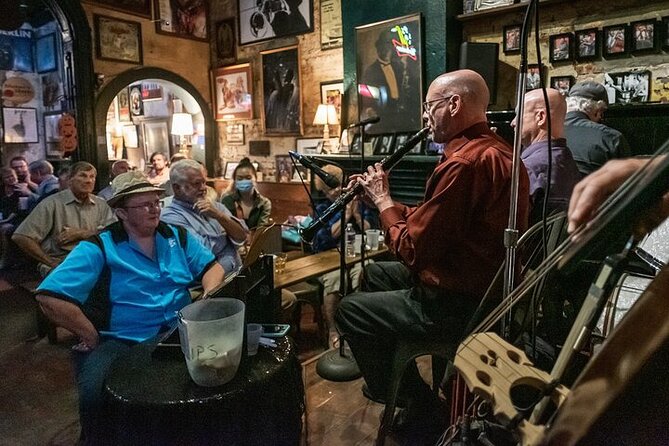
The final stop is Fritzel’s European Jazz Bar, where the cocktail tour ends with the option to remain for the music. It is a jazz pub rather than a formal concert hall, and the atmosphere connects the drinking side of New Orleans with its musical side.
This is a useful ending because you are not dropped at an isolated meeting point. You can stay for the show, find dinner nearby, or continue exploring the French Quarter on your own.
The tour returns you to the general French Quarter area in the early evening. That makes the timing convenient for dinner, though you should not book a tight reservation immediately after the advertised end. One participant had to leave the cocktail walk after the second stop to make a dinner booking, and another found the history portion longer than expected.
Is $105.50 a fair price?
At $105.50 per person, the value depends on how much you want from the afternoon. You receive a two-hour chef-led demonstration, a substantial food tasting with beer and nonalcoholic drinks, recipes, a spice packet, a store discount, a coupon, a guided French Quarter walk, and included cocktails.
Buying the food and drinks separately could approach the same amount, especially once you add a guided history walk. The real value is the combination. You get both a meal and a structured introduction to New Orleans drinks without having to plan several stops yourself.
The price is less attractive if you want hands-on cooking, tiny cocktail samples, or a short orientation before dinner. It is also worth checking the exact number of included cocktails, since the official details say three while some past accounts describe two.
The maximum group size is 18 for the cocktail portion, though the cooking demonstration may be held in a much larger room. That difference matters. The first half can feel like a public presentation, while the second half may be more conversational.
Who will enjoy this afternoon most?
I would recommend the tour to you if you are visiting New Orleans for the first time and want an efficient introduction to food, drinks, and the French Quarter. It suits couples, friends, solo visitors, and anyone who likes learning through meals.
It is especially good for:
- People who want to understand Cajun and Creole cooking before ordering more restaurant meals
- Adults who enjoy cocktail history and old neighborhood stories
- Visitors looking for a late lunch followed by an early evening walk
- Anyone who values recipes and food ideas to take home
- People comfortable walking for about two hours after eating and drinking
I would choose something else if you need a hands-on cooking lesson, cannot walk comfortably on French Quarter streets, or have a fixed dinner reservation soon after the tour. The walking portion is relaxed but can stretch when the guide has many stories to tell.
The minimum age is 21, and the experience is offered in English. Most people can participate, but the food demonstration may be crowded and the cocktail segment includes standing and walking between stops.
Should you book the cooking and cocktail tour?
Book it if you want one well-packed afternoon that covers New Orleans food, drinks, architecture, and stories. The chefs are the strongest part for many people, particularly when you get a lively presenter such as Eric, Dianne, Michael, Lynn, or Vivian.
The cocktail walk adds useful local context, but it is not a quick pub crawl. You may spend a fair amount of time listening between drinks, and the tour can run too long for a tightly planned evening.
My advice is to leave the rest of the afternoon open, skip lunch beforehand, wear walking shoes, and confirm the included drink count. If you can accept a demonstration instead of hands-on cooking, this is a practical and flavorful first look at New Orleans.
FAQ
Where does the tour begin?
It begins at the New Orleans School of Cooking, 524 St. Louis Street, in the French Quarter.
What time does the experience start?
The stated start time is 2 p.m. The cocktail guide meets the group outside the cooking school before 4:15 p.m.
How long does the tour last?
The full experience lasts approximately four hours. The cooking demonstration takes about two hours, followed by roughly two hours of cocktail walking.
Do participants cook during the class?
No. This is a demonstration only. The chef prepares the dishes while you watch, listen, and taste the food.
What food and drinks are included at the cooking school?
The food includes generous samples of the dishes prepared during the demonstration. Coffee, iced tea, and beer are also included.
How many cocktails are included?
The published tour details include three classic New Orleans cocktails, including a Sazerac. Additional alcoholic drinks are available to purchase.
Is there an age requirement?
Yes. The minimum age is 21.
What is the cancellation policy?
You can cancel at least 24 hours before the local start time for a full refund. Cancellations or changes made less than 24 hours before the experience are not accepted for a refund.
More Walking Tours in New Orleans
- New Orleans Premier Ghost, Voodoo and Vampire Walking Tour
★ 4.5 · 12,856 reviews - New Orleans Food Walking Tour of the French Quarter with Small-Group Option
★ 5.0 · 6,118 reviews - St. Louis Cemetery No. 1 Official Walking Tour
★ 4.5 · 3,941 reviews - New Orleans French Quarter, Voodoo and Culture Walking Tour
★ 4.5 · 2,961 reviews
More Workshops in New Orleans
- Hands-on Cajun Traditions Cooking Class
★ 5.0 · 132 reviews - New Orleans: Cooking Class & Cocktail Walking Tour
★ 4.7 · 16 reviews - New Orleans: Traditions Cooking Class
★ 5.0 · 9 reviews - New Orleans: Food Walking Tour & Cooking Class Experience
★ 5.0 · 8 reviews
Newest New Orleans tours we have written up
- New Orleans: 1.5-Hour Voodoo History Evening Tour★ 4.5 · 34 reviews
- New Orleans: Voodoo History Guided Walking Tour★ 4.8 · 3 reviews
- New Orleans: Voodoo, Storyville, and Treme Walking Tour★ 3.3 · 3 reviews
- New Orleans: Voodoo Legends, Vampires & Magic Walking Tour★ 3.0 · 4 reviews
- New Orleans: 1.5-Hour Vampire Tour of the French Quarter★ 4.8 · 30 reviews
- New Orleans: VIP Bar and Club Crawl Tour with Free Shots★ 4.5 · 39 reviews
- New Orleans: Traditions Cooking Class★ 5.0 · 9 reviews
- New Orleans: Tombs and Mansions of the Garden District★ 4.6 · 4 reviews
New Orleans Cooking Classes, compared.
New Orleans Demonstration Cooking Class with Meal
Read our review →
New Orleans Hands-On Cooking Class with Meal
Read our review →
Hands-on Cajun Roux Cooking Class in New Orleans
Read our review →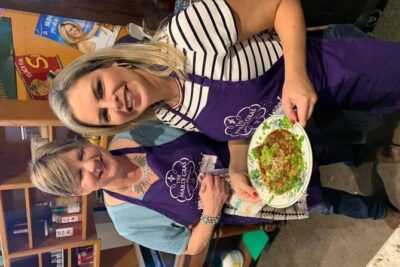
Browse the lists this tour appears in