
Reviewed · NEW ORLEANS COOKING CLASSES
Private New Orleans Cajun Cooking Class with a Local Courtland
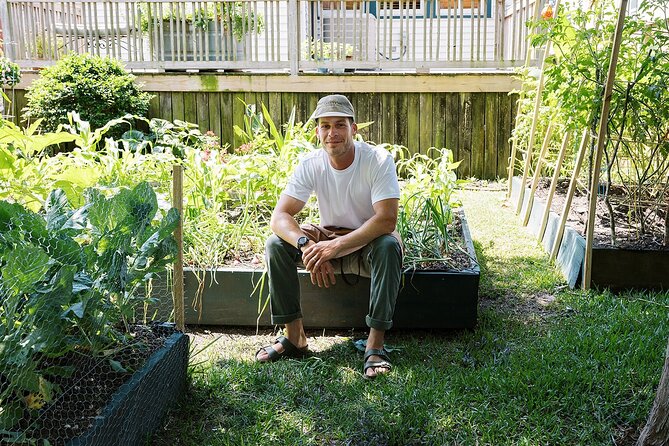
The best part of this experience is the setting: you cook in Courtland’s home, not in a polished school built for tour groups. His garden, family cookware, Cajun French background, and stories about New Orleans give the meal a personal link to the place.
I like two things right away. First, the class is private, so you can ask questions and work at your own pace. Second, Courtland teaches by taste, smell, and sight, which is far more useful than simply following a recipe. The main consideration is that this is a home visit, not a formal commercial cooking school, so the experience depends on enjoying a relaxed, social format.
Key points to know
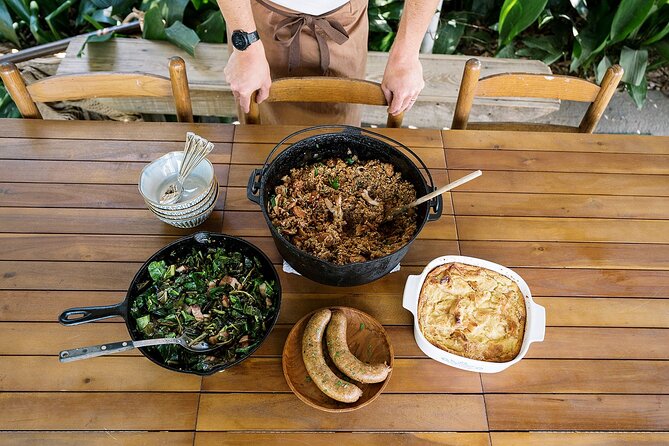
- Courtland hosts in his own New Orleans home, with access to his garden and family heirloom cookware.
- You prepare three Cajun dishes, usually an appetizer, main course with a vegetable side, and dessert.
- The menu changes with the season, and may include boudin balls, jambalaya, gumbo, étouffée, or blackened fish.
- Your group is private, with a choice of a lunchtime or dinner class.
- The cooking portion lasts about 1.5 hours, followed by a shared meal and beer or wine.
- Dietary requests are welcome, including vegetarian, gluten-free, and lactose-free options when arranged in advance.
A Cajun meal begins at Courtland’s home
This three-hour New Orleans cooking experience takes you away from the main tourist areas and into a residential neighborhood where people actually live. The address is 305 Homedale Street, New Orleans, Louisiana 70124, and the activity begins and ends there.
That change of setting matters. You are not only learning how to make a Cajun dish. You are stepping into the domestic side of New Orleans food culture, where cooking is tied to family, conversation, and long meals around a table.
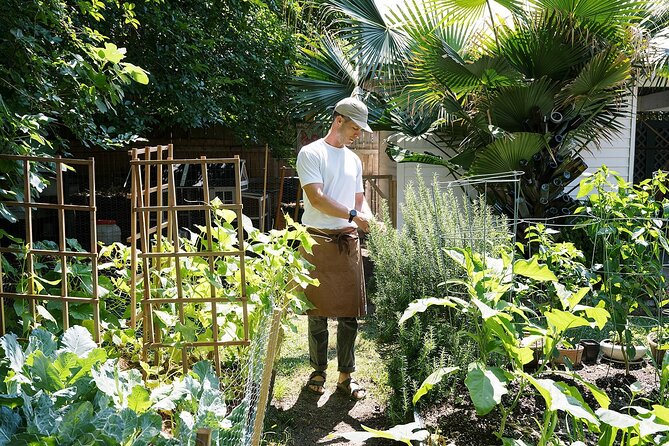
Courtland shares the home with his wife and their cat. He welcomes you with a refreshing drink and gives you time to settle in before the kitchen work begins. You may also spend time in the garden, where he grows vegetables and herbs used in his cooking whenever possible.
I like this opening because it gives the food a setting and a story. The meal does not arrive as a finished product with a quick explanation. You see the home, the garden, and the tools that help shape the cooking.
More cooking classes in New Orleans:
- New Orleans Demonstration Cooking Class with Meal
★ 5.0 · 3,000 reviews - New Orleans Hands-On Cooking Class with Meal
★ 5.0 · 1,183 reviews - New Orleans: Cajun and Creole Cooking Class
★ 4.9 · 730 reviews
Courtland’s family traditions shape the class
Courtland comes from a strong Cajun French background. He learned to cook from his grandmother and his father, who continues to host well-known Cajun parties.
That family connection is important for you as a learner. Cajun food is not just a set of measurements. It is a practical cooking tradition built around instinct, available ingredients, and the habits passed from one generation to the next.
Courtland encourages you to cook according to what you taste, see, and smell. I find that approach especially helpful for dishes such as gumbo, jambalaya, and étouffée, where the final result depends on balance and texture as much as on exact quantities.
You will also hear about the difference between Cajun and Creole food. The class does not treat the two terms as interchangeable, which helps put the meal into a clearer New Orleans context.
A particularly personal detail is the use of family heirloom cookware. That cookware is not a stage prop. It connects the food on your plate to the people who taught Courtland how to make it.
The first 90 minutes: cooking, tasting, and learning
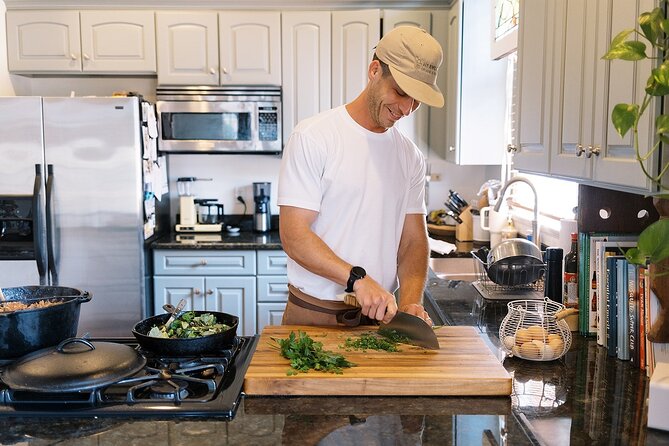
The hands-on cooking lesson lasts about 1.5 hours. It combines demonstration with active participation, so you should expect to help prepare the meal rather than watch Courtland do everything.
The exact order can vary with the menu, but you will learn three authentic Cajun dishes. The meal includes a starter, a main dish, a vegetable side, and dessert, with the main course selected from several Cajun possibilities.
Your appetizer may be something traditional such as boudin balls. This is a useful introduction to the style of Cajun food because it shows how a dish can be hearty, seasoned, and built for sharing.
For the main course, possibilities include jambalaya, gumbo, étouffée, or blackened fish. Each one teaches a different lesson:
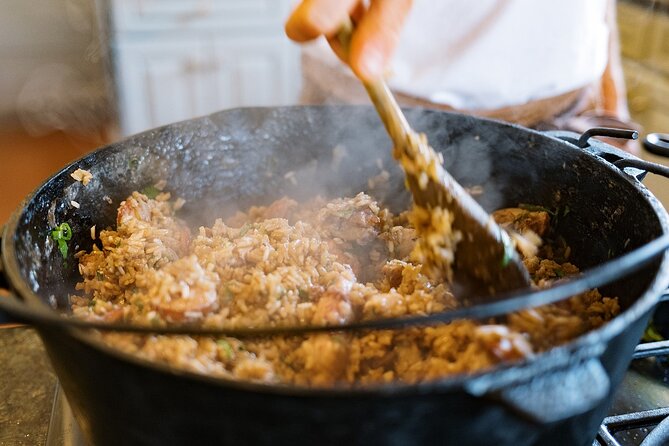
- Jambalaya gives you a one-pot approach, with ingredients cooked together so the flavors build as the dish progresses.
- Gumbo helps you understand the importance of a deeply developed base and careful seasoning.
- Étouffée focuses on a rich sauce and the way it coats the main ingredient.
- Blackened fish shows a different side of Cajun cooking, with bold seasoning and a direct cooking method.
A vegetable side rounds out the meal, and dessert finishes it. Since the menu changes with the season, you should not book this expecting one fixed list of dishes. That flexibility can be a benefit, especially if you like food made around what is available at the time.
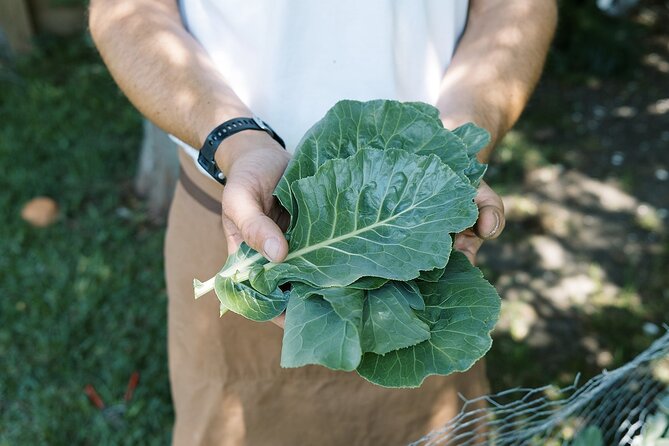
Courtland uses produce from his garden or buys ingredients from local markets as much as possible. The result is not a demonstration built around rare ingredients. It is closer to the way a home cook plans a meal, using what is fresh and suitable.
Why the private format makes a difference
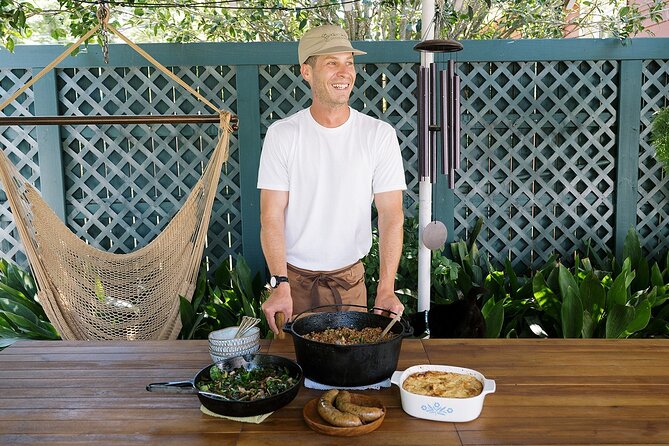
This is a private activity for only your group. That makes it a good choice for families, couples, friends, or small groups who want to ask questions without competing for the host’s attention.
A private class also allows the cooking to feel more conversational. Courtland can explain a technique, adjust the pace, or respond to your preferences. If you are new to Cajun cooking, you can stop and ask why a step matters. If you already cook, you can focus on seasoning and technique.
The setting is informal by design. You should not expect a professional teaching kitchen, printed culinary syllabus, or restaurant-style service. Instead, you get a personal visit with a local cook who is sharing food and family traditions in his own space.
That distinction is worth considering before you book. I would choose this experience for connection and practical cooking advice, not for a formal certificate or a highly structured chef’s lesson.
A different side of New Orleans for another evening:
- New Orleans Premier Ghost, Voodoo and Vampire Walking Tour
★ 4.5 · 12,856 reviews - New Orleans Steamboat Natchez Jazz Cruise with Dinner Option
★ 4.0 · 7,533 reviews - Adults-Only New Orleans Ghost, Crime, Voodoo, and Vampire Tour
★ 5.0 · 6,545 reviews - New Orleans Food Walking Tour of the French Quarter with Small-Group Option
★ 5.0 · 6,118 reviews
From the kitchen to the family-style table
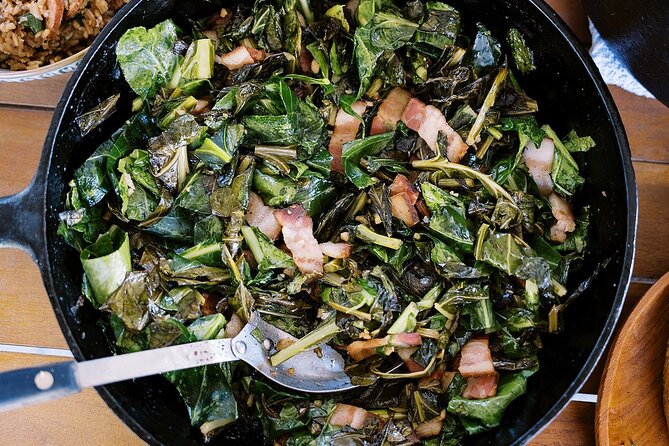
After the cooking, you sit down to eat the meal you helped prepare. This shared table is the natural second half of the experience, not an afterthought.
The format gives you time to taste the results and talk with Courtland about New Orleans life, Cajun cooking, and the meal itself. It also lets you notice how the dishes work together, from the starter through the main course and dessert.
Beer or wine is included. That makes the meal feel more complete, though you should still think of the experience as a home-hosted gathering rather than a restaurant meal.
The strongest detail here is the sense of care in the small things. Courtland shares his garden, his home, and his family cookware, then sits down with you to enjoy the food. The meal feels connected to the cooking because you have taken part in its preparation.
I also like that the emphasis is on conversation. Courtland sees food as a way for people to come together, and the family-style meal gives that idea room to work.
Cajun and Creole food in plain terms
New Orleans food is often described with the broad label Creole, but Cajun and Creole cooking are not identical. The class gives you a chance to hear how they differ while preparing dishes rather than learning the distinction from a guidebook.
Cajun cooking is tied closely to rural southwest Louisiana traditions and family methods. Creole cooking developed in the multicultural setting of New Orleans and often reflects a broader mix of culinary influences.
The line between the two can be complex, and a single class will not explain every regional variation. Still, hearing Courtland discuss the difference while you handle ingredients makes the subject easier to remember.
You also learn that Cajun cooking is not merely about making food spicy. It depends on layers of flavor, good seasoning, proper texture, and knowing when a dish is ready by looking and tasting.
That lesson is more valuable than memorizing a recipe. You can take the method home and apply it to other dishes, even if your kitchen does not have the same ingredients.
Price, timing, and the value of the experience
The price is $64 per person for about three hours. For that cost, you receive a private class, a prepared meal, beer or wine, and direct time with a local host in his home.
I consider that a fair value if you want more than a restaurant meal. A standard dinner gives you food and service. This experience gives you the food, the cooking lesson, the setting, and the personal conversation.
The value also depends on your group size and expectations. A larger private group can make the price feel especially reasonable because everyone shares the same host and meal. A solo participant or couple may pay more for privacy than for instruction alone.
You can choose a lunchtime or dinner class. Pick lunch if you want to keep your evening open for music, a show, or another New Orleans activity. Pick dinner if you like the idea of making the meal the main event of your evening.
The experience is often reserved well ahead of time, with bookings averaging about 76 days in advance. That suggests you should plan early if your dates are fixed, especially if you want a particular meal time.
Who should book this New Orleans cooking class
I would recommend this experience to anyone who values local contact over a polished tourist production. It is especially well suited to:
- Couples looking for a relaxed food experience
- Families who enjoy preparing and sharing meals
- Friends who want a private activity
- Home cooks interested in Cajun techniques
- Visitors who want to spend time in a residential part of New Orleans
- People who enjoy conversation as much as sightseeing
It may not suit you if you prefer a formal cooking school with a fixed menu and professional kitchen equipment. It may also feel slow if you want to cover several New Orleans sights in a short time.
The class works best when you arrive ready to participate. You do not need to be an experienced cook, but you should be willing to taste, ask questions, and take part in the process.
Dietary needs and practical details
Courtland can accommodate vegetarian, gluten-free, and lactose-free diets on request. Tell him about your needs before the experience so he can plan the menu properly.
The menu may change by season. That is normal for a home cooking experience and gives Courtland room to use garden produce or ingredients from local markets.
Service animals are allowed. The home also includes a cat, so take that into account if anyone in your group has a cat allergy.
You receive confirmation within 48 hours of booking, subject to availability. The activity is mobile-ticket friendly, begins at 305 Homedale Street, and returns to the same meeting point.
Cancellation is flexible up to two full days before the start time for a full refund. If you cancel or request changes less than two full days before the experience, the payment is not refunded and changes are not accepted.
My recommendation: book it for the personal touch
I would book this class if I wanted to understand New Orleans food through one person’s family and home. Courtland’s garden, inherited cookware, Cajun French background, and relaxed teaching style give the experience details that a restaurant meal cannot provide.
The main tradeoff is the informal format. You are visiting someone’s home, not entering a commercial culinary studio, so the experience is social and personal rather than polished and standardized.
At $64 per person, the combination of private instruction, three dishes, a full meal, drinks, and local conversation is strong value. Book it if you want to cook, eat, and talk your way into Cajun culture. Skip it only if you need a fixed menu, a formal classroom, or a short activity with little conversation.
FAQ
How long does the Cajun cooking class last?
The full experience lasts about three hours. The cooking lesson itself takes about 1.5 hours, followed by time to share the meal.
Where does the experience begin and end?
It begins at 305 Homedale Street, New Orleans, Louisiana 70124. The activity ends back at the same meeting point.
Is the cooking class private?
Yes. Only your group participates in the activity.
What dishes will I learn to cook?
You will learn three Cajun dishes, including a starter, a main dish with a vegetable side, and dessert. Possible dishes include boudin balls, jambalaya, gumbo, étouffée, and blackened fish, but the menu may change by season.
Is food and drink included?
Yes. You share the meal you help prepare, and beer or wine is included.
Can dietary requests be accommodated?
Yes. Vegetarian, gluten-free, and lactose-free diets can be accommodated when requested in advance.
Is there a cancellation policy?
You can receive a full refund if you cancel at least two full days before the experience start time. Cancellations or changes made less than two full days before the start time are not accepted for a refund.
More Workshops in New Orleans
- Voodoo Doll Class in New Orleans
★ 5.0 · 40 reviews - Sip History in the Crescent City Cocktail Making Class
★ 4.5 · 32 reviews - New Orleans: Cooking Class & Cocktail Walking Tour
★ 4.7 · 16 reviews - New Orleans: Traditions Cooking Class
★ 5.0 · 9 reviews
Newest New Orleans tours we have written up
- New Orleans : Garden District Architecture Walking tour★ 4.8 · 5 reviews
- Ultimate Denver Day Out: Red Rocks, City Views & Ice Cream★ 5.0 · 7 reviews
- From New Orleans: Whitney and Laura Guided Plantation Tour★ 4.9 · 20 reviews
- Whitney Plantation and Soul of New Orleans City Tour Combo★ 5.0 · 13 reviews
- Treme Bar Crawl & Seafood Experience★ 4.2 · 7 reviews
- True Voodoo History of NOLA’s Congo Square with Local Guide★ 4.9 · 16 reviews
- Whitney Plantation Tour with Transportation★ 4.0 · 29 reviews
- Witches Coven Walking Tour in New Orleans★ 5.0 · 49 reviews
New Orleans Cooking Classes, compared.
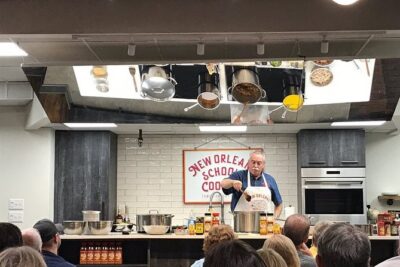
New Orleans Demonstration Cooking Class with Meal
Read our review →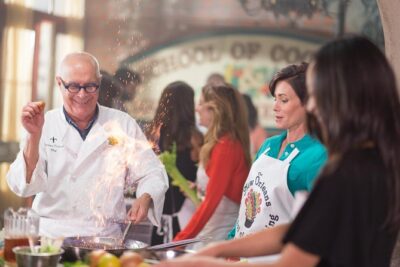
New Orleans Hands-On Cooking Class with Meal
Read our review →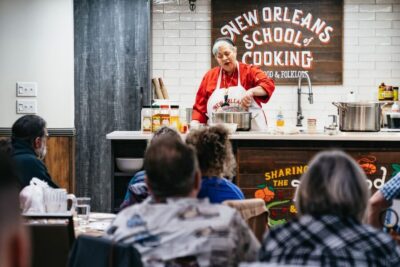
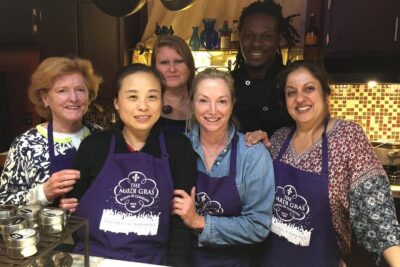
Hands-on Cajun Roux Cooking Class in New Orleans
Read our review →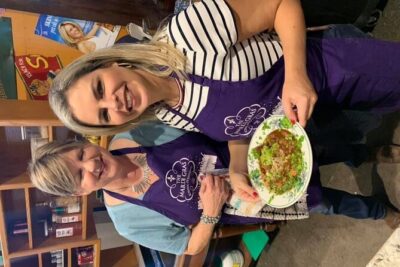
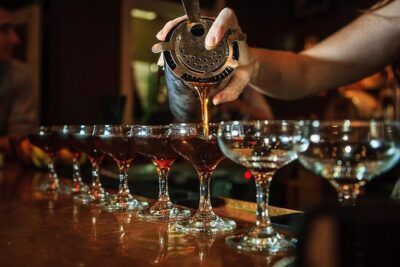
New Orleans Cooking Class and Cocktail Walking Tour
Read our review →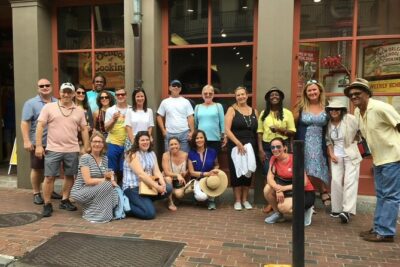
New Orleans Small-Group Food Walking Tour and Cooking Class
Read our review →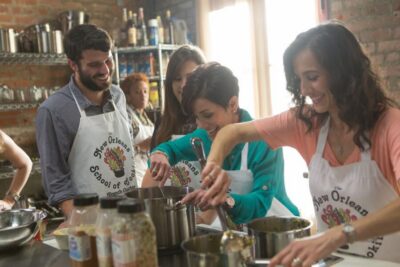
Browse the lists this tour appears in