
Reviewed · NEW ORLEANS COOKING CLASSES
New Orleans Demonstration Cooking Class with Meal
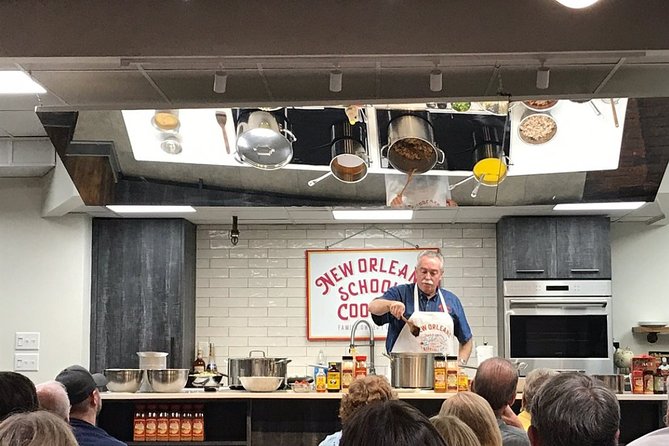
New Orleans cooking is part lesson, part lunch, and part local theater. In a converted 19th-century molasses warehouse, a chef such as Lynn, Eric, Dianne, or Austin prepares Creole staples while explaining roux, spices, Cajun and Creole traditions, and the stories behind the food. You watch, ask questions, and eat a generous helping of what was just cooked.
I like the strong food value: for $43, you get samples of several dishes, coffee, iced tea, water, and one local beer. I also like the easy, entertaining format, especially if you want New Orleans flavor without spending hours at a kitchen counter. The main thing to consider is size. This is a demonstration class, not hands-on cooking, and the room can hold up to 68 people.
Key points to know before booking
- Four or more Creole dishes may be prepared live, often including gumbo, jambalaya, shrimp or chicken Creole, and crawfish étouffée.
- The food comes after each demonstration, so you can taste the dish while its preparation is still fresh in your mind.
- Chef personalities are a major part of the experience, with instructors such as Lynn, Eric, Dianne, Vivian, Austin, Terri, and Rene praised for humor, stories, and clear explanations.
- The class is held at 524 St. Louis Street, in the French Quarter, inside a former molasses warehouse.
- It is a large-group demonstration, with a maximum of 68 people and no hands-on cooking.
- Dietary help is available, including vegan, gluten-free, and nut-free substitutions for an extra $5, but those alternatives are not demonstrated.
Inside the New Orleans School of Cooking
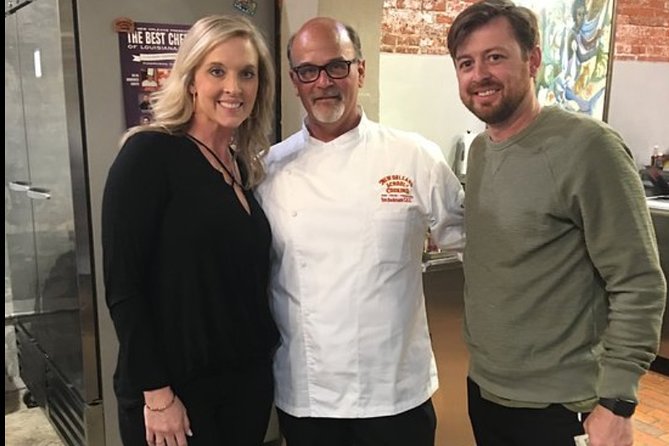
The setting gives the class a useful sense of place before the first pot is stirred. The New Orleans School of Cooking is at 524 St. Louis Street, in the French Quarter, inside a converted 19th-century molasses warehouse. You are not just sitting in a generic cooking studio. The building connects the lesson to the city’s old food and trade culture.
The class lasts about two hours. That is enough time for a proper meal and a good introduction to Louisiana cooking, but not enough for a slow, hands-on workshop. You take a seat, meet the chef, and watch the dishes come together in real time.
The style is relaxed and talkative. The chef explains each step, answers questions, and fills the gaps with New Orleans anecdotes. Names vary by class, but the instructors who have led this experience include Lynn, Chef Eric, Dianne, Vivian, Austin, Terri, and Rene. Their personalities matter because the class is as much a live presentation as a cooking lesson.
If you are hoping to chop vegetables, stir a roux, or cook your own pot, this is not the right format. You watch the chef do the work. For many people, that is the appeal: you get the food, the instruction, and the stories without having to spend the afternoon worrying about whether your roux has burned.
More cooking classes in New Orleans:
- New Orleans Hands-On Cooking Class with Meal
★ 5.0 · 1,183 reviews - New Orleans: Cajun and Creole Cooking Class
★ 4.9 · 730 reviews - Hands-on Cajun Roux Cooking Class in New Orleans
★ 5.0 · 356 reviews
Stop one: the live Louisiana cooking demonstration
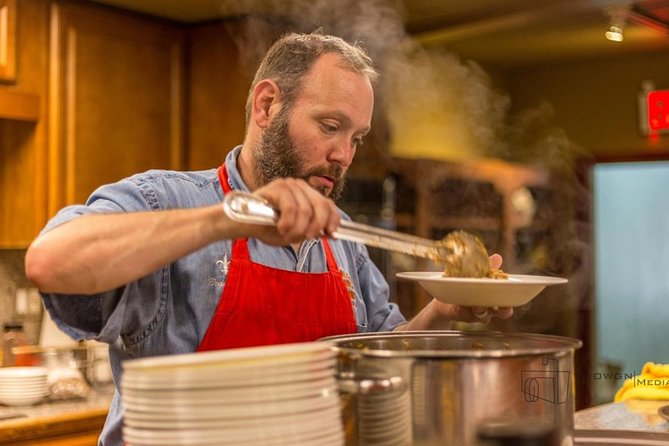
The central lesson begins with the foundations of Louisiana food. You hear how Cajun and Creole cooking developed through a mix of cultural influences, then see how those traditions show up in everyday ingredients, seasoning, and technique.
The difference between Cajun and Creole cooking is discussed during the class, and you can ask the chef to explain it further. It is a useful question because visitors often treat the terms as interchangeable. The class gives you a practical way to understand the distinction through the dishes being prepared, rather than through a dry definition.
The roux gets special attention. This browned mixture of flour and fat is one of the keys to many Louisiana dishes, and the chef explains why color, timing, and patience matter. You also learn how seasonings shape the final dish. The prepared food is generally not made very spicy, and seasoning blends are placed on the table so you can adjust your portion to taste.
That approach works well for a mixed group. A fiery dish might impress one person and defeat another. Here, you can try the food as prepared, then add more seasoning if you want extra heat.
The menu changes, so you should not book expecting every item on the sample list. Possible dishes include:
- Corn and crab bisque
- Gumbo
- Jambalaya
- Shrimp or chicken Creole
- Crawfish étouffée
- Shrimp and artichoke soup
- Bread pudding
- Bananas Foster
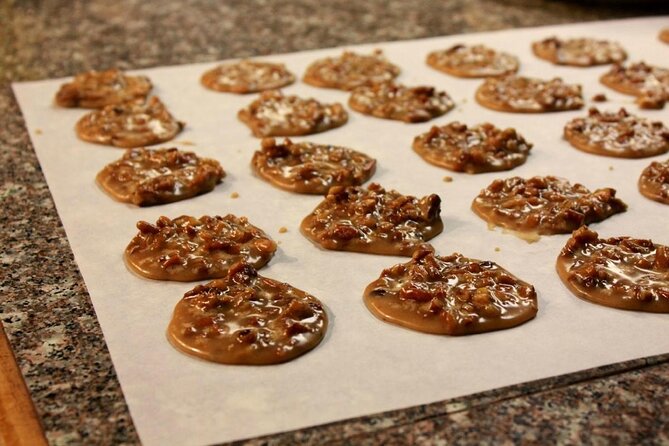
- Pralines
- Pecan pie
A typical class may include a starter, several savory dishes, and more than one dessert. The key point is variety. You are not paying to watch one recipe from beginning to end. You are learning how several familiar New Orleans dishes relate to one another, then tasting each one.
Gumbo, jambalaya, and the pleasure of tasting as you learn
Gumbo and jambalaya are often the dishes people most want to understand, and they make good teaching tools. You see how each dish gets its flavor, how ingredients are combined, and how the finished texture develops. The chef also gives practical advice that can be useful at home, especially if you have never made a roux or worked with Louisiana seasoning.
The meal arrives as part of the lesson. After a dish is prepared, you receive a sample, often a generous one. By the end, the separate tastes add up to a full meal. You do not need to plan lunch or dinner immediately afterward.
That is one of the best features of the experience. A standard food demonstration can leave you hungry, especially when you spend two hours smelling dishes without tasting them. Here, the eating is built into the schedule. You watch, listen, then try the result.
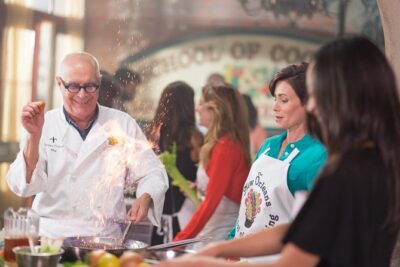
Dessert adds some fun to the final part of the meal. Bananas Foster may involve a flaming presentation, and pralines, bread pudding, or pecan pie may appear depending on the menu. The sweet dishes help break up the heavier savory food and give the chef another chance to explain a New Orleans favorite.
You receive coffee, iced tea, water, and one local beer. The beer is a welcome match for the hearty food, while iced tea gives non-beer drinkers a classic Southern option. Additional drinks are not listed as included, so treat the one beer as part of the package rather than an open bar.
Stop two: the French Quarter setting
The itinerary lists the French Quarter as a second stop, but this should not be confused with a separate walking tour. The cooking activity takes place at the school on St. Louis Street, and the experience ends back at the meeting point.
That still makes the location useful. You can pair the class with time in the French Quarter before or after, without crossing the city for another appointment. Since the school is near public transportation, it is practical for a day when you are already exploring central New Orleans.
The location also gives you a chance to build a sensible half-day plan. You might visit the Quarter first, attend the class around a meal period, then continue on foot afterward. Just allow enough time to arrive at 524 St. Louis Street and check in without rushing.
A different side of New Orleans for another evening:
- New Orleans Premier Ghost, Voodoo and Vampire Walking Tour
★ 4.5 · 12,856 reviews - New Orleans Steamboat Natchez Jazz Cruise with Dinner Option
★ 4.0 · 7,533 reviews - Adults-Only New Orleans Ghost, Crime, Voodoo, and Vampire Tour
★ 5.0 · 6,545 reviews - New Orleans Food Walking Tour of the French Quarter with Small-Group Option
★ 5.0 · 6,118 reviews
How large is the class?

The maximum group size is 68 people. That is a substantial room, and one experience had about 48 people. The larger setting helps keep the price low and makes it possible to serve a full set of samples, but it changes the feel of the class.
You are not getting an intimate lesson around a family kitchen table. The chef speaks to the room, and you may need to pay close attention if people nearby are talking. The chef can answer questions, but the experience works best when the audience gives the presentation its attention.
This is also why the chef’s delivery matters. The strongest instructors turn the room into a show, combining cooking steps with jokes, Louisiana history, and personal stories. Several instructors have been singled out for keeping the class lively while still explaining the food clearly.
If you prefer quiet instruction or one-to-one coaching, choose a smaller hands-on class instead. If you like a social room and do not want to cook, the large format is a reasonable tradeoff.
Is $43 a good value?
At $43 per person, the price is strong for what is included. You receive a roughly two-hour presentation, a full set of samples from the prepared dishes, one local beer, iced tea, coffee, water, and copies of the recipes.
The value improves if you treat it as both a meal and an introduction to New Orleans food. A restaurant meal would give you a finished dish, but not the reasoning behind the roux, the spice blends, or the cooking methods. A cooking class elsewhere might offer more hands-on practice, but often costs more and may not include such a broad tasting menu.
The class is particularly good for couples, families, and friends with mixed interests. You do not need to be the person in your group who loves to cook. The storytelling, food, and live presentation give non-cooks plenty to enjoy.
Add the recommended 15 to 20 percent gratuity to your budget. Tips are not included, and the chef and staff are doing more than simply serving food. They are teaching, presenting, answering questions, and managing a large meal.
Dietary restrictions and menu limits
Dietary restrictions can be accommodated, but you need to call the reservations line after booking and tell the staff when you arrive. For a $5 surcharge paid at check-in, you can receive gumbo z’herbes and Creole z’herbes as substitutions. These options are vegan, gluten-free, and nut-free.
There is an important limit. The substitute dishes are discussed but not demonstrated, and you receive copies of those recipes. The school cannot alter the recipes being prepared for the whole class, so your substitutions may not match every course.
If your needs are strict, ask the staff exactly which parts of the demonstrated meal you can eat. The information provided notes that you may be able to have the soup but not the entree. This is manageable, but it is not the same as a class designed entirely around your diet.
What you take home
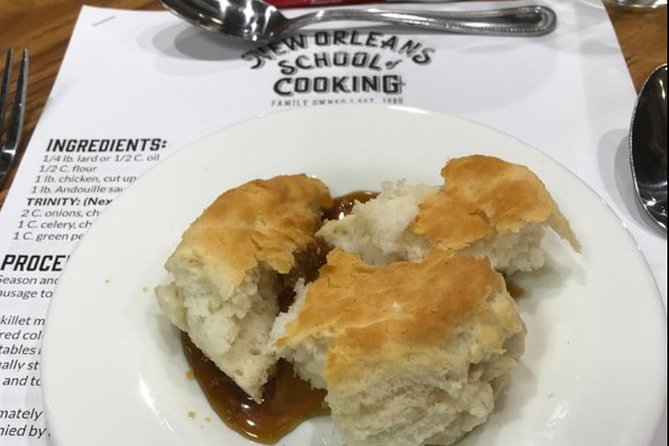
The recipes are one of the most useful parts of the class. You leave with written instructions for the dishes prepared, including the substitutions if you arranged a special meal.
That gives the experience a life beyond New Orleans. You can try the roux again at home, make the gumbo for friends, or use the seasoning advice to improve a dish you already cook. The class also offers a diploma if you submit photos of yourself cooking the recipes at home.
Do not expect the diploma to be a formal culinary qualification. It is a playful extra, but it gives you a reason to actually use the recipes instead of filing them away with old menus.
Who will enjoy this most?
I would recommend this class to you if you want a clear, tasty introduction to Louisiana food and do not need to cook with your own hands. It works especially well as a first food activity in New Orleans because it gives you vocabulary for later restaurant meals.
It is also a good choice for:
- First-time visitors who want context for gumbo, jambalaya, and Creole dishes
- Couples looking for a relaxed meal with a live presentation
- Families with older children who can follow a two-hour demonstration
- Non-cooks who still enjoy food stories and local culture
- Home cooks who want practical ideas and recipes to try later
I would think twice if you need a small class, quiet surroundings, or personalized instruction. The room can be large, and the experience is built around watching rather than doing.
Booking, timing, and cancellation
The activity is offered in English and includes a mobile ticket. It is commonly booked about 24 days in advance, so popular dates may not be available at the last minute.
You receive confirmation when booking. The experience requires a minimum number of participants and suitable weather. If the school cancels for either reason, you are offered another date or experience, or a full refund.
You can cancel for a full refund up to 24 hours before the local start time. Cancellations or changes made within 24 hours are not refunded or accepted.
Should you book the New Orleans cooking class?
Book it if you want a meal, a show, and a practical introduction to Creole cooking in one affordable stop. The combination is hard to beat at $43, especially with several dishes, a local beer, recipes, and entertaining chefs such as Eric, Lynn, Austin, Dianne, Vivian, Terri, and Rene.
Skip it if your idea of a cooking class requires hands-on work or a tiny group. Otherwise, arrive ready to listen, eat, and take notes. You will leave with a fuller stomach, a better grasp of roux and seasoning, and recipes that can keep your New Orleans meal going at home.
FAQ
Where does the New Orleans cooking class begin?
It begins at the New Orleans School of Cooking, 524 St. Louis Street, New Orleans, Louisiana 70130, in the French Quarter.
How long does the experience last?
The cooking demonstration and meal last approximately two hours.
Is this a hands-on cooking class?
No. This is a demonstration class. You watch a chef prepare the dishes, ask questions, and sample the completed food.
What food might be served?
The menu may include corn and crab bisque, gumbo, jambalaya, shrimp or chicken Creole, crawfish étouffée, shrimp and artichoke soup, bread pudding, bananas Foster, pralines, and pecan pie. The exact menu can vary.
Are drinks included?
Yes. The package includes coffee, iced tea, water, and one local beer.
Can dietary restrictions be accommodated?
Yes, but you must call the reservations line after booking and inform the staff at check-in. For a $5 surcharge, vegan, gluten-free, and nut-free gumbo z’herbes and Creole z’herbes substitutions are available. These substitutes are not demonstrated.
More Workshops in New Orleans
- Hands-on Cajun Traditions Cooking Class
★ 5.0 · 132 reviews - New Orleans Cooking Class and Cocktail Walking Tour
★ 4.5 · 109 reviews - New Orleans: Cooking Class & Cocktail Walking Tour
★ 4.7 · 16 reviews - New Orleans: Traditions Cooking Class
★ 5.0 · 9 reviews
Newest New Orleans tours we have written up
- New Orleans: 1.5-Hour Voodoo History Evening Tour★ 4.5 · 34 reviews
- New Orleans: Voodoo History Guided Walking Tour★ 4.8 · 3 reviews
- New Orleans: Voodoo, Storyville, and Treme Walking Tour★ 3.3 · 3 reviews
- New Orleans: Voodoo Legends, Vampires & Magic Walking Tour★ 3.0 · 4 reviews
- New Orleans: 1.5-Hour Vampire Tour of the French Quarter★ 4.8 · 30 reviews
- New Orleans: VIP Bar and Club Crawl Tour with Free Shots★ 4.5 · 39 reviews
- New Orleans: Traditions Cooking Class★ 5.0 · 9 reviews
- New Orleans: Tombs and Mansions of the Garden District★ 4.6 · 4 reviews
New Orleans Cooking Classes, compared.
New Orleans Hands-On Cooking Class with Meal
Read our review →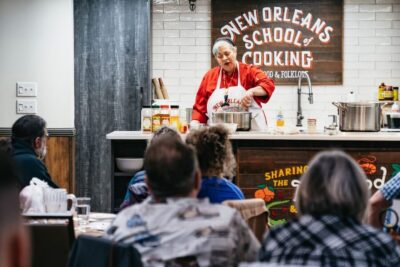
Hands-on Cajun Roux Cooking Class in New Orleans
Read our review →
New Orleans Cooking Class and Cocktail Walking Tour
Read our review →
Browse the lists this tour appears in